

Colorado House passed a bill raising threshold for agriculture overtime by one vote

The bill that would raise the overtime threshold for overtime pay for certain agricultural workers won the narrowest of votes Thursday in the Colorado House.
Senate Bill 121 won a 33-32 vote, a dramatic difference from votes cast Wednesday on nearly three dozen amendments offered by progressive Democrats. Most of those recorded votes, taken late in the day following a six-hour debate on the bill, showed support from as many as 19 Democrats.
Not one of those 32 amendments passed.
Still, the bill survived and now heads back to the state Senate, which must review an amendment added Wednesday by co-sponsors Rep. Matthew Martinez, D-Monte Vista, and House Assistant Minority Leader Ty Winter, R-Trinidad.
That amendment puts more teeth into penalties for employers who willfully don’t pay overtime for their agriculture workers or who classify hourly workers as salaried to avoid paying overtime.
The bill, as approved by the House, states that any agricultural employer who “willfully” and without legal justification fails to pay overtime three times in a five-year period can be assessed a fine 10% higher than what’s already in the law, which is a $50 per day fine.
An agriculture employer who misclassifies workers as salaried when they’re hourly face a fine of $20,000 for three or more violations over a five-year period, and a $40,000 fine if the problem is not remedied within 60 days of a determination by the stae labor department.
Martinez told Colorado Politics the amendment is designed to bring more balance into the bill and to go after repeat offenders who don’t pay overtime when they should.
As introduced, SB 121 set a threshold of 60 hours before most agricultural workers can start earning overtime pay. Currently, rules set up by the Colorado Department of Labor and Employment set the overtime minimum at 48 hours, with a minimum of 56 hours for 22 weeks of the year during peak planting and harvesting season.
The bill was amended by the Senate to drop the threshold to 56 hours. It excludes salaried employees and those who are on the range 24/7, such as shepherds and those who work with cattle.
Proponents noted studies from California and Oregon that show agricultural workers are losing money because of the overtime rules, that employers cut off the work at the overtime minimum, and that forces those workers to take on second jobs.
Opponents said the workers face harsh labor conditions, an issue that a 2021 law addressed and which also allowed the labor department to come up with the rules on overtime.
They additionally claimed most of the farms that will benefit from the bill are large, corporate farms, which are about 3% of operations in Colorado, and that concerns for small farms are misguided, since most don’t have outside labor.
The debates Wednesday and Thursday took on racial overtones, with complaints that progressive Democrats targeted Martinez for not supporting migrant workers.
It would be nice “if race wasn’t a part of this, but it appears that it really is. It is why agricultural workers are being so penalized in their work,” said Rep. Tammy Story, D-Evergreen, who introduced an amendment to add in a legislative declaration noting the 2021 bill that set up the overtime rules and which addressed “the inequity and racist origins of the exclusion of agricultural employees from overtime.”
Martinez responded with a history lesson of his own.
“Who were the first farmers and ranchers in the state of Colorado? Latino farmers and ranchers that were here before Colorado was Colorado in my area, in my neck of the woods,” he said.
“Not every farmer or rancher looks the same across the state,” he said, adding that he represents Latino farmers and ranchers who have worked the land years before Colorado was a state.
“We have to take skin color out of this,” said Rep. Scott Bottoms, R-Colorado Springs, who recounted his own experience in eastern Colorado with migrant farm workers, who, he noted, were from South Africa and who were White.
“This is not about ethnicity,” he said. “This is about people wanting to work, people wanting to get the job done and do the work.”
Story pointed out that last month, the legislature approved changing the name of Cesar Chavez Day to Farm Workers Day to honor the farm workers.
The House recognized farm workers as the backbone of American agriculture and the core of the Colorado economy, Story said, and the vote was unanimous.
Lawmakers can’t honor farmworkers one day and then vote to exploit them 19 days later, she said, calling it blatant hypocrisy and “selective inequality.”
“The choice today for me is simple. Either we stand with farm workers or we stand against them, and I know where I stand,” Story said.
Winter responded that the bill is about doing what’s right for the people of Colorado in more ways than one.
“I will not have my character impugned or allow my co-prime to have his character impugned. The amount of work that he has done and the amount of work that we’ve put into this to make this a race issue — it’s disgusting,” Winter said.
The Senate is expected to concur with the House amendment, and if that happens, the bill is off to Gov. Jared Polis’ desk. Supporters have told Colorado Politics they believe the governor will sign it.


With its water source dry, a southeast Colorado town’s clock is ticking
Savannah Eller
savannah-eller@coloradopolitics.com
Updated 11 hours ago
The Cucharas is not a mighty river, but the people of La Veta knew they had a problem brewing when it ran dry at the beginning of June. “We’re getting by,” said La Veta Mayor Doug Brgoch. “It’s not great.”...
Colorado farmers, ranchers wrestle with hurdles amid extreme drought conditions
Shen Wu Tan (Special to The Denver Gazette)
shen-wu-tan@gazette.com
Updated 1 month ago
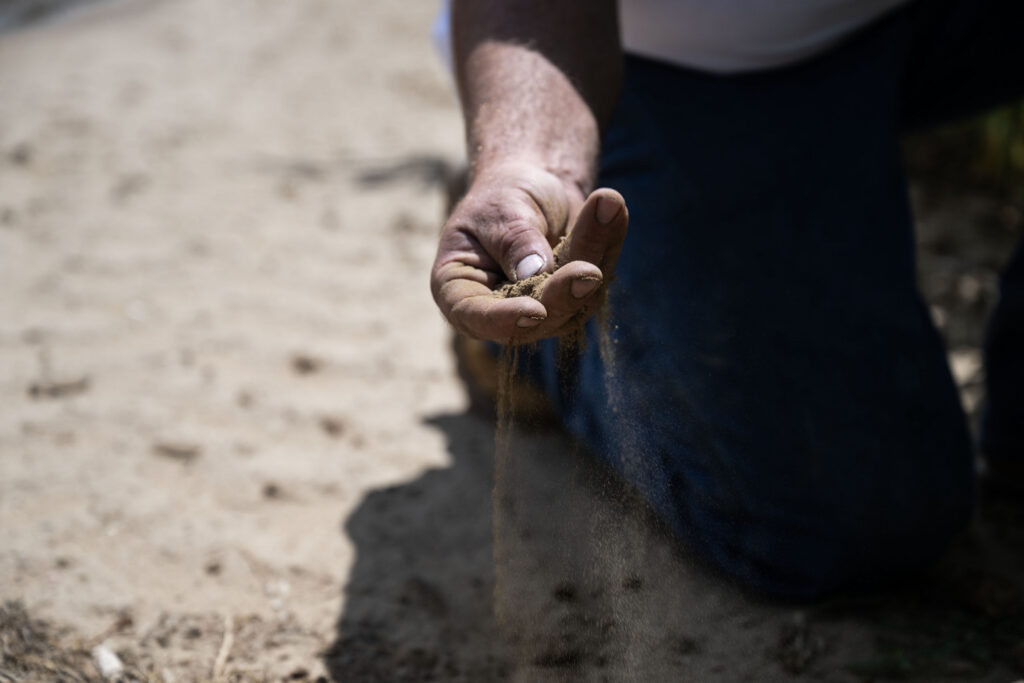
Some producers take drastic steps to adapt to dry climate, record-low snowpack This is the first time that Jim Magnuson, who operates a family farm in the rural town of Eaton, can ever recall planting only 75% of his acreage. ...

Colorado produce not tied to nationwide cyclospora outbreak, agriculture officials say
Marissa Ventrelli
marissa.ventrelli@coloradopolitics.com
Updated 2 months ago
There is no indication that the recent outbreak of cyclospora, a fecal parasite that has contaminated food and water across nearly every state, can be linked to produce grown in Colorado, according to the state’s Department of Agriculture. “Colorado growers...

With no 7-state deal, federal agency turns to 10-year Colorado River strategy
Marianne Goodland
marianne.goodland@coloradopolitics.com
Updated 3 months ago
The U.S. Department of the Interior is moving forward with a 10-year framework for managing the Colorado River after 2026, outlining a plan to issue new operating guidelines every two years as the seven basin states remain unable to reach...
Colorado on the hook for $1 million in costs to pay for wolves’ livestock kills
Marianne Goodland
marianne.goodland@coloradopolitics.com
Updated 4 months ago
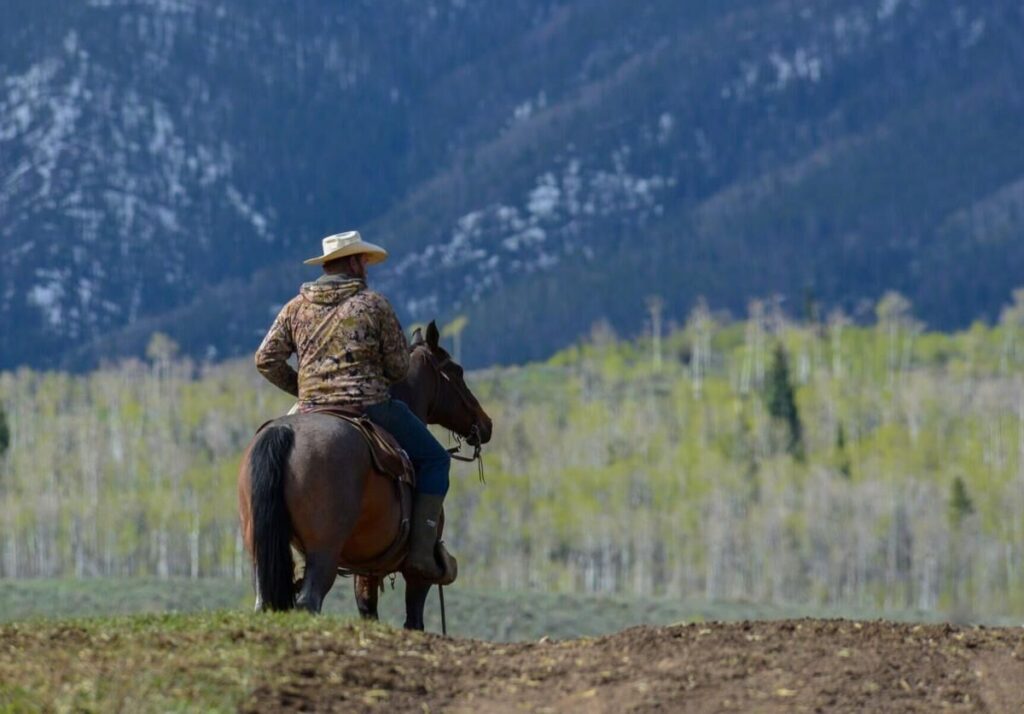
After paying more than $700,000 in March to ranchers for livestock lost to wolves, the Colorado Parks and Wildlife Commission is poised to approve two additional claims totaling $262,000 at its meeting this week. Those approvals would bring total payouts...
Overtime for farms, school safety, public office rules: What’s new in Colorado law
Marianne Goodland
marianne.goodland@coloradopolitics.com
Updated 4 months ago
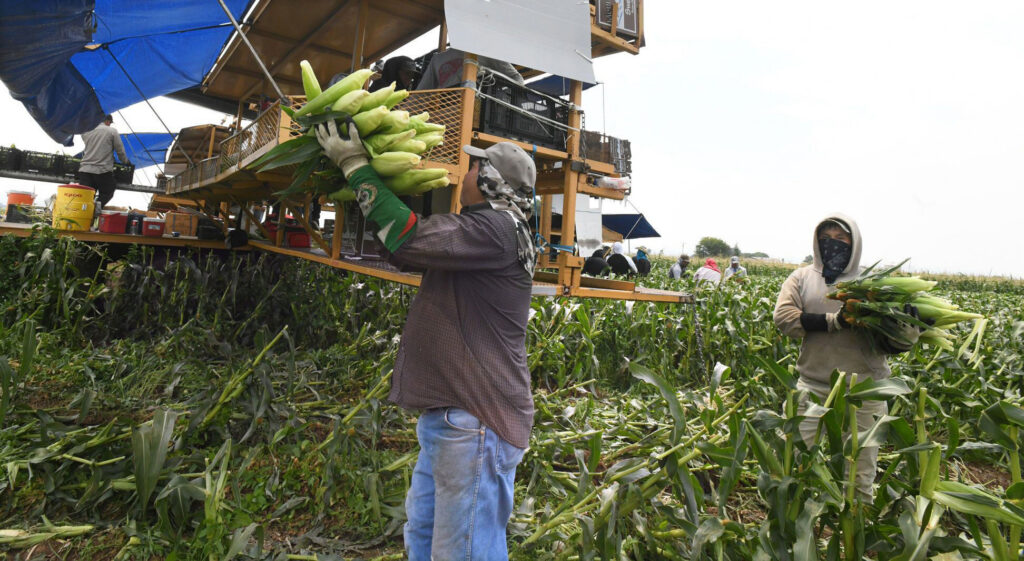
Gov. Jared Polis signed 25 bills into law Monday, bringing changes that will affect workers, families, schools, and local governments across Colorado. The new laws deal with a range of issues – from overtime rules for farmworkers to limits on...

While growth slows statewide, small-town populations in Colorado boom
Savannah Eller
savannah-eller@coloradopolitics.com
Updated 4 months ago
A proposed housing project could more than double the population of Calhan, a town of just 760 on the Eastern Plains outside Colorado Springs. For some small towns on the Front Range, it’s a familiar situation. Colorado’s overall population growth...
Governor’s wildlife commission picks face pushback ahead of Colorado Senate hearing
Marianne Goodland
marianne.goodland@coloradopolitics.com
Updated 5 months ago
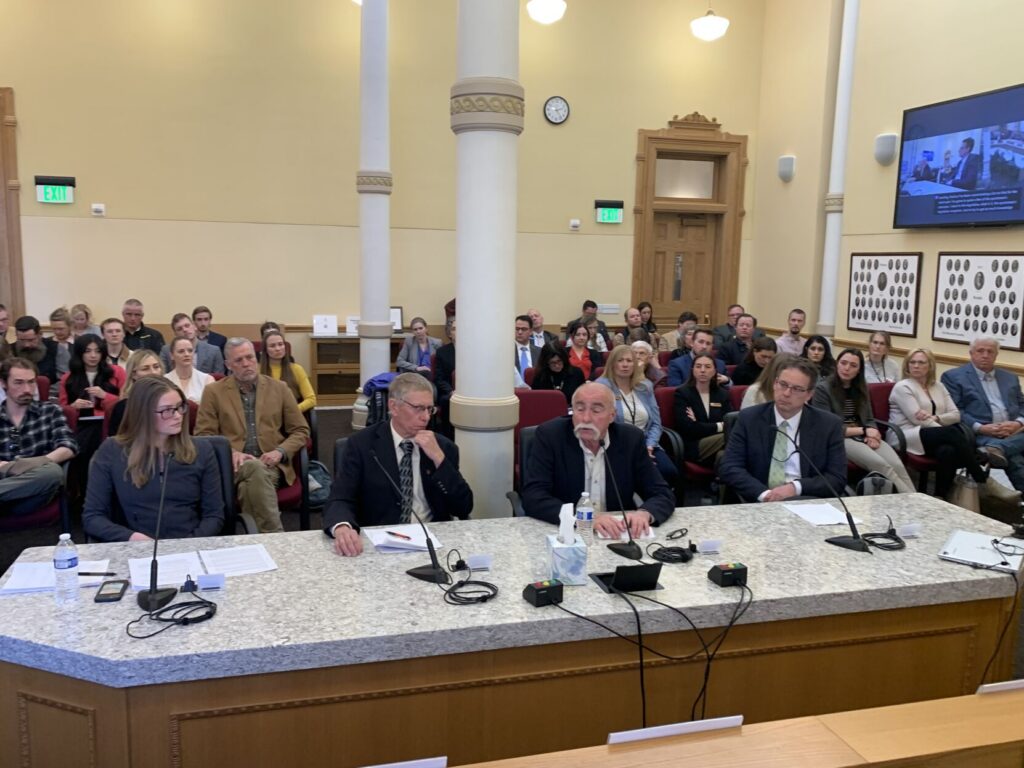
Colorado’s largest coalition of hunters, anglers, and wildlife conservation groups is urging state lawmakers to reject two of Gov. Jared Polis’ latest nominees to the Colorado Parks and Wildlife Commission, setting up a contentious confirmation hearing before the Senate Agriculture...
Cannabis overhaul introduced in Colorado Senate
Chris Osher
chris-osher@gazette.com
Updated 5 months ago
Colorado lawmakers on Wednesday introduced a measure that, if approved, would place a ballot proposal before voters this fall that contains changes backers say would improve consumer safety and overhauls how the marijuana industry is taxed. The proposed ballot initiative would fund a testing...
Colorado marijuana regulators pledge crackdown on intoxicating hemp
Christopher Osher
chris.osher@gazette.com
Updated 5 months ago
Citing potential tax avoidance, ‘serious risk to public safety,’ Marijuana Enforcement Division warns companies about swapping illegal chemically converted hemp for marijuana This article was produced for ProPublica’s Local Reporting Network in partnership with The Denver Gazette. Colorado regulators announced...
PREV
PREVIOUS

Colorado's $46.8 billion budget nears finish line
The Colorado Senate on Thursday voted largely along party lines to approve $46.8 billion in spending for the next state budget. The spending plan is bigger than what legislators originally approved for the current fiscal year’s budget, driven by increases in Medicaid costs. The proposal saw changes from a dozen amendments during debate Wednesday, but […]

Cannabis overhaul introduced in Colorado Senate
Colorado lawmakers on Wednesday introduced a measure that, if approved, would place a ballot proposal before voters this fall that contains changes backers say would improve consumer safety and overhauls how the marijuana industry is taxed. The proposed ballot initiative would fund a testing program, in which regulators would randomly buy marijuana products from dispensaries and test them for […]