

Proposal exempting some IT equipment from ‘right-to-repair’ law fails

A bill proposing an exemption to Colorado’s “right to repair” laws for “critical infrastructure” failed to pass its first committee in the House after clearing the Senate.
Senate Bill 090 would have exempted information technology equipment considered “critical infrastructure” — defined by the federal government as physical and information systems and assets essential to the functioning of the United States — from the state’s consumer right-to-repair law passed in 2024.
Federal law includes 16 categories of critical infrastructure, including transportation systems, communications and information technology, financial services, and water and wastewater systems.
“Right to repair” generally refers to the idea that consumers should have the ability to repair their own devices and appliances rather than rely on the manufacturer.
Colorado passed such a law in 2022, requiring manufacturers of electric wheelchairs to provide the parts, tools, and manuals necessary for owners and shops to repair the devices. The following year, the state passed a similar law for agricultural equipment, such as tractors, trailers, and combines.
“Colorado is a leader and continues to be a leader in right to repair law,” sponsor Sen. Marc Snyder, D-Colorado Springs, told his colleagues on the Senate floor.
According to Snyder, every other state with right-to-repair legislation similar to Colorado’s 2024 law includes an exemption for critical infrastructure. What Senate Bill 090 does that those laws don’t, however, is give the attorney general authority to determine whether to grant an exemption request.
Under the bill, the Attorney General’s Office would have been responsible for considering whether the IT equipment qualifies as critical infrastructure and whether it is sold in a retail setting or through a business-to-business or business-to-government contract.
The bill passed on a 23-13 vote in the Senate, with 11 Democrats and two Republicans opposed.
In the House State, Civic, Military and Veterans Affairs Committee, sponsor Reps. Chad Clifford, D-Greenwood Village, told members he has long supported “right to repair” legislation but that certain exemptions are necessary to mitigate security risks.
“I do not like this fight, I have not enjoyed it, but I do think that this is urgent,” he said. “I don’t think it can wait. I think it is something that we must tend to.”
Clifford said he and his cosponsor, Rep. Anthony Hartsook, R-Parker, are not trying to create loopholes for certain industries, nor are they trying to “kill” the efforts of Rep. Brianna Titone, D-Arvada, who sponsored all three of the state’s previous right-to-repair policies.
Hartsook, who worked on critical infrastructure projects at the Pentagon and U.S. Northern Command in Colorado Springs, argued that, in the wrong hands, repair instructions could easily become instructions for reverse-engineering the state’s most crucial infrastructure systems.
“If somebody can gain access and get in there, then foreign entities, adverse actors, people that want to cause harm — whether it’s to the state, to a business, or anyone else — can do that through reverse-engineering, and it’s not that hard to do,” he said. “The repair of these systems has to be done in a controlled and very tightly managed manner.”
Opponents of the measure argued the bill’s definition of critical infrastructure is too broad, opening up the possibility for a wide variety of industries to seek exemptions.
“The same router used at a water department or a power plant is the same one used at Kohl’s and Barnes & Noble,” said Jake Blough, a retired information technology repairman. “It’s the same servers. They don’t manufacture a different server or different storage system for different uses.”
Under the bill, Blough argued, the IT department at an elementary school would not be able to repair its own servers just because it happens to be the same server that runs accounting at a power plant.
“Obfuscation is not reliable security,” said Alicia Seidle of the Open Source Hardware Association. “It is a false pretense to claim that repair tools are a security risk.”
Committee members voted, 7-4, against the bill.

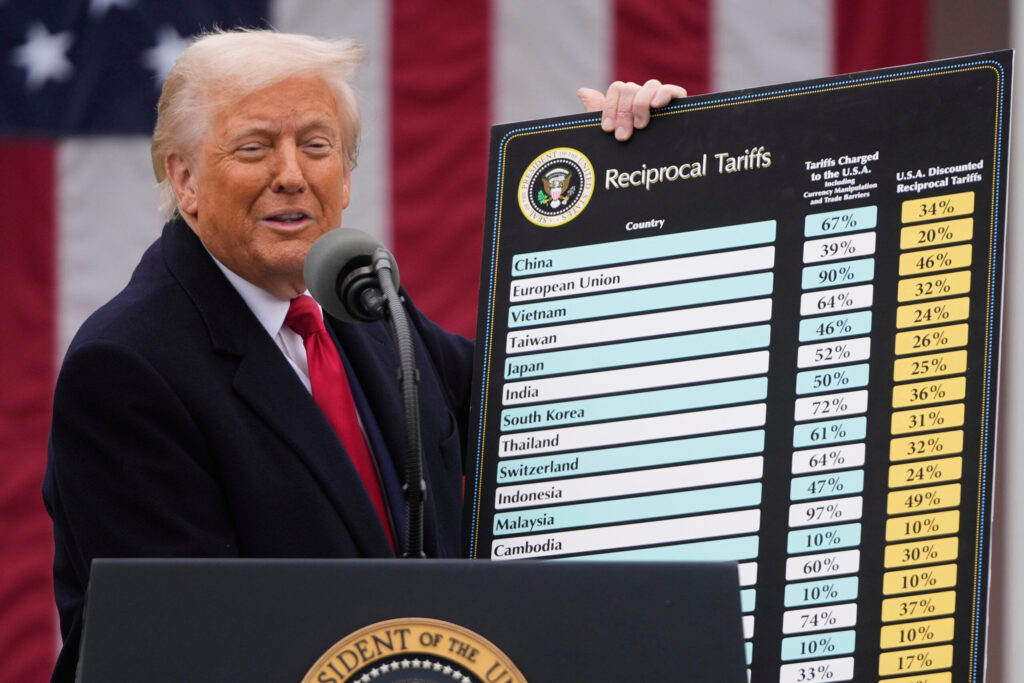
Colorado joins 2 lawsuits against Trump administration over TANF, tariffs authority
Marissa Ventrelli
marissa.ventrelli@coloradopolitics.com
Updated 15 hours ago
Colorado has joined a coalition of states in filing two new lawsuits against the Trump administration. The first lawsuit alleges the Trump administration’s move to expand the U.S. health department’s oversight of the Temporary Assistance for Needy Families would illegally...

Colorado farmers, ranchers wrestle with hurdles amid extreme drought conditions
Shen Wu Tan (Special to The Denver Gazette)
shen-wu-tan@gazette.com
Updated 23 hours ago
Some producers take drastic steps to adapt to dry climate, record-low snowpack This is the first time that Jim Magnuson, who operates a family farm in the rural town of Eaton, can ever recall planting only 75% of his acreage. ...

Federal biotech commission examines Colorado’s role in critical minerals production
Scott Weiser
scott.weiser@gazette.com
Updated 4 days ago
China’s dominance over critical mineral supplies has left U.S. manufacturers vulnerable. Colorado’s biotech and research community is working to ease that dependence. Leaders from the National Security Commission on Emerging Biotechnology met last week at the Colorado School of Mines...
Douglas County schools to consolidate administrative offices into $29M headquarters to cut costs
Nicholas Fogleman
nicholas.fogleman@denvergazette.com
Updated 4 days ago
The Douglas County School Board is moving forward with a $29 million plan to consolidate district administrative operations into a new headquarters. It’s part of an effort to reduce annual costs as the district faces ongoing budget pressures. In June,...

Veo scooter clutter, sidewalk riders frustrate Denverites
Deborah Grigsby
deborah.smith@denvergazette.com
Updated 4 days ago
Denver resident Mike Miller was on a downtown sidewalk recently when a Veo scooter rider traveling at full speed passed him as the scooter blasted a “do not ride on sidewalks” warning. In a letter to Veo Policy and Partnerships...

Colorado’s 72-hour social media warrant law takes effect Aug. 12
Marissa Ventrelli
marissa.ventrelli@coloradopolitics.com
Updated 5 days ago
A law requiring social media platforms to respond to search warrants within 72 hours goes into effect on Aug. 12. Senate Bill 011 also requires platforms to create a staffed hotline for Colorado law enforcement agencies to contact regarding pending...
El Paso County rejects multi-family zoning request near Monument Academy
Savannah Eller
savannah-eller@coloradopolitics.com
Updated 6 days ago
The El Paso County Board of Commissioners narrowly rejected a developer’s bid to convert land from low- to high-density residential zoning. The request, made by MA Infrastructure, LLC, would have allowed 12 units per acre on half of a 14-acre...

Denver City Council sends Xcel franchise deal to voters
Deborah Grigsby
deborah.smith@denvergazette.com
Updated 7 days ago
This November, Denver voters will decide whether to renew the city’s longstanding franchise agreement with Xcel Energy. Members of the Denver City Council approved on Monday sending a proposed 20-year franchise agreement with Xcel that would deliver more than $180...

Chamber names its Top 25 Most Powerful Women in Business | NONPROFIT REGISTER
Joanne Davidson Special to Colorado Politics
joanne-davidson-special-to-colorado-politics@coloradopolitics.com
Updated 3 days ago
COLORADO WOMEN’S CHAMBER OF COMMERCE Denver News: Marielena DeSanctis, chancellor of the Colorado Community College System; Terri Jackson, executive director and co-founder of the African American Trade Association and Emily Trujillo, chief operating officer at HCA HealthONE Centennial, are among the 2026 Top 25 Most Powerful Women...

Colorado produce not tied to nationwide cyclospora outbreak, agriculture officials say
Marissa Ventrelli
marissa.ventrelli@coloradopolitics.com
Updated 1 week ago
There is no indication that the recent outbreak of cyclospora, a fecal parasite that has contaminated food and water across nearly every state, can be linked to produce grown in Colorado, according to the state’s Department of Agriculture. “Colorado growers...
PREV
PREVIOUS

Don’t upend Colorado’s ‘healthy balance’ on stream access | PODIUM
By Ashley House “The horizon is a perfect line between sky and water.” I heard this line of dialogue waft through my parents’ living room recently as they tuned into one of the newest Taylor Sheridan TV dramas, “The Madison.” As I lingered to admire the cinematographic qualities of the show (shot within the Madison River […]

Union presses Douglas County School District to negotiate first contract in 13 years
A Douglas County teachers’ union is urging the Douglas County School District to begin negotiations for a collective bargaining agreement after going for more than 13 years without one. The Douglas County Federation of Teachers (DCF) asked the Douglas County School District Board of Education to pass a resolution recognizing the union as the bargaining […]