

Flat or graduated income tax? Colorado groups push dueling measures for November election
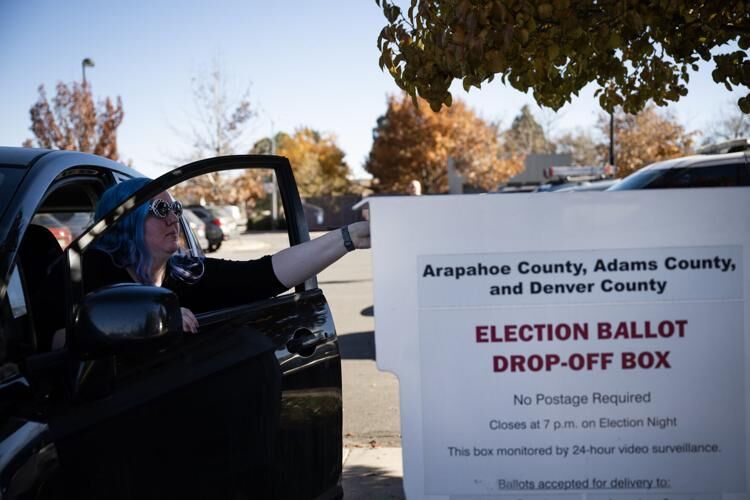
Colorado voters could face two opposing income-tax measures on the November ballot, with the dueling campaigns seeking to advance proposals that would take the state in sharply different fiscal directions.
One initiative seeks to replace Colorado’s flat income tax with a graduated system, while the other aims to lock in the current rate.
Both measures — which are still gathering signatures — are part of a tug and pull in Colorado between opposing political forces, one side of which has long sought to raise more revenue, arguing what the state collects is insufficient to pay for services and programs.
The other side counters that a flat tax is fair to everyone, while producing sufficient revenue for state spending and what policymakers need is fiscal discipline.
Proposal increases taxes to generate billions in new revenue
Initiative No. 195, backed by the Denver-based think tank Bell Policy Center and a coalition known as Protect Colorado’s Future, would establish a graduated income tax, wherein individuals and businesses would be taxed differently based on their earnings.
For example, those who make over $1 million a year would see an increase from the current flat income tax rate of 4.4% to 8.41%, while those earning under $25,000 would see a reduction to 3.71%.
The measure would result in lower income tax for 97% of Colorado residents and 95% of businesses, insisted the Bell Policy Center.
Critics said the measure is a tax hike to the tune of billions of dollars, with the majority seeing a tax cut of only a few hundred dollars, while higher-income earners would pay the state government tens of thousands more.
The federal government uses a graduated income tax rate, as do several states, including Minnesota, Wisconsin, California and Alabama.
Initiative 195 has received support from several Democratic leaders, including State Treasurer Dave Young, who previously served on the legislature’s Joint Budget Committee.
“Our current tax structure prevents Coloradans from becoming their best,” Young said at a March rally.
The Bell Policy Center did not respond to Colorado Politics’ request for an update on its signature-gathering efforts. On its website, the group framed the battle as a struggle between the wealthy and ordinary residents.
“For more than three decades, an upside-down tax code has hurt Colorado’s schools, health care, childcare and the environment,” Chris deGruy Kennedy, president and CEO of the Bell Policy Center, said in a news release last year. “We’ve made the wealthy even wealthier while everyone else struggles to keep up.”
Kathy White, the executive director at Colorado Fiscal Institute, echoed that sentiment in the same statement, arguing that Colorado’s working families “shouldn’t have to pick up the tab so the wealthiest get a $71,000-a-year gift from Congress — especially when TABOR has already tied our hands for decades.”
Supporters said that a graduated structure makes sense, with “98% of us” receiving a tax cut, and the “folks doing really well chip in a fair share” to pay for state priorities.
Countermeasure locks in place flat tax
Initiative No. 232, backed by the think tank Advance Colorado as a counter to the Bell Policy Center’s proposal, would establish a statutory income tax maximum of 4.4%, which has been the state’s flat income tax rate since 2022.
Colorado is one of 15 states with a flat income tax rate.
Neither measure has secured enough petition signatures to make the ballot yet — though Advance Colorado executive director Michael Fields told Colorado Politics he expects his proposal to reach the threshold in the coming weeks.
Fields said that if both initiatives are approved, the one with the higher vote total would take effect. That means a victory for Initiative 195 would move Colorado to a graduated income tax system, while a win for Initiative 232 would allow income tax cuts but prohibit increases.
Initiative 195 ballot measure is anticipated to bring in nearly $2 billion in additional revenue to the state, which would be used for K-12 education, health care and early child care and education.
However, Fields argued the costs to the state could be much greater than the projected revenue.
“We’re going to chase revenue out of the state,” he said. “If you go and double taxes for businesses or individuals that are higher income earners, they’re going to leave the state and go somewhere else and we’re seeing that in other states that have decided to do this recently.”
He added, “My argument would be, if you pass this, you’re going to have less revenue, not more.”
Fields also argued that Initiative 195 is written ambiguously and could produce what he described as unintended consequences. Late last year, the state’s Title Board ruled that an earlier version of the measure violated the single-subject rule because it contained multiple subjects that weren’t clearly explained. Although a revised version ultimately qualified for the ballot, Fields maintained it could still be misinterpreted.
Jake Fogleman of the Independence Institute, which has persuaded voters to reduce Colorado’s income tax rate, said a flat tax offers offers several advantage, notably making tax filing “simpler and more predictable.”
A single tax rate, he wrote, also “prevents schemes to impose concentrated costs on small groups of residents.”
“Thus,” he said, “the flat tax acts as a powerful political disincentive against policymakers making routine requests for higher taxes.”


Fashion, food and fun combine to make arc Thrift Store’s annual fundraiser a success | NONPROFIT REGISTER
Joanne Davidson Special to Colorado Politics
joanne-davidson-special-to-colorado-politics@coloradopolitics.com
Updated 10 hours ago
arc THRIFT STORES Denver News: “Let’s Celebrate” was the theme for arc Thrift Stores’ annual fundraiser, and it’s not a stretch to say that’s exactly what everyone did at this Sept. 3 gathering held at Denver Botanic Gardens. The crowd that filled the gigantic...

With its water source dry, a southeast Colorado town’s clock is ticking
Savannah Eller
savannah-eller@coloradopolitics.com
Updated 2 days ago
The Cucharas is not a mighty river, but the people of La Veta knew they had a problem brewing when it ran dry at the beginning of June. “We’re getting by,” said La Veta Mayor Doug Brgoch. “It’s not great.”...

Ikon Pass company Alterra to move into former Denver Post building, create downtown ‘outdoor hub’
Bernadette Berdychowski
bernadette.berdychowski@denvergazette.com
Updated 6 days ago
What was once the home of two of Colorado’s longest-running daily newspapers could soon become a central location for the state’s ski resort and outdoor companies, city and state leaders said Thursday. Alterra Mountain Co. is moving its headquarters to...
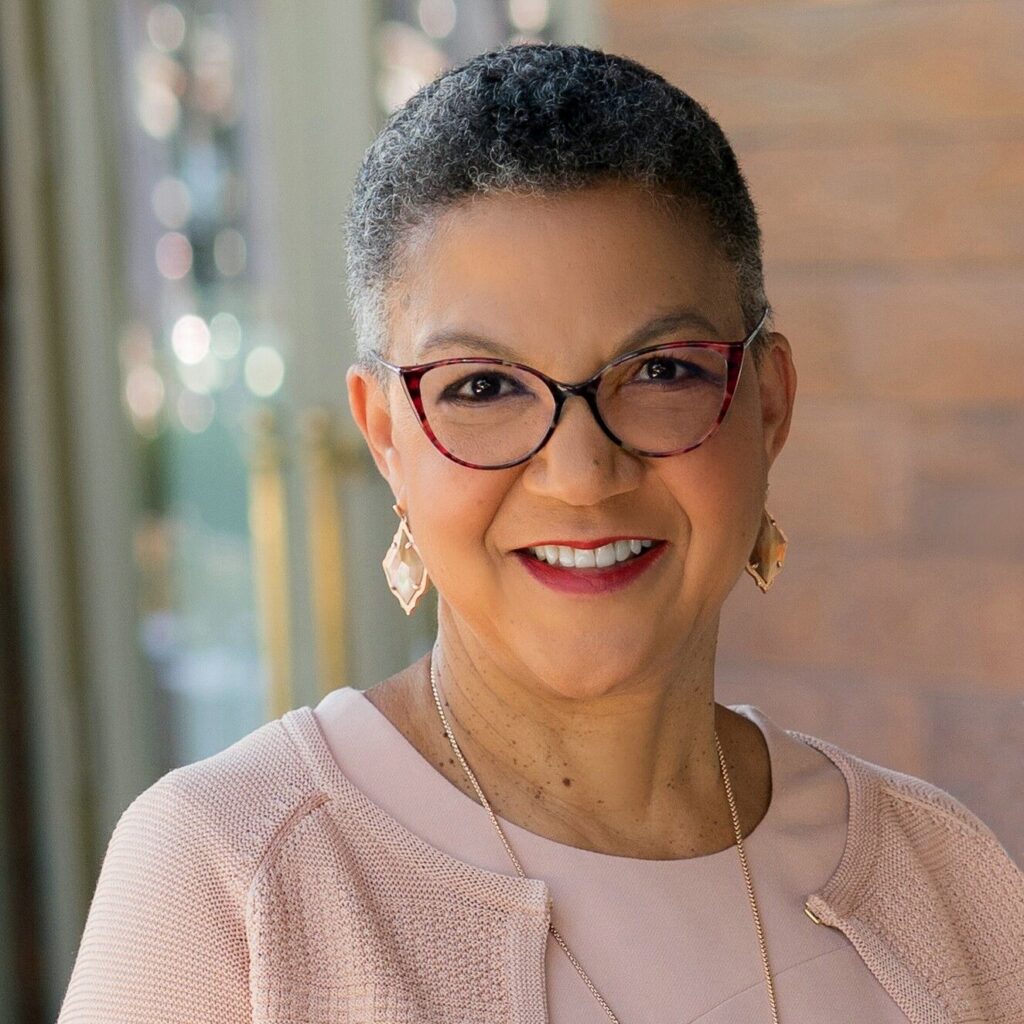
‘Until Every Woman Thrives’ campaign receives a $10 million investment | NONPROFIT REGISTER
Joanne Davidson Special to Colorado Politics
joanne-davidson-special-to-colorado-politics@coloradopolitics.com
Updated 1 week ago
WOMEN’S FOUNDATION OF COLORADO COLORADO HEALTH FOUNDATION Denver News: A $10 million gift from the Colorado Health Foundation will enhance “Until Every Woman Thrives,” a comprehensive campaign launched by the Women’s Foundation of Colorado in 2024 to transform lives, deepen relationships and amplify the impact of various...

Voices of Our Youth Gala celebrated the impact a mentor can have | NONPROFIT REGISTER
Joanne Davidson Special to Colorado Politics
joanne-davidson-special-to-colorado-politics@coloradopolitics.com
Updated 5 days ago
BIG BROTHERS BIG SISTERS OF COLORADO Denver News: When chief executive officer Elycia Cook extended an invitation to the 2026 Big Little Gala, Voices of Our Youth, it came with a note advising that it would be an evening that was “Very...

Amazon buys 70 acres in Aurora
Bernadette Berdychowski
bernadette.berdychowski@denvergazette.com
Updated 1 week ago
Amazon purchased 70 acres of land in Aurora with plans to build a distribution center, according to city and county records. The e-commerce giant bought a parcel at 825 N. Lisbon St. from a company tied to Northpoint Development for...

Colorado’s EV charging map nearly complete, state says
Scott Weiser
scott.weiser@gazette.com
Updated 4 days ago
Gov. Jared Polis and the Colorado Department of Transportation released a statement calling the state’s public fast-charging network nearly built out. The Aug. 27 news release reports there are now 486 DC fast-charging locations and 83% of the state highway...

PUC adds weekly comment after killing private talks
Scott Weiser
scott.weiser@gazette.com
Updated 2 weeks ago
The Colorado Public Utilities Commission will take public comment at the start of every commissioner’s weekly meeting beginning Sept. 9 as part of its new transparency mandate, the commission announced, expanding a slot previously limited to the second Wednesday of...

Healthcare Freefall: AI arms race hits rural healthcare as hospitals fight to keep up
Thelma Grimes
thelma.grimes@coloradopolitics.com
Updated 2 weeks ago
Editor’s Note: Colorado’s healthcare system is entering a period of accelerating instability — a “tsunami,” as multiple leaders describe it — driven by collapsing hospital finances, shrinking Medicaid reimbursements, disappearing services and a political fight over who is responsible for...
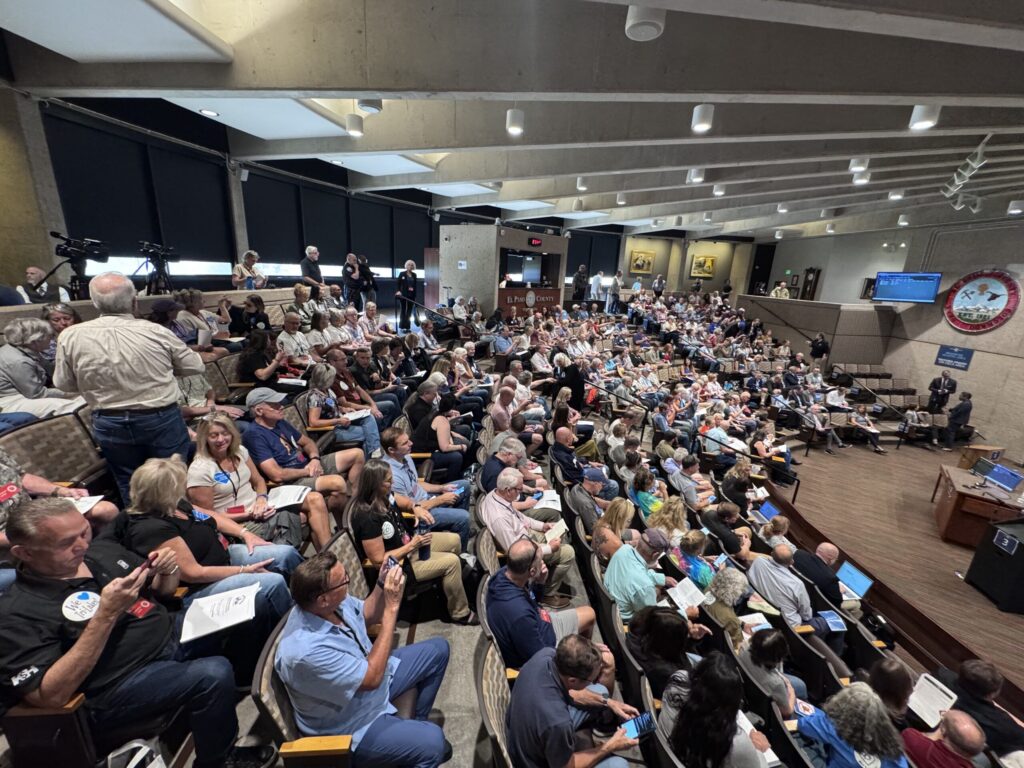
El Paso County upholds Buc-ee’s zoning appeal, clearing way for administrative approval
Savannah Eller
savannah-eller@coloradopolitics.com
Updated 2 weeks ago
A packed, daylong meeting on Thursday resulted in a win for the Texas travel center chain Buc-ee’s, with El Paso County commissioners voting 4-1 to approve the developer’s zoning appeal. “I think the burden of proof has been met here,”...
PREV
PREVIOUS

Primary preview: Regina English, Chauncy Johnson face off in House District 17
State Rep. Regina English is facing a young, ambitious Democratic activist in the primary election for House District 17. The choice between English and Chauncy Johnson in District 17, representing the southern portion of Colorado Springs from the east side of downtown to the Colorado Springs Airport, is the only competitive Democratic legislative primary in […]
Colorado Supreme Court upholds police search of car based on arm movements
The Colorado Supreme Court decided last week that Denver officers’ search of a vehicle was constitutional, based on their perception of the occupants’ arm movements that a trial judge found to not be credible. Officers Keegan Grubb and Richard Eberharter were patrolling West Denver one night in February 2025. Their purpose was to make “as […]