

Colorado Supreme Court upholds police search of car based on arm movements
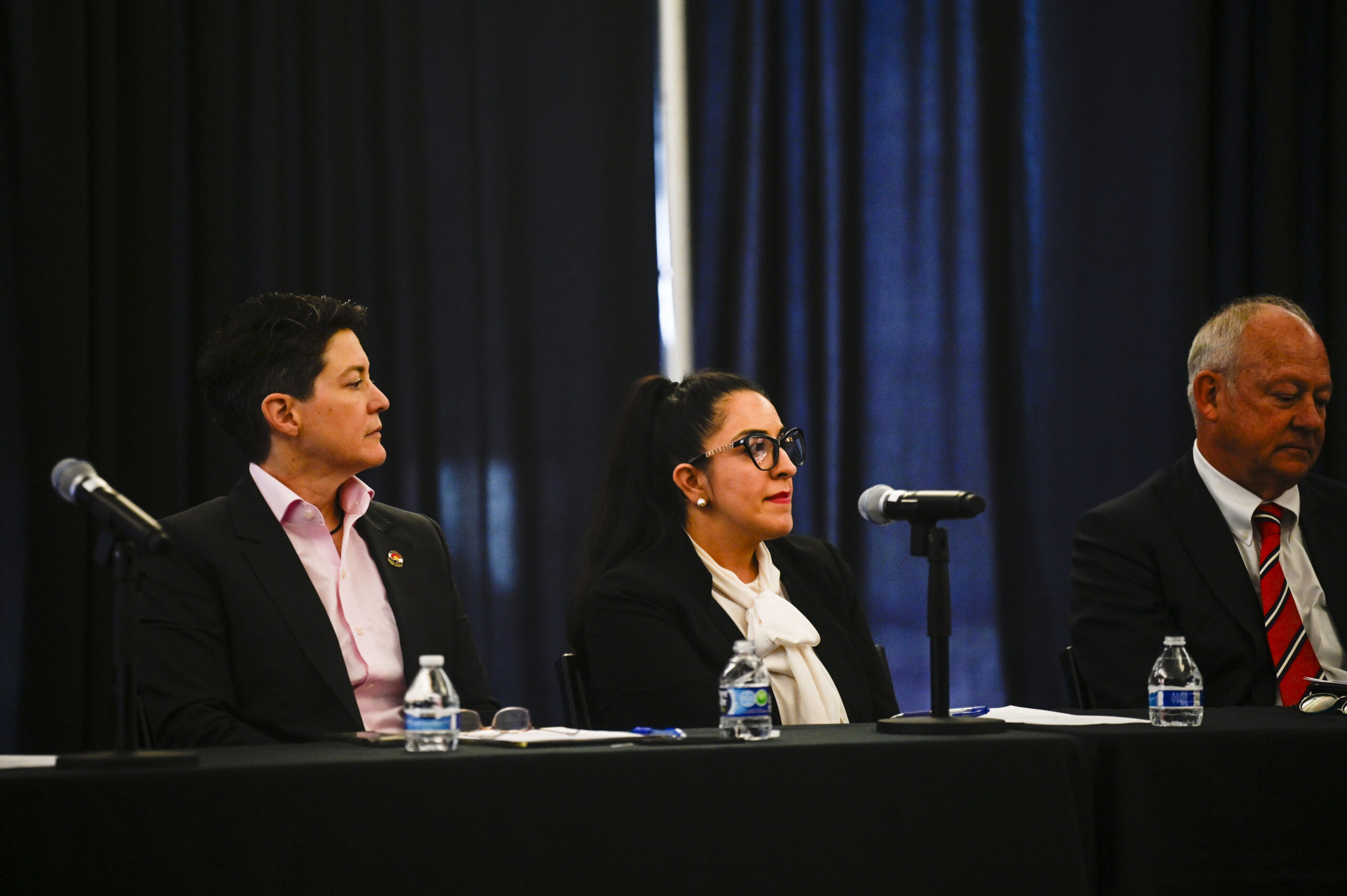
The Colorado Supreme Court decided last week that Denver officers’ search of a vehicle was constitutional, based on their perception of the occupants’ arm movements that a trial judge found to not be credible.
Officers Keegan Grubb and Richard Eberharter were patrolling West Denver one night in February 2025. Their purpose was to make “as many contacts in that area as we can” to demonstrate police presence. They spotted a Toyota that was missing a front license plate and pulled it over.
As the officers did so, they allegedly saw two people inside making unusual movements with their arms. The occupants were “moving stuff” and “making a lot of furtive movements,” the officers said at the time. One of them said they would “get (the occupants) out” of the car, and they called for backup.
Grubb and Eberharter walked up to the Toyota and informed the driver that she lacked a front license plate. The driver and her passenger, Troy J. Baker, cooperated, and the officers saw nothing suspicious in the Toyota.
Eberharter went to the patrol car and learned that Baker had recently been arrested for possession of a weapon by a prior offender. Around that time, additional police cars arrived, and the officers ordered the occupants out of the Toyota.
An officer patted down Baker for weapons, but he had none. Eberharter then conducted a “protective sweep” of the passenger compartment and found a gun under the passenger’s seat. After placing Baker under arrest, Eberharter then conducted a “probable cause search” of the car and found narcotics.
Prosecutors charged Baker with drug felonies and weapons possession.
The defense moved to exclude the evidence from trial, arguing officers violated the constitutional prohibition on unreasonable searches and seizures because they lacked the required belief that Baker was armed and dangerous at the time of the protective sweep.
After hearing testimony and reviewing the video footage, District Court Judge Karen L. Brody agreed with the defense.
“Neither officer credibly established what he saw that gave rise to the alleged belief that they needed to remove the occupants and conduct a warrantless search or protective sweep of the vehicle,” she wrote in November.
Brody elaborated that Grubb and Eberharter decided to remove the occupants of the Toyota after observing “abnormal” arm movements. At the time of the protective sweep, the officers knew that Baker had been arrested, were unaware of any convictions, and did not find any outstanding warrants for him. They had “nothing left to investigate,” but detained Baker anyway.
“In the first instance, the Court finds the officers’ testimony about seeing ‘furtive movements,’ multiple movements, ‘abnormal’ movements, and throwing items … lacking in credibility and so vague that the testimony failed to provide an articulable or objectively reasonable belief that the passengers in the car had weapons,” she wrote. “The Court also finds implausible that both officers saw the occupants throwing or moving things from the front of the car to the back seat or from the back seat to the front of the car.”
The district attorney’s office exercised its right to immediately appeal to the Supreme Court, where it argued that Brody had tried to “explain away multiple clear, objective signs of danger” the officers faced.
“The point is that the officers had no idea what was being moved inside the Toyota — and occupants don’t normally move things around their car as they’re being pulled over by police,” wrote Senior Deputy District Attorney Jeff M. Van der Veer. “That created a safety concern — and police shouldn’t be expected to cross their fingers, write a ticket, and deliver it with the hope that those suspicious movements aren’t the harbinger of dangerous (or deadly) behavior.”
The defense countered that after backup officers arrived and removed the occupants from the Toyota, it was unreasonable to suspect a threat emanating from the car.
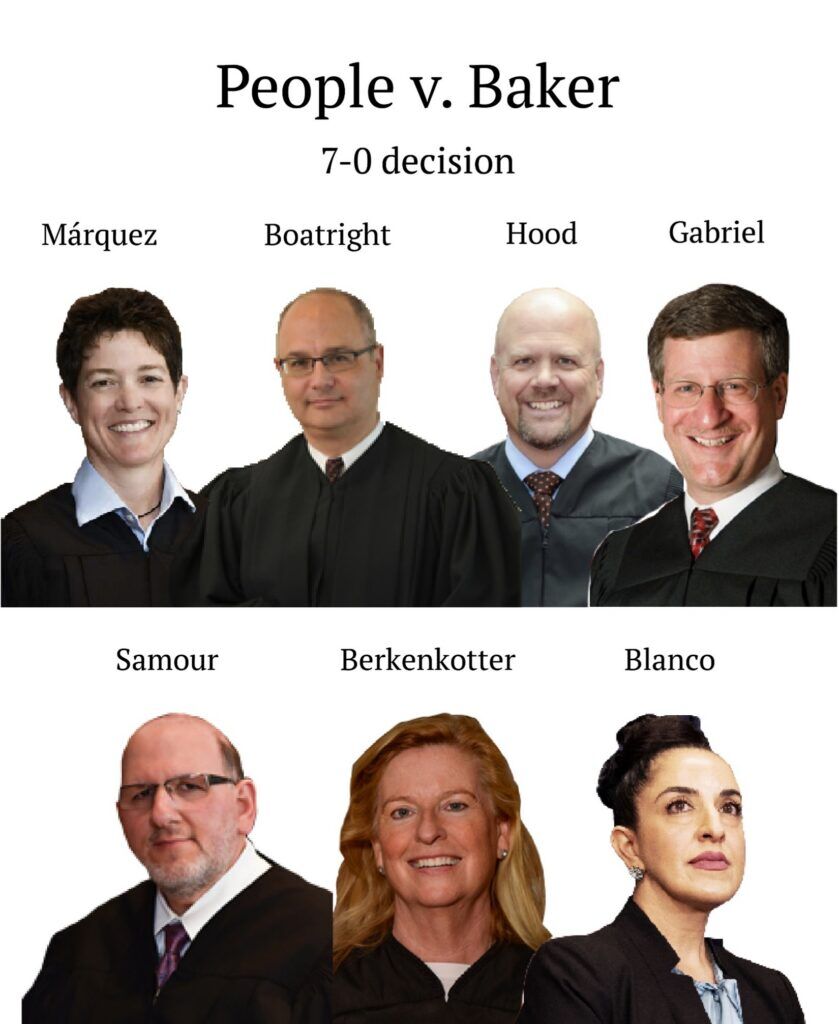
In a June 1 opinion, the Supreme Court sided with the prosecution.
“While we agree that an officer may not rely on vague or ambiguous movements to justify a protective sweep, officers should not have to wait for an unmistakably dangerous act, such as drawing a firearm, before taking steps to ensure their safety,” wrote Justice Susan Blanco.
She added that the combination of the arm movements, Baker’s prior arrest for weapons possession, and the “high-crime area” where the stop occurred was sufficient to justify a weapons sweep of the car.
Once police found the gun, they then had grounds to search the car for other evidence.
“(A)lthough we agree that the initial purpose of the stop was to investigate the license plate infraction, once officers observed furtive movements and learned of Baker’s recent (weapons) arrest,” wrote Blanco, “officer safety concerns arose, and the nature and purpose of the stop changed.”
The case is People v. Baker.

Federal judge green-lights civil trial against ex-Fort Collins DUI officer
Michael Karlik
michael.karlik@coloradopolitics.com
Updated 2 days ago
A federal judge ruled on Thursday that Fort Collins’ former “DUI officer” will face a civil trial for allegedly investigating a motorist for impaired driving without any reasonable suspicion to do so. In recent years, several people arrested by Officer...

Colorado Supreme Court suspends Mesa County judge pending misconduct investigation
Michael Karlik
michael.karlik@coloradopolitics.com
Updated 1 day ago
The Colorado Supreme Court suspended Mesa County Court Judge Michael J. Grattan on Thursday amid a misconduct investigation. The court’s Sept. 10 order gave Grattan 21 days to explain why his paid suspension should not continue through the end of...
Colorado Supreme Court changes course, dismisses case about special district bonds
Michael Karlik
michael.karlik@coloradopolitics.com
Updated 1 day ago
The Colorado Supreme Court declined on Friday to decide a dispute between a large-scale Commerce City development and the various districts financing it, after initially showing interest in the ongoing case. Colorado has roughly 2,800 special districts, which are local...
10th Circuit tosses GEO Group’s pretrial appeal in human trafficking lawsuit
Michael Karlik
michael.karlik@coloradopolitics.com
Updated 3 days ago
The Denver-based federal appeals court dismissed an attempt by The GEO Group on Wednesday to appeal a trial judge’s non-existent decision two months before the company is scheduled to face a civil trial over alleged trafficking violations at the Aurora...
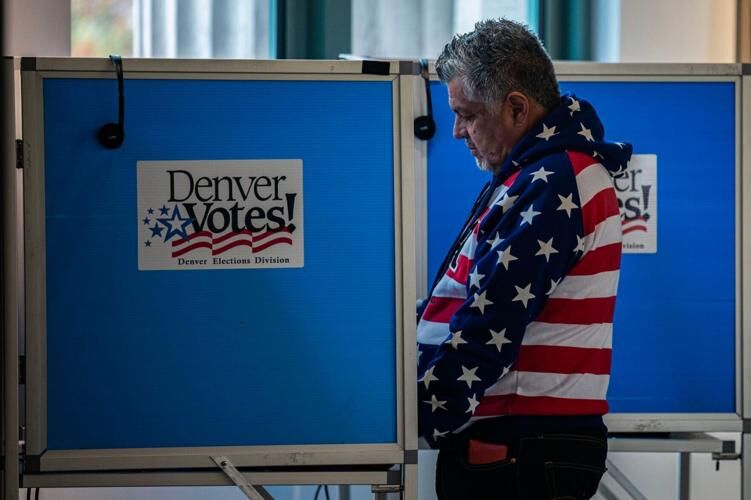
Denver sues Trump to block armed ICE agents from polling sites
Deborah Grigsby
deborah.smith@denvergazette.com
Updated 3 days ago
The city of Denver, along with several groups, sued the Trump administration Thursday, seeking to block U.S. Immigration and Customs Enforcement officers who are armed from polling sites during the upcoming midterm elections. In fact, there are no official orders...
Federal judge takes no action against ICE in Colorado after hearing about mistakes, not ‘blatant violations’
Michael Karlik
michael.karlik@coloradopolitics.com
Updated 22 hours ago
A federal judge declined to take action against U.S. Immigration and Customs Enforcement on Thursday after hearing that a pattern of alleged lawbreaking amounted to mistakes and a misunderstanding of the government’s position in court. For nearly a year, Colorado’s...
Colorado doctors, dentists challenge state law on gender‑transition services in new federal lawsuit
Marissa Ventrelli
marissa.ventrelli@coloradopolitics.com
Updated 19 hours ago
A group of Christian doctors and dentists has filed a federal lawsuit challenging a Colorado law they say requires them to provide gender‑transition services that conflict with their religious and ethical beliefs. The lawsuit, filed by the Christian Medical and...
Federal judge directs plaintiff to revise complaint alleging Denver officers’ constitutional violations
Michael Karlik
michael.karlik@coloradopolitics.com
Updated 22 hours ago
A federal judge directed a plaintiff to revise his allegations on Wednesday to more precisely state what two Denver officers and the city itself allegedly did to violate his constitutional rights by facilitating his prosecution for murder until prosecutors dropped...

Lawsuit challenges Douglas County commissioners’ ballot actions
Nicholas Fogleman
nicholas.fogleman@denvergazette.com
Updated 3 days ago
A new lawsuit against Douglas County commissioners seeks to invalidate the board’s intervention in efforts to expand the commission from three members to five and restore the original ballot language approved by more than 20,000 petition signers. The suit marks...
Federal judge explores new sanctions against ex-Colorado judicial discipline director
Michael Karlik
michael.karlik@coloradopolitics.com
Updated 1 day ago
A federal judge on Wednesday directed Colorado’s former judicial discipline director, for the third time this year, to explain why she should not sanction him for his latest conduct in his litigation against the state’s judiciary. Christopher S.P. Gregory, who served...
PREV
PREVIOUS
Flat or graduated income tax? Colorado groups push dueling measures for November election
Colorado voters could face two opposing income-tax measures on the November ballot, with the dueling campaigns seeking to advance proposals that would take the state in sharply different fiscal directions. One initiative seeks to replace Colorado’s flat income tax with a graduated system, while the other aims to lock in the current rate. Both measures […]

Cherry Creek hires search firm for new superintendent
The Cherry Creek School District board earlier this week approved a nearly $30,000 contract with McPherson & Jacobson to conduct a national superintendent search. The measure was unanimously passed on Monday without discussion. Founded in 1991, McPherson & Jacobson is an executive recruitment firm for public organizations and nonprofits. McPherson & Jacobson was one of two […]