10th Circuit finds no fair housing violation by Littleton landlord for worker’s alleged rape of tenant
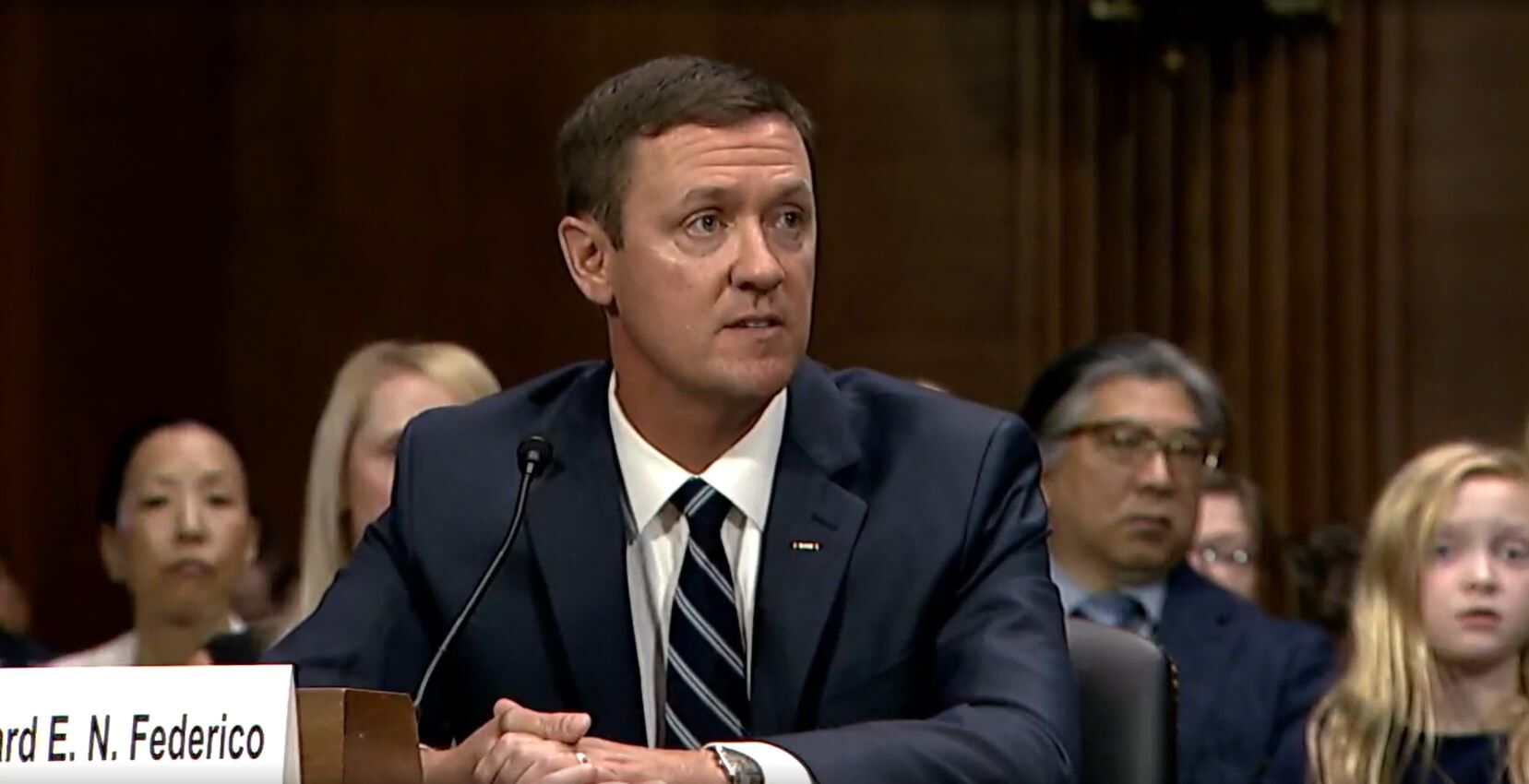
The Denver-based federal appeals court concluded on Monday that Littleton’s housing authority could not be held liable for a maintenance worker’s alleged rape of a tenant, as the worker’s employment did not provide any special access to the victim.
A three-judge panel of the U.S. Court of Appeals for the 10th Circuit acknowledged that neither the U.S. Supreme Court nor any other federal appeals court has decided when employers may be automatically held liable under the Fair Housing Act for their employees’ actions. Relying heavily on state court decisions that warned against employer liability in all circumstances, the panel determined two conditions could trigger liability: an employee’s use of their job-related authority or their job-related access to harm someone.
“The key to this special privilege rule is that the privilege or access must be ‘unique’ and not available to the public writ large,” wrote Judge Richard E.N. Federico in the July 27 opinion. “This means the mere presence of some sort of authority or special privilege is not enough on its own to trigger the exception. The employee needs to actually use and be aided by that authority or privilege.”
Case: Trujillo v. Amity Plaza, LLC
Decided: July 27, 2026
Jurisdiction: U.S. District Court for Colorado
Ruling: 3-0
Judges: Richard E.N. Federico (author)
Allison H. Eid
David M. Ebel
Katherine Trujillo lived at Amity Plaza, which the city of Littleton owned and operated through its housing authority. Frank Martinez was a maintenance worker Trujillo first encountered in March 2021 when he fixed her sink. The two had additional contacts on personal issues for the next two months. Trujillo alleged that on May 3, 2021, Martinez entered her unlocked apartment and raped her.
Although Colorado Politics does not ordinarily name alleged victims of sexual assault, Trujillo sued under her full name and did not seek anonymity in court. Martinez, who police did not charge, testified in his deposition that he had a consensual sexual encounter with Trujillo.
Trujillo alleged the housing authority and Martinez were liable for unlawful sexual discrimination under the Fair Housing Act. Under federal regulations, landlords can be liable directly for failing to address discriminatory practices that they know or should know about. They can also be vicariously liable for an employee’s actions that fall within the scope of employment, regardless of the employer’s knowledge.
The U.S. Department of Justice initially submitted an unusual statement in support of Trujillo’s lawsuit, arguing that the housing authority defendants would be vicariously liable for Martinez’s actions if Trujillo’s allegations were true, based on his status as an agent of his employer.
After the parties exchanged evidence, then-U.S. District Court Senior Judge Christine M. Arguello sided with the housing authority defendants. She concluded they could not be directly liable for any discrimination, as Amity Plaza did not know about any improper behavior Martinez exhibited toward Trujillo until she reported a sexual assault.
In evaluating whether the defendants were vicariously liable for Martinez’s alleged rape, Arguello analyzed the “aided-by-agency” theory. The Supreme Court recognized in a 1998 decision that an employer can be automatically liable for an employee’s wrongful acts, but there must be “something more than the employment relation itself.”
“On May 3, 2021, Mr. Martinez did not have a work order for her apartment, he did not use a work order as a pretext to visit her or gain access to her apartment, and he did not use his work keys to enter her apartment, because Ms. Trujillo left the door unlocked,” Arguello wrote. “There is no evidence that Ms. Trujillo felt pressured to engage with Mr. Martinez on May 3, 2021, because he was working that day and wearing a uniform.”
Therefore, she concluded there was “no evidence that Mr. Martinez’s contact with Ms. Trujillo on May 3, 2021, was under the guise of his employment, directed by the Housing Defendants, or aided by the existence of his employment with Housing Defendants.”
Shortly afterward, Arguello issued a second order acknowledging she mistakenly resolved the case in Martinez’s favor, when he had not moved to end the litigation and she had not given Trujillo a chance to argue against it. But Arguello noted that her reasoning inevitably led to the conclusion that Martinez had not violated the Fair Housing Act, either.
Trujillo appealed, arguing Arguello had taken too narrow a view of Martinez’s employment relationship and the access it provided to his victim.
“Anybody had access to this apartment. She had it unlocked,” said Senior Judge David M. Ebel during oral arguments to the 10th Circuit panel. “So, I just don’t see any nexus to his work status and the access that led to the rape.”
“Here, it would seem to me that access to the apartment is key,” added Federico. “If we’re gonna draw a line on access, it makes me a little uncomfortable to say whether the door is unlocked or not. But how can we draw a line as to where access then facilitates this conduct?”
Judge Allison H. Eid asked the housing authority’s lawyer whether the totality of circumstances suggested the Supreme Court’s standard of “something more” was satisfied.
“I think they’re arguing you gave the person a master key, a uniform, and superior access to whatever. Isn’t that enough?” she wondered.
Ultimately, the panel relied on a collection of state supreme court decisions to conclude that an employer’s vicarious liability for an employee’s actions hinges on an employee’s “significant authority” over their victim or their “special privilege or access” to the victim.
“As a maintenance worker, Martinez did not control Trujillo’s lease or rent. Nor does the record suggest that Martinez could have coerced Trujillo by withholding maintenance services,” wrote Federico. “Martinez did possess a special privilege and access not available to the public at large: a master key. The problem for Trujillo’s claims is that there is no evidence Martinez used that master key the day he allegedly raped Trujillo.”
Because neither condition applied, the panel agreed the housing authority defendants were not liable for Martinez’s alleged actions.
The case is Trujillo v. Amity Plaza, LLC.

Denver detox center did not violate man’s rights with 10-hour hold, 10th Circuit says
Michael Karlik
michael.karlik@coloradopolitics.com
Updated 23 hours ago
The Colorado-based federal appeals court concluded on Tuesday that Denver’s detoxification facility did not violate a man’s rights by holding him against his will for 10 hours until his blood alcohol content was projected to reach zero. Unusually, Brian Garrett’s...

Federal judge clarifies ex-GOP treasurer candidate’s burden to prove defamation claims
Michael Karlik
michael.karlik@coloradopolitics.com
Updated 23 hours ago
A federal judge clarified last week that businessman and former Republican statewide candidate Brian Watson will need to surmount a higher hurdle in proving his claim that a party guest’s alleged description of him as a “criminal” amounted to defamation....
Colorado board permits state to appeal injunction against arthritis drug price cap
Marissa Ventrelli
marissa.ventrelli@coloradopolitics.com
Updated 1 day ago
A Colorado board voted Friday to allow the Attorney General’s Office to fight an injunction against a price cap on a drug that treats arthritis. A U.S. district court judge had granted the company Amgen a preliminary injunction, temporarily blocking...

Federal judge rejects constitutional claims, ‘expressions of hatred’ by Club Q defendant
Michael Karlik
michael.karlik@coloradopolitics.com
Updated 2 days ago
A federal judge rejected a defendant’s claims that he received constitutionally ineffective assistance of counsel while facing federal hate crime and firearms charges for murdering five people at a Colorado Springs LGBTQ nightclub in 2022. Anderson Lee Aldrich is serving...

Divided 10th Circuit upholds Colorado congestion fee on car rentals
Michael Karlik
michael.karlik@coloradopolitics.com
Updated 2 days ago
The Denver-based federal appeals court concluded on Monday that a 2024 “congestion impact fee” that lawmakers imposed on short-term vehicle rentals did not conflict with a federal prohibition on certain airport-related charges. Beginning in the 1970s, Congress began limiting the...
10th Circuit dismisses woman’s lawsuit following 10-year attempt to undo restraining order
Michael Karlik
michael.karlik@coloradopolitics.com
Updated 5 days ago
The Denver-based federal appeals court rejected a woman’s challenge on Friday to a restraining order imposed on her more than a decade ago, finding that she cannot credibly claim she will be prosecuted for violating the restraining order through her...
10th Circuit dismisses woman’s lawsuit following 10-year attempt to undo restraining order
Michael Karlik
michael.karlik@coloradopolitics.com
Updated 5 days ago
The Denver-based federal appeals court rejected a woman’s challenge on Friday to a restraining order imposed on her more than a decade ago, finding that she cannot credibly claim she will be prosecuted for violating the restraining order through her...
Colorado equal pay law does not require plaintiffs to allege gender-based retaliation, appeals court finds
Michael Karlik
michael.karlik@coloradopolitics.com
Updated 4 days ago
The 2019 Colorado law aimed at rooting out pay discrimination on the basis of sex does not require a plaintiff to allege their employer retaliated against them for sex- or gender-related reasons, the state’s second-highest court decided on Thursday. Lawmakers...
Hudson faces lawsuit over ICE detention facility
Nicole C. Brambila
nicole-c-brambila@coloradopolitics.com
Updated 5 days ago
A nonprofit organization filed a lawsuit against the Town of Hudson Wednesday, challenging plans to reopen a former federal prison in the town as a U.S. Immigration and Customs Enforcement detention facility. Together Colorado, along with Janet E. Carlson, filed...
Senate committee advances Trump’s 10th Circuit nominee, as Domenico responds to questions about delays
Michael Karlik
michael.karlik@coloradopolitics.com
Updated 5 days ago
The U.S. Senate Judiciary Committee advanced President Donald Trump’s nominee to the Denver-based federal appeals court on Thursday by a party-line vote of 12-10. U.S. District Court Judge Daniel D. Domenico, who was Trump’s first-term appointee to Colorado’s federal trial...