

Denver detox center did not violate man’s rights with 10-hour hold, 10th Circuit says
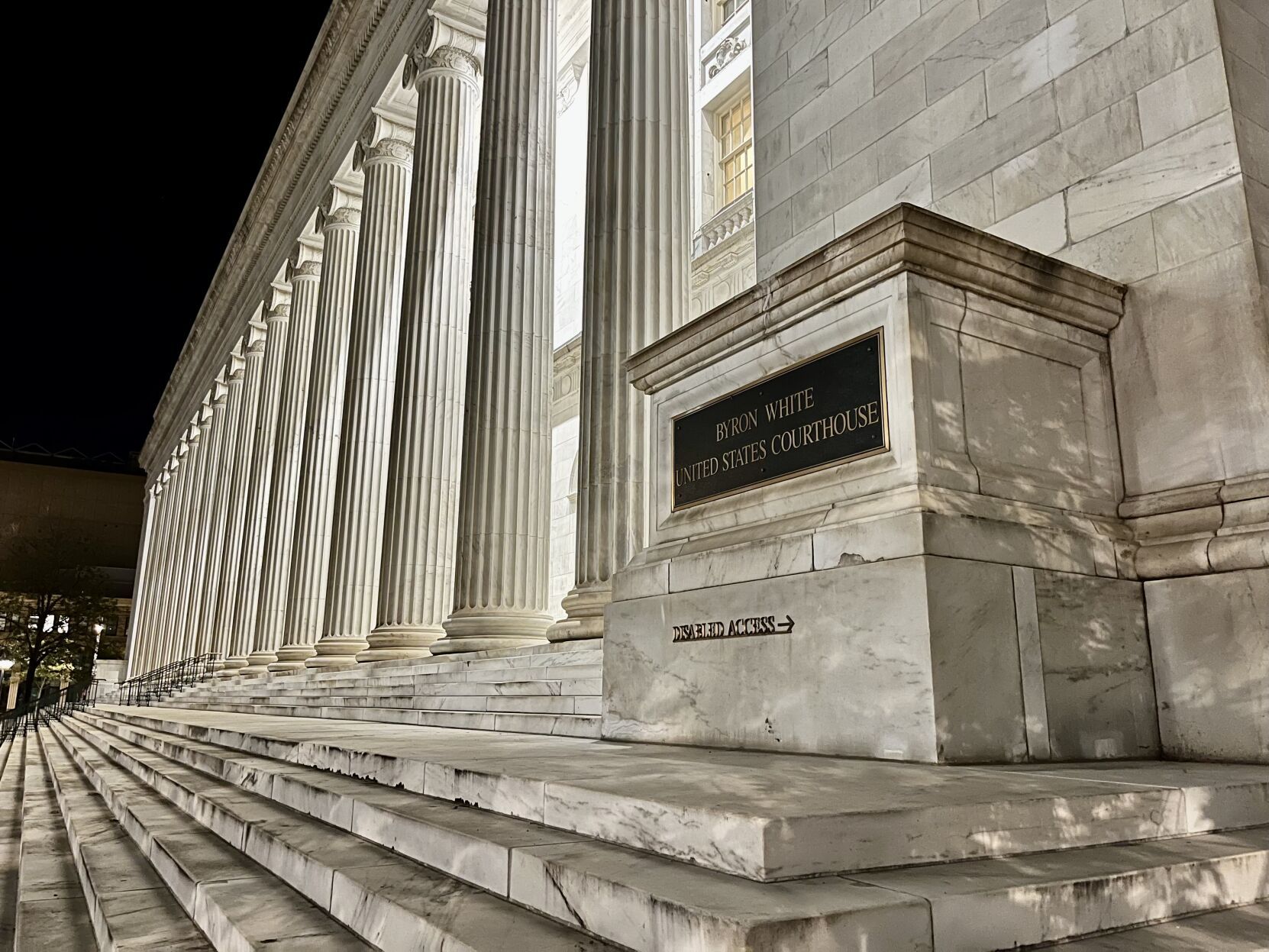
The Colorado-based federal appeals court concluded on Tuesday that Denver’s detoxification facility did not violate a man’s rights by holding him against his will for 10 hours until his blood alcohol content was projected to reach zero.
Unusually, Brian Garrett’s lawsuit against Denver CARES unfolded as a federal jury concluded the organization violated the constitutional rights of two other plaintiffs by seizing them without probable cause in circumstances similar to Garrett’s. The same trial judge and attorneys handled both cases.
However, the trial judge dismissed Garrett’s lawsuit after concluding the defendants in his case had probable cause to believe he was intoxicated and dangerous. A three-judge panel of the U.S. Court of Appeals for the 10th Circuit upheld that assessment.
“If probable cause dissipated at any point, it would have been at or around his (estimated sobriety time), and Denver CARES released Plaintiff within thirty minutes of that time,” wrote Judge Joel M. Carson III in a July 28 order.
Case: Garrett v. Denver C.A.R.E.S.
Decided: July 28, 2026
Jurisdiction: U.S. District Court for Colorado
Ruling: 3-0
Judges: Joel M. Carson III (author)
Scott M. Matheson Jr.
Allison H. Eid (concurrence)
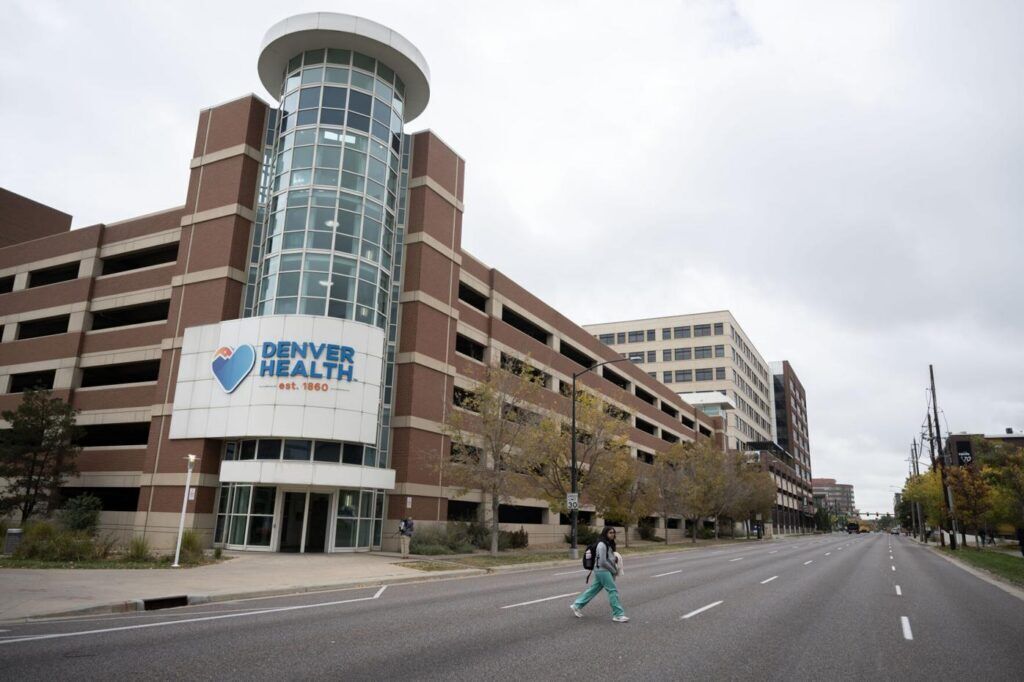
Among other things, Denver CARES provides a detox center for “public inebriates.” Denver Health and Hospital Authority operates the facility, which Garrett’s attorneys referred to as a “drunk tank.”
Garrett alleged that he was on his lawn after a Rockies game one evening in April 2021 when he and his roommate got into an argument and “began roughhousing.” A neighbor called police, who handcuffed Garrett and put him in the back of a patrol car. They did not perform any tests for intoxication.
Next, an emergency patrol van arrived and transported Garrett to Denver CARES. Personnel documented that he was “verbally aggressive and cursing and threatening lawsuit,” and he had other indicators of intoxication like slurred speech and an odor of alcohol.
At the detox center, Garrett’s blood alcohol content measured 0.196. Staff calculated that his estimated sobriety time was just after 5 a.m., meaning he could leave around then.
Garrett never consented to treatment and, despite being told he was not under arrest, was unable to leave. He alleged that Denver CARES treats all admissions as voluntary, but staff repeatedly turned him away when he insisted he was not a danger to himself or others. At one point, he called a friend to pick him up, but staff would not release him until his estimated sobriety time.
Upon release at 5:37 a.m., Denver CARES presented him with a bill, which Garrett declined to pay. He later received a charge for $315. His discharge paperwork noted that a counselor was “unable to provide motivational interviewing” to him.
Garrett sued Denver CARES and individual employees for violating the Fourth Amendment’s prohibition on unreasonable seizures. He argued that he had not consented to treatment and there was no probable cause to believe he was both intoxicated and a danger to himself or others, as Colorado law requires for involuntary holds.
While Garrett’s case was pending, a jury awarded a combined $660,000 to two plaintiffs who similarly alleged Denver CARES unconstitutionally seized them pursuant to a policy that required no assessment for probable cause.
However, U.S. District Court Chief Judge Daniel D. Domenico, who presided over the trial and also handled Garrett’s case, granted the defendants’ motion to dismiss Garrett’s claim.
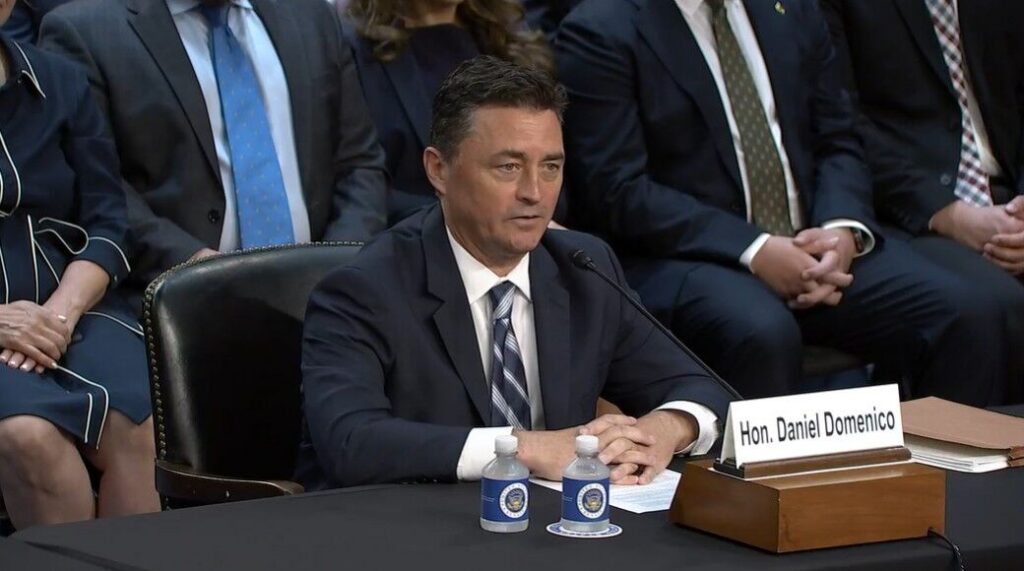
In an August 2024 order, Domenico wrote that Garrett’s circumstances were “not identical.” Specifically, his high blood alcohol level upon intake, his documented “irritable” behavior, and the indicators of intoxication supplied probable cause to hold him.
“If a verbally aggressive, cursing, agitated individual with low frustration tolerance, smelling strongly of alcohol, who was first contacted by police because of a physical altercation, who walked with a staggered gait and slurred his words, cannot reasonably be determined to be intoxicated and clearly dangerous to himself or others, it is hard to think anyone could,” wrote Domenico.
On appeal, Garrett’s lawyers argued it was unreasonable to assume someone is dangerous because they react negatively to an involuntary placement in a detox facility.
“Without any accusation of criminal wrongdoing, Mr. Garrett gets caught up in this dragnet,” attorney Robyn Levin told the 10th Circuit panel during oral arguments. “They seem to believe that, just because he is brought there, that means they can, without any formal commitment process, keep him there. And that can’t be so.”
“Is it reasonable to let someone leave the facility who registers a 0.196,” wondered Judge Scott M. Matheson Jr., “especially when there’s at least some risk to the facility that if something bad happens after release, they could be liable?”
The defendants argued that there was no obligation for them to assess at the intake stage whether probable cause existed to hold Garrett.
“What if he had come in and the blood alcohol was 0.01? And he was perfectly calm, non-aggressive, and all the rest,” said Matheson. “And they say, ‘That’s too bad. We’re gonna keep you here.’ What you’re saying is it doesn’t matter.”
“That’s not what I’m saying,” said Elliot V. Hood, who is also an elected University of Colorado regent.
“Well, it sounds like what you’re saying,” responded Matheson. “They’re making a detention decision.”
Ultimately, the panel’s majority believed Denver CARES workers had probable cause of Garrett’s intoxication and dangerousness, and there was no information upon intake to the contrary.
“Indeed, any new information staff learned supported probable cause, especially his 0.196 (blood alcohol level),” wrote Carson for himself and Matheson.
Judge Allison H. Eid wrote separately to say that she would not have decided whether the defendants violated Garrett’s rights. She would have granted Denver CARES personnel qualified immunity, which shields government employees from civil lawsuits, because no prior court decision put them on notice that they would act unreasonably under the circumstances.
Lawyers for Garrett did not immediately respond to a request for comment.
Colorado Politics asked attorneys for Denver CARES whether the organization had changed any of its procedures during Garrett’s case or the related litigation in which a jury found Denver CARES liable for a constitutional violation.
“We are pleased with the court’s ruling,” Hood responded.
The case is Garrett v. Denver C.A.R.E.S. et al.

Federal judge green-lights civil trial against ex-Fort Collins DUI officer
Michael Karlik
michael.karlik@coloradopolitics.com
Updated 2 days ago
A federal judge ruled on Thursday that Fort Collins’ former “DUI officer” will face a civil trial for allegedly investigating a motorist for impaired driving without any reasonable suspicion to do so. In recent years, several people arrested by Officer...

Colorado Supreme Court suspends Mesa County judge pending misconduct investigation
Michael Karlik
michael.karlik@coloradopolitics.com
Updated 14 hours ago
The Colorado Supreme Court suspended Mesa County Court Judge Michael J. Grattan on Thursday amid a misconduct investigation. The court’s Sept. 10 order gave Grattan 21 days to explain why his paid suspension should not continue through the end of...
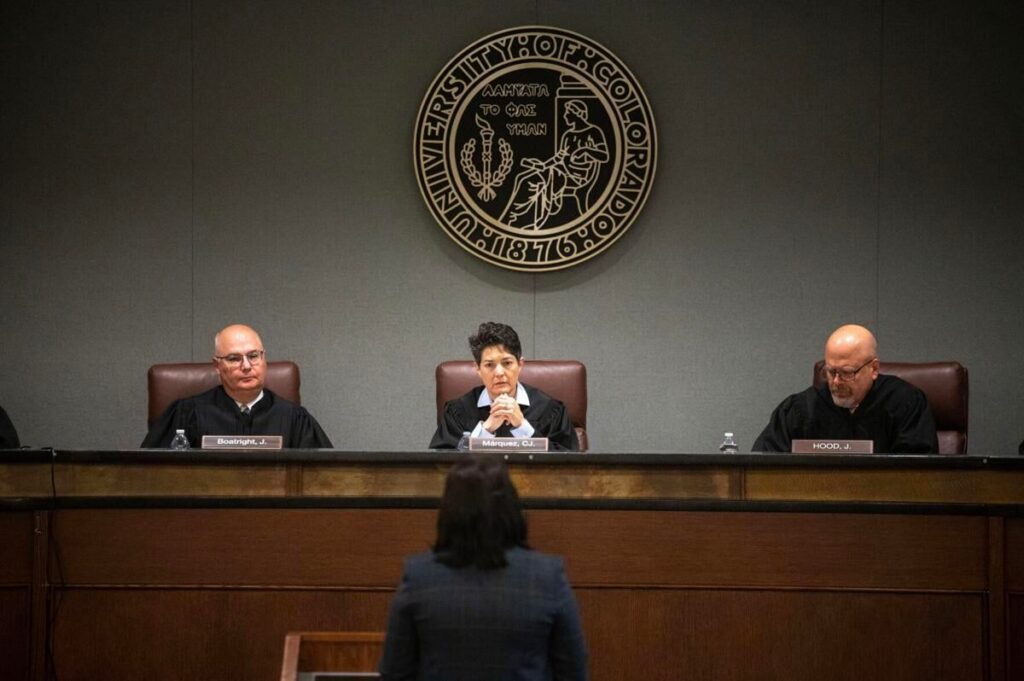
Colorado Supreme Court changes course, dismisses case about special district bonds
Michael Karlik
michael.karlik@coloradopolitics.com
Updated 14 hours ago
The Colorado Supreme Court declined on Friday to decide a dispute between a large-scale Commerce City development and the various districts financing it, after initially showing interest in the ongoing case. Colorado has roughly 2,800 special districts, which are local...
10th Circuit tosses GEO Group’s pretrial appeal in human trafficking lawsuit
Michael Karlik
michael.karlik@coloradopolitics.com
Updated 2 days ago
The Denver-based federal appeals court dismissed an attempt by The GEO Group on Wednesday to appeal a trial judge’s non-existent decision two months before the company is scheduled to face a civil trial over alleged trafficking violations at the Aurora...
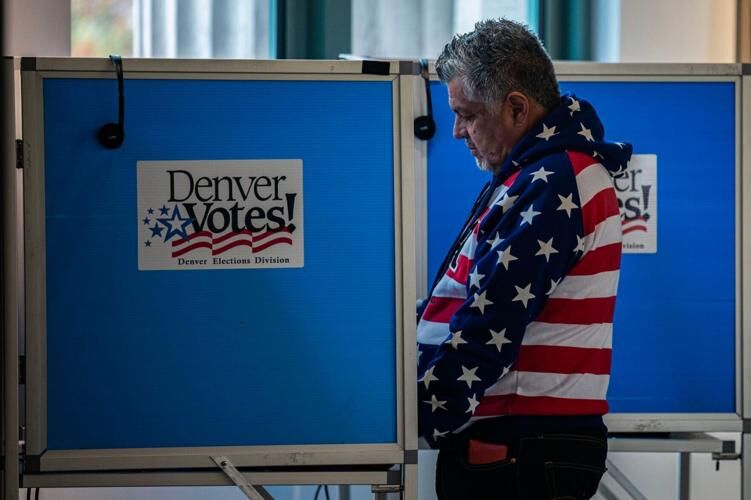
Denver sues Trump to block armed ICE agents from polling sites
Deborah Grigsby
deborah.smith@denvergazette.com
Updated 2 days ago
The city of Denver, along with several groups, sued the Trump administration Thursday, seeking to block U.S. Immigration and Customs Enforcement officers who are armed from polling sites during the upcoming midterm elections. In fact, there are no official orders...
Federal judge takes no action against ICE in Colorado after hearing about mistakes, not ‘blatant violations’
Michael Karlik
michael.karlik@coloradopolitics.com
Updated 12 hours ago
A federal judge declined to take action against U.S. Immigration and Customs Enforcement on Thursday after hearing that a pattern of alleged lawbreaking amounted to mistakes and a misunderstanding of the government’s position in court. For nearly a year, Colorado’s...
Colorado doctors, dentists challenge state law on gender‑transition services in new federal lawsuit
Marissa Ventrelli
marissa.ventrelli@coloradopolitics.com
Updated 9 hours ago
A group of Christian doctors and dentists has filed a federal lawsuit challenging a Colorado law they say requires them to provide gender‑transition services that conflict with their religious and ethical beliefs. The lawsuit, filed by the Christian Medical and...
Federal judge directs plaintiff to revise complaint alleging Denver officers’ constitutional violations
Michael Karlik
michael.karlik@coloradopolitics.com
Updated 12 hours ago
A federal judge directed a plaintiff to revise his allegations on Wednesday to more precisely state what two Denver officers and the city itself allegedly did to violate his constitutional rights by facilitating his prosecution for murder until prosecutors dropped...

Lawsuit challenges Douglas County commissioners’ ballot actions
Nicholas Fogleman
nicholas.fogleman@denvergazette.com
Updated 3 days ago
A new lawsuit against Douglas County commissioners seeks to invalidate the board’s intervention in efforts to expand the commission from three members to five and restore the original ballot language approved by more than 20,000 petition signers. The suit marks...
Federal judge explores new sanctions against ex-Colorado judicial discipline director
Michael Karlik
michael.karlik@coloradopolitics.com
Updated 14 hours ago
A federal judge on Wednesday directed Colorado’s former judicial discipline director, for the third time this year, to explain why she should not sanction him for his latest conduct in his litigation against the state’s judiciary. Christopher S.P. Gregory, who served...
PREV
PREVIOUS

Federal judge clarifies ex-GOP treasurer candidate’s burden to prove defamation claims
A federal judge clarified last week that businessman and former Republican statewide candidate Brian Watson will need to surmount a higher hurdle in proving his claim that a party guest’s alleged description of him as a “criminal” amounted to defamation. Watson was the GOP nominee for Colorado treasurer in 2018 and a 2012 candidate for […]

Gov. Polis celebrates Colorado’s first-place education ranking by U.S. News
Colorado officials said they have something to celebrate this week, in addition to the state’s sesquicentennial birthday on Saturday. U.S. News & World Report on Tuesday gave Colorado its top ranking for education efforts from pre-K to postsecondary, though it didn’t fare well in other areas, such as health access and crime. Gov. Jared Polis […]