

Gov. Polis celebrates Colorado’s first-place education ranking by U.S. News

Colorado officials said they have something to celebrate this week, in addition to the state’s sesquicentennial birthday on Saturday.
U.S. News & World Report on Tuesday gave Colorado its top ranking for education efforts from pre-K to postsecondary, though it didn’t fare well in other areas, such as health access and crime.
Gov. Jared Polis celebrated the announcement with a trip to the Farrell B. Howell ECE-8 School in east Denver.
U.S. News & World Report issued its annual best states rankings on Tuesday.
Colorado earned its first place in education based on “increases in associate degree completion and attainment rates, as well as substantial growth in preschool enrollment enabled by the Colorado Universal Preschool program.”
For this year’s report, Colorado ranked ninth in pre-K and third in higher education.
In an interview with Colorado Politics, Polis pointed to six different accomplishments — early education, better funding for K-12, school choice, after-school programs, outcome tracking and workforce training — that moved Colorado from 11th place overall in 2019 to third place two years ago to first place this week.
The governor said programs targeting early education have been key, notably expanding universal preschool and taxpayer-funded full-day kindergarten. These programs have received significant support through state funding and voter-approved initiatives.
He noted better funding for K-12 education. The state “owed” a $1 billion debt to K-12 beginning in 2010, a shortfall that wasn’t fully repaid until two years ago. Polis pointed to that payoff — along with allowing general fund support for mill levy equalization for charter schools, which ensures charter students receive the same level of funding as other public school students — as a factor. He also cited Healthy School Meals for All, which provides free meals to public school students, as part of that success.
The governor also noted the expansion of school choice, which he said gives parents the ability to select the public or charter school that best fits their children’s needs. Polis said about 40% of families now use that option. Having spent years helping develop charter schools and serving on the state Board of Education, he called that authority “magical.”
He cited investment in after-school and summer programs. Education doesn’t stop at 3 p.m. or in May, Polis said Tuesday. That investment was partly put in jeopardy with a bill in the 2026 session that would have stripped $1.75 million for nonprofits that provide after-school programs, but Polis vetoed the measure.
Data collection and outcome tracking have also been central to Polis’ approach. In his first year in office, the state strengthened the READ Act to emphasize phonics-based, evidence-backed reading instruction and improve teacher preparation. Polis said Tuesday that 32,000 teachers have now been trained on high-quality curriculum, helping push Colorado into the top five states for literacy. The state has also developed “evidence-informed training” to help educators better support students learning math, including strategies for those below grade level, students with disabilities and multilingual learners.
Higher education and postsecondary workforce training have also expanded, the governor said. A record number of high school students are now enrolled in dual or concurrent programs, allowing them to earn college credit while still in high school — with tuition typically covered by the state or their school district.
Colorado has also added two years of free community college for students from families earning under $90,000 a year. According to the administration, 65,000 high school students in 2025 earned some form of postsecondary credit or credential, completed an apprenticeship or took part in other meaningful work-based learning. Colorado’s efforts also included the 2021 launch of Finish What You Started, which helps students who made progress toward a degree but didn’t finish obtain the remaining credits they need. The Department of Higher Education reported that more than 2,500 credentials have been completed through the program, even though it sunset on June 30.
U.S. News & World Report evaluated 71 metrics across eight categories, each weighted to produce an overall ranking. Colorado placed 17th.
The rankings draw on data from multiple years and sources. Two-year college graduation rates, for example, were based on the 2021 cohort — students who graduated in 2023. Preschool enrollment, an area where Colorado scored well, used 2024 data.
While Colorado’s education results were a bright spot, other measures were less favorable.
Colorado ranked second in healthcare quality but 33rd in healthcare access, a category that included affordability.
Rising healthcare costs, especially in rural and mountain communities, have long been a concern. Access has also been strained by growing maternal-care deserts, the loss of federal tax subsidies and the departure of more than half a dozen insurers from the state’s individual market in recent years. Health insurance enrollment and affordability data came from 2024.
The state ranked 47th in crime and corrections and 45th in fiscal stability. The latter included a ranking of 49th for short-term fiscal stability — a measure of whether a state can meet its immediate financial obligations, including maintaining enough capital to cover short-term liabilities and passing a balanced budget, which Colorado is constitutionally required to do.
Liquidity, another factor in short-term stability, was based on how many days of general-fund reserves the state holds. For fiscal year 2024-25, the Pew Charitable Trusts estimated Colorado had enough reserves to cover 38.9 days of spending.
Crime and public safety rankings considered violent and property crime. Corrections metrics included juvenile incarceration, racial equity and the number of prisoners per 100,000 residents serving sentences of one year or more.
The FBI ranked Colorado eighth in violent crime and third in property crime just a year later.


Denver police reopen 13 sex assault cases after retesting Missy Woods’ CBI work
Jenny Deam
jenny.deam@gazette.com
Updated 6 hours ago
Thirteen previously closed Denver sexual assault cases have been reopened after the city’s crime lab retested DNA evidence once analyzed by former Colorado Bureau of Investigation forensic analyst Yvonne Woods. A police spokesperson told The Denver Gazette the once-closed cases...

Ballot measure aims to shift Colorado sporting goods tax revenue to land, water and wildfire projects
Marissa Ventrelli
marissa.ventrelli@coloradopolitics.com
Updated 21 hours ago
Colorado voters this November will decide whether to direct a share of sales tax revenue from sporting goods — including bicycles and skiing equipment — toward land and water conservation, wildfire prevention and expanding outdoor recreation. Supporters say the measure...

‘The smell of jet fuel lingered for years’: Colorado veterans recall 9/11
Deborah Grigsby
deborah.smith@denvergazette.com
Updated 2 days ago
For many years after the Sept. 11 attacks in Washington, D.C., Mark Schoenrock said he could still smell the burning jet fuel from American Airlines Flight 77. “It was just such an overpowering sensation,” Schoenrock, a former Lone Tree resident...

Denver sues Trump to block armed ICE agents from polling sites
Deborah Grigsby
deborah.smith@denvergazette.com
Updated 3 days ago
The city of Denver, along with several groups, sued the Trump administration Thursday, seeking to block U.S. Immigration and Customs Enforcement officers who are armed from polling sites during the upcoming midterm elections. In fact, there are no official orders...

Colorado Parks & Wildlife staff kill third wolf in 3 days
Marianne Goodland
marianne.goodland@coloradopolitics.com
Updated 21 hours ago
Colorado’s wildlife division on Thursday said that staff and contracted agents killed an uncollared female yearling wolf a pack after confirming she had been killing livestock in Grand County. Three wolves from three separate packs have been killed in the...
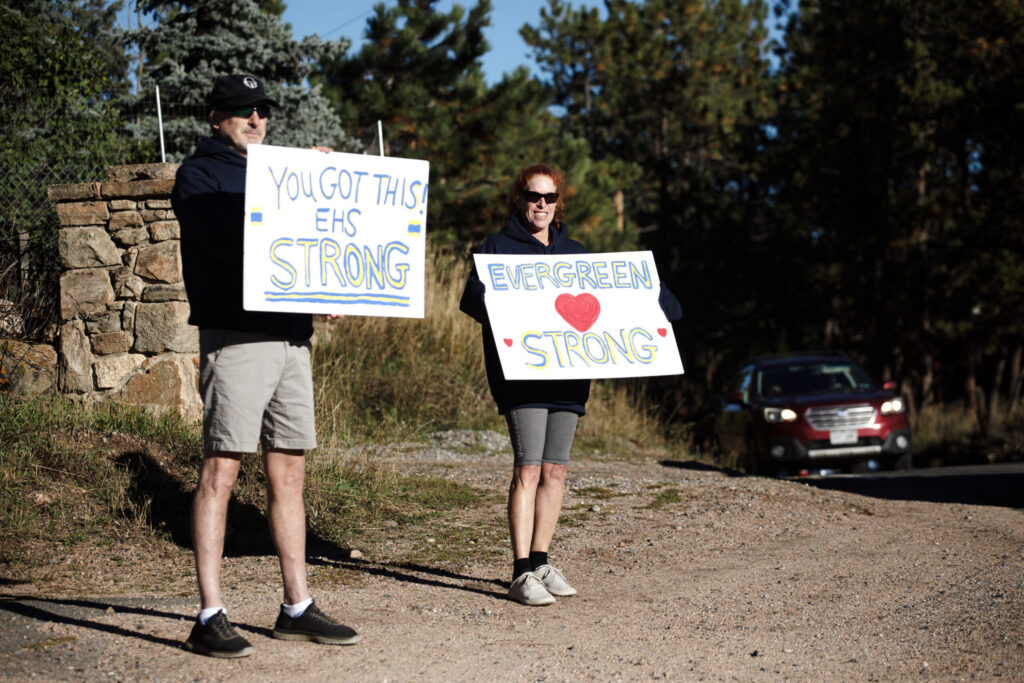
Evergreen High School marks one year since shooting on campus
Kyla Pearce
kyla.pearce@gazette.com
Updated 3 days ago
Thursday marks one year since the Evergreen High School shooting that injured two students and left the shooter dead. On Sept. 10, 2025, Desmond Holly, 16, entered the school armed with a Smith & Wesson .38 revolver and opened fire...
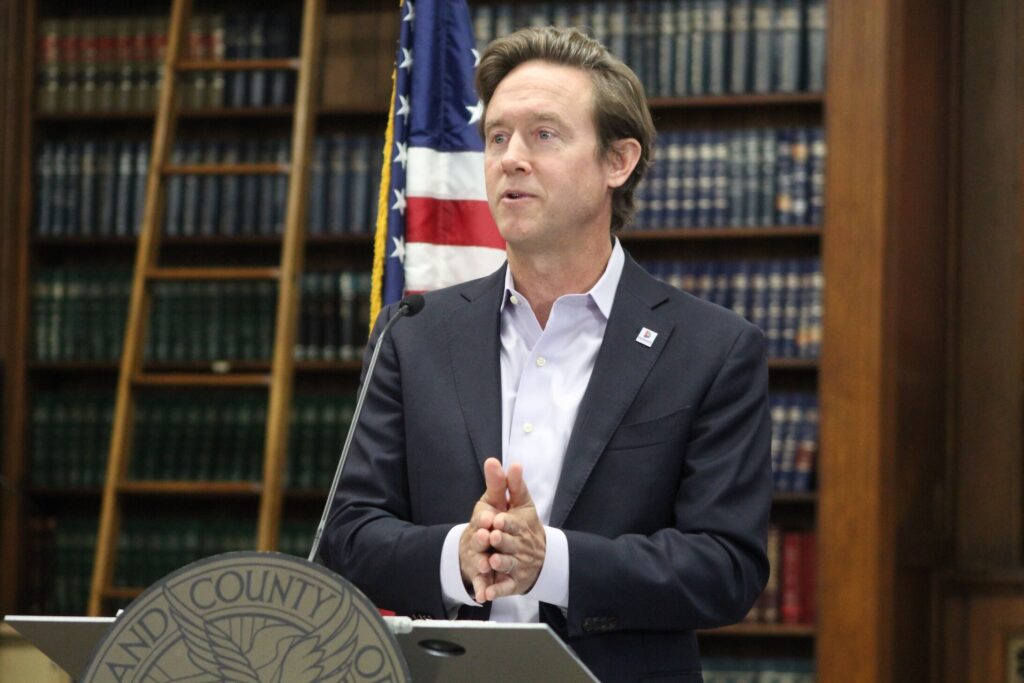
Denver mayor unveils 2027 budget after weeks of warning of tough choices
Nico Brambila
nico.brambila@denvergazette.com
Updated 3 days ago
Denver Mayor Mike Johnston unveiled his proposed 2027 budget Thursday after weeks of warning that the city is entering a tighter financial era despite stronger-than-expected revenue collections this year. The projected general fund revenue for 2027 is $1.684 billion, the...

Lawsuit challenges Douglas County commissioners’ ballot actions
Nicholas Fogleman
nicholas.fogleman@denvergazette.com
Updated 3 days ago
A new lawsuit against Douglas County commissioners seeks to invalidate the board’s intervention in efforts to expand the commission from three members to five and restore the original ballot language approved by more than 20,000 petition signers. The suit marks...

United abruptly cancels flyover marking 9/11 anniversary after ‘concerns in the community’
Mark Samuelson Special to The Denver Gazette
mark.samuelson@denvergazette.com
Updated 2 days ago
United Airlines had planned a dramatic flyover in Denver on Friday to mark the 25th anniversary of the 9/11 attacks, when it lost two of the four U.S. passenger jetliners hijacked by terrorists. But the airline abruptly cancelled plans late...

Denver Water proposes 6% rate increase for 2027
Nico Brambila
nico.brambila@denvergazette.com
Updated 3 days ago
Water could be more expensive for Denver residents next year. Denver Water commissioners received a staff proposal for rate increases Wednesday expected to generate about 6% more revenue in 2027. What individual customers pay would depend on where they live...
PREV
PREVIOUS
Denver detox center did not violate man’s rights with 10-hour hold, 10th Circuit says
The Colorado-based federal appeals court concluded on Tuesday that Denver’s detoxification facility did not violate a man’s rights by holding him against his will for 10 hours until his blood alcohol content was projected to reach zero. Unusually, Brian Garrett’s lawsuit against Denver CARES unfolded as a federal jury concluded the organization violated the constitutional […]
Q&A with Jeffco Public Schools’ interim superintendent on budget deficit, federal investigation
For the upcoming school year, Robert Stein will serve as Jeffco Public Schools’ superintendent. The 66-year-old Denver native has been semi-retired for the last few years. He spent 40 years in education, as both a teacher and administrator. Most recently, he spent nine years as superintendent of the Roaring Fork School District in Carbondale, where […]