

Grand Canyon flooding threatens economy that’s still recovering from a fire | OUT WEST ROUNDUP
ARIZONA
Flooding slams park’s economy
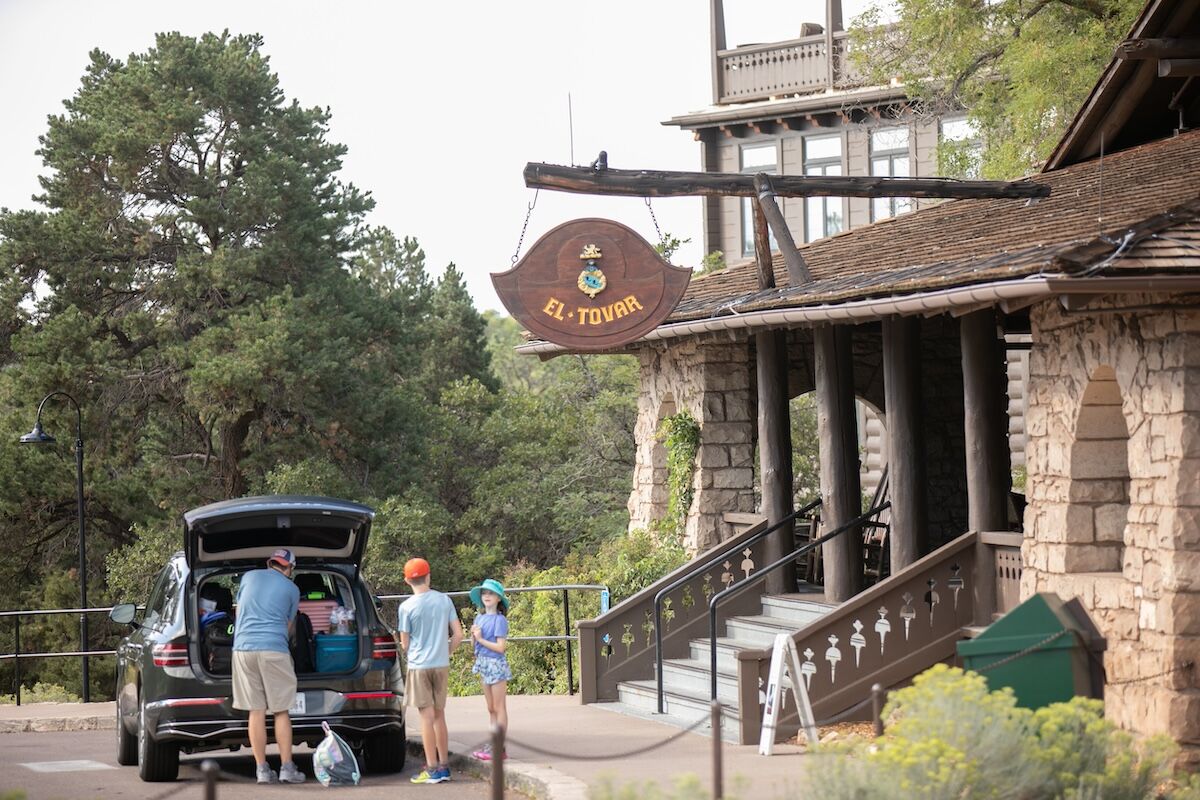
Deadly flooding at the Grand Canyon is damaging the area’s economy, with a washed-out pipeline severing the South Rim’s water supply and shutting down lodging at the popular tourist vista for an indefinite period.
The national park remained open Sept. 1 but tourists who planned to stay overnight — many traveling long distances for reservations from a year or more ago — have had to scramble to find rooms elsewhere.
The flooding that killed two people and left a third missing washed out an already decrepit pipeline spanning the canyon that supplied every shower, faucet and spigot at the South Rim.
Days later, hundreds of rooms were no longer available due to insufficient water, thwarting plans for thousands of tourists staying at the canyon or headed that way in the days ahead.
As of Sept. 1, it was uncertain how long the lodging would be closed. Experts warned that the economic toll of such closures would affect not only Northern Arizona but southern Nevada.
Many who visit the Grand Canyon also visit Las Vegas, said Christine Vogt, a consultant on sustainable tourism and outdoor recreation in the Western U.S.
An extended lodging shutdown could also affect hundreds of service jobs in and around the national park and cost hundreds of thousands of dollars in local revenue, said Megha Budruk, an Arizona State University associate professor who studies communities near public lands.
This is the latest economic blow to the region after a wildfire last summer destroyed a historic lodge at the Grand Canyon’s less busy but lusher North Rim, putting all rooms and cabins on that side of the canyon out of commission.
Grand Canyon was the fourth-most visited national park in 2025, behind Great Smoky Mountains, Zion and Yellowstone. Summer is the park’s busiest time, although tourist visits typically dip under 500,000 in September.
In 2024, the park drew almost $1 billion a year in spending by close to 5 million tourists visiting the otherwise remote Northern Arizona region, according to the National Park Service.
KANSAS
Lawsuit targets transgender policy
WASHINGTON — The U.S. Department of Justice filed a federal lawsuit on Sept. 1 against the school system in Kansas City, Kansas, over its policies on transgender students.
The lawsuit comes more than a year after the Education Department first said it was investigating four districts in Kansas following a complaint from the Defense of Freedom Institute. The conservative group’s complaint alleged the schools had policies preventing disclosure of a student’s “transgender status” to parents without the student’s consent.
Schools in Kansas City, Kansas, have a policy of using students’ preferred names and pronouns. The district also says requests from students who do not wish to involve their parents will be evaluated on a case-by-case basis, according to the Justice Department lawsuit.
In April, the Education Department said it found the four Kansas districts in violation of the Family Education Rights and Privacy Act. The districts violated the privacy law, the department said, by maintaining a policy of not disclosing a student’s gender transition at the parents’ request, though the department did not cite a specific instance where this happened.
The district in Kansas City, Kansas, which has more than 20,000 students, disputed in a statement that it was out of compliance with federal law and said it was “disappointed by the DOJ’s decision to file the lawsuit.” It said it wouldn’t comment further because litigation is pending.
As for the other school systems investigated in Kansas, the Department of Education announced the Topeka district had agreed to rescind any prior guidance that prevents schools from keeping parents informed. The department said Olathe and Shawnee Mission public schools “refused to come into voluntary compliance” and could face a potential loss of federal funding.
OKLAHOMA
Murder charged in explosion
An Oklahoma man has been charged with murder following a large explosion at a marijuana extraction facility that killed two of his employees and damaged surrounding businesses, prosecutors said on Aug. 31.
Ryan Bassham, 35, turned himself in this weekend after being charged with two counts of first-degree murder in the Aug. 27 blast at Solos Extracts near Tulsa, authorities said. The explosion around 1 a.m. partially tore the roof from a building, crumpled doors and scattered debris around an industrial park.
Bassham was booked into a Tulsa jail and released after posting a $2 million bond.
The two victims, Michael Newman and Stephen Scott, both worked for Bassham, said Adam Jones, spokesman for the Tulsa County district attorney’s office. He said prosecutors believe the employees were unlawfully manufacturing hazardous chemicals that wound up creating an explosion.
A fire marshal told authorities the business was seeking an updated marijuana license and narcotics registration, according to court records. Medical marijuana is legal in Oklahoma.
According to court documents, Newman told a paramedic on the way to the hospital that the area had not been well ventilated and that the explosion happened after he unplugged something. He was conscious when paramedics arrived but later died at the hospital.
No one else was harmed in the explosion, but multiple nearby businesses were damaged, authorities said.
MONTANA
Study delays facility plans
Opponents of the state’s plans for a forensic mental health facility in Laurel got some good news on Aug. 26.
Yellowstone County District Court Judge Ed Zink granted a preliminary injunction in a lawsuit brought by the group Laurel CARED, or Community Advocates for Responsible Economic Development.
The preliminary injunction stops construction of the 32-bed psychiatric facility intended to treat and rehabilitate people in the criminal justice system while the lawsuit progresses. The proposed site is located just west of the city of Laurel.
Construction was set to begin in early September, according to Laurel CARED member Shawna Hopper.
The state must now conduct another environmental assessment and open it to public comment.
The group’s main concern was whether the state had adequately studied whether Laurel had enough water to serve the facility.
Mental health advocates and the administration of Gov. Greg Gianforte have pushed for the facility’s construction to ease the backlog of people languishing in local jails, awaiting mental health evaluations before they can proceed to trial.
Many locals aren’t opposed to the facility’s purpose, but they felt the process the state used to select the site and forge ahead with its plans wasn’t fair to local residents.


Immigration reporting measure fuels debate over Colorado’s role with ICE
Marissa Ventrelli
marissa.ventrelli@coloradopolitics.com
Updated 12 hours ago
A coalition of advocacy groups and several district attorneys rallied outside the Colorado Capitol on Thursday to oppose a ballot measure that, if approved by voters in November, would require state and local law enforcement to cooperate with federal immigration...

Colorado Politics Calendar Sept. 14-20
Rachael Wright, Special to Colorado Politics
rachael.wright@coloradopolitics.com
Updated 4 days ago
CoPo’s weekly political calendar will help you find political and public-policy events throughout Colorado. It includes candidate and issue campaign events, public policy meetings, court hearings, state and local party conventions, assemblies, debates, rallies, parades, speaking engagements, traveling dignitary appearances,...
The African roots of three Colorado leaders | SONDERMANN
Eric Sondermann
eric-sondermann@coloradopolitics.com
Updated 3 days ago
Colorado’s political transformation is measured in many ways. A once reliably red state (with asterisks) became purple and is now a rather deep blue. For better or worse, probably the latter, power is ever more consolidated along the Front Range...
Federal judge green-lights civil trial against ex-Fort Collins DUI officer
Michael Karlik
michael.karlik@coloradopolitics.com
Updated 2 days ago
A federal judge ruled on Thursday that Fort Collins’ former “DUI officer” will face a civil trial for allegedly investigating a motorist for impaired driving without any reasonable suspicion to do so. In recent years, several people arrested by Officer...

Denver police reopen 13 sex assault cases after retesting Missy Woods’ CBI work
Jenny Deam
jenny.deam@gazette.com
Updated 1 day ago
Thirteen previously closed Denver sexual assault cases have been reopened after the city’s crime lab retested DNA evidence once analyzed by former Colorado Bureau of Investigation forensic analyst Yvonne Woods. A police spokesperson told The Denver Gazette the once-closed cases...

Ballot measure aims to shift Colorado sporting goods tax revenue to land, water and wildfire projects
Marissa Ventrelli
marissa.ventrelli@coloradopolitics.com
Updated 12 hours ago
Colorado voters this November will decide whether to direct a share of sales tax revenue from sporting goods — including bicycles and skiing equipment — toward land and water conservation, wildfire prevention and expanding outdoor recreation. Supporters say the measure...

Colorado Supreme Court suspends Mesa County judge pending misconduct investigation
Michael Karlik
michael.karlik@coloradopolitics.com
Updated 14 hours ago
The Colorado Supreme Court suspended Mesa County Court Judge Michael J. Grattan on Thursday amid a misconduct investigation. The court’s Sept. 10 order gave Grattan 21 days to explain why his paid suspension should not continue through the end of...

Trump honors the fallen of the 9/11 terrorist attacks during Pentagon speech
Mabinty Quarshie
mabinty-quarshie@coloradopolitics.com
Updated 2 days ago
President Donald Trump and first lady Melania Trump honored the roughly 3,000 Americans killed during the Sept. 11, 2001, terrorist attacks during a ceremony at the Pentagon. The event marking the 25th anniversary of the deadliest attack on American soil...
Colorado Supreme Court changes course, dismisses case about special district bonds
Michael Karlik
michael.karlik@coloradopolitics.com
Updated 14 hours ago
The Colorado Supreme Court declined on Friday to decide a dispute between a large-scale Commerce City development and the various districts financing it, after initially showing interest in the ongoing case. Colorado has roughly 2,800 special districts, which are local...

Colorado leaders express outrage and pain following 9/11 attacks | A LOOK BACK
Rachael Wright, Special to Colorado Politics
rachael.wright@coloradopolitics.com
Updated 2 days ago
Twenty-Five Years Ago This Week: “Responding to the 9/11 terrorist attacks, Colorado Gov. Bill Owens told reporters in a statement, “I join all Coloradans in expressing outrage and horror at the senseless terrorist bombings in New York and Washington D.C....
