The Denver Broncos are on the ballot this fall | Jon Caldara

Do you want the Broncos to win the Super Bowl?
Then you’d better hope Amendment 87 — which brings back Colorado’s economy-strangling “graduated” income tax — loses at the ballot box this fall. Seriously.
Forget Republicans and Democrats. Forget tax policy. This is about Xs and Os — and whether Denver can afford the players who execute them and win a Super Bowl.
Every successful business has star employees: rare talents without whom the enterprise simply doesn’t work. Same goes for an NFL franchise.
Every business has star employees the whole operation is built around. Sometimes that star is the chief executive. No Henry Ford, no assembly line, no affordable car. No Steve Jobs, no iPhone — foldable or otherwise. No Elon, and Teslas are just golf carts with better marketing.
But more often, the star isn’t the person running the place — it’s the person the CEO had the sense to hire. A smart CEO understands paying extraordinary people extraordinary salaries is sometimes the price of success.
Competent employees may be plentiful. Franchise-changing talent is not.
The chemist in the lab who sees the molecule nobody else does. The closer on the sales team. The reporter whose byline wins the Pulitzer. The performer who actually fills the arena.
Any company can hire a receptionist. Few can hire star employees. A smart CEO knows you pay that person absurdly well, because the alternative is watching him walk across the street or across the state border to your competitor.
Football works exactly the same way. A head coach’s most consequential decisions aren’t play calls — they’re personnel calls.
In 2012, the Broncos handed Peyton Manning roughly $20 million a year to be their star employee (adjusted for inflation, that’s pushing $40 million today). Did it work out? Ask the Lombardi Trophy sitting in the team’s front office.
Manning was worth every nickel.
But like any CEO, a head coach doesn’t have infinite money. He’s stuck with a salary cap, competing against 31 other teams for the same shrinking pool of ridiculously overpaid talent.
Enter Amendment 87, which offers most of us a token tax cut while nearly doubling the rate on those evil, hated rich people we call Denver Broncos. If it passes this fall, every Bronco currently taxed at Colorado’s flat 4.4% starts paying 8.4%.
Football players take a lot of hits to the head, but their accountants don’t — and unlike our legislators, accountants (and even concussed football players) can do arithmetic. All else equal, a player has to earn 8.4% more to play in Denver than to play somewhere with no state income tax at all.

Any player who plays for the Miami Dolphins, Tampa Bay Buccaneers, Jacksonville Jaguars, Las Vegas Raiders, Tennessee Titans, Dallas Cowboys, Houston Texans or the Seattle Seahawks gets an instant 8.4% raise compared to playing for Denver under Amendment 87.
Run Peyton Manning’s numbers again: at $20 million a year, that 8.4% is $1.68 million a year — $8.4 million over a five-year deal. Double those figures to adjust for inflation, and you’re talking real money even by NFL standards.
Sure, plenty of things factor into where a star chemist, programmer, performer or quarterback decides to live and work. But an 8.4% pay cut isn’t a rounding error. It’s the kind of number that ends up circled on a napkin in some agent’s office come free agency.
Not that it matters, but it’s not just football teams competing for star talent. Every Colorado business is as well.
If Colorado wants to be a tech magnet for the upcoming quantum revolution, companies will be competing for quantum specialists. I don’t know how many of those you know, I don’t know any.
What goes for the quantum tech field and the football field goes for every industry.
A company can give those superstar employees an immediate 8.5% pay increase by relocating to a no-income-tax state. That’s why so many companies are relocating out of California, Illinois, New York and now Colorado for places like Florida and Texas. Just ask the well-paid people who used to work at Palantir in Denver.
Amendment 87 makes the Denver Broncos’ problem every business’s problem.
But let’s keep it to football.
The ballot language for Amendment 87 should actually read: “Shall the Denver Broncos have 8.4% less money to spend on player talent than other teams in the NFL?”
Jon Caldara is president of the Independence Institute in Denver and hosts “The Devil’s Advocate with Jon Caldara” on Colorado Public Television Channel 12. His column appears Sundays in Colorado Politics.


Was there ever a Colorado city that required racial segregation by law? | BOB LOEVY
Bob Loevy
bob-loevy@coloradopolitics.com
Updated 1 day ago
The answer is “yes.” The Black Racial Equity Study Commission, led by Colorado Senate President James Coleman, has learned the city of Fruita had laws forbidding black people from being on the city streets at night and from being buried...

Immigration reporting measure fuels debate over Colorado’s role with ICE
Marissa Ventrelli
marissa.ventrelli@coloradopolitics.com
Updated 12 hours ago
A coalition of advocacy groups and several district attorneys rallied outside the Colorado Capitol on Thursday to oppose a ballot measure that, if approved by voters in November, would require state and local law enforcement to cooperate with federal immigration...

Ballot measure aims to shift Colorado sporting goods tax revenue to land, water and wildfire projects
Marissa Ventrelli
marissa.ventrelli@coloradopolitics.com
Updated 12 hours ago
Colorado voters this November will decide whether to direct a share of sales tax revenue from sporting goods — including bicycles and skiing equipment — toward land and water conservation, wildfire prevention and expanding outdoor recreation. Supporters say the measure...

Fighting for every Colorado rural hospital on the eastern plains | GUEST COLUMN
Colorado Politics
colorado-politics@coloradopolitics.com
Updated 2 days ago
By Lauren Boebert After touring Melissa Memorial Hospital in Holyoke and Wray Community District Hospital — two of more than a dozen rural hospitals in my district — I was again reminded why I fight for them in Washington. The...

Fix Colorado without shortchanging taxpayers | GUEST COLUMN
Colorado Politics
colorado-politics@coloradopolitics.com
Updated 2 days ago
By Lisa Frizell If we truly want to fix Colorado, we must respect taxpayers, demand accountability and prioritize classroom results. Proposition NN fails the test. The far left put forth this measure, presenting it as the only way to fund public...

New anti-gun legislation is about preventing firearm ownership, not safety | GUEST COLUMN
Colorado Politics
colorado-politics@coloradopolitics.com
Updated 2 days ago
By Ava Flanell It’s been a little more than a month since the most radical anti-gun legislation went into effect in Colorado history: Senate Bill 25-003. Originally intended as an “assault weapons ban,” Colorado Democrat sponsors settled for a complicated...
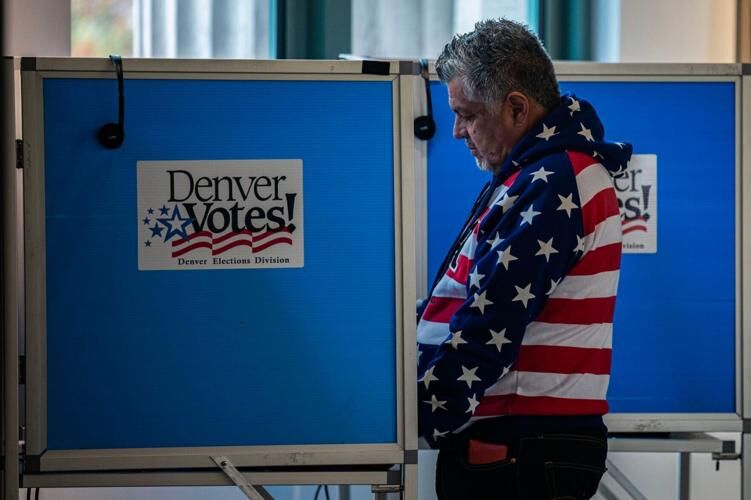
Denver sues Trump to block armed ICE agents from polling sites
Deborah Grigsby
deborah.smith@denvergazette.com
Updated 2 days ago
The city of Denver, along with several groups, sued the Trump administration Thursday, seeking to block U.S. Immigration and Customs Enforcement officers who are armed from polling sites during the upcoming midterm elections. In fact, there are no official orders...
Colorado doctors, dentists challenge state law on gender‑transition services in new federal lawsuit
Marissa Ventrelli
marissa.ventrelli@coloradopolitics.com
Updated 9 hours ago
A group of Christian doctors and dentists has filed a federal lawsuit challenging a Colorado law they say requires them to provide gender‑transition services that conflict with their religious and ethical beliefs. The lawsuit, filed by the Christian Medical and...

Colorado ed department must up its competence to prevent waste, fraud, abuse | Paula Noonan
Paula Noonan
paula-noonan@coloradopolitics.com
Updated 3 days ago
The Colorado Department of Education let $24 million fly from its checking accounts from January 2017 through June 2026 to CHE, aka Colorado Homeschool Enrichment. The details show how easily CHE and Education Re-Envisioned BOCES re-envisioned how to convert public...

Remember the injustice of forced unionism | GUEST COLUMN
Colorado Politics
colorado-politics@coloradopolitics.com
Updated 3 days ago
By Mark Mix This Labor Day we celebrated the men and women whose hard work keeps the country running. But in Colorado, many of those same workers face a real threat: pay union dues or lose their job. That’s because...