Immigration reporting measure fuels debate over Colorado’s role with ICE

A coalition of advocacy groups and several district attorneys rallied outside the Colorado Capitol on Thursday to oppose a ballot measure that, if approved by voters in November, would require state and local law enforcement to cooperate with federal immigration authorities.
Backed by Advance Colorado, Proposition 81 would require local law enforcement agencies to notify Immigration and Customs Enforcement when they charge a person who is in the country illegally with a violent crime or when the individual has previously been charged with a felony. This also applies when the person’s legal status cannot be determined.
Kristi Burton Brown, executive vice president of Advance Colorado, told Colorado Politics that the group is pursuing the measure because state law now bars law enforcement from proactively reporting violent offenders or repeat felons to the U.S. Department of Homeland Security.
She said that, under a recent state law, an officer faces a fine of up to $50,000 for choosing to report a violent offender to federal authorities. She also noted that other “sanctuary” states, including California and New York, include exceptions in these situations that Colorado does not.
While many have characterized Colorado as a “sanctuary state,” Gov. Jared Polis has pushed back on the label, saying the state “fully cooperates with federal authorities in identifying, apprehending and prosecuting criminals – regardless of immigration status.”
Over the years, Colorado has adopted several laws whose provisions fall under the broad outlines of what constitutes a “sanctuary” state.
Notably, a 2019 law prohibits a law enforcement officer from arresting or detaining an individual solely based on a civil immigration detainer and bars a probation officer or probation department employee from providing an individual’s personal information to federal immigration authorities.
A 2021 law blocks employees from providing personally identifiable information to immigration enforcement without a warrant or as part of a criminal investigation. In 2025, Colorado’s legislators imposed the same restrictions on local government employees as well as judicial and legislative employees.
Some local governments, such as Denver, have also adopted “sanctuary” policies.
Speaking from the Capitol steps Thursday, ACLU Colorado director Olivia Mendoza said approving Proposition 81 would make communities less safe, particularly under the current administration.
“We have seen that since the beginning of the Trump administration’s second term, our communities have been gripped by the fear of ICE’s brutal immigration enforcement, from warrantless arrests to physical brutality to deplorable detention conditions,” she said. “ICE has no place in our state, and Amendment 81 invites them to take a strong foothold in Colorado.”
Mendoza argued that Proposition 81 violates the Due Process Clause of the U.S. Constitution, which prohibits the government from taking away an individual’s life, liberty or property without fair legal proceedings.
Burton Brown countered that the allegations that the measure violates due process are unfounded because law enforcement would be allowed to report to ICE only after obtaining enough evidence to charge someone with a crime.
If the measure passed, it would require law enforcement to contact ICE every time they charge someone who has a prior criminal record, unless that person happened to have proof of citizenship with them in the form of a birth certificate or passport, according to Denver District Attorney John Walsh.
Walsh called Proposition 81 a “recipe for abuse,” saying it would inevitably lead to racial profiling and the detainment of citizens and legal residents.
“To make things much worse, this obligation triggers on charging a person with a crime, not on a conviction,” he added.
Burton Brown disagreed, noting that nothing in Proposition 81 allows profiling or gives ICE agents any authority they don’t have in Colorado.
She added, “Instead, this gives Colorado law enforcement the ability to report violent criminals or repeat felons if they are here illegally without facing a $50,000 fine from the state.”
Walsh insisted that Proposition 81 would further erode the already strained relationship between immigrant communities and law enforcement.
“Today, state and local law enforcement in this state can truthfully tell the victims and witnesses to a crime that we do not participate in federal civil immigration enforcement,” he said. “If Proposition 81 passes, we would no longer be able to do that.”
Larimer and Jackson County District Attorney Gordon McLaughlin also attended the rally.


Ballot measure aims to shift Colorado sporting goods tax revenue to land, water and wildfire projects
Marissa Ventrelli
marissa.ventrelli@coloradopolitics.com
Updated 1 hour ago
Colorado voters this November will decide whether to direct a share of sales tax revenue from sporting goods — including bicycles and skiing equipment — toward land and water conservation, wildfire prevention and expanding outdoor recreation. Supporters say the measure...

Fighting for every Colorado rural hospital on the eastern plains | GUEST COLUMN
Colorado Politics
colorado-politics@coloradopolitics.com
Updated 2 days ago
By Lauren Boebert After touring Melissa Memorial Hospital in Holyoke and Wray Community District Hospital — two of more than a dozen rural hospitals in my district — I was again reminded why I fight for them in Washington. The...

Fix Colorado without shortchanging taxpayers | GUEST COLUMN
Colorado Politics
colorado-politics@coloradopolitics.com
Updated 1 day ago
By Lisa Frizell If we truly want to fix Colorado, we must respect taxpayers, demand accountability and prioritize classroom results. Proposition NN fails the test. The far left put forth this measure, presenting it as the only way to fund public...

New anti-gun legislation is about preventing firearm ownership, not safety | GUEST COLUMN
Colorado Politics
colorado-politics@coloradopolitics.com
Updated 2 days ago
By Ava Flanell It’s been a little more than a month since the most radical anti-gun legislation went into effect in Colorado history: Senate Bill 25-003. Originally intended as an “assault weapons ban,” Colorado Democrat sponsors settled for a complicated...
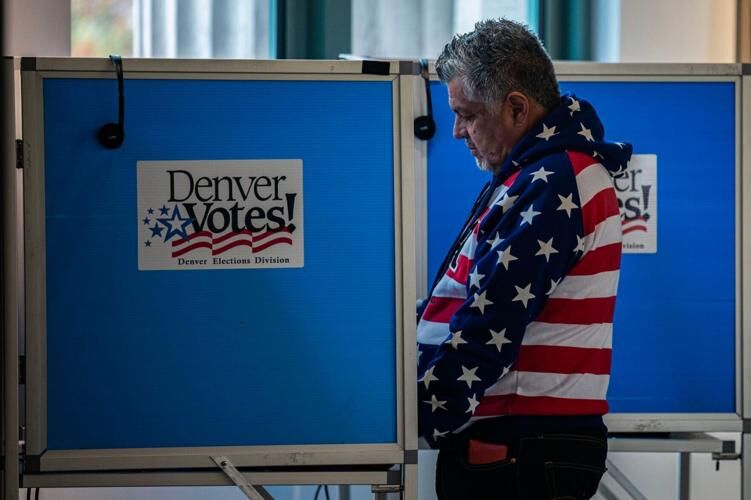
Denver sues Trump to block armed ICE agents from polling sites
Deborah Grigsby
deborah.smith@denvergazette.com
Updated 2 days ago
The city of Denver, along with several groups, sued the Trump administration Thursday, seeking to block U.S. Immigration and Customs Enforcement officers who are armed from polling sites during the upcoming midterm elections. In fact, there are no official orders...
Colorado doctors, dentists challenge state law on gender‑transition services in new federal lawsuit
Marissa Ventrelli
marissa.ventrelli@coloradopolitics.com
Updated 17 hours ago
A group of Christian doctors and dentists has filed a federal lawsuit challenging a Colorado law they say requires them to provide gender‑transition services that conflict with their religious and ethical beliefs. The lawsuit, filed by the Christian Medical and...

Colorado ed department must up its competence to prevent waste, fraud, abuse | Paula Noonan
Paula Noonan
paula-noonan@coloradopolitics.com
Updated 2 days ago
The Colorado Department of Education let $24 million fly from its checking accounts from January 2017 through June 2026 to CHE, aka Colorado Homeschool Enrichment. The details show how easily CHE and Education Re-Envisioned BOCES re-envisioned how to convert public...

Remember the injustice of forced unionism | GUEST COLUMN
Colorado Politics
colorado-politics@coloradopolitics.com
Updated 2 days ago
By Mark Mix This Labor Day we celebrated the men and women whose hard work keeps the country running. But in Colorado, many of those same workers face a real threat: pay union dues or lose their job. That’s because...

Should we always blame voters for low civic participation in elections? | GUEST COLUMN
Roland Halpern
roland-halpern@coloradopolitics.com
Updated 3 days ago
This year, like every election cycle, we hear the same complaints — enough citizens don’t vote. Voter turnout is too low. People are disengaged. Citizens are shirking their civic responsibility. If only voters cared more, democracy would work better. Fair...
Colorado joins lawsuit challenging changes to Endangered Species Act
Marissa Ventrelli
marissa.ventrelli@coloradopolitics.com
Updated 3 days ago
Colorado once more joined a coalition of states challenging the Trump administration — this time on proposed rules regarding the Endangered Species Act. The pair of lawsuits challenge new rules made under Interior Secretary Doug Burgum, who earlier said the...