

Colorado joins lawsuit challenging changes to Endangered Species Act
Colorado once more joined a coalition of states challenging the Trump administration — this time on proposed rules regarding the Endangered Species Act.
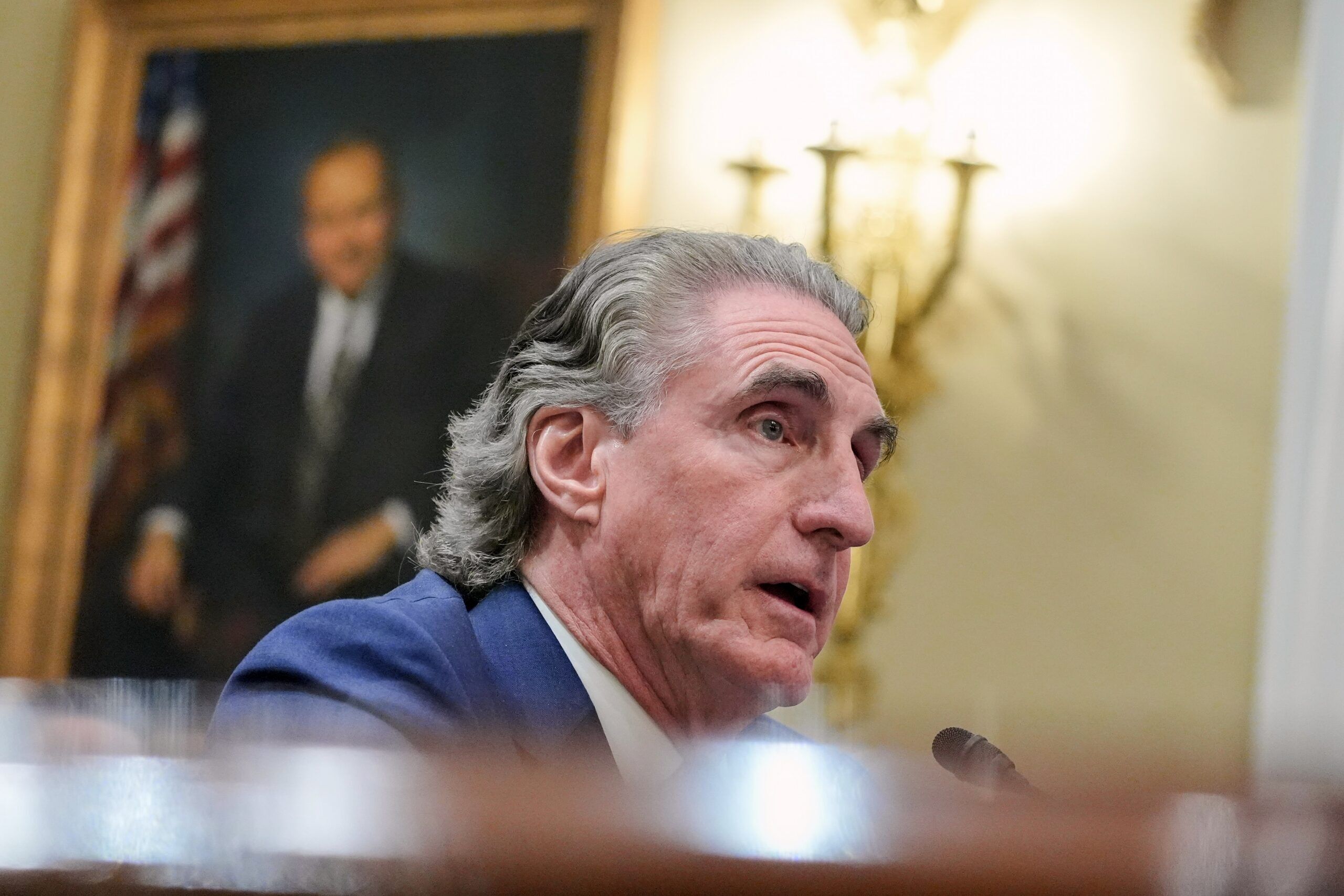
The pair of lawsuits challenge new rules made under Interior Secretary Doug Burgum, who earlier said the endangered species law has been abused by federal agencies for years in order to “obstruct lawful use and burden American families and businesses.”
In a news release, Colorado Attorney General Phil Weiser said the rules make it easier for private companies to modify or degrade the habitats of threatened and endangered species.
“Colorado is home to over 30 threatened and endangered species that are critical to stable and healthy ecosystems,” said Weiser, who is also the Democratic candidate for governor. “The changes by the Trump administration put threatened and endangered species and their habitats at risk, undermining the comprehensive protections Congress mandated under the Endangered Species Act. Our state is known for its great outdoors and responsible wildlife management.”
The first lawsuit challenges a recent rule implemented by the administration that changes the definition of “harm” under the Endangered Species Act.
For decades, the government defined “harm” broadly to include encroachments on places with threatened and endangered animals. The change, which was announced in July, would allow oil and gas drilling, mining, logging and other development on critical wildlife habitats — so long as the animals themselves aren’t killed or injured.
In July, the Interior defended the move by saying its action “returns the interpretation of the ESA back to its actual text and original intent, which will end years of federal overreach,” adding it “(delivers) the kind of common sense and accountability the American people voted for.”
The agency also said the changes are based on the U.S. Supreme Court’s 2024 decision in Loper Bright v. Raimondo, which, the Interior Department argued, mandates agencies to follow the “single best meaning of a statute rather than contorting laws to fit political agendas.”
“For years, federal agencies abused the ESA to obstruct lawful land use and burden American families and businesses,” Burgum said in July. “That approach turned routine activity into a regulatory trap, drove up costs that impacted people’s lives, and expanded federal authority beyond what Congress intended. This action restores common sense, respects private property, provides much-needed certainty for landowners and follows the statute Congress actually passed.”
The second lawsuit challenges two proposed rule changes made by the U.S. Fish and Wildlife Service last month that seek to rescind regulations that automatically protect newly listed threatened species and create a new process for designating areas as “critical habitat,” respectively. The lawsuit argues that these proposed rules will leave areas essential to species’ conservation without the protections that Congress intended.
To date, Weiser has filed or joined 82 lawsuits against the Trump administration since January of 2025.
The suits come just days after Trump announced he has directed Burgum to launch a 90-day review on whether gray and Mexican wolves should be removed from Endangered Species Act protections.
The order drew mixed reactions for Colorado’s wolf-reintroduction effort, with ranchers and some state leaders calling it a step toward more flexible management, while wolf advocates argue it strips away key safeguards.
Republican U.S. Rep. Lauren Boebert, of Colorado’s 4th Congressional District, has also introduced legislation directing the Secretary of the Interior to remove Endangered Species Act protections for the gray wolf. The bill passed through the House last year but has stalled in the Senate.
In 2020, the Trump administration ordered the delisting of gray wolves, but a California federal court overturned that decision in 2022. That decision is now on appeal, with a hearing scheduled next month.
In Colorado, gray wolves are protected under Section 10(j) of the Endangered Species Act, which designates them as a “nonessential experimental population” and prohibits the general public from trapping, shooting, wounding or killing them, unless they pose an immediate threat to human safety.
According to Colorado Parks and Wildlife, there are at least 32 gray wolves living in Colorado since voters approved their reintroduction to the state in 2022. Since 2023, 19 wolves have died, either due to natural causes, mountain lion conflict or euthanization by CPW due to chronic depredation. On Sept. 8, CPW confirmed it had killed two wolves in Pitkin and Rio Blanco counties due to depredation events in recent months.
Wufei Yu and Matthew Brown of The Associated Press and Colorado Politics reporter Marianne Goodland contributed to this story.


Boebert challenger Eileen Laubacher says she’ll ‘break through the noise’ in Democrat’s 1st TV ad
Ernest Luning
ernest.luning@coloradopolitics.com
Updated 1 hour ago
Democratic congressional candidate Eileen Laubacher says she’ll take a different approach than her opponent in a campaign ad released by Wednesday that opens with a cacophonous series of videos featuring Republican U.S. Rep. Lauren Boebert. “Eileen’s had enough of the...

Colorado congressman asks DOJ to investigate violent student ICE walkout
Nico Brambila
nico.brambila@denvergazette.com
Updated 7 minutes ago
U.S. Rep. Jeff Crank is asking the Justice Department to investigate violence at last week’s anti-ICE student walkout in Denver, including whether outside organizations helped organize, fund, or influence the demonstration. Crank sent a letter Tuesday requesting the investigation to...

Two more wolves killed by Colorado wildlife staff
Marianne Goodland
marianne.goodland@coloradopolitics.com
Updated 1 day ago
Two yearling wolves from the Copper Creek and Three Creeks packs in Pitkin and Rio Blanco counties, respectively, were killed by Colorado Parks and Wildlife staff on Monday. That brings to 19 the number of wolves that have died under...

Federal judge dismisses Douglas County’s challenge to collective bargaining law
Nicholas Fogleman
nicholas.fogleman@denvergazette.com
Updated 8 hours ago
A federal judge dismissed claims brought by the Douglas County Board of Commissioners alleging that a state law granting county employees the right to organize and join labor unions violates free speech protections and conflicts with federal labor law. Douglas...

U.S. Rep. Lauren Boebert calls Trump’s 90-day wolf-delisting review ‘real progress’
Marianne Goodland
marianne.goodland@coloradopolitics.com
Updated 22 hours ago
President Donald Trump has directed Interior Secretary Doug Burgum to launch a 90-day review on whether gray wolves and Mexican wolves should be removed from Endangered Species Act protections. The order drew mixed reactions for Colorado’s wolf-reintroduction effort, with ranchers...

Jeffco Public Schools eliminated 350 jobs as part of budget cuts
Matt Kyle
matt.kyle@denvergazette.com
Updated 8 hours ago
Jeffco Public Schools eliminated 350 full-time positions as part of ongoing budget cuts between last school year and this school year. The district has operated in a budget deficit in the range of tens of millions of dollars over the...
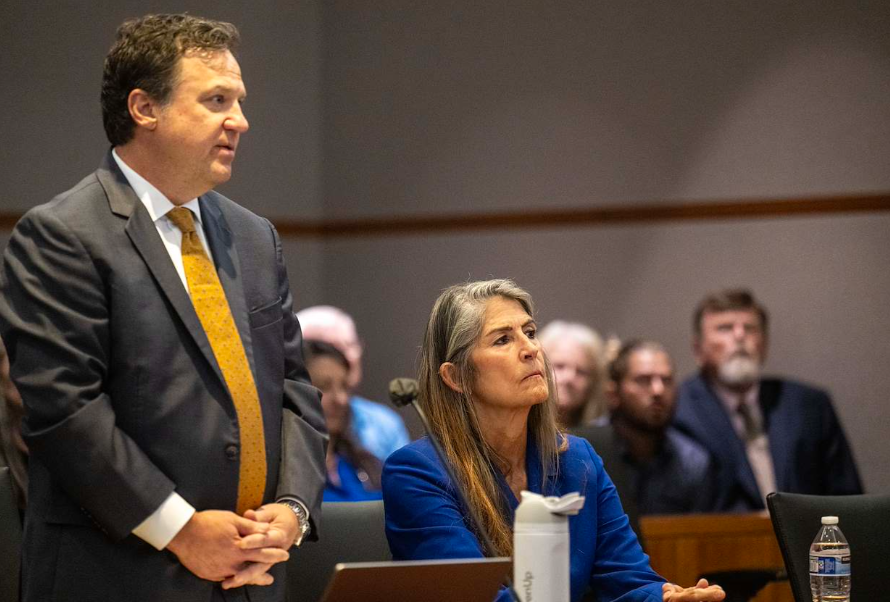
Disgraced ex-CBI analyst Missy Woods sentenced to prison in DNA scandal
Jenny Deam
jenny.deam@gazette.com
Updated 1 day ago
A Jefferson County district court judge on Tuesday sentenced a disgraced former Colorado Bureau of Investigation DNA analyst to a decade in prison for altering and deleting data in scores of criminal cases over several years. Jefferson County District Judge...

Jason Crow endorses Democrats up and down Colorado’s ballot, chips in $100K for campaign efforts
Ernest Luning
ernest.luning@coloradopolitics.com
Updated 1 day ago
Democratic U.S. Rep. Jason Crow on Tuesday formally endorsed more than 60 Democrats running up and down Colorado’s ballot and said he’s putting $100,000 into statewide and county campaigns and organizing programs to drive turnout in the fall election. Crow,...

With its water source dry, a southeast Colorado town’s clock is ticking
Savannah Eller
savannah-eller@coloradopolitics.com
Updated 1 day ago
The Cucharas is not a mighty river, but the people of La Veta knew they had a problem brewing when it ran dry at the beginning of June. “We’re getting by,” said La Veta Mayor Doug Brgoch. “It’s not great.”...

Fort Carson soldiers run Indonesian exercise, refine communications tech
Mary Shinn
mary-shinn@coloradopolitics.com
Updated 1 day ago
Fort Carson soldiers are overseeing an expansive military exercise in Indonesia while honing new communications technology for the Army. More than 4,700 personnel are participating in the annual training, known as Super Garuda Shield 2026, taking place across several regions...
PREV
PREVIOUS

Boebert challenger Eileen Laubacher says she’ll ‘break through the noise’ in Democrat's 1st TV ad
Democratic congressional candidate Eileen Laubacher says she’ll take a different approach than her opponent in a campaign ad released by Wednesday that opens with a cacophonous series of videos featuring Republican U.S. Rep. Lauren Boebert. “Eileen’s had enough of the noise in Washington,” the ad’s announcer says after a flurry of split-second clips depicting some […]

Federal judge explores new sanctions against ex-Colorado judicial discipline director
A federal judge on Wednesday directed Colorado’s former judicial discipline director, for the third time this year, to explain why she should not sanction him for his latest conduct in his litigation against the state’s judiciary. Christopher S.P. Gregory, who served as the executive director of the Colorado Commission on Judicial Discipline between 2022 and 2024, raised […]