

Fort Carson soldiers run Indonesian exercise, refine communications tech
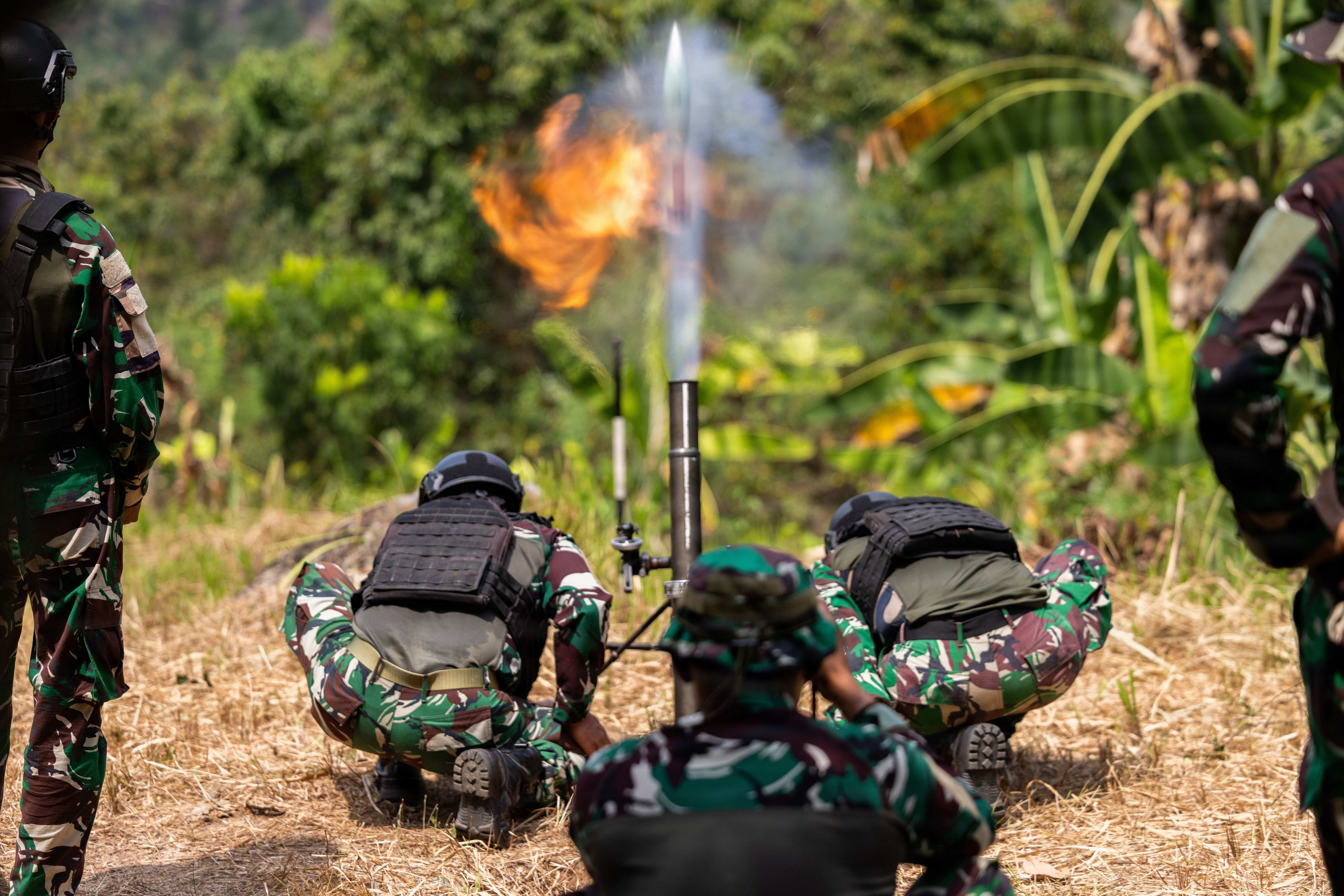
Fort Carson soldiers are overseeing an expansive military exercise in Indonesia while honing new communications technology for the Army.
More than 4,700 personnel are participating in the annual training, known as Super Garuda Shield 2026, taking place across several regions of Indonesia and featuring infiltration drills, firing of Stinger missiles, cyber exercises and amphibious maneuvers. The expansive training exercise started on Aug. 31 and will wrap up on Friday.
About 150 Fort Carson soldiers traveled to Indonesia, an archipelago of 17,000 islands, to oversee the exercise that is bringing together U.S. Army, Air Force, Navy and Marine Corps personnel and troops from partner nations. It is the first exercise since Indonesia and the U.S. announced a new defense partnership this year.
The participating nations include Australia, Canada, Japan, Singapore, Brazil, India, France, Germany, New Zealand and the Netherlands.
The exercise is “building valuable relationships and readiness with our Indonesian and multinational partners through challenging and realistic training,” said Maj. Gen. Patrick Ellis, commanding general of the 4th Infantry Division, in a news release.
Indonesia has long maintained a foreign policy of non-alignment, with President Prabowo Subianto vowing to befriend all nations and maintain good ties with both the United States and China.
Indonesia last month agreed to boost its military ties with Beijing during a visit by China’s foreign and defense ministers.
In addition to overseeing the training, Fort Carson soldiers also worked to further the development of the Next Generation Command and Control systems that will be rolled out to the entire Army.
The new system will bring together formerly siloed communication systems and allow for greater speed and reliability in transmitting data across the battlefield.
As part of this work, Fort Carson used a Mobile Command Group Stryker and associated technology to maintain connectivity to the Next Generation Command and Control system on board a C-17 Globemaster III while traveling from Colorado to Indonesia, a spokesperson with Super Garuda Shield said in an emailed statement.
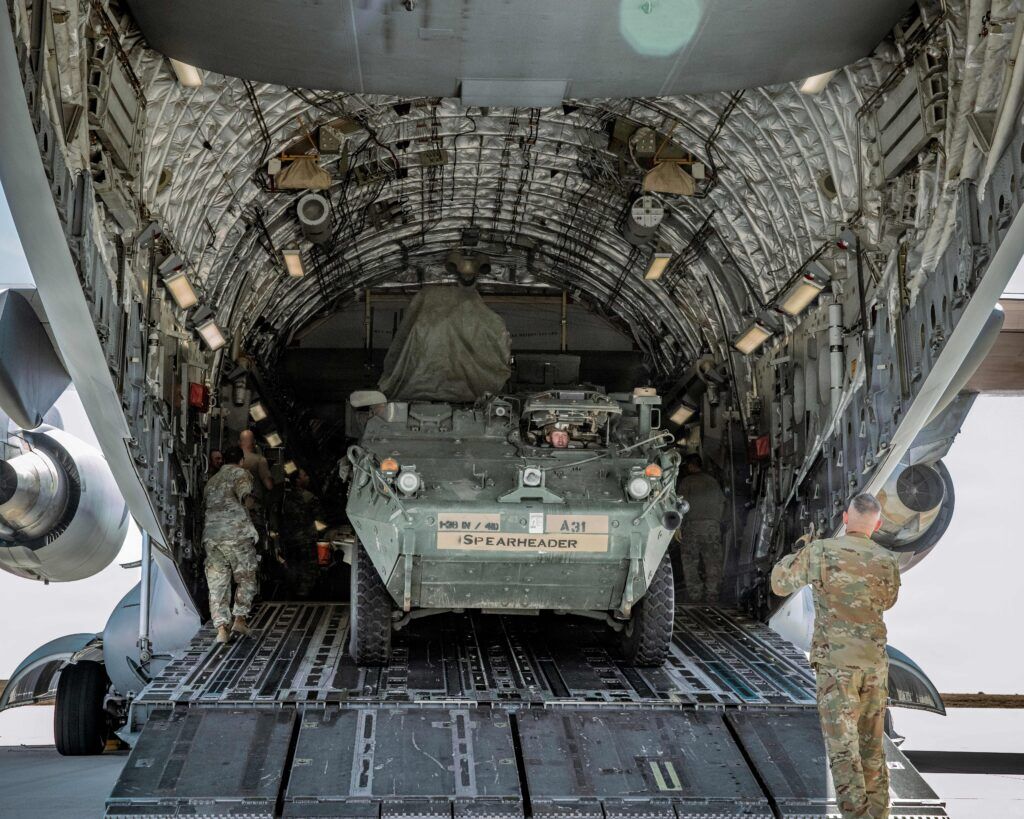
While on board the plane, leaders were able to operate with systems and techniques established and refined while using Strykers during ground operations, the statement said.
“This provided a huge boost in situational awareness for leaders while in transit, as they were able to remain digitally connected to ongoing training and operations occurring in Fort Carson and in Indonesia,” the statement said.
The new communications technology was also tested aboard a U.S. Coast Guard patrol boat, it said.
“This is a first for the Army and for the Pacific Theater,” the statement said.
A team of Fort Carson soldiers with the 124th Division Signal Battalion personnel worked with U.S. Navy and U.S. Coast Guard teams operating from Jakarta on the Coast Guard’s Emlen Tunnell and Charles Moulthrope, both Sentinel-class fast response cutters, on the maritime communications test.
The test relied on satellites in low Earth orbit to connect with leaders 300 miles north in Baturaja, the statement said.
It was a proof of concept that marked an important first step in working across the military branches and enhancing maritime security, the statement said.
Fort Carson soldiers are expected to continue to refine the Next Generation Command and Control systems over the next year.
Following a monthlong training at the National Training Center in California over the summer focused on the new technology, Ellis said, it was functional but not optimized.
Following that exercise, the Army determined the systems are ready to scale.
“The Ivy Division is proud to have delivered a prototype at the division scale, and we’ll spend the next year refining how we fight using the technology to share our lessons learned across the Army.”
Reuters contributed to this report.

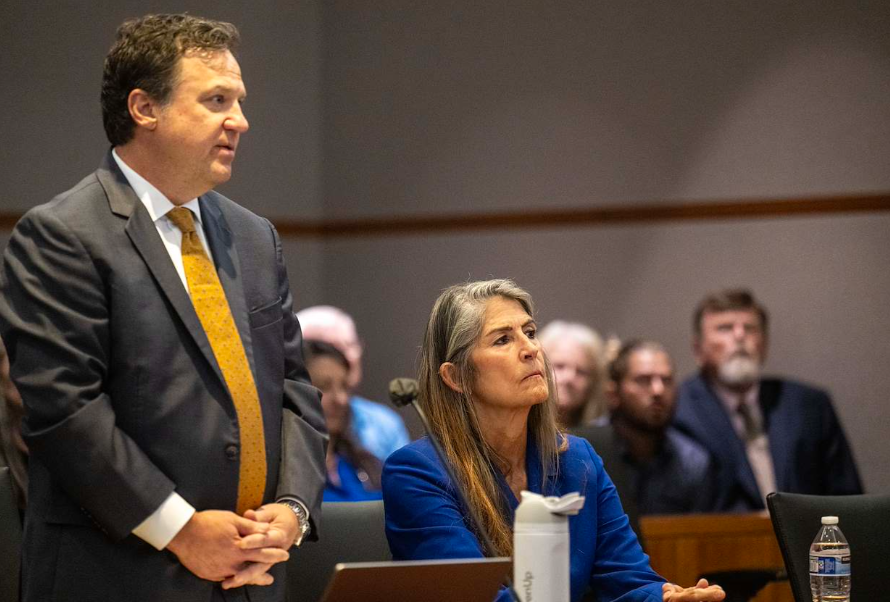
Missy Woods to be sentenced Tuesday
Jenny Deam
jenny.deam@gazette.com
Updated 11 minutes ago
The former high-profile CBI analyst faces between 8 and 16 years in prison Yvonne “Missy” Woods, in a blue blazer and skirt, arrived at the Jefferson County courthouse Tuesday just before 8 a.m. She was greeted outside the courtroom by...

With its water source dry, a southeast Colorado town’s clock is ticking
Savannah Eller
savannah-eller@coloradopolitics.com
Updated 46 minutes ago
The Cucharas is not a mighty river, but the people of La Veta knew they had a problem brewing when it ran dry at the beginning of June. “We’re getting by,” said La Veta Mayor Doug Brgoch. “It’s not great.”...

Colorado House ethics committee issues ‘stern letter’ to Democrat over caucus funds mismanagement
Marianne Goodland
marianne.goodland@coloradopolitics.com
Updated 2 days ago
The Colorado House ethics committee on Friday voted unanimously to issue a “stern letter” to Rep. Mandy Lindsay, D-Aurora, regarding her mismanagement of House Democratic caucus funds. The committee further voted to request that Lindsay resign as Democratic Caucus co-chair...

Secretary of Energy, congressmen push for reliable power over renewable outside CSU coal power plant
Brennen Kauffman
brennen-kauffman@coloradopolitics.com
Updated 42 minutes ago
U.S. Secretary of Energy Chris Wright said Friday that the Trump administration would continue to fight against state efforts to close coal power plants, including the Ray Nixon Power Plant outside of Colorado Springs. Wright was joined by Colorado Republican...

Regulators knew this marijuana product was harming people. It stayed on shelves for more than a year
Christopher Osher
chris.osher@gazette.com
Updated 1 day ago
Colorado’s Marijuana Enforcement Division can take months or even years to issue formal safety warnings about marijuana products even when it receives reports that the products are harming people’s health, The Denver Gazette and ProPublica found. This article was produced...

Douglas County commissioners reject challenge to ballot language for 3 to 5 petition
Nicholas Fogleman
nicholas.fogleman@denvergazette.com
Updated 4 days ago
Douglas County commissioners denied a challenge Thursday to the language of a ballot initiative that would expand the board from three to five members. Following a contentious hearing that saw multiple audience members escorted out by police for disruptions, commissioners...

Favorability rating of Mayor Mike Johnston, Denver City Council slides
Nico Brambila
nico.brambila@denvergazette.com
Updated 4 days ago
Denver Mayor Mike Johnston’s favorability rating fell 7 percentage points over the past year, while the City Council’s favorability rating dropped 3 percentage points, a new poll has found. A little more than a year after taking office, Johnston had...

Judge orders home confinement for Barry Morphew
Dennis Huspeni
dennis.huspeni@gazette.com
Updated 5 days ago
An Alamosa County district judge has ordered home confinement for Barry Morphew, who is accused of murdering his wife. Barry Morphew, 59, faces a first-degree murder charge in the death of his wife, Suzanne Morphew, who disappeared Mother’s Day weekend...

Ikon Pass company Alterra to move into former Denver Post building, create downtown ‘outdoor hub’
Bernadette Berdychowski
bernadette.berdychowski@denvergazette.com
Updated 5 days ago
What was once the home of two of Colorado’s longest-running daily newspapers could soon become a central location for the state’s ski resort and outdoor companies, city and state leaders said Thursday. Alterra Mountain Co. is moving its headquarters to...

Castle Rock Town Council passes measure expanding authority over school-designated land and funds
Nicholas Fogleman
nicholas.fogleman@denvergazette.com
Updated 5 days ago
The Castle Rock Town Council passed an ordinance Tuesday that gives the council broader authority to repurpose land and cash designated for school facilities. Douglas County School District officials argue the move would allow the town to do so without...
PREV
PREVIOUS

Parenting from prison: Inmates hope to be present in their children’s lives, while physically absent
The room was decorated with balloons, the tables sparking bright with colors as the smell of pizza and cake wafted through the air. As did music. This was, after all, a father-daughter dance. Except this was not a typical father-daughter dance. The fathers are residents of Trinidad State Prison, a minimum-security facility for men with […]

With its water source dry, a southeast Colorado town's clock is ticking
The Cucharas is not a mighty river, but the people of La Veta knew they had a problem brewing when it ran dry at the beginning of June. “We’re getting by,” said La Veta Mayor Doug Brgoch. “It’s not great.” The town has water in storage at its two reservoirs on the edge of town, […]