

Castle Rock Town Council passes measure expanding authority over school-designated land and funds

The Castle Rock Town Council passed an ordinance Tuesday that gives the council broader authority to repurpose land and cash designated for school facilities.
Douglas County School District officials argue the move would allow the town to do so without compensating the district and would “effectively prohibit construction of new schools in Castle Rock.”
The town code requires that new developments designate land or pay cash-in-lieu fees for public facilities used for public services including schools, water providers and fire departments. Previously, designations were required to be used for the specific purpose for which they were designated.
The amendment now allows the town to use designated land and fees for any public purpose, regardless of the original designation made at the time of development.
In letters to the council, during public comment periods, and at a recent school board meeting, school officials raised concerns about provisions that specifically affect school-related land and cash dedications.
District officials argued that the new ordinance would allow the Town Council to redirect land designated for future school use without compensation and give the council sole discretion to use funds specifically dedicated to schools for any public purpose.
Castle Rock officials said the amendment is intended to address several properties currently held for school purposes that they believe are unsuitable for future school development because of their size, location, proximity to other schools, or changing community needs. They emphasized that any redesignation would require a public hearing before a determination is made.
Officials said they want to provide certainty to nearby residents about future land uses.
Town documents show 13 properties dedicated for future school sites, including one near Castlewood Ranch that has been designated for a school since 1999. According to town staff, the town also possesses $230,000 designated for a school in the Red Hawk development.
Councilmember Max Brooks defended the ordinance by noting that the amendment does not redesignate any land; rather, it creates “a mechanism to review each individual property.”
“We’re not deciding what’s happening with the sites tonight,” Brooks said. “That will come in the future, and each one of those sites will have its own public hearing.”
Since the 1980s, the town has collected land and fees from residential developments for school facilities. The land and fees are held and managed by the town until requested by the district for construction of a planned school.
Under the previous ordinance, if the town determined that land previously acquired for schools would better serve another public need, it could compensate the district for the land. School officials argued this provision already allowed the town to repurpose school-designated land if it provided compensation.
“Allowing the town to take property currently held in trust for the school district without compensation, on the other hand, will steadily erode the school district’s ability to serve Castle Rock’s constituents,” Superintendent Erin Kane wrote in a letter to the council.
The amendment places additional requirements on the district before land is conveyed and establishes deadlines under which the town can reclaim the property through a reversion clause. These include a 10-year use deadline and a three-year construction deadline, after which the town retains a right of reversion.
Additionally, the district must obtain approval for a site development plan and demonstrate that it has sufficient funding to complete construction.
During public comment, members of the district’s Long-Range Planning Committee said the timelines imposed by the ordinance did not reflect the district’s planning and funding mechanisms.
“It has taken almost 15 years from when we first said, ‘Gee, we may need a school at some point where this place is being built, called Sterling Ranch,’ to where we actually put the last steel beam in last week,” Rudy Lukez, a member of the Long-Range Planning Committee, said, referencing a nearly completed school in Sterling Ranch.
School construction is funded primarily through voter-approved bonds, which can require years of planning before approval, in addition to construction timelines that can take six years or more. District officials argued the combination of timelines, planning requirements, and reversion rights leaves school construction solely in the hands of the town.
“We wouldn’t be able to designate a site without securing funding for building a new school,” Kane told the council. “We can’t ask the taxpayers for funding for a new school without telling them what that site is and having that site dedicated for that purpose. It puts us in a chicken-and-egg cycle.”
Councilmember Kevin Bracken and Mayor Jason Gray expressed similar concerns about the imposed timelines.
“They can’t request the funding until they’ve identified the site,” Bracken said. “And if our timeline is too tight, then it really precludes them from building a school. So we’re in a catch-22, in my opinion.”
School officials also raised concerns about the use of fees designated for school facilities. New developments can pay cash in lieu of land, which is held by the town until the district requests it for school construction.
The new ordinance changes language regarding cash-in-lieu fees that previously stated “cash … will be utilized” to purchase land for the school district to “cash … may be utilized” to purchase land.
“Developers, and ultimately homebuyers, paid these fees expecting them to support school construction, not to sit in municipal coffers indefinitely or to support other uses,” Kane wrote in a letter to the council. “The ordinance would let the town collect money under the banner of school funding while spending it however it chooses.”
District staff also argued that if the town applied these amendments to existing dedications, it would violate the state constitution’s prohibition on retroactive legislation.
Councilmembers repeatedly stressed that the amendment was not designed to take land from the school district or prevent new schools from being built in town.
“I am a little put off by what I would consider to be not just hyperbolic verbiage, but wildly hyperbolic claims that we’re talking about never building another school in Castle Rock,” Councilmember Brooks said. “That is not what we are discussing here.”
Councilmembers stressed that the ordinance did not redesignate land at this time and expressed a willingness to work with the school district on any future decisions.
“We’re not trying to take property from you,” Mayor Pro Tem Laura Cavey said. “I think we can still work together.”
The motion passed 4-3, with Councilmember Ryan Hollinghead, Councilmember Bracken and Mayor Gray voting no, and Councilmember Mark Davis, Councilmember Brooks, Councilmember Tim Dietz and Mayor Pro Tem Cavey voting yes.


Judge orders home confinement for Barry Morphew
Dennis Huspeni
dennis.huspeni@gazette.com
Updated 53 minutes ago
An Alamosa County district judge has ordered home confinement for Barry Morphew, who is accused of murdering his wife. Barry Morphew, 59, faces a first-degree murder charge in the death of his wife, Suzanne Morphew, who disappeared Mother’s Day weekend...

Ikon Pass company Alterra to move into former Denver Post building, create downtown ‘outdoor hub’
Bernadette Berdychowski
bernadette.berdychowski@denvergazette.com
Updated 1 hour ago
What was once the home of two of Colorado’s longest-running daily newspapers could soon become a central location for the state’s ski resort and outdoor companies, city and state leaders said Thursday. Alterra Mountain Co. is moving its headquarters to...

Denver plans to spend $50M on improvements to Sloan’s Lake
Nicole C. Brambila
nicole-c-brambila@coloradopolitics.com
Updated 23 hours ago
Denver plans to spend $50 million for Sloan’s Lake improvements. Mayor Mike Johnston and Councilmembers Amanda P. Sandoval and Jamie Torres announced the project’s launch steps from the lake’s shore near the jetty in the park on Wednesday morning. “After...

Petitions seek to place noise restrictions, surveillance cameras and water limits on Colorado Springs ballot
Brennen Kauffman
brennen-kauffman@coloradopolitics.com
Updated 1 hour ago
Petitioners in Colorado Springs are preparing to gather signatures to place restrictions on noise levels, developments that use a large volume of water and surveillance cameras that use automatic tracking technology. The City Clerk’s office on Monday gave final approval...

Douglas County sheriff warns of scam impersonating officer
Nicholas Fogleman
nicholas.fogleman@denvergazette.com
Updated 24 hours ago
The Douglas County Sheriff’s Office is warning residents about an ongoing scam in which a caller impersonates a sheriff’s office commander in an attempt to solicit payment. Officials said the scammer is posing as Sheriff’s Office Commander Chad Walker and...
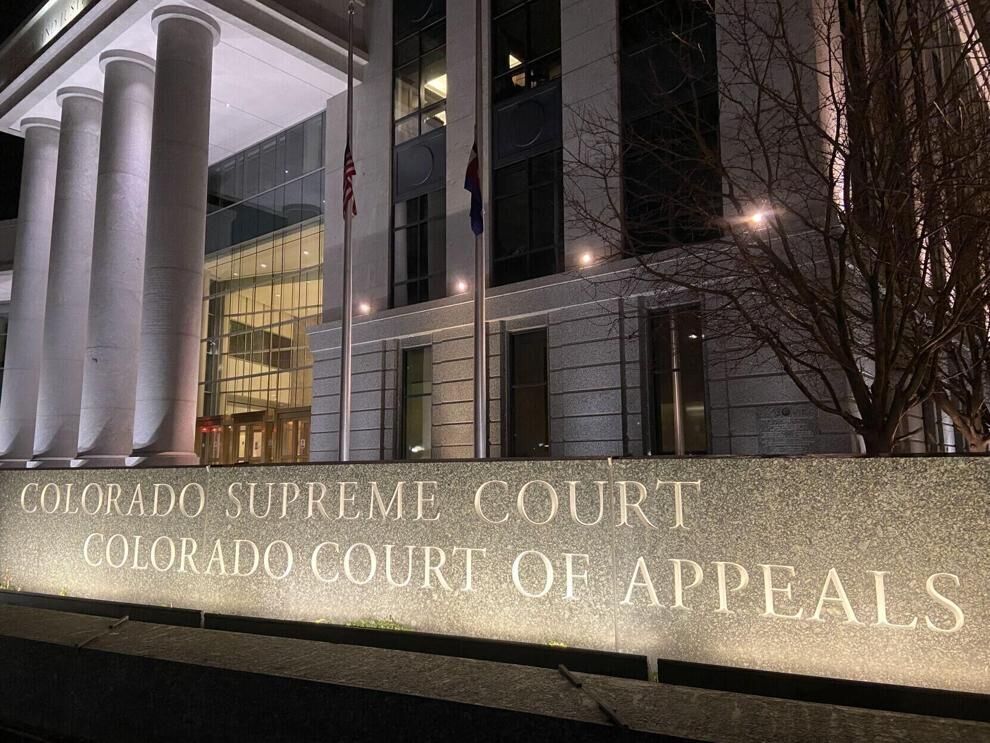
Colorado judges may use professional name in lieu of legal name, ethics panel says
Michael Karlik
michael.karlik@coloradopolitics.com
Updated 1 day ago
Colorado’s Judicial Ethics Advisory Board concluded on Tuesday that members of the bench may go by a professional name, rather than their legal name, so long as their intent is not to deceive. The board, which consists of judges, attorneys...

Fort Carson combat medic killed by fellow soldier remembered as supportive brother and son
Mary Shinn
mary-shinn@coloradopolitics.com
Updated 1 hour ago
A Fort Carson infantryman told police he shot a fellow soldier with a gun he believed was unloaded while at a home in Pueblo during late August. Private 2nd Class Kalob Deyo, 23, is facing a felony manslaughter charge and...

Amazon buys 70 acres in Aurora
Bernadette Berdychowski
bernadette.berdychowski@denvergazette.com
Updated 2 days ago
Amazon purchased 70 acres of land in Aurora with plans to build a distribution center, according to city and county records. The e-commerce giant bought a parcel at 825 N. Lisbon St. from a company tied to Northpoint Development for...

500 teens gather near, and in, Aurora King Soopers, prompting police response
Kyla Pearce
kyla.pearce@gazette.com
Updated 2 days ago
Hundreds of teenagers gathered at an Aurora King Soopers on Sunday, causing a public safety issue and prompting police response. Aurora Police Department officers responded to the King Soopers, at 655 Peoria St., just after 1:30 p.m. Sunday as about...
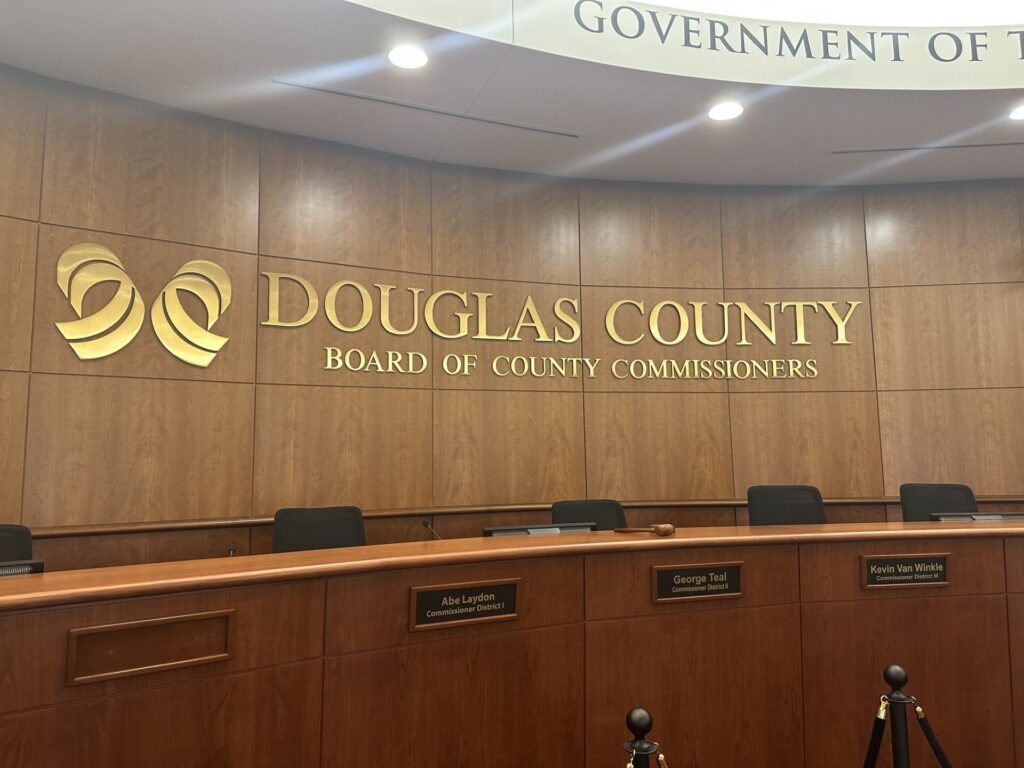
DougCo commissioners refer competing election measure on board expansion
Nicholas Fogleman
nicholas.fogleman@denvergazette.com
Updated 1 day ago
Douglas County commissioners formally waded into the debate over a voter-led ballot initiative Monday by unanimously referring a separate measure that would give voters an additional option if they choose to expand the board from three members to five. The...
PREV
PREVIOUS

Denver plans to spend $50M on improvements to Sloan’s Lake
Denver plans to spend $50 million for Sloan’s Lake improvements. Mayor Mike Johnston and Councilmembers Amanda P. Sandoval and Jamie Torres announced the project’s launch steps from the lake’s shore near the jetty in the park on Wednesday morning. “After decades of work from neighbors in this community, today we are announcing a plan to […]

Colorado sues to stop Trump’s ban on Medicaid dollars paying for minors’ transgender transition
Colorado on Wednesday filed yet another lawsuit against the Trump administration — this time to stop a new rule that prohibits Medicaid dollars from paying for transgender transition services for minors. The question of transgender services has increasingly become a core election matter in Colorado. This November, residents will vote on two measures that implicate […]