Denver plans to spend $50M on improvements to Sloan’s Lake

Denver plans to spend $50 million for Sloan’s Lake improvements.
Mayor Mike Johnston and Councilmembers Amanda P. Sandoval and Jamie Torres announced the project’s launch steps from the lake’s shore near the jetty in the park on Wednesday morning.
“After decades of work from neighbors in this community, today we are announcing a plan to finally restore the health of Sloan’s Lake,” Johnston said to applause.
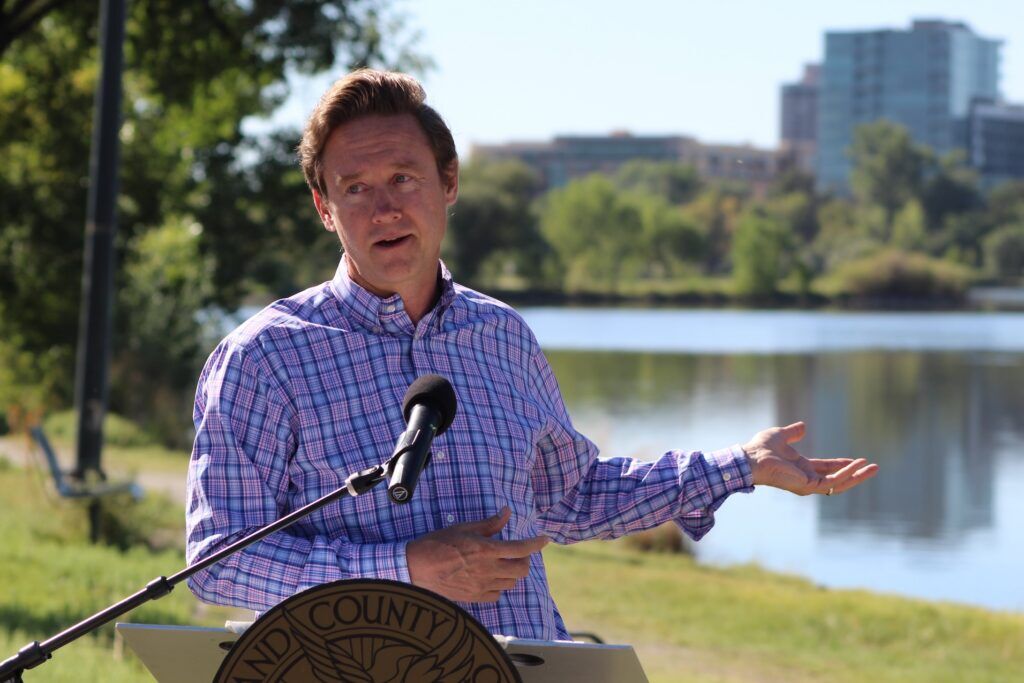
The project, expected to take 30 months, will dredge years of sediment that has built up in the lake and restore the shoreline. Officials said that the park will remain accessible to the public during the work.
The project is not expected to raise taxes nor will it impact the city’s cash-strapped 2027 budget, officials said.
“What we are doing today is we’re ensuring that this remains a jewel for the next seven generations,” Sandoval said.
Johnston identified the project’s funding sources: $5 million in bond money and $5 million from the wastewater management system. The bulk — $40 million — will come from the Denver Urban Renewal Authority through the St. Anthony’s Urban Redevelopment Project.
The Denver Urban Renewal Authority uses what’s called “tax increment financing” to fund redevelopment projects. The special financing captures the growth in property and sales tax revenue within a designated area and uses the additional revenue to finance improvements within the urban renewal area.
The plan still requires approval from both the authority and the Denver City Council.
Last year, voters approved nearly $1 billion in “vibrant” bonds that included $382 million for transportation projects, $147.1 million for parks and recreation and $212.4 million for city facilities, such as upgrades to Red Rocks Park and Amphitheatre.
Wednesday’s announcement was long in coming.
Sandoval pointed to a 2002 Sloan’s Lake master plan as evidence that the city had known for more than two decades that investments would be needed to protect the lake, while balancing recreation, nature, history and environmental responsibility, Sandoval said.
But keeping the lake healthy has been complicated by another role it plays: Sloan’s Lake is a major piece of the region’s stormwater system.
A city drainage plan says the 176-acre lake receives runoff from most of a watershed stretching west into Lakewood, Wheat Ridge and Edgewater, while providing significant storage during floods.
That runoff also carries sediment into the lake that has contributed to its shrinking depth — just a couple of feet in some places — and conditions that can fuel algae growth.
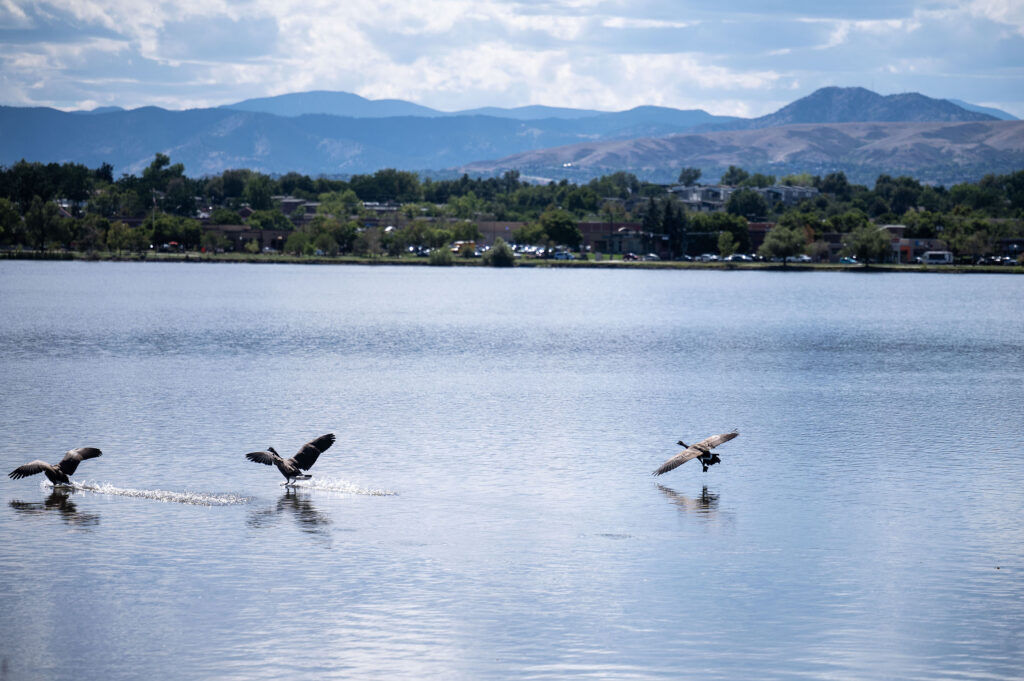
“You don’t need everything out to make it healthy,” said Kurt Weaver, executive director for the Sloan’s Lake Park Foundation. “You just need some real deep, cold areas.”
The consequences of a shallow, warm lake became visible two years ago, when an estimated 2,000 fish died in Sloan’s Lake over the course of a week.
Denver public health officials attributed the die-off to a combination of blue-green algae, heat and environmental conditions. Warmer water holds less oxygen, while blue-green algae can further reduce oxygen available to fish.
The lake had an average depth of just 3.3 feet at the time, according to the Sloan’s Lake Park Foundation, which said sediment from historic and modern construction was entering through 23 unfiltered storm drains. Shallower water is more susceptible to temperature changes and algae blooms.
The area with the most sediment, Weaver said, is located in the western part of Sloan’s Lake near Sheridan Boulevard.
The lake’s namesake, Thomas M. Sloan, is said to have accidentally tapped into an aquifer in 1861 while digging a well to irrigate his farmland in West Denver. The lake sprang to life overnight, so the legend goes, flooding 200 acres and leading to the nickname, “Sloan’s Leak.”
Sloan’s is the largest — and sickest — lake in Denver.
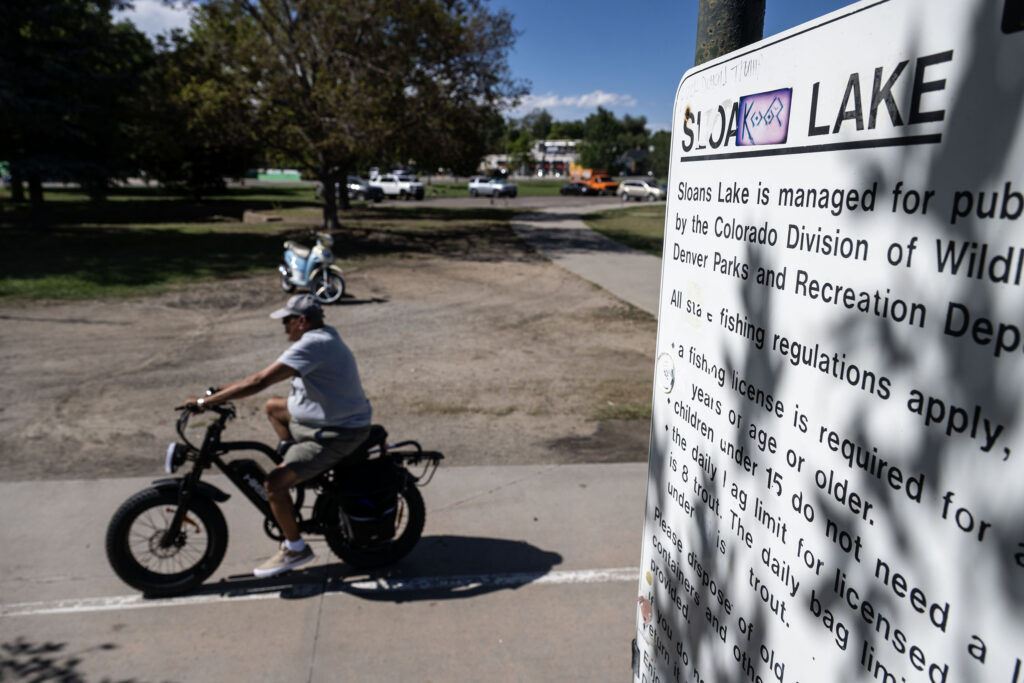
That hasn’t always been the case. In its heyday, the lake attracted activities, such as boating, swimming, and ice skating. Its North shore was also once home to Manhattan Beach, one of Denver’s first amusement parks. The theme park was short-lived, though, after a hot-air balloon frightened Roger the Elephant, causing several children to fall from his back, killing one.
“You’re probably standing where Roger the Elephant walked around,” Weaver told the group gathered for Wednesday’s announcement.
“No, he is not in the lake, for those of you who are still wondering. He’s not there,” he added, drawing laughs.
The lake became a public park in 1923. It is home to the annual Dragon Boat Festival and is visited by more than two million people each year.
Miller Hudson, government relations coordinator for the Sloan’s Lake Park Foundation, lived in the neighborhood for four decades. He remembers when the lake was 12 to 13 feet deep, with dozens of boats on the lake with skiers, something not seen in decades.
Hudson praised the investment in the lake.
“What a real gem this is for the city,” Hudson said. “If we let it die, it’s on us.”

Wildlife commissioner pushes for tougher penalties after hunter accidentally kills Colorado wolf
Marianne Goodland
marianne.goodland@coloradopolitics.com
Updated 2 hours ago
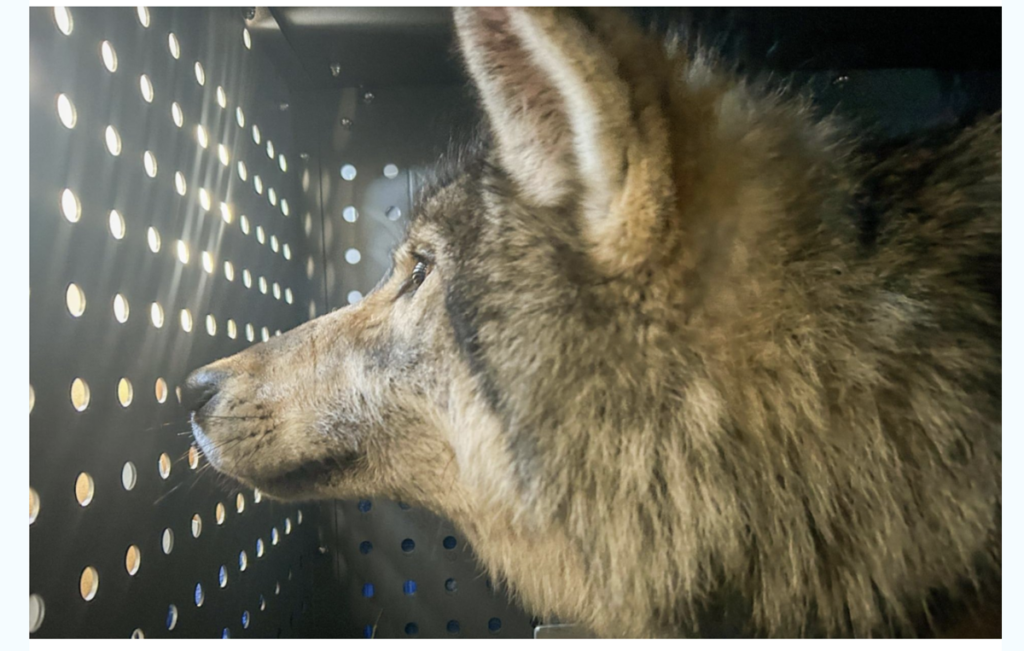
Colorado wildlife officials on Wednesday revisited the agency’s handling of violations involving protected species, prompting renewed debate over whether current penalties are sufficient. Colorado Parks and Wildlife Commissioner Rebecca Niemiec on Wednesday urged the agency to impose stronger penalties —...

Colorado’s Parks and Wildlife chair’s decision to limit public comments sparks backlash from fellow commissioners
Marianne Goodland
marianne.goodland@coloradopolitics.com
Updated 2 hours ago
Last week, the chairman of Colorado’s wildlife commission unilaterally decided to limit public comments, complaining, in particular, that elected officials often “grandstand” at meetings and noting that the election season is well underway. This week, the commission overturned its chair’s...
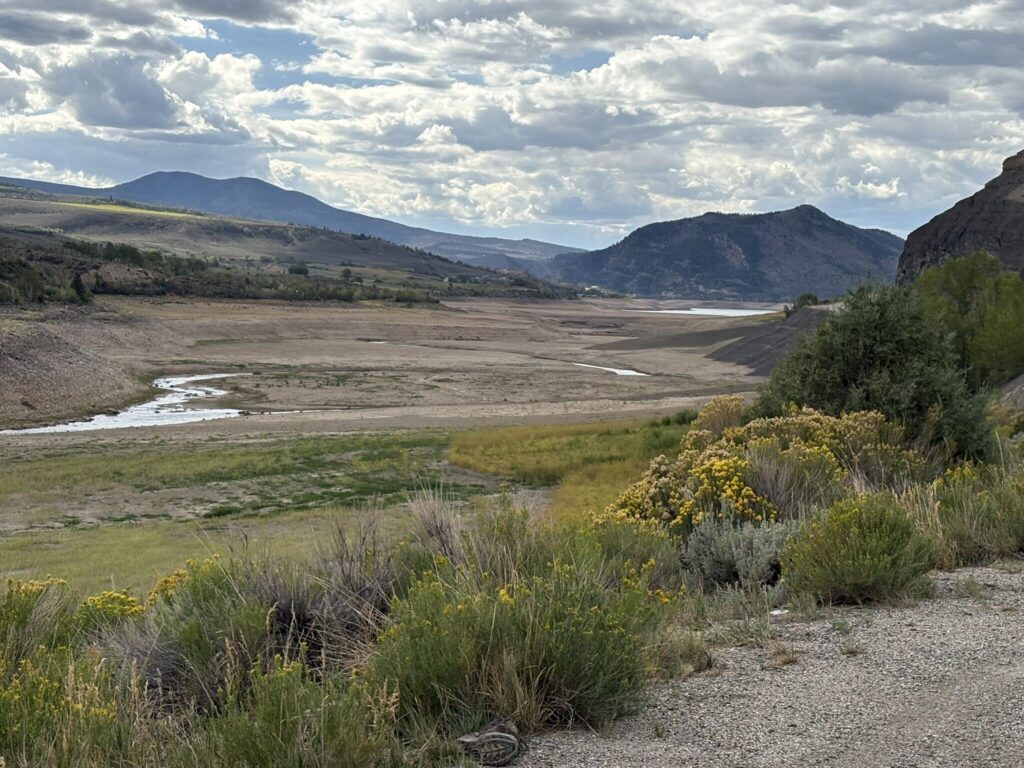
A silver lining: Low water conditions at Green Mountain Reservoir open door for major repairs
Marianne Goodland
marianne.goodland@coloradopolitics.com
Updated 1 day ago
One of the most striking signs of the low snowpack and drought that has plagued Colorado this year can be found by driving by Green Mountain Reservoir in Grand County. The reservoir, first filled in the 1940s, sits at its...

Colorado’s EV charging map nearly complete, state says
Scott Weiser
scott.weiser@gazette.com
Updated 1 day ago
Gov. Jared Polis and the Colorado Department of Transportation released a statement calling the state’s public fast-charging network nearly built out. The Aug. 27 news release reports there are now 486 DC fast-charging locations and 83% of the state highway...

Arapahoe County going ‘all in’ on water conservation in open spaces, parks
Kyla Pearce
kyla.pearce@gazette.com
Updated 5 days ago
Arapahoe County is going “all in” on open space water conservation as Colorado’s drought continues, county officials said. Arapahoe County Open Space officials are modernizing irrigation systems, rethinking turf and cutting water use when possible, according to a statement on...
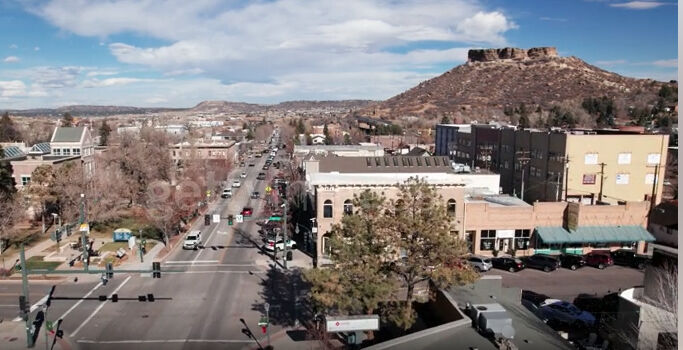
Douglas County School District, Castle Rock clash over school land and fee use
Nicholas Fogleman
nicholas.fogleman@denvergazette.com
Updated 5 days ago
The Town of Castle Rock and the Douglas County School District are at odds over a proposed ordinance change that would give the town greater discretion over how land and cash dedicated for school facilities can be used. Under Castle...

Clear Creek, Jefferson County officials give inside look on wildfire preparations
Matt Kyle
matt.kyle@denvergazette.com
Updated 1 week ago
When it comes to fighting wildfires, the best methods are proactive, not reactive. For officials in Clear Creek and Jefferson counties, it’s not a matter of if a wildfire happens, but when. With a large number of wildfires devastating parts...
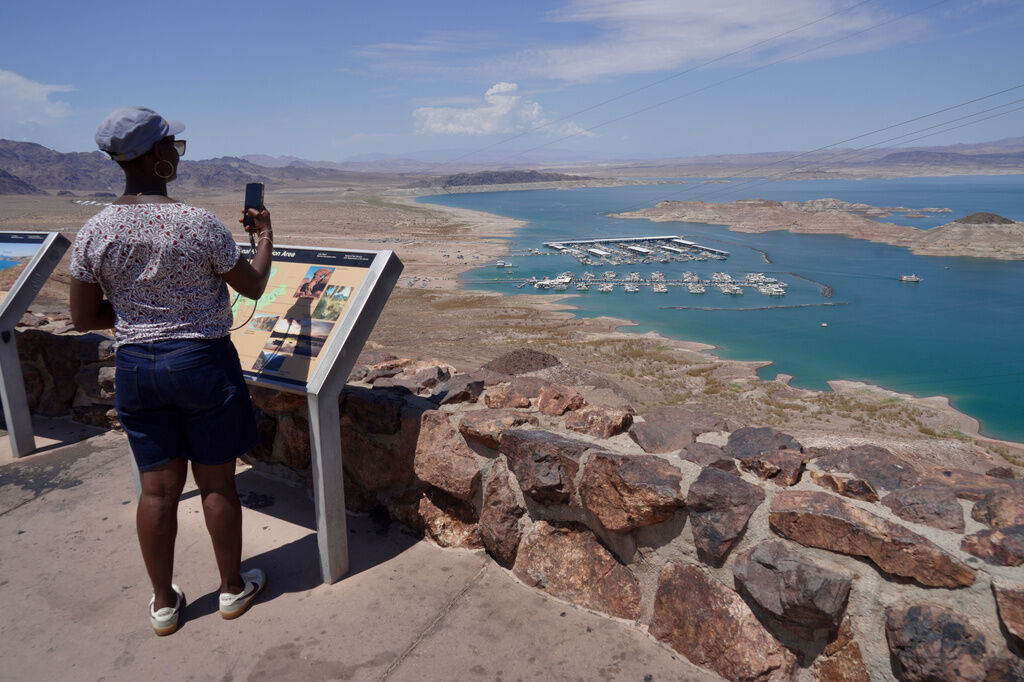
Nevada sues Trump administration over Colorado River cuts
Marianne Goodland
marianne.goodland@coloradopolitics.com
Updated 1 week ago
On Monday, the state of Nevada filed a lawsuit against the Trump administration and Interior Secretary Doug Burgum, seeking to block the Colorado River management plan. On Friday, Burgum released a “record of decision” that would reduce water allocations to...

Democratic candidate in Colorado’s 4th CD urges long-term water planning
Marianne Goodland
marianne.goodland@coloradopolitics.com
Updated 2 weeks ago
The Democrat hoping to become the next representative of Colorado’s 4th Congressional District on Thursday made her case on the final day of Colorado Water Congress in Steamboat Springs. Eileen Laubacher, who spent 34 years in the U.S. Navy and...
Colorado voters will decide fate of ‘right to hunt’ proposal
Colorado Politics
colorado-politics@coloradopolitics.com
Updated 1 week ago
Colorado’s election office said Thursday that a proposal to add a constitutional right to hunting and fishing has qualified for the November ballot. Backed by the International Order of T. Roosevelt, a group dedicated to preserving the North American Model...