

Colorado’s Parks and Wildlife chair’s decision to limit public comments sparks backlash from fellow commissioners

Last week, the chairman of Colorado’s wildlife commission unilaterally decided to limit public comments, complaining, in particular, that elected officials often “grandstand” at meetings and noting that the election season is well underway.
This week, the commission overturned its chair’s decision.
In fact, Jay Tutchton, the wildlife body’s chair, ultimately voted against his own decision.
Tutchton last week announced cutting the public comment time to one hour and to stop giving preferential time to elected officials who testify at commission meetings. He also eliminated the previous “first-come, first-served” rule for testimony. Instead, the commission, he said, would now call witnesses at random and allow only a third of them to be selected by online viewers.
Tutchton justified his decision at the beginning of Wednesday’s meeting at Otero College in La Junta, saying that, because it’s election season, some elected officials “grandstand” at commission meetings and that it is more important to hear from the public than the politicians who may represent them.
He added that elected officials have other means to reach out to the commissioners.
“Your phone calls get returned probably at a higher rate” than ordinary residents, he said.
“I would prefer to hear directly from the local people, rather than filtered through an elected official, even if they’re good at it,” Tutchton added.
Elected officials will be treated just like everyone else, he told the commission.
He added that he isn’t downplaying the value of public comment, but that capping the amount of time would keep the meetings on a timely schedule, given that public comments can sometimes go on for hours — something that, he said, he “failed miserably” at in the July meeting.
It’s hard on the commission’s staff when they don’t get home until after 3 a.m., Tutchton said.
Tutchton also claimed he spoke for all of the commissioners on the issue.
Not all members of the body agreed with Tutchton’s rule changes, including Commissioner Dallas May.
May pointed out that the body’s agenda belongs to the entire commission and that, once presented by the chair, the rest of the board can correct or adapt it. May also said any changes to the public comment policy are the “responsibility and privilege of the commission as a whole.”
He added that Tutchton’s revisions “will add to the already eroding trust that can only be viewed as an effort to discourage public participation in our process. The high volume of public comment requests is a reflection of the contentious nature of what this commission is tasked with.”
Public comment should not be limited solely to the commissioners’ personal convenience, May said, adding meetings should be extended as long as necessary to allow members of the public to speak.
He noted the commission’s policy on public comment that encourages the public to share viewpoints.
But, May said, in today’s meeting, “we have provided very little opportunity for general public comment.”
Regarding the issue of elected officials’ comments, which have traditionally been allotted at the beginning of the public comment period, May said it is done not to show favoritism but to allow for regional governance perspectives.
He noted that elected officials speak for thousands of constituents.
May suggested shaking up the agenda for Thursday and swapping time allotted for the commission to discuss the legality of a decision on hunting bag limits for certain species with the public comment period. He also wanted to make sure that elected officials got to testify at the beginning of the public comment period, as well as everyone else who signed up to speak.
“We’re here to serve the public,” May told the commission.
“There is no excuse,” he added, for ending the meeting by 1:30 p.m. Thursday if there are people waiting to offer public comment.
“The fact that we simply want to leave at 1:30 in the afternoon is offensive to me,” May said.
Tutchton said he is just trying to be responsive to staff concerns about late nights.
Commissioner Frances Silva Blayney noted that she had received questions from the public about whether they would have a chance to speak under the changes announced by Tutchton. She also said a “randomized lottery” to speak is a “really bad idea.” As a citizen who attends public meetings, she isn’t going to drive four, five or six hours to a meeting to “maybe” have an opportunity to speak, she said.
The commission is there “to hear the voices of this community,” she said.
As for elected officials, they are the voice of the people and in her year on the commission, she has never once heard a public official speak like they’re on the campaign trail, she said.
If anyone is being long-winded, it’s the commissioners, Silva Blayney claimed.
She also said she values in-person public comment, given the number of emails she receives before meetings, which sometimes exceed 1,000. That’s an impossible number to actually read and thoughtfully process, she said.
Public comment is not the reason for late meetings, added both Commissioner Tai Jacober and May.
The commission then voted on May’s motion to overturn Tutchton’s decision. It passed on a 6-5 vote.


Denver plans to spend $50M on improvements to Sloan’s Lake
Nicole C. Brambila
nicole-c-brambila@coloradopolitics.com
Updated 18 minutes ago
Denver plans to spend $50 million for Sloan’s Lake improvements. Mayor Mike Johnston and Councilmembers Amanda P. Sandoval and Jamie Torres announced the project’s launch steps from the lake’s shore near the jetty in the park on Wednesday morning. “After...
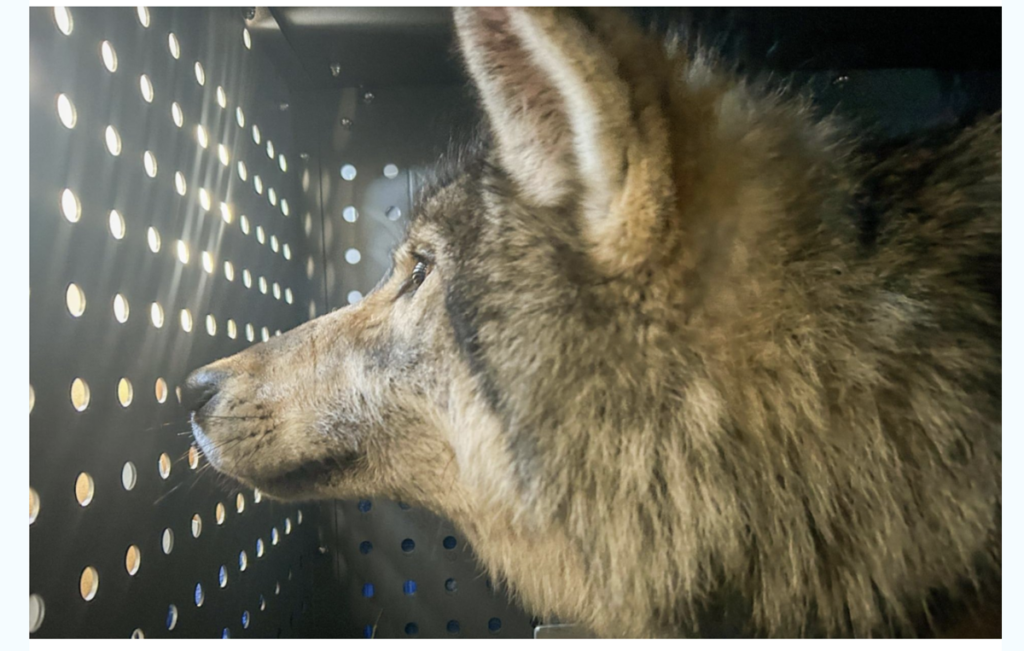
Wildlife commissioner pushes for tougher penalties after hunter accidentally kills Colorado wolf
Marianne Goodland
marianne.goodland@coloradopolitics.com
Updated 32 minutes ago
Colorado wildlife officials on Wednesday revisited the agency’s handling of violations involving protected species, prompting renewed debate over whether current penalties are sufficient. Colorado Parks and Wildlife Commissioner Rebecca Niemiec on Wednesday urged the agency to impose stronger penalties —...

Douglas County sheriff warns of scam impersonating officer
Nicholas Fogleman
nicholas.fogleman@denvergazette.com
Updated 45 minutes ago
The Douglas County Sheriff’s Office is warning residents about an ongoing scam in which a caller impersonates a sheriff’s office commander in an attempt to solicit payment. Officials said the scammer is posing as Sheriff’s Office Commander Chad Walker and...
Colorado judges may use professional name in lieu of legal name, ethics panel says
Michael Karlik
michael.karlik@coloradopolitics.com
Updated 2 hours ago
Colorado’s Judicial Ethics Advisory Board concluded on Tuesday that members of the bench may go by a professional name, rather than their legal name, so long as their intent is not to deceive. The board, which consists of judges, attorneys...
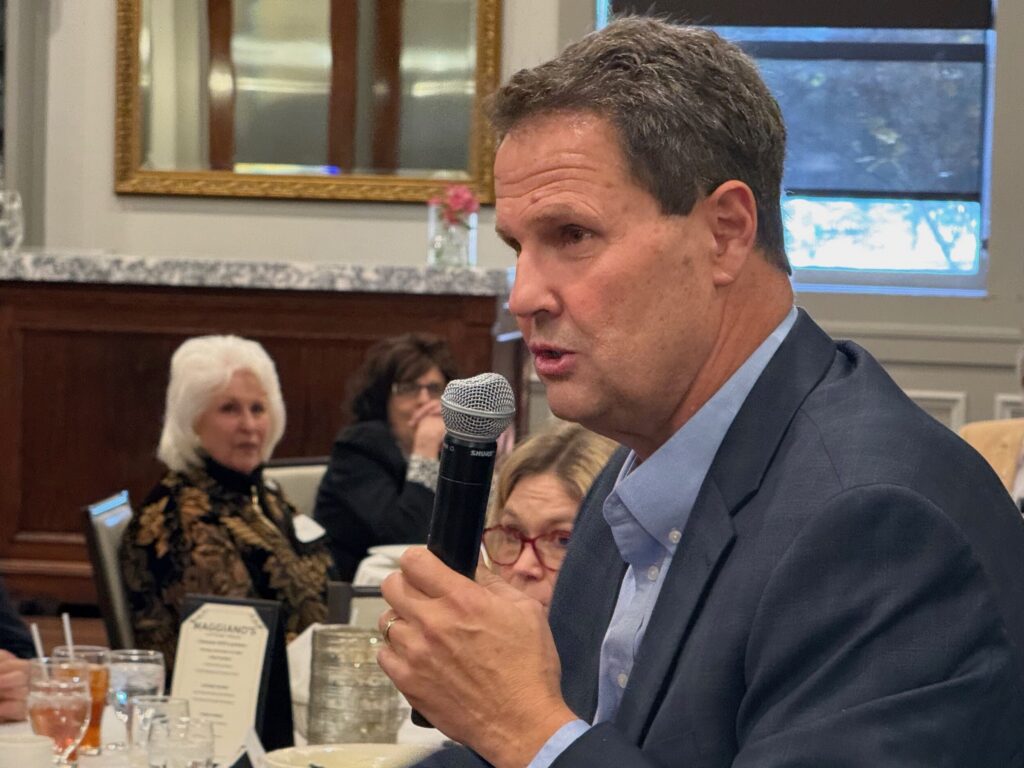
House adopts Republican U.S. Rep. Jeff Crank’s resolution condemning socialism, mostly along party lines
Ernest Luning
ernest.luning@coloradopolitics.com
Updated 4 hours ago
The U.S. House on Tuesday approved a resolution sponsored by U.S. Rep. Jeff Crank to condemn socialism in a largely party-line vote that the Colorado Republican characterized as a chance for lawmakers to “stand firm” against an ideology making inroads...
Capped or graduated income tax rate? Colorado voters to decide
Marianne Goodland
marianne.goodland@coloradopolitics.com
Updated 4 hours ago
The proposal to create income tax tiers — which would replace Colorado’s flat rate — has been certified for the November general election ballot, setting the stage for a major showdown between two competing forces seeking to define the parameters of...

Amazon buys 70 acres in Aurora
Bernadette Berdychowski
bernadette.berdychowski@denvergazette.com
Updated 1 day ago
Amazon purchased 70 acres of land in Aurora with plans to build a distribution center, according to city and county records. The e-commerce giant bought a parcel at 825 N. Lisbon St. from a company tied to Northpoint Development for...
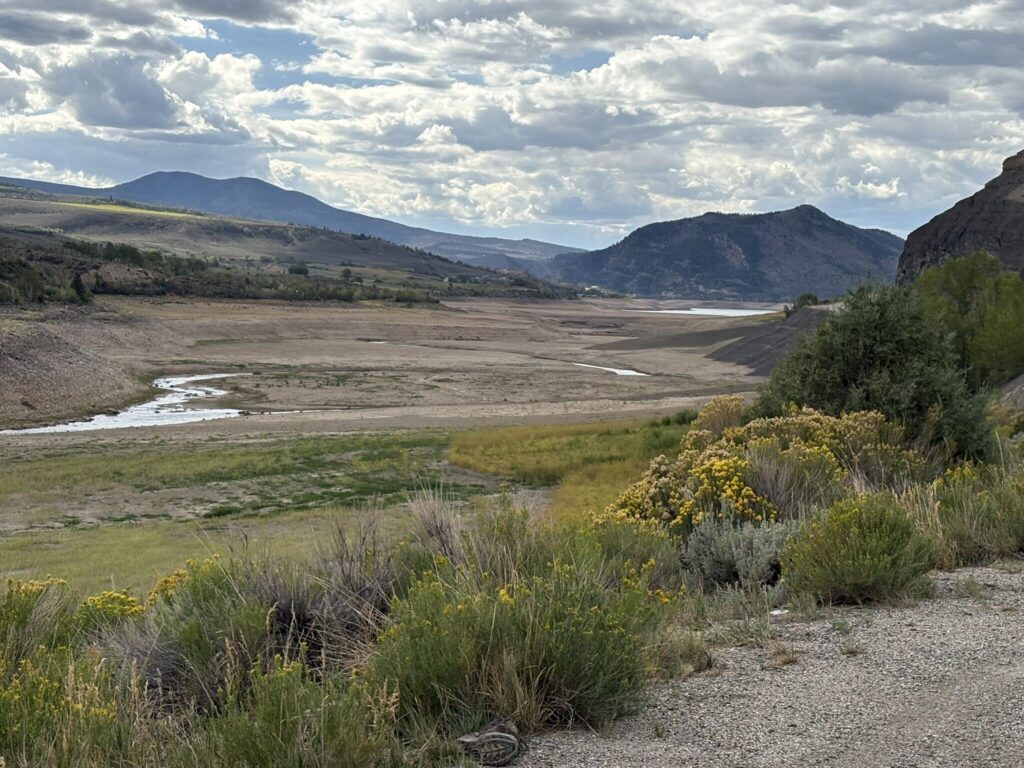
A silver lining: Low water conditions at Green Mountain Reservoir open door for major repairs
Marianne Goodland
marianne.goodland@coloradopolitics.com
Updated 1 day ago
One of the most striking signs of the low snowpack and drought that has plagued Colorado this year can be found by driving by Green Mountain Reservoir in Grand County. The reservoir, first filled in the 1940s, sits at its...

500 teens gather near, and in, Aurora King Soopers, prompting police response
Kyla Pearce
kyla.pearce@gazette.com
Updated 1 day ago
Hundreds of teenagers gathered at an Aurora King Soopers on Sunday, causing a public safety issue and prompting police response. Aurora Police Department officers responded to the King Soopers, at 655 Peoria St., just after 1:30 p.m. Sunday as about...
DougCo commissioners refer competing election measure on board expansion
Nicholas Fogleman
nicholas.fogleman@denvergazette.com
Updated 3 hours ago
Douglas County commissioners formally waded into the debate over a voter-led ballot initiative Monday by unanimously referring a separate measure that would give voters an additional option if they choose to expand the board from three members to five. The...
PREV
PREVIOUS

Colorado enacts new penalties for violent crimes and updates race categories on state forms
A trio of new laws, two regarding increased penalties for violent crimes and one establishing new requirements for government-issued forms, go into effect on Sept. 1. Here’s a breakdown of what they do. The bill: Senate Bill 25-050 What it does: Sponsored by Sen. Iman Jodeh, D-Aurora and Rep. Yara Zokaie, D-Fort Collins, Senate Bill […]

Appeals court rejects CDOT employee’s discrimination, retaliation claims
Colorado’s second-highest court agreed last week that a Colorado Department of Transportation employee had not shown that his employer discriminated and retaliated against him due to his religion and national origin. Ayman Salloum, who described himself as a 70-year-old Muslim immigrant from Jordan, was an environmental protection specialist at CDOT in December 2024. That month, […]