Appeals court rejects CDOT employee’s discrimination, retaliation claims
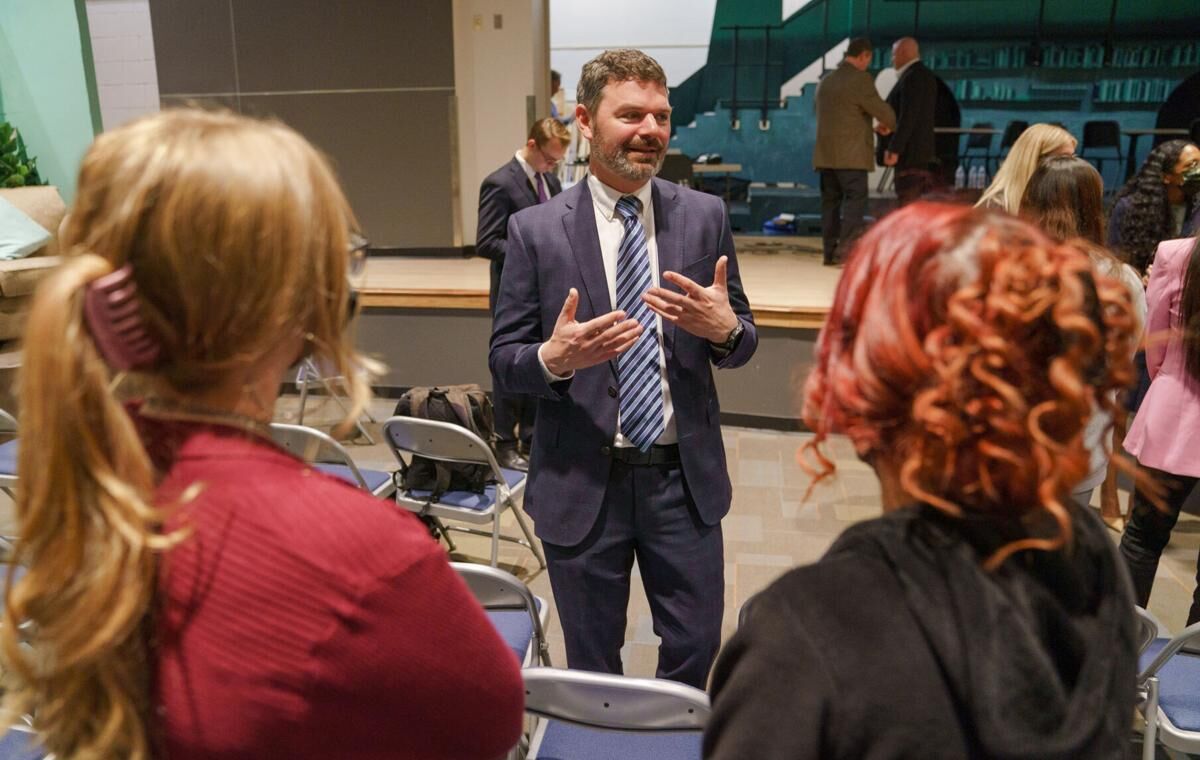
Colorado’s second-highest court agreed last week that a Colorado Department of Transportation employee had not shown that his employer discriminated and retaliated against him due to his religion and national origin.
Ayman Salloum, who described himself as a 70-year-old Muslim immigrant from Jordan, was an environmental protection specialist at CDOT in December 2024. That month, his department organized a holiday party on a Tuesday, which was the required in-office day for employees.
The invitation indicated the party would last for two hours and would take place in a conference room.
Salloum emailed his supervisor the day before the party, writing that he “will not take part in the festivities tomorrow. It will be appropriate for me to work from home tomorrow.”
After his supervisor directed him to report to the office, Salloum responded, “I will be the only one working. There are festivities in the morning and afternoon.”
Salloum then contacted the affirmative action and equal opportunity officer to report religious discrimination. The officer did not find the department had violated Salloum’s religious exercise.
Salloum also wrote to another supervisor to propose that he use three hours of leave to avoid reporting to the office during the party. The supervisor agreed with that proposal.
After the party, Salloum continued to pursue a grievance within the department, seeking an end to “religious persecutions” and “hostility toward non-Caucasian workers,” plus a letter of apology for denying him a religious accommodation.
The Colorado Civil Rights Division investigated and found insufficient evidence to support Salloum’s claims. An administrative law judge concluded Salloum had not requested a religious accommodation and had pointed to no evidence suggesting the department intended to discriminate or retaliate against him. Finally, the Colorado State Personnel Board denied Salloum’s request for a hearing.
Representing himself, Salloum turned to the Court of Appeals to argue that the department’s actions toward him amounted to “forced attendance at a Christmas event.”
“The forced appearance served no operational purpose and instead resulted in humiliation and disparate treatment,” Salloum wrote, adding that employers “must engage in the accommodation process” once an employee invokes a conflict with their religious beliefs.
“His initial communications stated only his belief that it was appropriate to work from home because he did not wish to ‘take part in the festivities.’ And he did not identify any religious observance or practice necessitating his absence from work, nor did he assert that reporting to the office created any religious conflict,” responded the Colorado Attorney General’s Office. “And despite his insistence that he was ‘forced’ to attend a ‘Christmas party,’ the ALJ correctly concluded the party was not a celebration of any religious holiday but was rather an inclusive holiday or employee appreciation event.”
Case: Salloum v. Department of Transportation
Decided: August 27, 2026
Jurisdiction: Colorado State Personnel Board
Ruling: 3-0
Judges: Matthew D. Grove (author)
Christina F. Gomez
Pax L. Moultrie
A three-judge Court of Appeals panel agreed that Salloum never requested a religious accommodation nor explained why being in the office at the same time as the party would violate his rights.
“Indeed, he never actually requested anything of his supervisor; instead, without explaining his reasons, he simply declared that it would be ‘appropriate’ for him to work from home because he did not plan to take part in the ‘festivities’,” wrote Judge Matthew D. Grove in the Aug. 27 opinion.
Grove added that Salloum provided no evidence that other employees were allowed to work from home to avoid attending the party.
As for Salloum’s claim that his employer retaliated against him for filing grievances and personnel board appeals in multiple cases, the panel concluded that the grievance Salloum filed after the denial of his work-from-home request could not be evidence that the denial itself was retaliatory.
Salloum declined to comment on the Court of Appeals’ decision. He said he was pursuing other cases, including one in federal court that also alleges discrimination, failure to accommodate, and retaliation.
The case is Salloum v. Department of Transportation et al.

Colorado judges may use professional name in lieu of legal name, ethics panel says
Michael Karlik
michael.karlik@coloradopolitics.com
Updated 9 minutes ago
Colorado’s Judicial Ethics Advisory Board concluded on Tuesday that members of the bench may go by a professional name, rather than their legal name, so long as their intent is not to deceive. The board, which consists of judges, attorneys...
Colorado’s federal court confirms John Eastman cannot practice due to disbarment
Michael Karlik
michael.karlik@coloradopolitics.com
Updated 23 hours ago
Colorado’s federal trial court confirmed last week that attorney John C. Eastman, who devised a plan for President Donald Trump to remain in office despite losing the 2020 election, cannot practice in the state’s U.S. District Court due to his...
Colorado Springs officers’ tasing, threats prompt federal judge to block use of suspect’s statements
Michael Karlik
michael.karlik@coloradopolitics.com
Updated 23 hours ago
A federal judge blocked the government last month from using some of a defendant’s statements as evidence, reasoning that the defendant made them involuntarily as Colorado Springs officers tased him five times and one officer threatened to kill him. Officers...
Federal judge green-lights immediate appeal in challenge to Colorado’s unclaimed property program
Michael Karlik
michael.karlik@coloradopolitics.com
Updated 22 hours ago
A federal judge took the unusual step last month of authorizing an immediate appeal of her decision to dismiss key components of a constitutional challenge to Colorado’s program for reuniting people with their unclaimed property. In February, U.S. District Court...

10th Circuit orders new unlawful arrest trial against Colorado Springs officers
Michael Karlik
michael.karlik@coloradopolitics.com
Updated 2 days ago
The Denver-based federal appeals court concluded on Friday that a trial judge inappropriately allowed jurors to see several unflattering video clips of a plaintiff being belligerent toward police officers during a trial to determine whether police violated her constitutional rights....
Federal judge to await SCOTUS decision before addressing Boulder County firearm ordinances
Michael Karlik
michael.karlik@coloradopolitics.com
Updated 2 days ago
A federal judge agreed on Friday that she would await the U.S. Supreme Court’s decision in an upcoming Second Amendment case before she addresses the constitutionality of similar gun ordinances in multiple Boulder County jurisdictions. Rocky Mountain Gun Owners, the...

State Supreme Court names next chief justice, 10th Circuit releases full-court decision | COURT CRAWL
Michael Karlik
michael.karlik@coloradopolitics.com
Updated 2 days ago
Welcome to Court Crawl, Colorado Politics’ roundup of news from the third branch of government. The Colorado Supreme Court has named its next chief justice, and the Denver-based federal appeals court released a decision that overwhelmingly rejected one of its...
10th Circuit overturns framework for sentencing probation violators by 11-1
Michael Karlik
michael.karlik@coloradopolitics.com
Updated 4 days ago
In a rare decision by all 12 of its full-time judges, the Denver-based federal appeals court ruled in a lopsided vote on Friday that one of its members created a sentencing process for probation violators that was out of step...

Federal judge dismisses excessive force lawsuit against Colorado Springs, officer
Michael Karlik
michael.karlik@coloradopolitics.com
Updated 4 days ago
A federal judge concluded last week that a Colorado Springs police officer could not be held liable for shooting a suspect three times after the man menaced two victims with a gun and fled the scene. Al’morion Germany was involved...

Weld County man sentenced to 236 years for sexually assaulting 9-year-old girl
Kyla Pearce
kyla.pearce@gazette.com
Updated 5 days ago
A Weld County man was sentenced to 236 years in prison for repeatedly sexually assaulting a 9-year-old girl. Joshua Andrews, 41, was charged in June with 12 counts of sexual assault on a child by a person in a position...