

Colorado Springs officers’ tasing, threats prompt federal judge to block use of suspect’s statements
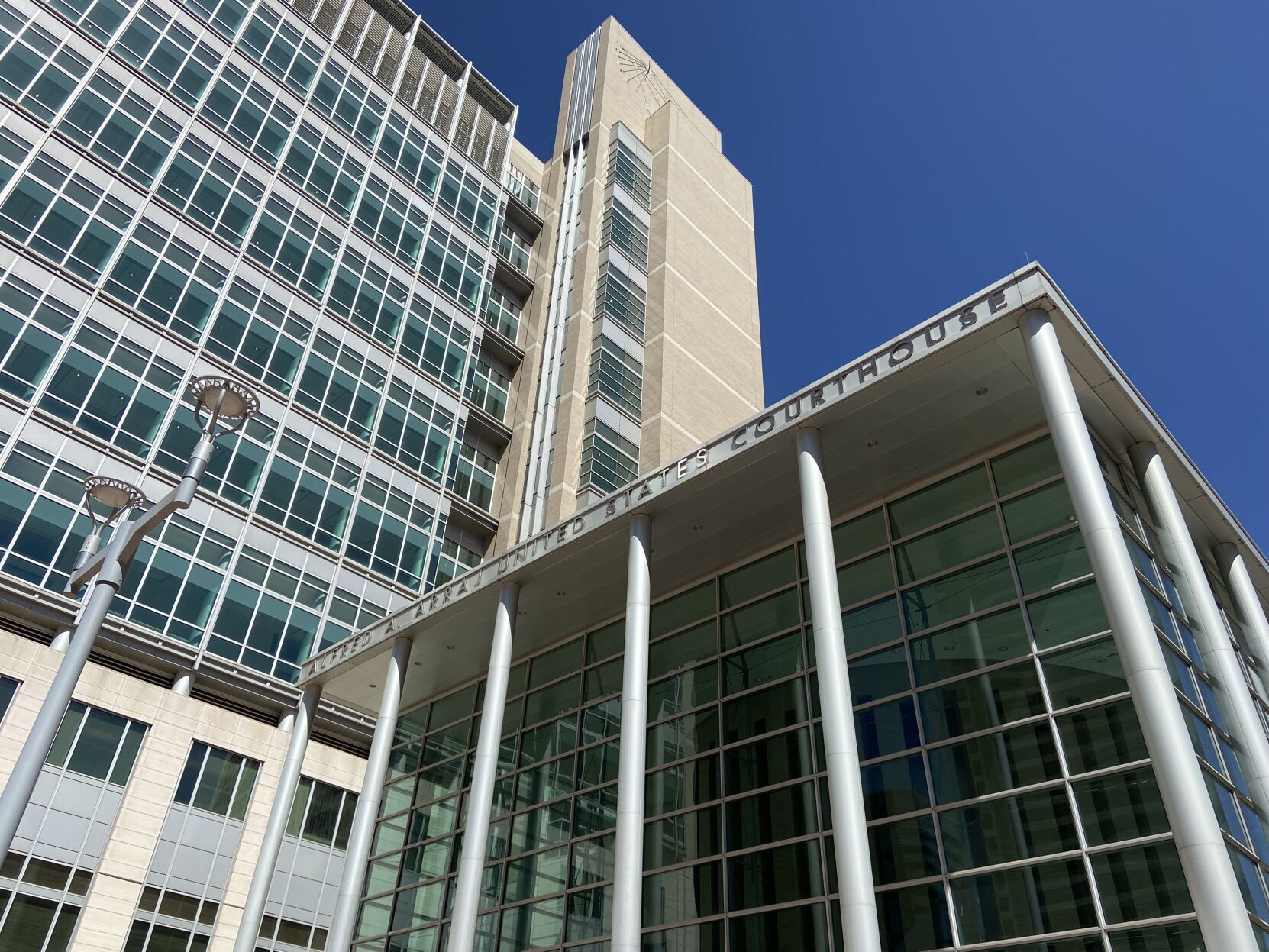
A federal judge blocked the government last month from using some of a defendant’s statements as evidence, reasoning that the defendant made them involuntarily as Colorado Springs officers tased him five times and one officer threatened to kill him.
Officers responded one morning in June 2025 to a theft call from a plumbing store in the 3000 block of Mallard Drive. The staff said a man and a woman were the culprits, although they referred to the woman as the one who stole the items. One employee took a photo of the suspects, which he showed to an officer.
Around 20 minutes later, Officer Ryan Paine located Anthony Miranda and Samara Yingling-Winbush within a mile of the store. Paine told them about the theft and said they “kind of look like you might match the description.” Seeing metal pipes protruding from a bag, Paine added that the thieves took “what you guys have there.”
Paine asked some questions, ran a background check on them, and said he was detaining them. When Paine and another officer tried to handcuff Miranda, he ran. The officers chased him and tased him at least five times.
When Miranda was on the ground, one officer, identified as “Officer Kirby,” put the barrel of his gun on Miranda’s head and threatened to kill him.
Officer Daniel Mork confiscated items from Miranda, including a gun. Miranda spoke to Mork about his experience with the legal system, his “equal rights to protect myself,” and said he “didn’t even know” the gun was there.
At the police vehicle, in accordance with the U.S. Supreme Court’s landmark Miranda v. Arizona decision, Mork informed Miranda of his rights to silence and to consult with an attorney. Miranda made incriminating statements about the gun.
A federal grand jury indicted Miranda for being a felon in possession of a firearm. El Paso County prosecutors charged Yingling-Winbush with a misdemeanor for theft, but dismissed the charge after she pleaded guilty in a different case to a more serious offense.
Miranda moved to bar prosecutors from using the handgun and his statements as evidence against him, arguing Paine did not have reasonable suspicion to believe anyone but Yingling-Winbush stole from the plumbing store at the time Paine detained them. He also argued that he had not voluntarily given up his right to silence under the circumstances.
“Just before Mr. Miranda made the statements to Officer Mork, he had been tased, tackled, and threatened with a gun to his head. Under these circumstances his statements cannot be said to be voluntary,” wrote attorney David R. Jones.
After a hearing at which Paine and Mork testified, U.S. District Court Senior Judge William J. Martínez partly agreed with the defense.
In an Aug. 24 order, Martínez wrote that Paine had reasonable suspicion to detain Miranda and probable cause to arrest him, given what he knew about the thieves and Miranda’s proximity to the stolen merchandise.
Martínez also took no issue with Miranda’s statements to Paine before his detention or his statements to Mork after he received a Miranda warning. Instead, Martínez found “stage 2” to be problematic, referring to the chase and arrest involving multiple officers.
During stage 2, “the events unfolded quickly, Officer Kirby pulled out his gun, the officers placed Miranda face down in the dirt after he had fallen, and none of the officers Mirandized Miranda,” wrote Martínez. By that time, “the officers here had already tased Miranda at least 5 times, and most notably, Officer Kirby threatened to kill Miranda while pressing the barrel of his service weapon to Miranda’s head. Surely from Miranda’s perspective, having already been tased multiple times and tackled to the ground by several officers, followed by the threat to be killed on the spot by one of those officers, any semblance of a noncoercive or nonthreatening character to the encounter with law enforcement had long since vanished.”
Because Miranda’s statements were involuntary in stage 2, Martínez suppressed them as evidence.
Shortly after Martínez’s order, Jones moved to convert Miranda’s upcoming jury trial to a bench trial. The government did not oppose the request, but Martínez refused to cancel the jury trial.
“Defendant has provided the Court with no reason or rationale whatsoever for wanting to forgo a jury trial,” he wrote on Aug. 27, adding that a jury would be “best positioned to determine the credibility of the law enforcement officers who testified at the hearing on Defendant’s motion to suppress, those being Officers Paine and Mork.”
On Monday, Jones notified Martínez that the defense and the government had reached a plea deal. Martínez will accept Miranda’s guilty plea later this month.
The case is United States v. Miranda.

Colorado’s federal court confirms John Eastman cannot practice due to disbarment
Michael Karlik
michael.karlik@coloradopolitics.com
Updated 10 minutes ago
Colorado’s federal trial court confirmed last week that attorney John C. Eastman, who devised a plan for President Donald Trump to remain in office despite losing the 2020 election, cannot practice in the state’s U.S. District Court due to his...
Federal judge green-lights immediate appeal in challenge to Colorado’s unclaimed property program
Michael Karlik
michael.karlik@coloradopolitics.com
Updated 5 hours ago
A federal judge took the unusual step last month of authorizing an immediate appeal of her decision to dismiss key components of a constitutional challenge to Colorado’s program for reuniting people with their unclaimed property. In February, U.S. District Court...
10th Circuit orders new unlawful arrest trial against Colorado Springs officers
Michael Karlik
michael.karlik@coloradopolitics.com
Updated 19 hours ago
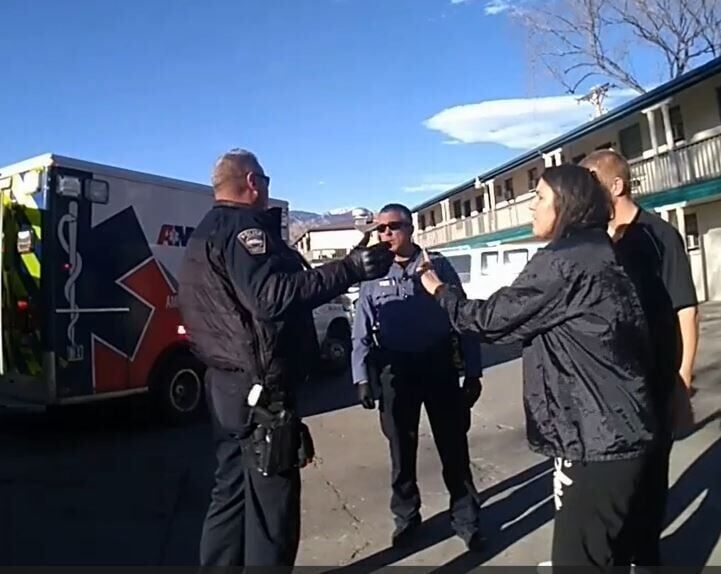
The Denver-based federal appeals court concluded on Friday that a trial judge inappropriately allowed jurors to see several unflattering video clips of a plaintiff being belligerent toward police officers during a trial to determine whether police violated her constitutional rights....
Federal judge to await SCOTUS decision before addressing Boulder County firearm ordinances
Michael Karlik
michael.karlik@coloradopolitics.com
Updated 18 hours ago
A federal judge agreed on Friday that she would await the U.S. Supreme Court’s decision in an upcoming Second Amendment case before she addresses the constitutionality of similar gun ordinances in multiple Boulder County jurisdictions. Rocky Mountain Gun Owners, the...

State Supreme Court names next chief justice, 10th Circuit releases full-court decision | COURT CRAWL
Michael Karlik
michael.karlik@coloradopolitics.com
Updated 1 day ago
Welcome to Court Crawl, Colorado Politics’ roundup of news from the third branch of government. The Colorado Supreme Court has named its next chief justice, and the Denver-based federal appeals court released a decision that overwhelmingly rejected one of its...
10th Circuit overturns framework for sentencing probation violators by 11-1
Michael Karlik
michael.karlik@coloradopolitics.com
Updated 3 days ago
In a rare decision by all 12 of its full-time judges, the Denver-based federal appeals court ruled in a lopsided vote on Friday that one of its members created a sentencing process for probation violators that was out of step...
Federal judge dismisses excessive force lawsuit against Colorado Springs, officer
Michael Karlik
michael.karlik@coloradopolitics.com
Updated 3 days ago
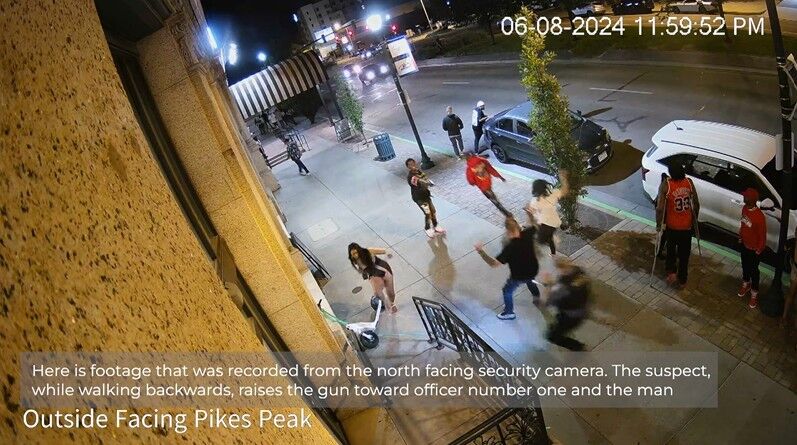
A federal judge concluded last week that a Colorado Springs police officer could not be held liable for shooting a suspect three times after the man menaced two victims with a gun and fled the scene. Al’morion Germany was involved...
Weld County man sentenced to 236 years for sexually assaulting 9-year-old girl
Kyla Pearce
kyla.pearce@gazette.com
Updated 4 days ago
A Weld County man was sentenced to 236 years in prison for repeatedly sexually assaulting a 9-year-old girl. Joshua Andrews, 41, was charged in June with 12 counts of sexual assault on a child by a person in a position...
Wrongfully deported man to be returned to U.S., Colorado federal judge orders
Michael Karlik
michael.karlik@coloradopolitics.com
Updated 5 days ago
Colorado’s chief federal judge took the extraordinary step of directing the government on Tuesday to do everything it can to return a man it deported in violation of his order. At the same time, Colorado’s chief magistrate judge has set...
Denver murder, assault convictions reversed due to faulty jury instructions
Michael Karlik
michael.karlik@coloradopolitics.com
Updated 4 days ago
Colorado’s second-highest court reversed a defendant’s convictions for murder and assault last week after concluding a Denver judge incorrectly omitted key jury instructions that could have affected the verdict and sentencing. Stephen C. Swainson fatally stabbed Israel Casillas in downtown...
PREV
PREVIOUS

Record turnout at Denver Rustlers event as Larry Mizel selected Citizen of the West
The fact that a record crowd of movers, shakers and policymakers who were prepared to part with some big money at the Colorado State Fair wasn’t the only big news to report from the Denver Rustlers’ 42nd annual brunch and road trip to Pueblo. Today’s gathering at Shanahan’s Steakhouse also was the occasion for Stanton Dodge, chief legal […]

Colorado voters to decide between graduated and flat income tax as both measures qualify for November ballot
Initiative #195, which would replace Colorado’s flat income tax with a graduated rate for individuals and corporations, has been certified for the November general election ballot by the Secretary of State. The certification of Initiative 195 adds to an escalating fight over Colorado’s tax future, with voters now set to weigh two opposing income-tax proposals […]