

Capped or graduated income tax rate? Colorado voters to decide

The proposal to create income tax tiers — which would replace Colorado’s flat rate — has been certified for the November general election ballot, setting the stage for a major showdown between two competing forces seeking to define the parameters of state revenue.
Initiative No. 195, which would raise the tax obligations on higher-income earners, will compete directly with Initiative No. 232, a statutory proposal to cap the state’s rate at 4.4%.
Whichever measure receives more votes will determine the rate Coloradans will pay.
The measure’s proponents have long argued that higher income earners should pay more in taxes, while those at the lower end should get a tax cut. Critics said it would hurt, not help, the state.
Those arguments are familiar in the long-running debate that perennially occurs across America over how to tax income. Supporters have insisted that bringing in more tax revenue would pay for the state’s priorities, arguing programs are underfunded. Critics have countered that a graduated tax system that exponentially increases liabilities for some not only dissuades companies from moving to Colorado, it perpetuates the state’s problem of overspending.
Initiative No. 195, which is backed by a coalition of about 20 mostly progressive groups, had submitted 165,765 signatures, of which 130,938 were declared valid.
That cut it close to the signature requirement for ballot measures set at 124,632.
The measure includes a constitutional change, which required supporters to gather 2% of valid signatures from voters in each of Colorado’s 35 state Senate districts.
The signature requirement for the Senate districts ranged from a low of 2,000 signatures to about 3,000. And, in most of the districts, the proponents submitted nearly 1,000 signatures above the requirement.
“It’s official,” the Bell Policy Center, one of the proponents of the tiered rate system, said on X. “Income Tax Fairness is on the ballot! Colorado’s tax system is broken. A nurse or teacher making $50K pays the same rate as a millionaire or big corporation. Under Initiative 195, 97% of taxpayers get a tax cut, & no one under $500K pays a penny more.”
“Voters aren’t going to support a measure that raises taxes on seniors, veterans, and small businesses,” said Michael Fields of Advance Colorado, the proponent of capping the income tax rate at 4.4%.
“Game on!” he added on X.
The graduated income tax, if approved by voters, would work like this, according to Protect Colorado’s Future, the coalition behind the tiered system.
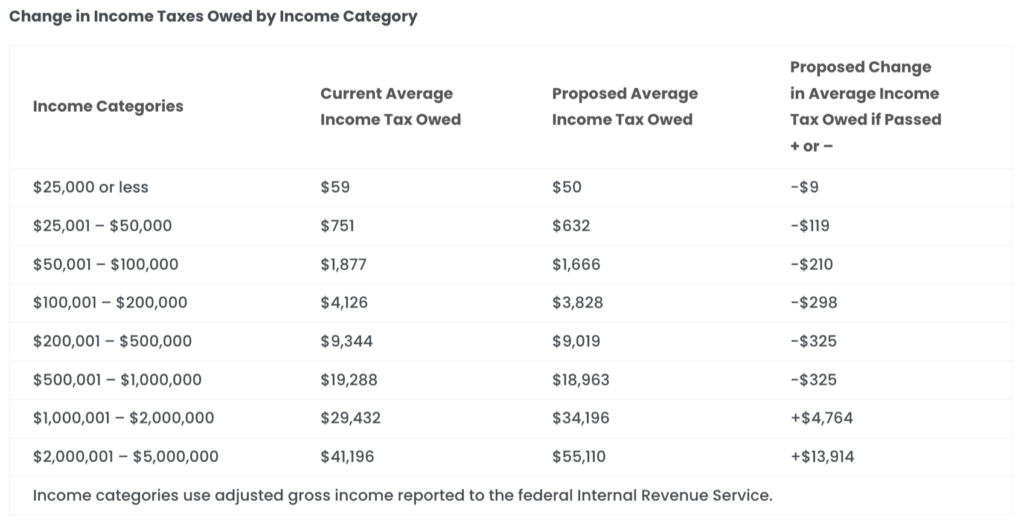
Based on the coalition’s chart, people and businesses earning up to $1 million would see a tax cut of roughly $300, while those who make above that threshold would pay thousands of dollars more.
In a statement, Protect Colorado’s Future said the ballot measure would cut taxes for 97% of Colorado taxpayers, raise $2 billion annually for K-12 education, healthcare and childcare and increase taxes only on the wealthiest 3% of individuals and largest 5% of corporations that make more than $500,000 annually.
The measure also mandates an annual, independent public audit to ensure the dollars are spent as required.
“Young people in Colorado are facing increasing rent costs, stagnating wages and the programs we rely on being cut, all while the wealthiest keep getting wealthier. Initiative 195 qualifying for the ballot means voters have the opportunity to create a fairer tax code that rebalances the scales,” said coalition co-chair Christina Soliz of New Era Colorado.
Jon Caldara of the Independence Institute told Colorado Politics that, if the measure passes, it would be a “death knell” for Colorado economically, adding it would come at a time when states across the country are fighting to be either low-tax or no-tax at all.
“If this were to pass, we would join California and New York as an exit state for businesses and people,” he said.
Even if people like the idea of a progressive income tax, the measure is fatally flawed because it isn’t indexed to inflation, Caldara said.
And that’s deliberate, he added.
“You might pay a lower tax rate to begin with, but with enough time we would all be in the top bracket,” Caldara said.
He pointed out that the federal government eliminated “bracket creep” in former President Ronald Reagan’s first term.
He called a graduated income tax archaic.
Caldara also noted the Independence Institute promoted the flat tax in 1987, and a Democratic governor — then-Gov. Roy Romer — signed it into law.
“The flat tax has served Colorado remarkably well,” Caldara said.
Initiative No. 195 is the last ballot measure awaiting approval from the Secretary of State’s Office.
With the dust now settled, there will be 14 ballot measures on the 2026 general election ballot. Of those, 13 measures came through the petition process. The 14th was sent to the ballot by the Democrat-dominated state legislature.
Six of the 13 petition measures are constitutional amendments, including Initiative No. 195; the other seven are statutory in nature.
There’s also a statutory ballot measure submitted by Democrats at the Colorado General Assembly, Proposition NN, which would increase the TABOR cap, with funds to be spent on K-12 education and to put some of those dollars into a “children’s account” with yet-to-be-defined purposes.


House adopts Republican U.S. Rep. Jeff Crank’s resolution condemning socialism, mostly along party lines
Ernest Luning
ernest.luning@coloradopolitics.com
Updated 59 minutes ago
The House on Tuesday approved a resolution sponsored by U.S. Rep. Jeff Crank to condemn socialism in a largely party-line vote that the Colorado Republican characterized as a chance for lawmakers to “stand firm” against an ideology making inroads among...

Amazon buys 70 acres in Aurora
Bernadette Berdychowski
bernadette.berdychowski@denvergazette.com
Updated 4 hours ago
Amazon purchased 70 acres of land in Aurora with plans to build a distribution center, according to city and county records. The e-commerce giant bought a parcel at 825 N. Lisbon St. from a company tied to Northpoint Development for...
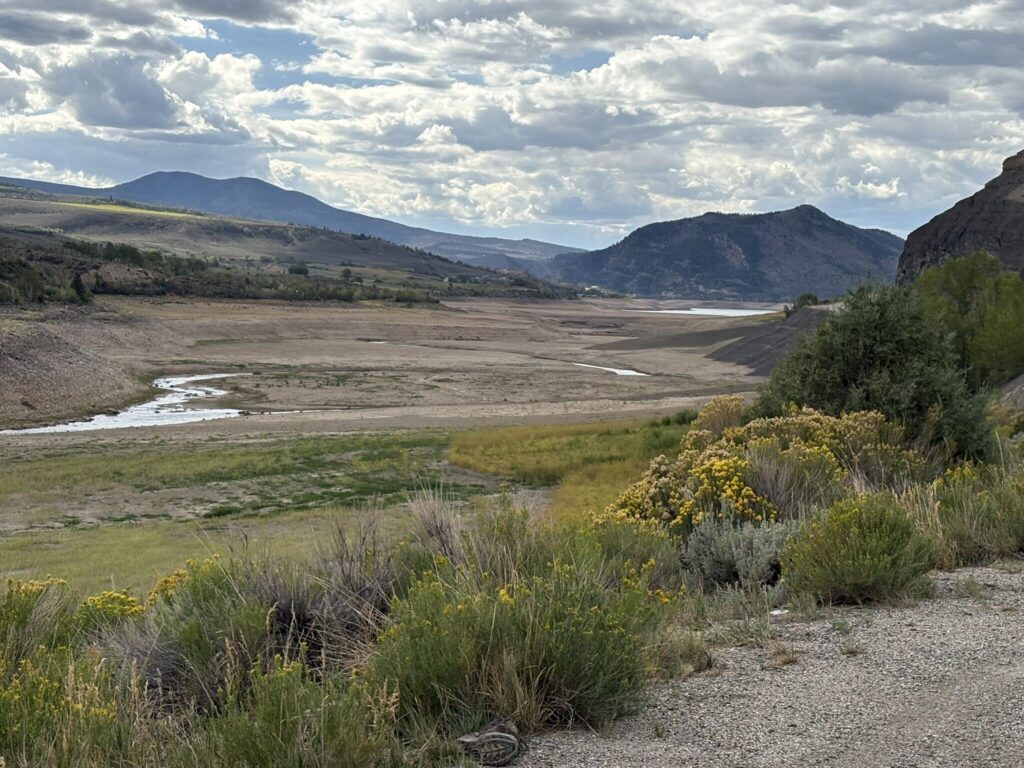
A silver lining: Low water conditions at Green Mountain Reservoir open door for major repairs
Marianne Goodland
marianne.goodland@coloradopolitics.com
Updated 2 hours ago
One of the most striking signs of the low snowpack and drought that has plagued Colorado this year can be found by driving by Green Mountain Reservoir in Grand County. The reservoir, first filled in the 1940s, sits at its...

500 teens gather near, and in, Aurora King Soopers, prompting police response
Kyla Pearce
kyla.pearce@gazette.com
Updated 3 hours ago
Hundreds of teenagers gathered at an Aurora King Soopers on Sunday, causing a public safety issue and prompting police response. Aurora Police Department officers responded to the King Soopers, at 655 Peoria St., just after 1:30 p.m. Sunday as about...
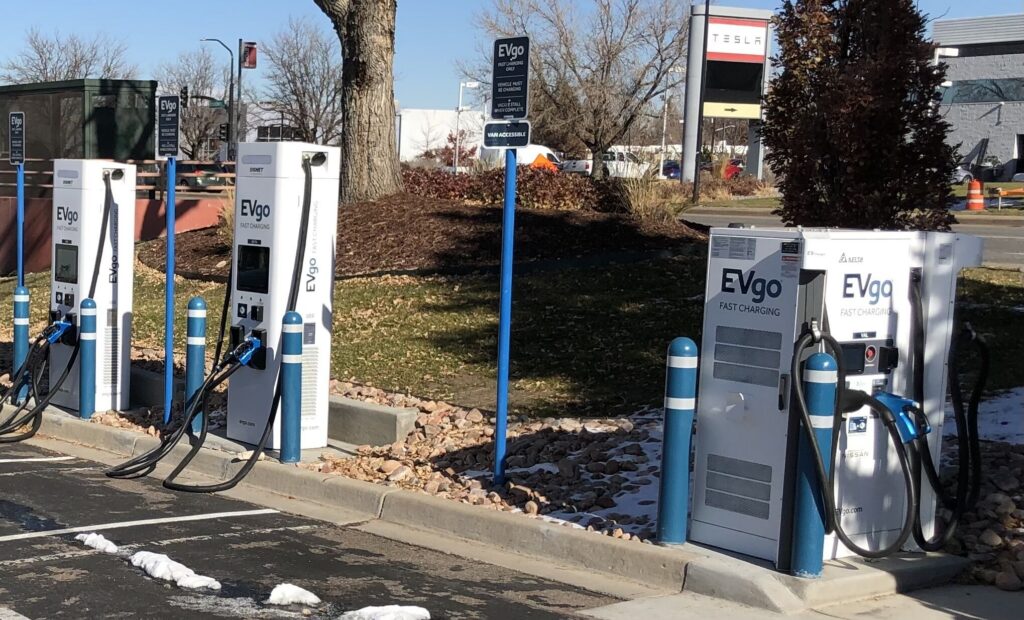
Colorado’s EV charging map nearly complete, state says
Scott Weiser
scott.weiser@gazette.com
Updated 5 hours ago
Gov. Jared Polis and the Colorado Department of Transportation released a statement calling the state’s public fast-charging network nearly built out. The Aug. 27 news release reports there are now 486 DC fast-charging locations and 83% of the state highway...

DA calls out election opponent over confidential voter breach
Savannah Eller
savannah-eller@coloradopolitics.com
Updated 6 hours ago
Fourth Judicial District Attorney Michael Allen said his office was investigating after a software glitch temporarily exposed his own personal information along with the information of more than 130,000 confidential voters in Colorado. “This represents a glaring safety issue,” he...

Denverites are wary of bus rapid transit and Waymo, voter survey says
Mark Samuelson Special to The Denver Gazette
mark.samuelson@denvergazette.com
Updated 4 hours ago
As residents and commuters get their first look at how the Regional Transportation District’s Bus Rapid Transit project has narrowed East Colfax Avenue east of downtown, Denverites seem to be flashing a caution light about any further expansion of BRT...

Aurora seeks public input on gas station spacing, other requirements
Kyla Pearce
kyla.pearce@gazette.com
Updated 5 hours ago
Aurora officials are asking for public input on a series of regulations for gas stations, including spacing and charging station requirements. Members of the public have until Oct. 31 to take the city’s survey, which is available on the Engage...

Colorado state House Democratic candidate arrested in Texas for public intoxication
Marianne Goodland
marianne.goodland@coloradopolitics.com
Updated 1 day ago
A Democrat from Lone Tree who is running for a House seat was arrested in Texas in May on charges of public intoxication and resisting arrest. Christian Schilder, the Democrat, is challenging Rep. Brandi Bradley, the Republican incumbent, in the...
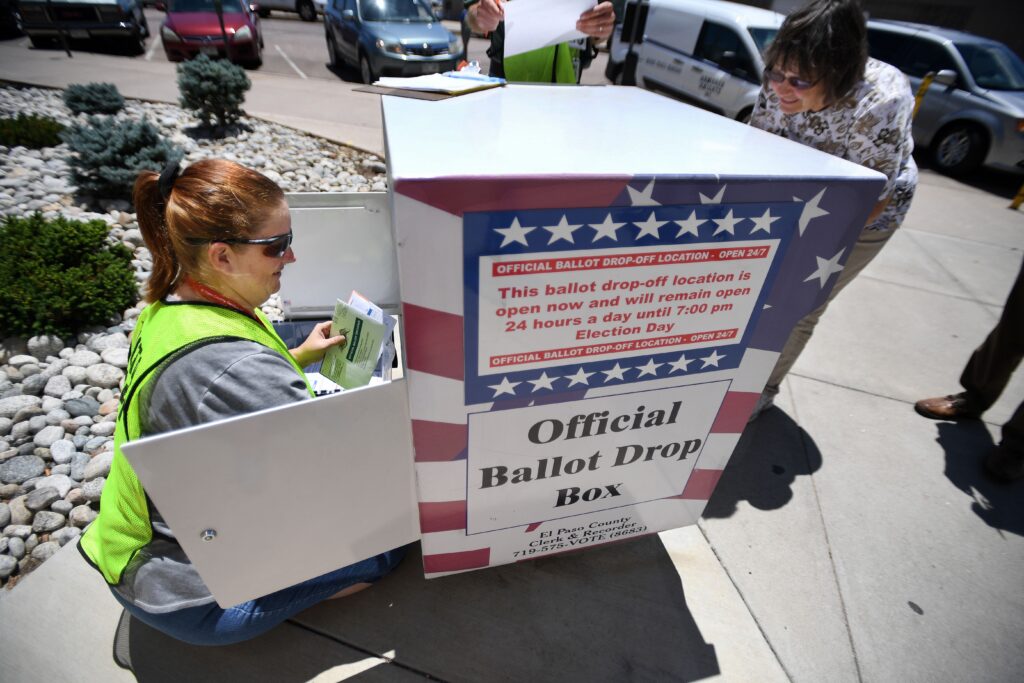
Initiative asks Colorado voters to approve 8th-grade reading standard for ballot measures
Marissa Ventrelli
marissa.ventrelli@coloradopolitics.com
Updated 1 day ago
A ballot initiative that would require all ballot measures to be written at no higher than an eighth-grade reading level has qualified for the November ballot, according to the Colorado Secretary of State’s Office. The measure, backed by the group...
PREV
PREVIOUS

Colorado Springs officers’ tasing, threats prompt federal judge to block use of suspect’s statements
A federal judge blocked the government last month from using some of a defendant’s statements as evidence, reasoning that the defendant made them involuntarily as Colorado Springs officers tased him five times and one officer threatened to kill him. Officers responded one morning in June 2025 to a theft call from a plumbing store in […]
Colorado’s federal court confirms John Eastman cannot practice due to disbarment
Colorado’s federal trial court confirmed last week that attorney John C. Eastman, who devised a plan for President Donald Trump to remain in office despite losing the 2020 election, cannot practice in the state’s U.S. District Court due to his disbarment in California. Under the court’s rules, attorneys cannot be in “good standing” to practice if they […]