

DougCo commissioners refer competing election measure on board expansion
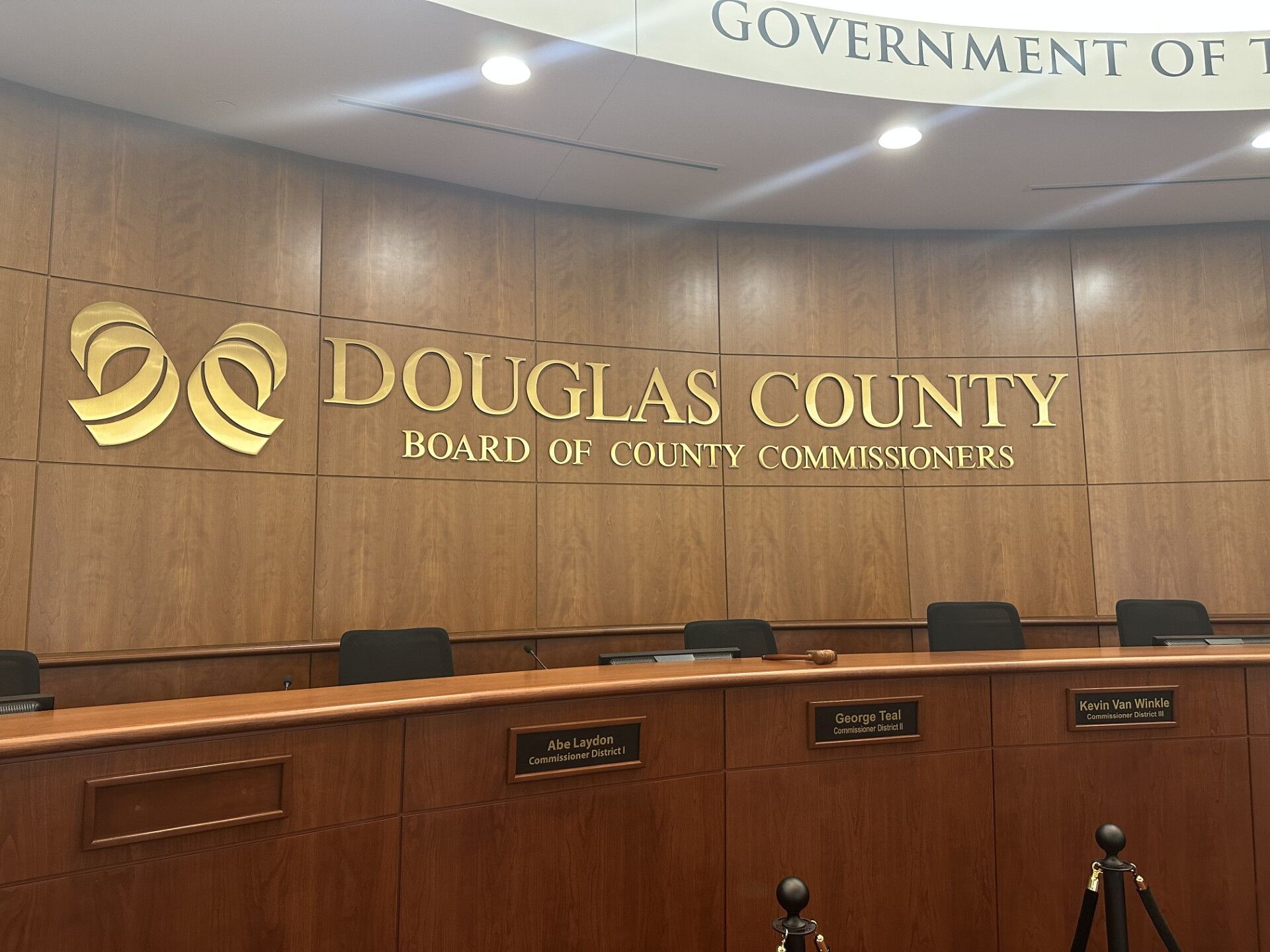
Douglas County commissioners formally waded into the debate over a voter-led ballot initiative Monday by unanimously referring a separate measure that would give voters an additional option if they choose to expand the board from three members to five.
The commissioner-referred measure will ask voters whether, in the event of an expansion, all five commissioners should continue to be elected countywide, rather than through districts.
The approved ballot language states:
“In the event the Douglas County Board of Commissioners is increased to five members, shall all registered Douglas County voters continue to elect all county commissioners?”
Commissioners argued voters should have access to every election model allowed under state law if the board were to expand. They maintained that commissioners represent the entire county and therefore should be elected by all county voters, regardless of where they live.
During public comment, opponents argued the measure’s wording is misleading and that it failed to clearly explain that the proposal would create five at-large commissioners.
“It does not state that this option would create five, at large commissioners,” one speaker said. “Instead, it implies voters are simply being asked whether they want to keep the right to vote for all commissioners.”
Others argued the proposal undermines the purpose of the citizen-led initiative, which seeks to give smaller communities the ability to elect commissioners directly accountable to their districts, rather than allowing population centers to dominate representation.
The commission’s referral followed a board action on Friday approving ballot language for the citizen-led initiative that would increase the number of commissioners from three to five.
If voters approved that question, they will also choose between two election models: A district-based system in which commissioners are elected only by voters within their districts or a hybrid system with three district-elected commissioners and two elected countywide.
The board’s approval of the citizen initiative’s ballot language also drew criticism from organizers, who accused commissioners of “putting their thumb on the scale” by modifying language that more than 23,000 voters had already signed.
The approved ballot title now contains additional language that states an expansion would create “an ongoing annual expense of $760,000 to $1,300,000 from county revenues” and notes that those revenues currently support “public safety, transportation and essential county services.”
On Monday, organizers filed a formal protest challenging the revised language.
They argued that the modified title actually advocates against the proposal — because it contains cost estimates based on discretionary future decisions, rather than the measure itself, and it violates state requirements that ballot titles not include extraneous material.
The county staff told commissioners on Friday that including cost estimates in ballot language is not required under state law and that cost estimates beyond the salaries and benefits of two additional commissioners are based on assumptions about future budget decisions.
Commissioners defended the additions, saying voters deserve to understand the financial implications of measures they are being asked to approve. They also argued on Friday that omitting cost information could leave voters with the impression that expanding the board would have no fiscal impact.
Critics countered that the board did not include similar disclosures in last year’s commissioner-led home-rule charter proposal, despite election costs of roughly $500,000 and potential future expenses associated with creating a county charter.
Commissioner George Teal acknowledged that criticism.
“I accept that as a failure of that measure,” Teal said. “Lesson learned. We are going to apply that here.”
In their protest, organizers also estimated the direct annual cost of adding two commissioners at $481,708 and insisted that the board’s higher estimate assumes the hiring of additional staff that is not required by the initiative.
The initiative itself creates no new staff positions. Any future staffing decisions would be made by subsequent boards of commissioners.
Under county ordinance, a protest hearing chaired by the commissioners must be held within 96 hours of submission.


Denver planning $50M improvements to Sloan’s Lake
Nicole C. Brambila
nicole-c-brambila@coloradopolitics.com
Updated 58 minutes ago
Plans call for sediment removal in the urban lake Denver plans to sink $50 million dollars into Sloan’s Lake. Improvements, that is. Mayor Mike Johnston and Councilmember Amanda P. Sandoval announced the project launch not quite on the lake’s shores,...

CPW chair’s unilateral comment changes spark backlash from fellow commissioners
Marianne Goodland
marianne.goodland@coloradopolitics.com
Updated 3 hours ago
A decision to cap public comment, announced last week by Colorado Parks and Wildlife Commission Chair Jay Tutchton, set off a lively discussion at Wednesday’s meeting. In the end, Tutchton’s unilateral decision to cut public comment and to change who...
Capped or graduated income tax rate? Colorado voters to decide
Marianne Goodland
marianne.goodland@coloradopolitics.com
Updated 2 hours ago
The proposal to create income tax tiers — which would replace Colorado’s flat rate — has been certified for the November general election ballot, setting the stage for a major showdown between two competing forces seeking to define the parameters of...
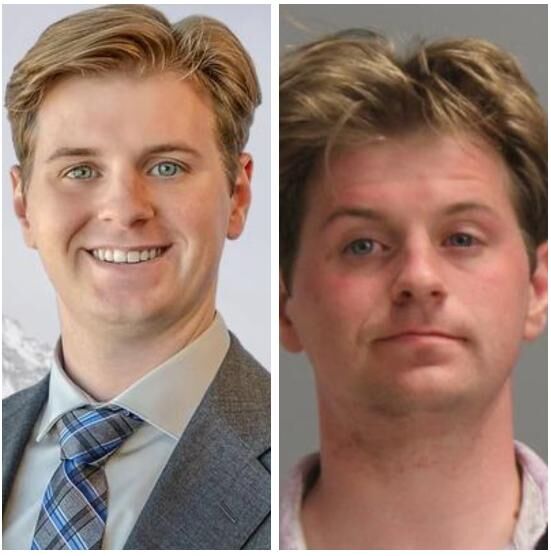
Some charges against Colorado Democrat arrested for intoxication dropped, Texas police say
Deborah Grigsby
deborah.smith@denvergazette.com
Updated 23 hours ago
The charges of resisting arrest against a Lone Tree Democrat who is running for the Colorado state House have been dropped, according to authorities from Texas. Christian Schilder, who is running to represent Colorado’s House District 39, was apprehended on...
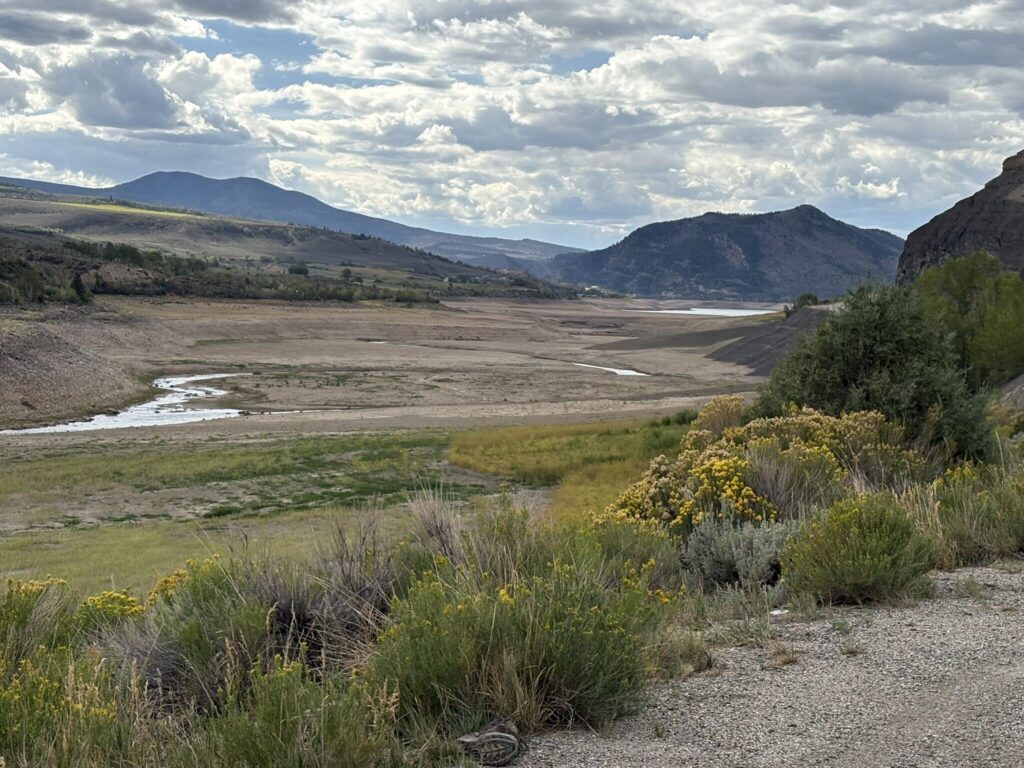
A silver lining: Low water conditions at Green Mountain Reservoir open door for major repairs
Marianne Goodland
marianne.goodland@coloradopolitics.com
Updated 1 day ago
One of the most striking signs of the low snowpack and drought that has plagued Colorado this year can be found by driving by Green Mountain Reservoir in Grand County. The reservoir, first filled in the 1940s, sits at its...

Denverites are wary of bus rapid transit and Waymo, voter survey says
Mark Samuelson Special to The Denver Gazette
mark.samuelson@denvergazette.com
Updated 1 day ago
As residents and commuters get their first look at how the Regional Transportation District’s Bus Rapid Transit project has narrowed East Colfax Avenue east of downtown, Denverites seem to be flashing a caution light about any further expansion of BRT...

Colorado redistricting limits measure heads to November ballot
Marissa Ventrelli
marissa.ventrelli@coloradopolitics.com
Updated 2 days ago
A proposed constitutional amendment that would prohibit Colorado’s congressional maps from being redrawn outside of election cycles has qualified for the November ballot, according to the Secretary of State’s Office. Under Initiative No. 256, redistricting changes for the 2028 election...
‘Governor for a Day’ contest launched for Colorado students
Marissa Ventrelli
marissa.ventrelli@coloradopolitics.com
Updated 1 day ago
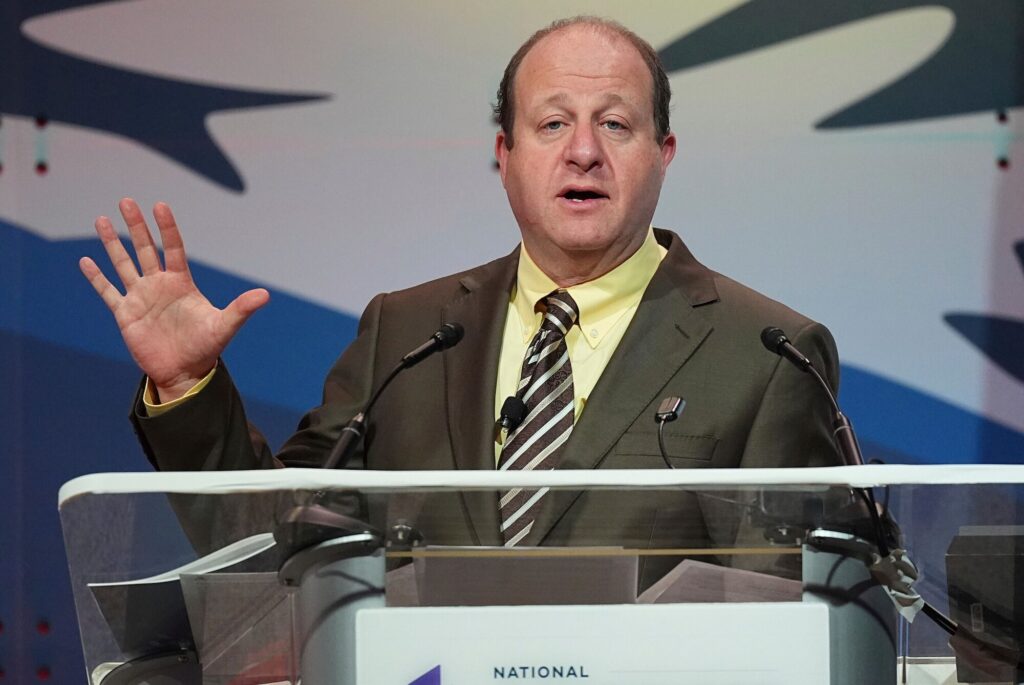
Colorado seventh and eighth graders have the chance to experience a day in the life of the governor. The “Governor for a Day” competition will give one student the chance to see firsthand how state government works, shadowing Gov. Jared...
Colorado state House Democratic candidate arrested in Texas for public intoxication
Marianne Goodland
marianne.goodland@coloradopolitics.com
Updated 2 days ago
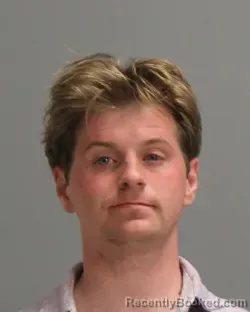
A Democrat from Lone Tree who is running for a House seat was arrested in Texas in May on charges of public intoxication and resisting arrest. Christian Schilder, the Democrat, is challenging Rep. Brandi Bradley, the Republican incumbent, in the...

What courageous citizenship really looks like | Vince Bzdek
Vince Bzdek
vince.bzdek@gazette.com
Updated 4 days ago
By Vince Bzdek What exactly is courage? Ernest Hemingway famously called it grace under pressure. Mark Twain wrote that “courage is resistance to fear, mastery of fear — not absence of fear.” C.S. Lewis refined that even more: “Courage is...
PREV
PREVIOUS

Colorado's EV charging map nearly complete, state says
Gov. Jared Polis and the Colorado Department of Transportation released a statement calling the state’s public fast-charging network nearly built out. The Aug. 27 news release reports there are now 486 DC fast-charging locations and 83% of the state highway system is now within 30 miles of a station. But those raw numbers do not […]

500 teens gather near, and in, Aurora King Soopers, prompting police response
Hundreds of teenagers gathered at an Aurora King Soopers on Sunday, causing a public safety issue and prompting police response. Aurora Police Department officers responded to the King Soopers, at 655 Peoria St., just after 1:30 p.m. Sunday as about 500 teenagers between the ages of 14 and 17 gathered in the store. The gathering […]