

What courageous citizenship really looks like | Vince Bzdek

By Vince Bzdek
What exactly is courage? Ernest Hemingway famously called it grace under pressure.
Mark Twain wrote that “courage is resistance to fear, mastery of fear — not absence of fear.”
C.S. Lewis refined that even more: “Courage is not the absence of fear, but acting despite it.”
Is there a particular kind of courage it takes to be a good American? I’ve been wondering that during this 250th anniversary year.
I ran into a couple thinkers recently who argue very much yes, but that the courage required of citizens in this country has evolved over time. And must evolve again.
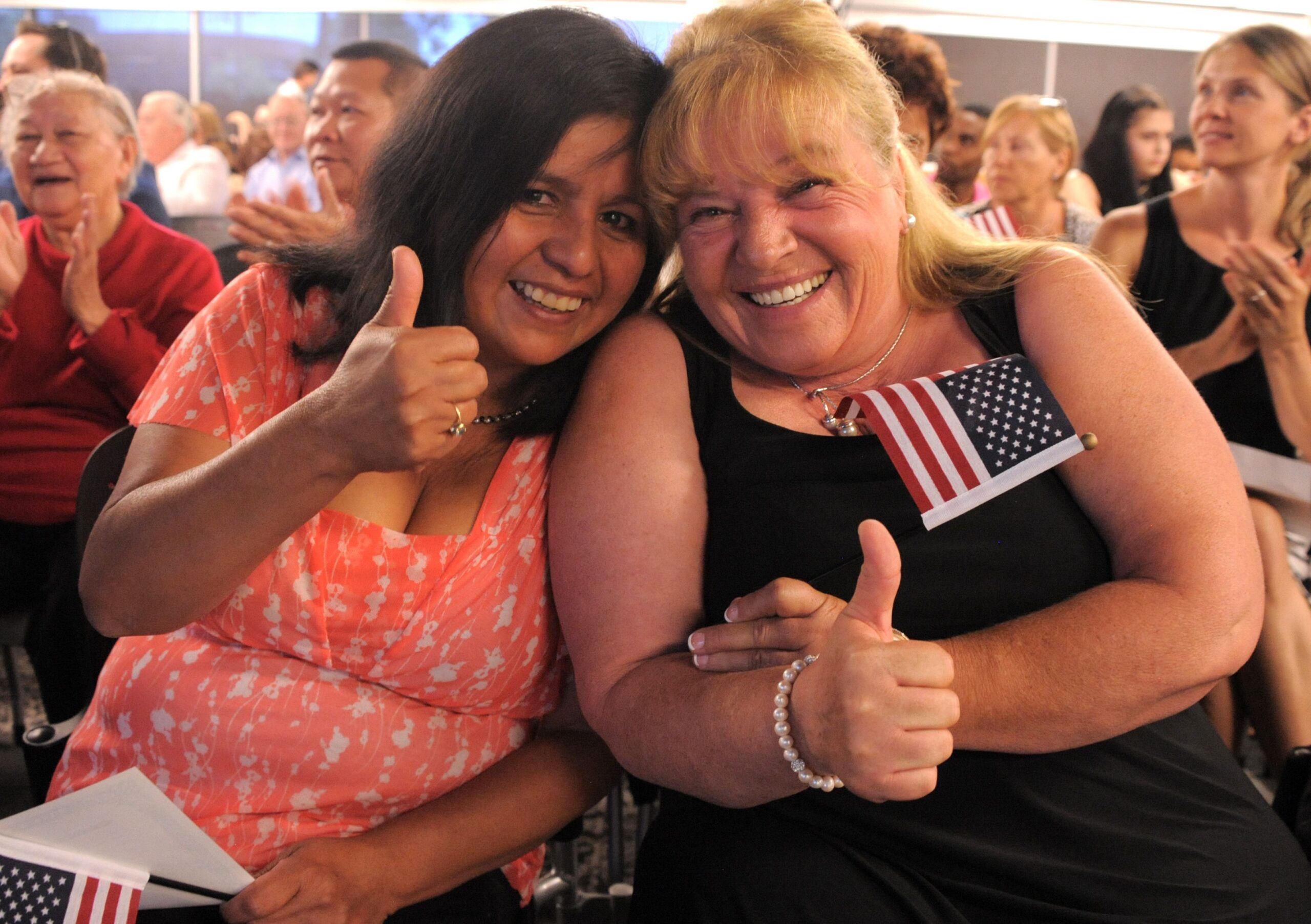
At the Braver Angels Civic Scholars Symposium in Philadelphia over the summer, Liane Weintraub and Eric Hamilton of the Pepperdine University Graduate School of Education and Psychology took the audience on a history trip through courageous citizenship.
In 1776, when the challenge for Americans was independence itself, courage required risking life and livelihood for self-government, Weintraub and Hamilton argue.
In the 1860s, when the challenge was preserving the union during the Civil War, the courage required was the ability to endure national rupture to keep the country from flying apart forever.
In the 1960s, when the challenge of the Civil Rights movement was equality and inclusion, we needed the courage to expand the promise of democracy.
And today, when our great challenge is polarization and the erosion of civic relationships, the courage required is that we remain engaged across difference.
Weintraub and Hamilton argue that the central challenge facing American democracy today is not disagreement, but the erosion of democratic relationships. Weintraub defines courage today as “the willingness to remain in relationship, tolerate ambiguity and engage constructively across deep difference in order to sustain democratic life.”
This erosion in our individual relationships is a threat to our whole social compact, the scholars fear. “When disagreement is experienced as a threat to identity, the consequences extend beyond individual perception to the structure of civil relationships themselves.”
And a threat to getting anything constructive done: “Under conditions of intense polarization, even constructive or broadly beneficial actions may be resisted if they are perceived to advantage the opposing side.”
Yikes.
And beyond logjam, polarization seems to be giving permission to people to support anti-democratic actions when they benefit one’s own group, even political violence.
If earlier generations were called to demonstrate civic courage through physical risk and material sacrifice, the present moment demands a different form of courage. “In a polarized society, the central challenge is not only to defend democratic institutions but to sustain the relationships that make shared political life possible and preserve the norms that enable pluralism,” the scholars said. We’ve got to start talking to each other again.

“This form of courage is less visible, but no less demanding than physical sacrifice,” they argue. “It requires individuals to remain open in the face of disagreement, to tolerate uncertainty without retreating into contempt and to stay engaged with others despite deep differences and discomfort.”
So how do you suddenly become a courageous citizen? What types of civic practices embody the courage necessary to sustain democracy right now?
Weintraub identifies three “core capacities” for courageous citizenship not by building consensus but by building connection.
- Remain in relationship. Maintain engagement with those whose views, values or identities differ from your own.
- Tolerate ambiguity. Resist the pressure for certainty, simplification and tribal thinking.
- Engage constructively. Approach disagreement as an opportunity for understanding and problem solving rather than conquest.
The two scholars have come up with a bundle of civic practices that can sustain democratic relationships:
- Active Listening, which is listening with attention rather than evaluation.
- Intellectual Humility. Remaining open to the possibility of error.
- Steelmanning. Representing opposing views fairly and accurately.
- Emotional Regulation: Responding thoughtfully rather than reacting impulsively.
- Perspective-taking: Seeking understanding before seeking agreement.
- Structured Dialogue: Creating conditions for productive disagreement.
- Intergroup contact: Building relationships across lines of difference.
- Cross-partisan collaboration: Work together on shared civic challenges.
If we want civic renewal right now, we have to literally reset the conditions of conversation and rebuild connections that may be initially uncomfortable. Fortunately there are national organizations like Braver Angels and local groups like Reclaiming Civility that are trying to do just that.
Weintraub and Elliott see our 250th year as a crucial time to reinvoke the Founders’ pledge. “Their pledge was not only a Declaration of Independence, but a commitment to remain bound together in a common project. Renewing that commitment in the present moment may be among the most consequential forms of civic courage.”
The real question in these cynical times, I fear, is do we even believe in this stuff any more? Do we think those civic practices are even worth doing? Writer and columnist David Brooks, in a recent talk at Yale, said he believes many Americans have stopped appreciating our blessings and are simply wallowing in their resentments. He argues that both the left and right have descended into a form of nihilism that believes whatever is lower is more real. “Selfishness, egoism, lust for power, those things are real,” he said.
Americans disappointed with their place in the country and where the country is going have abandoned some core values as naive. “Altruism, generosity, honor, integrity and hospitality, those things are mirages,” now he says. “Ideals are shams that the selfish use to mask their greed.”
“People who are resentful don’t even see the higher things. They have contracted their value system. So the higher things are declared worthless. They give themselves permission to embrace brutality, saying we won’t get fooled again. It’s dog eat dog.”
As more people lose their faith in America and its institutions, we could see levels of distrust, alienation and resentment we’ve never seen before.
But Brooks doesn’t think that’s going to happen.
“I think people will see that we need a change,” he said. “And I think they will diagnose that the problem is a spiritual one, a psychological one, an emotional one, a cultural one. We need a shift in values, we need a shift in the spirit of the age.
“They are going to realize this whole paradigm ain’t working for us. They are going to realize we’ve abandoned our humanistic core. All the things that nurture empathy and orient the soul toward justice and virtue and goodness are diminishing in our life.”
In efforts like the Braver Angels and Reclaiming Civility, Brooks sees a defiant humanism at work. “Even in the cruelest, most resentful and distrustful time, it’s possible to say I’m standing for the highest virtues, I’m standing for the highest ideals, I’m standing for the deepest humility, I’m standing for a cultural shift against resentment and toward admiration.”
“I think we’re all called upon to do that today.”
But it’s gonna take a little courage.

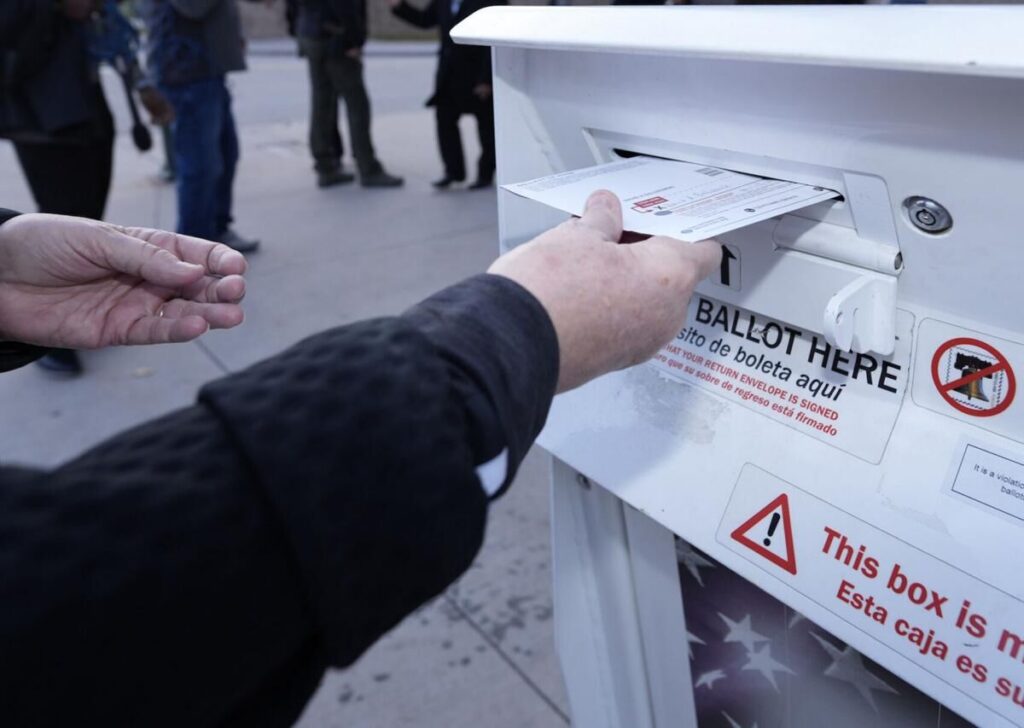
Colorado measure adding ID checks to mail-in voting qualifies for ballot
Marissa Ventrelli
marissa.ventrelli@coloradopolitics.com
Updated 2 days ago
A ballot initiative that would require voters to include additional information on mail-in ballots has qualified for the November election, according to the Secretary of State’s Office. Backed by El Paso County Treasurer Chuck Broerman and former Deputy Secretary of...
Colorado election website error exposes personal data of confidential voters
Marissa Ventrelli
marissa.ventrelli@coloradopolitics.com
Updated 2 days ago
A system update accidentally lifted protections on confidential records in Colorado, exposing dozens of voters’ personal information, according to the Secretary of State’s Office. The limit that normally blocks access to confidential voter profiles was inadvertently disabled during an update...

PUC adds weekly comment after killing private talks
Scott Weiser
scott.weiser@gazette.com
Updated 2 days ago
The Colorado Public Utilities Commission will take public comment at the start of every commissioner’s weekly meeting beginning Sept. 9 as part of its new transparency mandate, the commission announced, expanding a slot previously limited to the second Wednesday of...

Aurora student journalist cleared of disciplinary charges after ignoring ‘gag order’
Kyla Pearce
kyla.pearce@gazette.com
Updated 2 days ago
A Community College of Aurora student who accused the college of putting an “unconstitutional gag order” on his student-run publication was cleared of disciplinary charges against him. CCA student Andrew Green tried to register his independent student publication, called “FoxTalk,”...
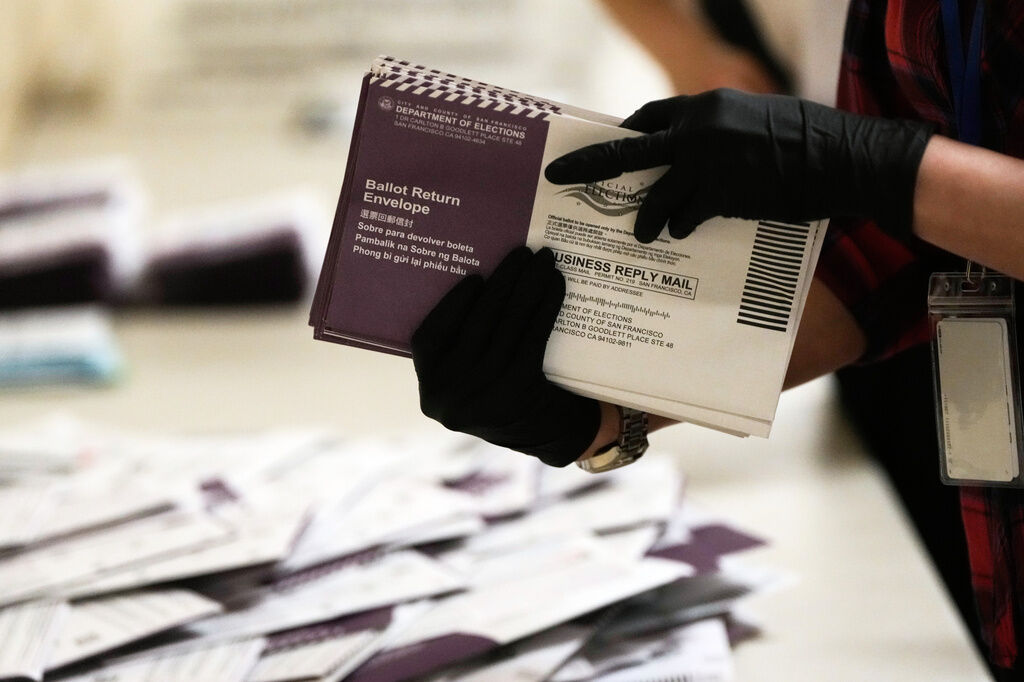
Colorado leaders cheer court decision to block Trump’s mail ballot order in a ruling that’s likely to be swiftly appealed
Thelma Grimes
thelma.grimes@coloradopolitics.com
Updated 2 days ago
A federal judge on Thursday halted — at least for now — attempts to implement President Donald Trump’s executive order that seeks to restrict the mailing of ballots to American citizens on an eligible voters list. The move stalled the...
El Paso County upholds Buc-ee’s zoning appeal, clearing way for administrative approval
Savannah Eller
savannah-eller@coloradopolitics.com
Updated 2 days ago
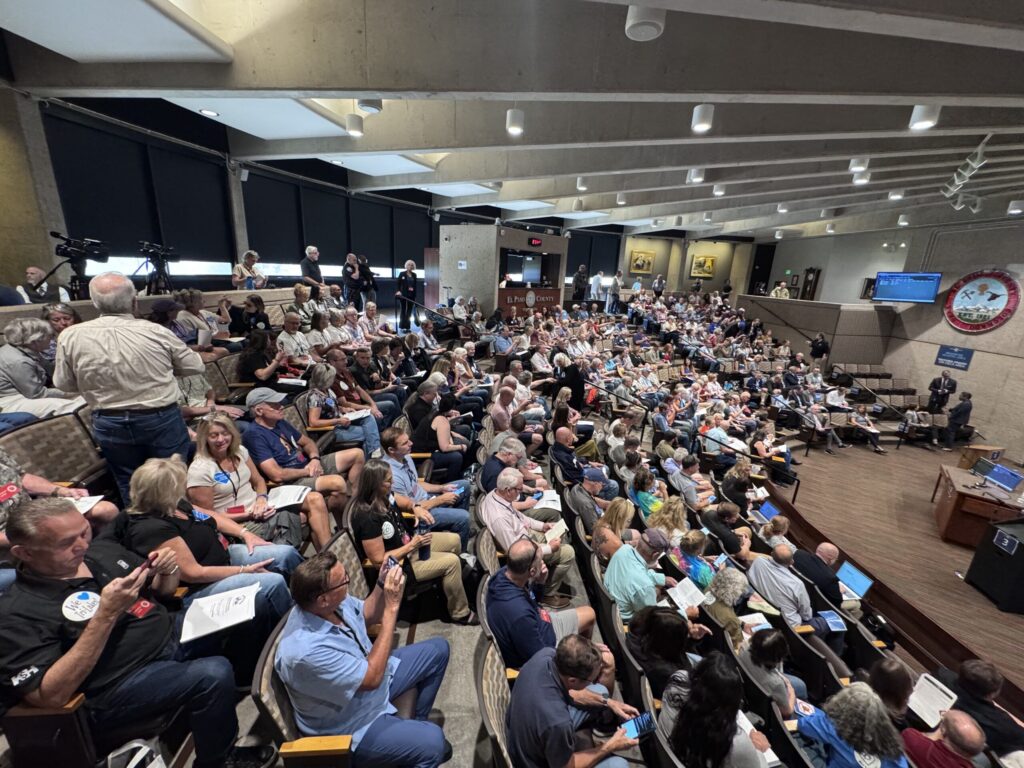
A packed, daylong meeting on Thursday resulted in a win for the Texas travel center chain Buc-ee’s, with El Paso County commissioners voting 4-1 to approve the developer’s zoning appeal. “I think the burden of proof has been met here,”...
Healthcare freefall: UNC’s new medical school aims to tackle Colorado’s rural doctor shortage
Hap Fry, Special to The Gazette
hap-fry@gazette.com
Updated 19 hours ago
Editor’s Note: Colorado’s healthcare system is entering a period of accelerating instability — a “tsunami,” as multiple leaders describe it — driven by collapsing hospital finances, shrinking Medicaid reimbursements, disappearing services and a political fight over who is responsible for...

Healthcare freefall: Economic ripple effects grow as Colorado hospitals face financial strain
Thelma Grimes
thelma.grimes@coloradopolitics.com
Updated 1 day ago
Colorado’s hospital systems aren’t just a network of clinics and emergency rooms — they are also one of the state’s largest economic engines. So some 10 hospitals identified at any given time as vulnerable to closure, the alarm extends far...

5th Congressional debate watchers hope for civility, truthfulness
Cleo Westin
cleo-westin@coloradopolitics.com
Updated 2 days ago
A few hundred people watched Rep. Jeff Crank and veteran Jessica Killin square off in a debate for the 5th Congressional District at the Pikes Peak Center for the Performing Arts on Thursday evening. Many of them sported campaign insignia...
DPS meets Marrero’s academic goals, but most students remain below state standards
Nico Brambila
nico.brambila@denvergazette.com
Updated 2 days ago
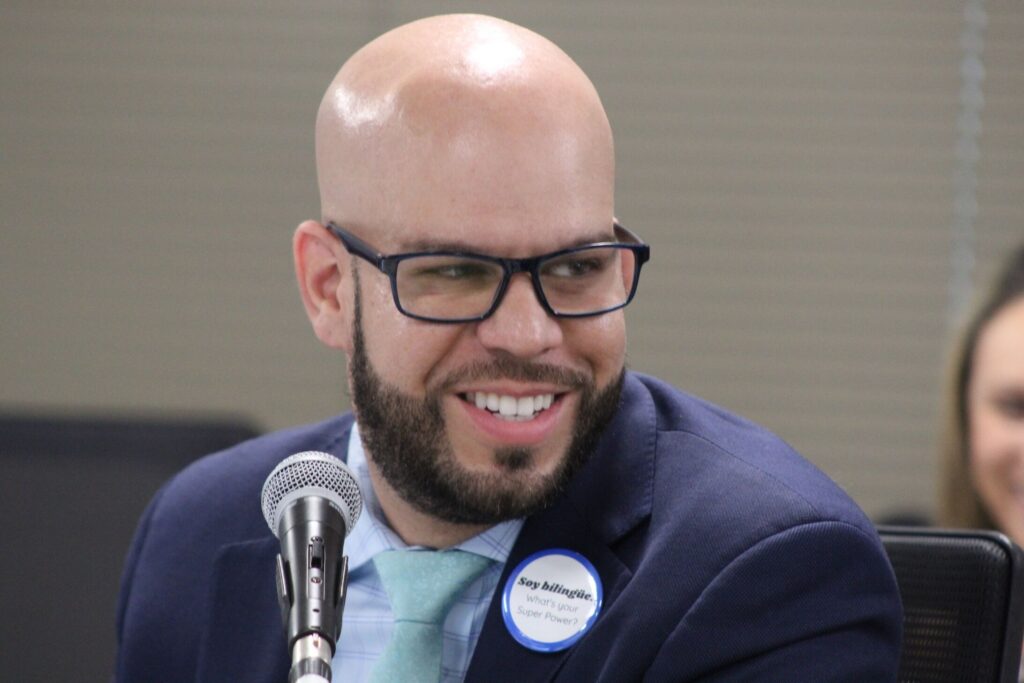
The majority of Denver Public Schools students do not meet state standards — and the academic goals set by Superintendent Alex Marrero’s administration do not expect them to. Marrero’s first strategic road map in 2021 set a goal of 10%...
PREV
PREVIOUS
The coming election and mischief in the making | SONDERMANN
America’s tribalism is such these days that we struggle to even agree on the basic rules. Elections have always been hotly contested. As the saying goes, “Politics ain’t beanbag.” The process has long involved elements of nastiness and underhanded conduct. Still, we used to be able to take some things for granted. We had a […]

Reflections on Weiser-Lopez, Crank-Killian debates | Tom Cronin
Thursday night, The Gazette and KOAA TV hosted two important candidate debates. The first featured incumbent Republican U.S. Rep. Jeff Crank, who is just completing his first term representing El Paso County in Congress, and Jessica Killian, a Democrat who has served in the Army and has years of experience working in Washington, D.C. The second […]