Healthcare freefall: Economic ripple effects grow as Colorado hospitals face financial strain

Colorado’s hospital systems aren’t just a network of clinics and emergency rooms — they are also one of the state’s largest economic engines.
So some 10 hospitals identified at any given time as vulnerable to closure, the alarm extends far beyond patient care.
Hospitals anchor local workforces, sustain regional economies and stabilize entire communities — meaning every threatened facility represents both a healthcare crisis and an economic one.

Colorado’s hospital sector generates more than $140 billion in annual economic output and supports nearly one in five jobs, making it one of the most consequential parts of the state’s economy.
In many rural counties, the hospital is effectively the center of the local economic identity, said Essey Yirdaw, Colorado Hospital Association vice president of data analytics and health equity. When hospitals struggle, the ripple effects reach well beyond medical services. Entire communities depend on the stability of their healthcare providers, she said.
Colorado’s growing reliance on healthcare — both as an economic driver and an essential service — is colliding with the financial realities of staffing and covering the rising costs of hospital operations.
State lawmakers echo the warning.
Sen. Dylan Roberts said hospitals in small towns “are such a big part of not only giving care to that community, but they are often one of the largest, if not the largest, employers in the community. They are a huge economic driver.”
When hospitals lose staff or services, he added, “those community members have families that operate other businesses and if those people aren’t there, those other businesses go away.”
A report from the Common Sense Institute warned that even a single rural hospital closure would send shock waves through local employment, tax revenue and business activity — a scenario some analysts said is increasingly plausible given the current strain on Colorado’s healthcare system.

Hospitals are economic anchors
Across rural counties, Colorado hospitals that once served as reliable employers and community anchors are now fighting to stay open, squeezed by rising costs, shrinking reimbursements and a workforce pipeline that can’t keep pace with demand, their executives said.
According to the Common Sense Institute report, Colorado’s healthcare workforce has grown significantly over the last decade, yet shortages persist in nearly every clinical category. The sector is expanding, but not fast enough to meet the needs of a growing, aging population.
Colorado’s healthcare sector supports more than 744,000 jobs statewide — directly and indirectly — a 15% increase between 2022 and 2024. The CSI report said that number is expected to continue rising over the next decade, as demand for care grows.
Hospital leaders said shifting state and federal budgets — with declining funds and increasing regulations — force them to focus on the bottom line and cover fixed daily costs. That includes competing with urban medical centers that can offer higher pay and lifestyle advantages rural communities can’t match.
A report from the Colorado Chamber Foundation noted that Colorado is now the sixth most regulated state in America. Its analysis put the number of regulations here at roughly 200,000, just behind New York.
When it comes to health services, Colorado has adopted some 13,700 rules, compared to the national average of about 4,700.
The highest expenses hospitals and medical centers incur are for staffing and labor. It’s estimated that, on average, nearly 50% of operating costs are workforce-related expenses, according to the Colorado Hospital Association.
Delta Health CEO Nicholas Colleran said workforce strain remains one of the hospital’s biggest challenges, noting that rural facilities must constantly adjust but still struggle to recruit compared with urban providers. Operating at a negative 9% margin, he said staffing accounts for about 70% of his hospital’s expenses.
“We usually have to pay a little more because we can’t get people to come here,” said Colleran. “We compete for every nurse. There’s only a certain number of nurses on the Western Slope.”
Recruiting for specialty services is also a daily struggle for all rural hospitals, Colleran said.
Hospitals must also staff departments, regardless of the volume of patients.
“Just because we had 120 births, we still have to have two nurses on (OB),” Colleran said. “You don’t have those economies of scale.”
CSI’s 2024 workforce modeling showed that Colorado will need tens of thousands of additional healthcare workers by 2030 — particularly nurses, behavioral health providers and long‑term care staff. Rural regions face the steepest shortages.
Service cuts: maternity deserts, specialty gaps and long drives
As margins shrink, hospitals are cutting services to stay open. Labor and delivery units have closed in multiple counties, creating what the Colorado Hospital Association calls “OB deserts” across half the state.
“It’s not acceptable that we have these maternal care deserts,” said Roberts, the state legislator. “They choose to no longer live in these communities.”
“That further erodes the character and vitality of rural Colorado,” he said.
Because of the ever-changing economic landscape, Colleran said hospitals are making tough choices to stay open, including discontinuing services altogether. Last year, Delta closed its labor and delivery department.
Colleran argued that closing can — or should — never be an option.
“If it ever did happen, the economic fallout to Delta County would be devastating. Over 600 employees… all the tax dollars,” he said. “It cannot happen,” he said.
“It would be like one of our mines shut down — but times two,” he added.
Yirdaw, from the hospital association, said hospitals struggle to “make the math work and as more services are cut, it’s getting hard to keep “care local.”
Hospitals operate with fixed daily costs that don’t change, regardless of how many patients they treat or how much they’re reimbursed by government programs or private insurance. They must maintain required staffing levels every day, even when patient volume fluctuates.
At Southwest Health in Cortez, that fixed daily cost is $213,000. CEO Joseph Theine said the hospital must be fully staffed whether the emergency department sees a record day with 60 patients, as it has recently, or a more typical day with around 30.
During a healthcare roundtable discussion hosted by U.S. Sen. John Hickenlooper in June, Lincoln Hospital CEO Kevin Stansbury said, “At my hospital, we employ about 160 people in a community of fewer than 800.”
“Last year,” Stansbury added, “our payroll exceeded $11 million. We’re the largest employer in our community and the second largest employer in our county.”
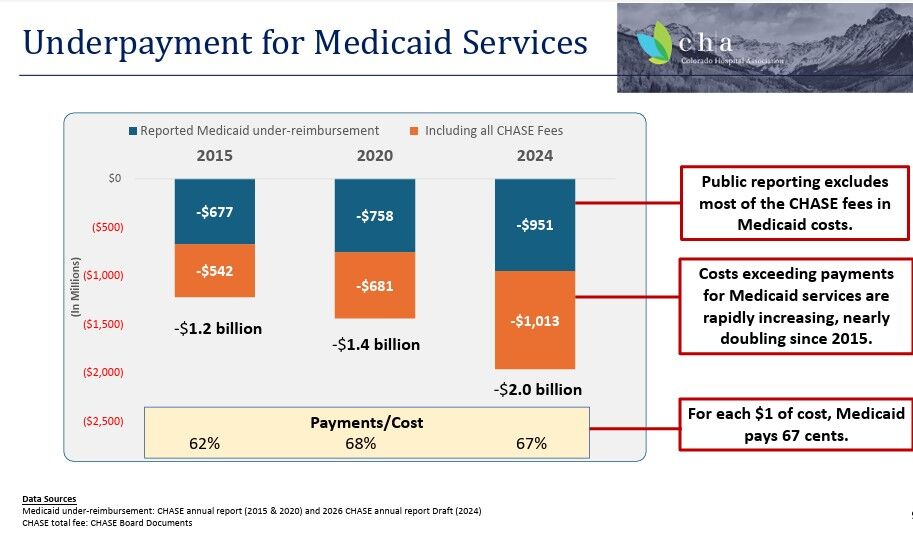
Nearly 80% of Colorado hospitals are operating with margins the Colorado Hospital Association considers unsustainable.
The stakes are clear for a system that is economically indispensable — but increasingly unstable, said Tom Rennel, the hospital association’s vice president of financial policy and data analytics.
“It would be hard for me to understand or even try to envision what a community would look like without that hospital, without those jobs and without those services,” he said.


Aurora police warn businesses of 5 shoplifters involved in 139 crimes
Kyla Pearce
kyla.pearce@gazette.com
Updated 20 hours ago
Aurora police are warning business owners to look out for five shoplifters involved in 139 crimes with some $60,000 in stolen merchandise. Four of the five shoplifters are wanted on active Aurora Police Department warrants, according to a news release...

Federal science agency gives CU Boulder $37.5M to supercharge its quantum studies
Bernadette Berdychowski
bernadette.berdychowski@denvergazette.com
Updated 20 hours ago
The University of Colorado Boulder was awarded $37.5 million from a federal research agency to propel its quantum research, the U.S. National Science Foundation announced Tuesday. The school was one of eight academic institutions to receive a total of $290...

Dance pros and their celebrity partners give it their all at 16th Dancing with the Denver Stars | NONPROFIT REGISTER
Joanne Davidson Special to Colorado Politics
joanne-davidson-special-to-colorado-politics@coloradopolitics.com
Updated 2 days ago
CLEO PARKER ROBINSON DANCE Denver News: Take 13 community and business leaders, pair them with members of the Cleo Parker Robinson Dance Ensemble and its Cleo II dance artists for a four-month intensive course in moving to the music and what do you...

On a night packed with events, this fundraiser did very well | NONPROFIT REGISTER
Joanne Davidson Special to Colorado Politics
joanne-davidson-special-to-colorado-politics@coloradopolitics.com
Updated 2 days ago
DENVER ZOO CONSERVATION ALLIANCE Denver ews: There were at least three other major events taking place on Aug. 22, the night when the Denver Zoo Conservation Alliance hosted its annual Flock Party: Cleo Parker Robinson’s Dancing with the Denver Stars, the Morgan...

Third ‘Pepper ‘Em with Love’ gala gave 500 guests a rockin’ good time | NONPROFIT REGISTER
Joanne Davidson Special to Colorado Politics
joanne-davidson-special-to-colorado-politics@coloradopolitics.com
Updated 2 days ago
PEPPER’S SENIOR DOG SANCTUARY Littleton News: There was so much to love about Pepper ‘Em with Love, the Aug. 19 fundraising gala for Pepper’s Senior Dog Sanctuary, that it’s hard to know where to begin or what not to overlook. But we’ll try. About...
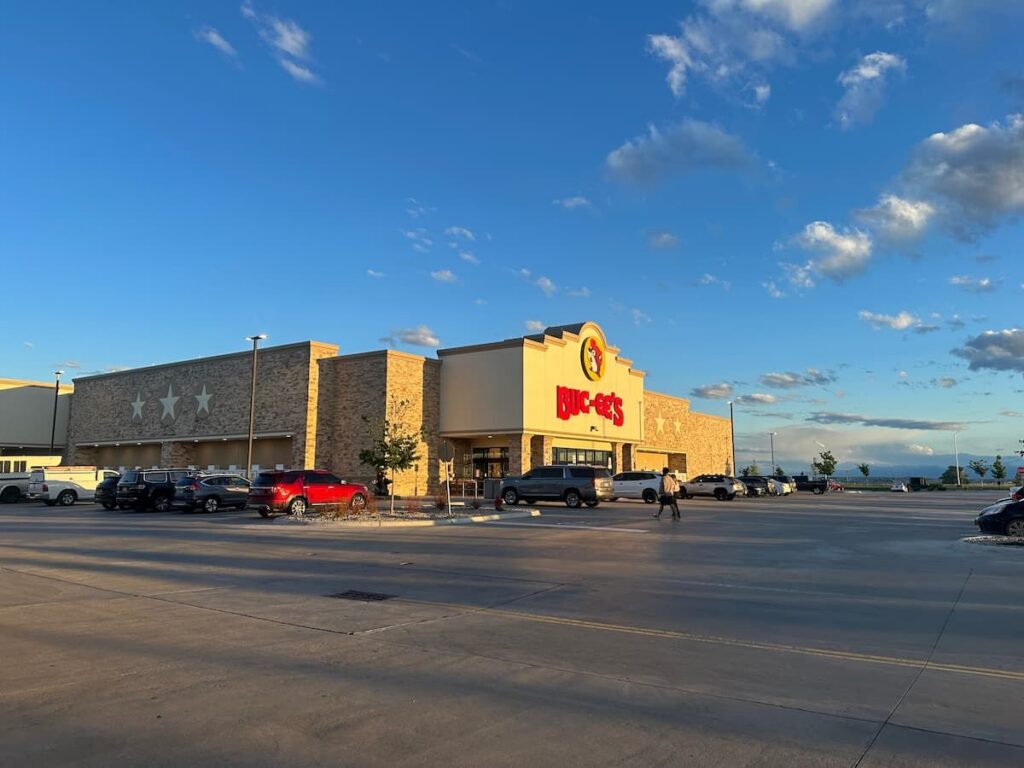
Buc-ee’s and El Paso County: What to know ahead of the public hearing
Savannah Eller
savannah-eller@coloradopolitics.com
Updated 2 days ago
Controversial plans for the second Colorado location of the Texas travel chain Buc-ee’s are making their debut in El Paso County’s public hearing process. Interest in the project has been high from the start, defining over a year of local...
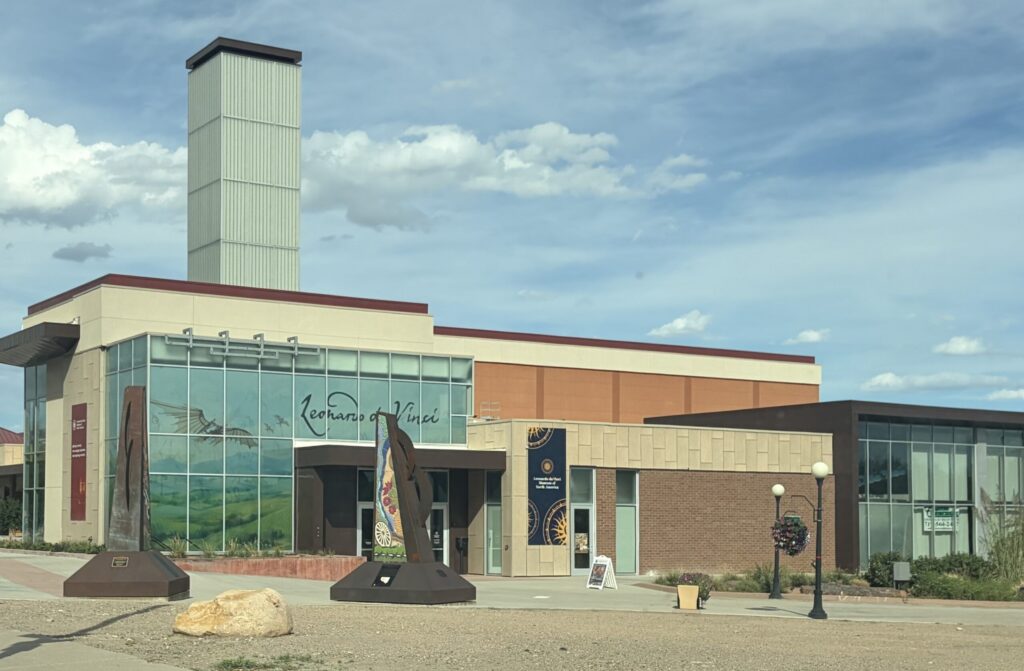
Pueblo City Council postpones vote on $885,000 funding for Leonardo da Vinci Museum
O'Dell Isaac
odell.isaac@gazette.com
Updated 2 days ago
In a highly contentious meeting that included outbursts, raised voices and several calls for decorum, the Pueblo City Council on Monday postponed its vote on the Leonardo da Vinci Museum’s request for $885,000 in funding from the city’s $60 million...

Colorado’s Ursa Major to go public in $2.3B deal as demand for missiles skyrockets
Bernadette Berdychowski
bernadette.berdychowski@denvergazette.com
Updated 20 hours ago
Ursa Major Technologies, one of Colorado’s biggest aerospace and defense companies, is undergoing a period of major growth. Following on the heels of solidifying the creation of more than a thousand jobs for the state, Ursa Major now plans to...

Aurora moves forward with data center regulations
Kyla Pearce
kyla.pearce@gazette.com
Updated 3 days ago
The Aurora City Council approved moving forward with two new regulations on data centers and directed staff to come back at the next study session with others. At a council meeting in early August, council members directed city management to...

Aurora City Council considers stricter food truck regulations
Kyla Pearce
kyla.pearce@gazette.com
Updated 3 days ago
The Aurora City Council is considering passing laws to limit the number of food trucks on properties in the city and how and when they operate. Councilmember Angela Lawson, who sponsored the ordinance, said she understands the importance of food...