

Petitions seek to place noise restrictions, surveillance cameras and water limits on Colorado Springs ballot
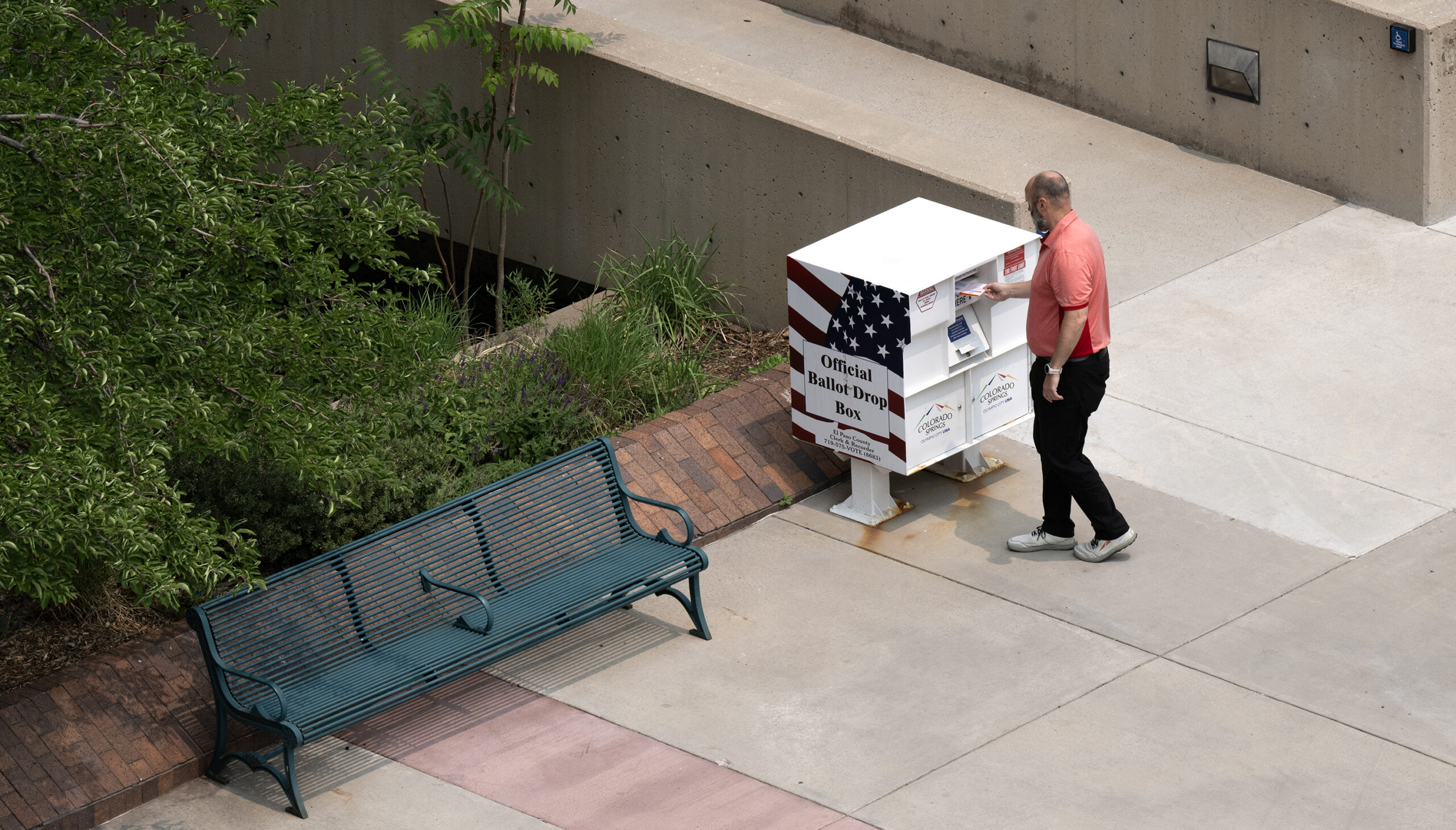
Petitioners in Colorado Springs are preparing to gather signatures to place restrictions on noise levels, developments that use a large volume of water and surveillance cameras that use automatic tracking technology.
The City Clerk’s office on Monday gave final approval to the titles for four petitions filed by Adriane Nau, former Councilmember Joel Miller and his wife Anita Miller.
While the proposals are not explicitly regulations for data centers, at least two of them would have applied to the development plan for the Project Taurus data center that the Colorado Springs City Council is expected to consider on Sept. 17.
Anita Miller said she heard concerns from friends and family in recent months about tracking technology, water usage and noise complaints. She began working with her husband and their friend Nau to figure out regulations that could appear on the April 2027 ballot.
“I think that all of these involve citizens being able to have a say in what is rightfully theirs, whether it’s their property or their water or the tracking of their own physical being,” Anita Miller said.
The first of the petition questions would prohibit any development that causes enough noise to be “detrimental to the quiet enjoyment of property.” Any project that would violate this restriction would have to pay for two acoustical studies to show the development would have minimal noise impact.
The question is intentionally broad about what type of business could face these restrictions by opening in or near a residential area. Companies would likely know coming in if they were a risk to generate high levels of noise and would need to provide studies, Anita Miller said.
“The beauty of some of these initiatives is there might be a type of business that we don’t even know exists right now but would be a concern,” she said.
Another question attempts to enact the same limits for existing businesses by proposing to eliminate noise hardship permits except for free events. The restriction may not affect the Project Taurus data center because Raeden, the backing company, has never said it would need a noise hardship permit. But it would affect Ford Amphitheater and a handful of other events. The majority of noise hardship permit recipients would still qualify for future permits, Anita Miller said.
The third development-related proposal would prohibit any nonresidential addition that would use more than 200,000 gallons of water during any 24-hour period. The proposal includes built-in exceptions for recreation or medical facilities such as hospitals. Any other project would need to receive voter permission for its water use.
The Project Taurus data center would use 200,000 gallons of water to fill its closed-loop cooling system. The cutoff would have also included the Swire Coca-Cola bottling plant and other projects that Anita Miller said were in discussion with the Colorado Springs Utilities.
The fourth petition question would prohibit all “automated location tracking technology” from being owned, leased or operated by Colorado Springs. The affected cameras are commonly called Flock cameras, though the automated license-plate readers used by the Colorado Springs Police Department do not come through the company Flock.
City spokesperson Max D’Onofrio said the petitions will be sent out Sept. 9. The campaigns will have 180 days to gather more than 25,000 signatures from registered Colorado Springs voters.
Anita Miller said she rebuffed offers to use paid signature gatherers and planned to enlist the help of volunteers. A website will launch next week with more details about the petitions and ways for volunteers to get in touch.
D’Onofrio said the petitions need to be turned in by Dec. 7 to be certified in time for next year’s election. If they are turned in after the 180-day window, D’Onofrio said there would need to be a special election later next year.


Colorado House ethics committee issues ‘stern letter’ to Democrat over caucus funds mismanagement
Marianne Goodland
marianne.goodland@coloradopolitics.com
Updated 1 hour ago
The Colorado House ethics committee on Friday voted unanimously to issue a “stern letter” to Rep. Mandy Lindsay, D-Aurora, regarding her mismanagement of House Democratic caucus funds. The committee further voted to request that Lindsay resign as Democratic Caucus co-chair...
State seeks $50K penalty against GOP candidate Victor Marx over alleged campaign finance violations
Deborah Grigsby
deborah.smith@denvergazette.com
Updated 5 hours ago
Republican gubernatorial candidate Victor Marx is looking at more than $50,000 in fines in what the Elections Division of the Office of the Secretary of State calls “unprecedented” campaign finance violations. The state has not imposed that fine yet, and...

Favorability rating of Mayor Mike Johnston, Denver City Council slides
Nico Brambila
nico.brambila@denvergazette.com
Updated 5 hours ago
Denver Mayor Mike Johnston’s favorability rating fell 7 percentage points over the past year, while the City Council’s favorability rating dropped 3 percentage points, a new poll has found. A little more than a year after taking office, Johnston had...

Denver plans to spend $50M on improvements to Sloan’s Lake
Nicole C. Brambila
nicole-c-brambila@coloradopolitics.com
Updated 2 days ago
Denver plans to spend $50 million for Sloan’s Lake improvements. Mayor Mike Johnston and Councilmembers Amanda P. Sandoval and Jamie Torres announced the project’s launch steps from the lake’s shore near the jetty in the park on Wednesday morning. “After...
Wildlife commissioner pushes for tougher penalties after hunter accidentally kills Colorado wolf
Marianne Goodland
marianne.goodland@coloradopolitics.com
Updated 2 days ago
Colorado wildlife officials on Wednesday revisited the agency’s handling of violations involving protected species, prompting renewed debate over whether current penalties are sufficient. Colorado Parks and Wildlife Commissioner Rebecca Niemiec on Wednesday urged the agency to impose stronger penalties —...

Colorado’s Parks and Wildlife chair’s decision to limit public comments sparks backlash from fellow commissioners
Marianne Goodland
marianne.goodland@coloradopolitics.com
Updated 2 days ago
Last week, the chairman of Colorado’s wildlife commission unilaterally decided to limit public comments, complaining, in particular, that elected officials often “grandstand” at meetings and noting that the election season is well underway. This week, the commission overturned its chair’s...

Capped or graduated income tax rate? Colorado voters to decide
Marianne Goodland
marianne.goodland@coloradopolitics.com
Updated 2 days ago
The proposal to create income tax tiers — which would replace Colorado’s flat rate — has been certified for the November general election ballot, setting the stage for a major showdown between two competing forces seeking to define the parameters of...

Some charges against Colorado Democrat arrested for intoxication dropped, Texas police say
Deborah Grigsby
deborah.smith@denvergazette.com
Updated 3 days ago
The charges of resisting arrest against a Lone Tree Democrat who is running for the Colorado state House have been dropped, according to authorities from Texas. Christian Schilder, who is running to represent Colorado’s House District 39, was apprehended on...
A silver lining: Low water conditions at Green Mountain Reservoir open door for major repairs
Marianne Goodland
marianne.goodland@coloradopolitics.com
Updated 1 day ago
One of the most striking signs of the low snowpack and drought that has plagued Colorado this year can be found by driving by Green Mountain Reservoir in Grand County. The reservoir, first filled in the 1940s, sits at its...
DougCo commissioners refer competing election measure on board expansion
Nicholas Fogleman
nicholas.fogleman@denvergazette.com
Updated 2 days ago
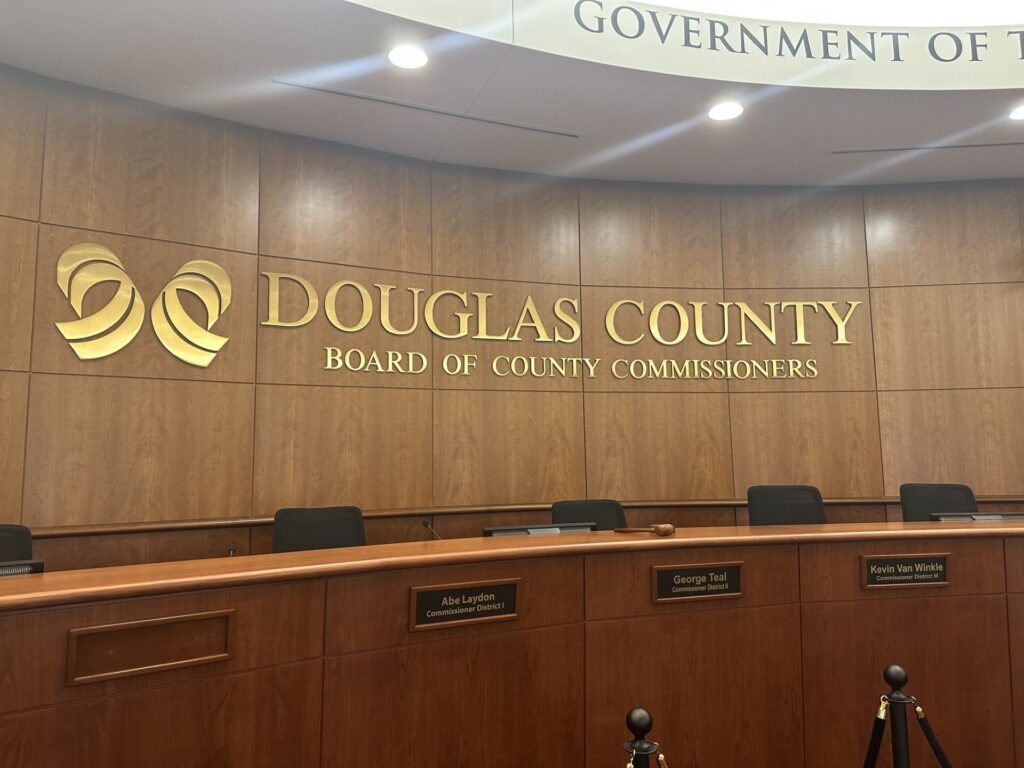
Douglas County commissioners formally waded into the debate over a voter-led ballot initiative Monday by unanimously referring a separate measure that would give voters an additional option if they choose to expand the board from three members to five. The...
PREV
PREVIOUS
Colorado's Parks and Wildlife chair’s decision to limit public comments sparks backlash from fellow commissioners
Last week, the chairman of Colorado’s wildlife commission unilaterally decided to limit public comments, complaining, in particular, that elected officials often “grandstand” at meetings and noting that the election season is well underway. This week, the commission overturned its chair’s decision. In fact, Jay Tutchton, the wildlife body’s chair, ultimately voted against his own decision. […]

Appeals court rejects CDOT employee’s discrimination, retaliation claims
Colorado’s second-highest court agreed last week that a Colorado Department of Transportation employee had not shown that his employer discriminated and retaliated against him due to his religion and national origin. Ayman Salloum, who described himself as a 70-year-old Muslim immigrant from Jordan, was an environmental protection specialist at CDOT in December 2024. That month, […]