Appeals court reinstates Mesa County defendant’s request for DNA testing under new Colorado law
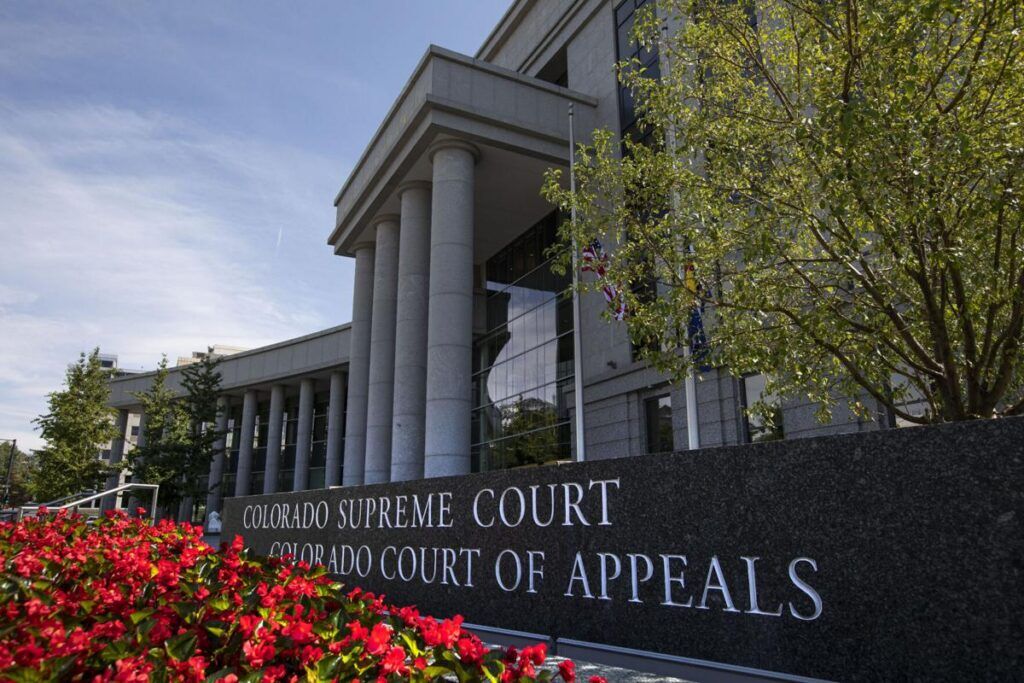
Colorado’s second-highest court revived a Mesa County defendant’s petition for DNA testing in his quarter-century-old attempted murder case on Thursday, concluding that a trial judge wrongly interpreted a recent Colorado law in dismissing the request outright.
Jurors convicted Billy Joe Page for the 1992 shootings of two victims. Page had no apparent motive, the victims were unsure he was the perpetrator, and his fingerprints were not on any evidence recovered from the crime scene.
Relying on a 2023 law intended to increase the availability of postconviction DNA testing, Page alleged that an analysis of the crime scene items could exclude him and reveal another suspect. A trial judge, citing “overwhelming evidence” of Page’s guilt, rejected his petition without a hearing.
A three-judge Court of Appeals panel reversed that decision, clarifying for the first time that trial judges must hold a hearing as with any other postconviction challenge, unless the allegations clearly do not entitle a defendant to relief.
“Moreover, in determining the adequacy of a defendant’s allegations, the postconviction court must assume that the requested testing would yield “favorable results” — that is, within the range of possible results, the results that are most favorable to a defendant’s claim that there’s a reasonable probability the defendant wouldn’t have been convicted had the results been available at the original prosecution,” wrote Judge Craig R. Welling in the Sept. 3 opinion.
Case: People v. Page
Decided: September 3, 2026
Jurisdiction: Mesa County
Ruling: 3-0
Judges: Craig R. Welling (author)
Karl L. Schock
Katharine E. Lum
In 2003, Colorado lawmakers created a mechanism for convicted defendants to obtain DNA testing. The law required judges to reject defendants’ requests unless they could demonstrate it was more likely than not that the results would show their “actual innocence.” In the next 20 years, only three defendants obtained postconviction DNA testing orders.
Then, in 2023, the legislature expanded the ability of defendants to secure testing by striking the requirement to show actual innocence. With no votes in opposition, lawmakers directed judges to order DNA testing when there is a “reasonable probability” the defendant would not have been convicted at trial if testing had shown “favorable results.”
In Page’s underlying case, a man shot two women who were jogging in the Grand Junction desert. The victims, then-Magistrate Martelle Daniels and court clerk RoseAnne Schweissing, survived the shooting. Mesa County’s chief judge at the time, referring to the shooter, urged police to “prosecute him, give him a fair trial and string him up by his huevos.”
Near the scene, police collected six shell casings that came from the perpetrator’s gun, along with a soda can and a chimichanga wrapper. The victims gave significantly different descriptions to a police sketch artist, but the composite drawing resembled Page.
Police focused on Page as a suspect, but he had seemingly no motive, an alibi, and none of his fingerprints were found on the items at the crime scene. The victims thought he might be the shooter, but were not positive. Law enforcement said that he confessed, but the confession was not recorded and he never signed the confession typed by the sheriff.
Three decades after his conviction, Page filed a petition for DNA testing under the new law and requested a hearing. In a November 2024 order, District Court Judge JenniLynn E. Lawrence agreed that she had to assume the testing results would be favorable to Page.
However, any results showing Page’s DNA was not on the crime scene items “would not present a reasonable probability that he did not shoot the weapon, especially when considered in light of the overwhelming evidence presented during the prosecution of this case that he did,” Lawrence wrote. “Someone else may have loaded the gun, the Defendant may have worn gloves to load the gun, the wrapper and the can may simply have been someone else’s trash.”
She added that the evidence was clearly sufficient for jurors to convict Page.
On appeal, Page received support from The Innocence Network, which encompasses more than 70 organizations that advocate internationally for people alleging wrongful conviction.
“As of 2020, nearly 400 innocent individuals have been exonerated in the United States through DNA testing. Many of these exonerations have involved circumstances like those Mr. Page claims — mistaken eyewitness identifications, flawed forensic analyses, and false confessions,” they wrote. “Access to DNA testing of relevant physical evidence was a critical first step in all of these exonerations.”
“People should not be let out of prison and cases shouldn’t drag into the third or fourth decade based on specious grounds or abstract possibilities,” said Paul Koehler of the Colorado Attorney General’s Office to the Court of Appeals panel during oral arguments.
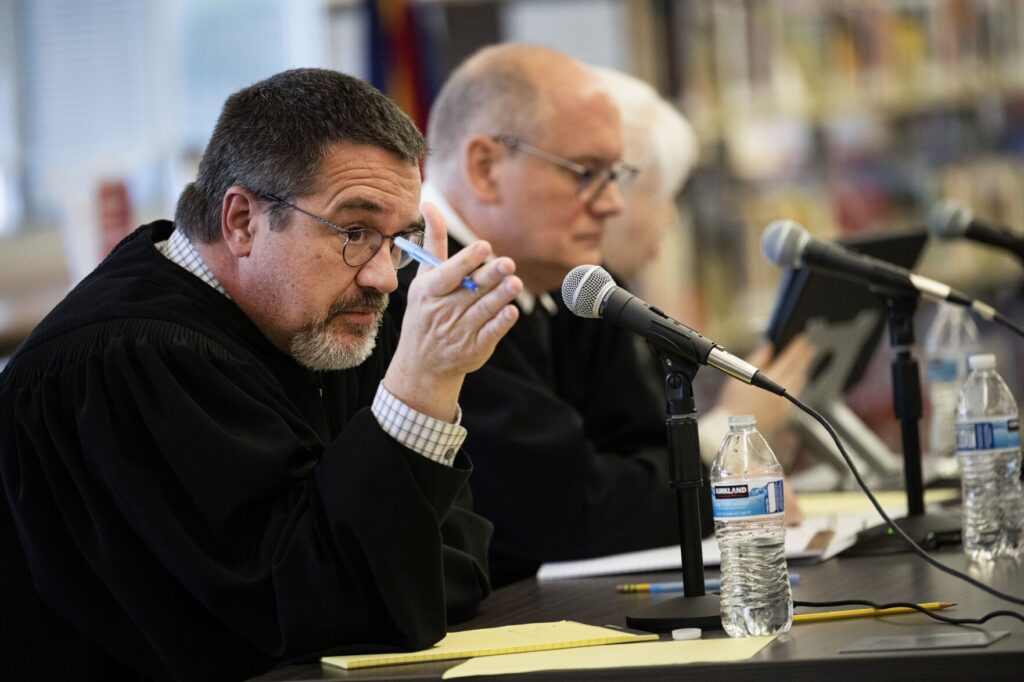
Judge Karl L. Schock clarified that the appeal was not about Page’s entitlement to leave prison.
“This case is about getting DNA testing,” Schock said. “And it’s fruitless, in which case we’re back where we are, or it’s exonerating, in which case — good thing we let him test DNA.”
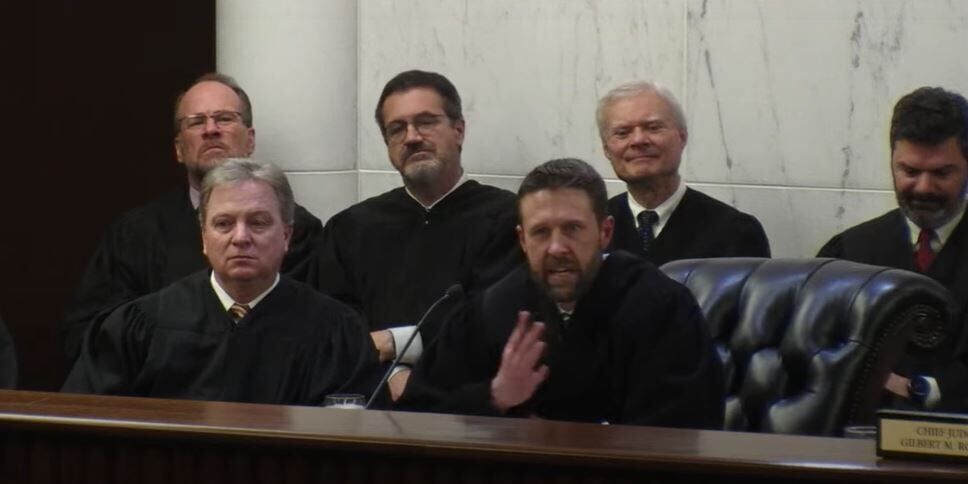
“The point is, if a jury had heard that — that somebody else’s DNA who’s not Mr. Page was on all of this evidence — doesn’t that undermine our confidence in the conviction?” asked Judge Katharine E. Lum.
Schock wondered whether Page’s petition would satisfy the law if the same person’s DNA appeared on each crime scene item, and that person knew the victims, had a reason to harm them, and had a violent criminal history.
“That seems like a fanciful chain of assumptions,” responded Koehler.
But the appellate panel ultimately concluded that lawmakers intended for judges to assume DNA testing will produce favorable results, given the problem they sought to address.
“Indeed, when a defendant files a petition for postconviction DNA testing, no one knows what the testing will reveal, if anything,” wrote Welling. “After all, the point of the petition (and the statute) is to fill this information gap.”
Assuming DNA testing would exclude Page from the items and point to a different perpetrator, the panel determined the results could have affected his trial, notwithstanding the “overwhelming evidence” that Lawrence cited.
“To put a sharper point on it, just because the evidence may have been viewed as substantial and compelling by the jury at Page’s original trial doesn’t mean that the same evidence would be similarly compelling or overwhelming when presented alongside the favorable DNA test results that Page posits in his petition,” concluded Welling.
Jud Lohnes, litigation director of the Korey Wise Innocence Project who represented Page, said the decision was not groundbreaking because it confirmed what lawmakers intended to happen.
“Postconviction DNA testing should be an ordinary, uncontroversial event in our legal system. There is no harm in postconviction DNA testing. The harm is in not testing — in not ensuring that our justice system got it right,” he said.
One of the legislation’s sponsors agreed.
“My intent in running bipartisan legislation in 2023 was to ensure that petitioners could access postconviction DNA testing in order to prove their innocence, identify the actual perpetrators of offenses, and reclaim their freedom,” said Sen. Julie Gonzales, D-Denver. “The Court of Appeals decision clarifies the process to ensure that petitioners in Colorado can vindicate their rights, and I am grateful for their thoughtful consideration of the facts in this case.”
The case is People v. Page.

Appeals court reverses Denver juvenile’s conviction due to improper expert testimony
Michael Karlik
michael.karlik@coloradopolitics.com
Updated 1 hour ago
Colorado’s second-highest court reversed a juvenile defendant’s conviction for unlawful sexual contact on Thursday after an expert witness’s testimony improperly suggested the child victim was telling the truth. The defendant, identified as S.H-S., was around 16 years old when he...

Judge orders home confinement for Barry Morphew
Dennis Huspeni
dennis.huspeni@gazette.com
Updated 1 hour ago
An Alamosa County district judge has ordered home confinement for Barry Morphew, who is accused of murdering his wife. Barry Morphew, 59, faces a first-degree murder charge in the death of his wife, Suzanne Morphew, who disappeared Mother’s Day weekend...
Appeals court says jury does not need to view porn to determine if it ‘obscene’
Michael Karlik
michael.karlik@coloradopolitics.com
Updated 1 hour ago
Colorado’s second-highest court ruled for the first time on Thursday that a jury does not always need to view pornographic material to determine if it meets the criteria for obscenity. Mesa County jurors found Shayla Ann Simpson guilty of child...
10th Circuit disagrees Sterling officer had no basis to arrest motorist who lacked insurance details
Michael Karlik
michael.karlik@coloradopolitics.com
Updated 22 hours ago
The Denver-based federal appeals court disagreed on Tuesday with a trial judge’s decision to bar evidence from a pat-down search from being used against a defendant. Federal prosecutors obtained an indictment of Jorge Sigala-Baray for being a felon in possession of a...

Colorado Springs officers’ tasing, threats prompt federal judge to block use of suspect’s statements
Michael Karlik
michael.karlik@coloradopolitics.com
Updated 24 hours ago
A federal judge blocked the government last month from using some of a defendant’s statements as evidence, reasoning that the defendant made them involuntarily as Colorado Springs officers tased him five times and one officer threatened to kill him. Officers...

Appeals court rejects CDOT employee’s discrimination, retaliation claims
Michael Karlik
michael.karlik@coloradopolitics.com
Updated 1 day ago
Colorado’s second-highest court agreed last week that a Colorado Department of Transportation employee had not shown that his employer discriminated and retaliated against him due to his religion and national origin. Ayman Salloum, who described himself as a 70-year-old Muslim...
Colorado judges may use professional name in lieu of legal name, ethics panel says
Michael Karlik
michael.karlik@coloradopolitics.com
Updated 1 day ago
Colorado’s Judicial Ethics Advisory Board concluded on Tuesday that members of the bench may go by a professional name, rather than their legal name, so long as their intent is not to deceive. The board, which consists of judges, attorneys...
Colorado’s federal court confirms John Eastman cannot practice due to disbarment
Michael Karlik
michael.karlik@coloradopolitics.com
Updated 2 days ago
Colorado’s federal trial court confirmed last week that attorney John C. Eastman, who devised a plan for President Donald Trump to remain in office despite losing the 2020 election, cannot practice in the state’s U.S. District Court due to his...
Federal judge green-lights immediate appeal in challenge to Colorado’s unclaimed property program
Michael Karlik
michael.karlik@coloradopolitics.com
Updated 2 days ago
A federal judge took the unusual step last month of authorizing an immediate appeal of her decision to dismiss key components of a constitutional challenge to Colorado’s program for reuniting people with their unclaimed property. In February, U.S. District Court...
10th Circuit orders new unlawful arrest trial against Colorado Springs officers
Michael Karlik
michael.karlik@coloradopolitics.com
Updated 3 days ago
The Denver-based federal appeals court concluded on Friday that a trial judge inappropriately allowed jurors to see several unflattering video clips of a plaintiff being belligerent toward police officers during a trial to determine whether police violated her constitutional rights....