Parenting from prison: Inmates hope to be present in their children’s lives, while physically absent
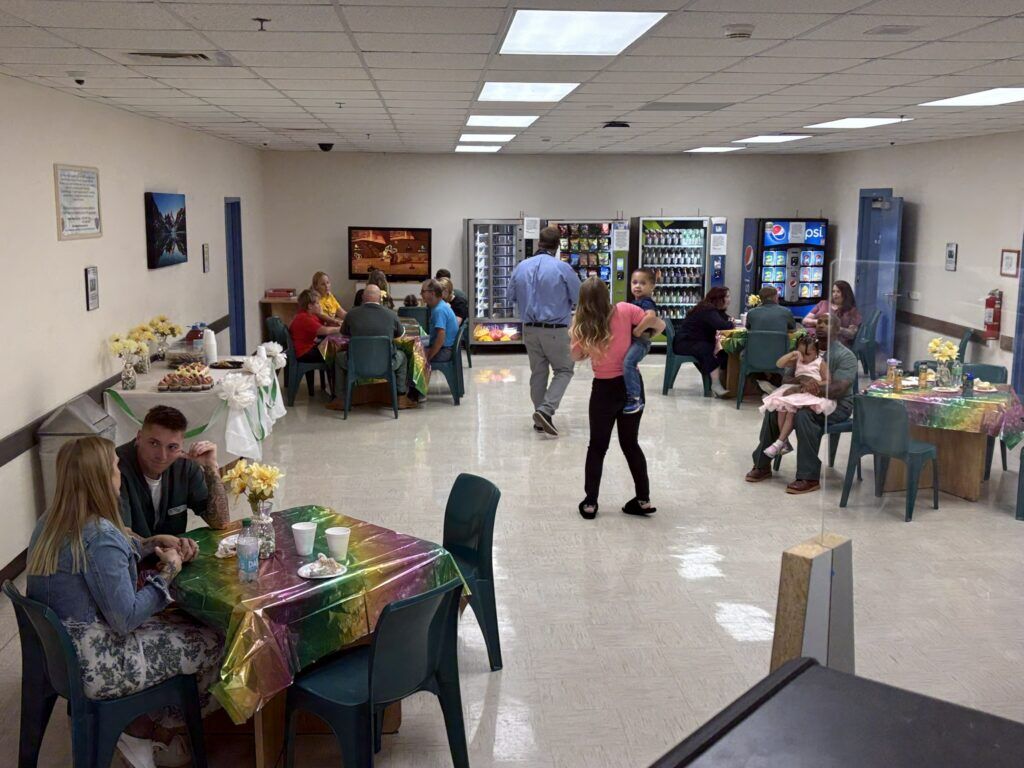
The room was decorated with balloons, the tables sparking bright with colors as the smell of pizza and cake wafted through the air.
As did music.
This was, after all, a father-daughter dance.
Except this was not a typical father-daughter dance.
The fathers are residents of Trinidad State Prison, a minimum-security facility for men with 10 years or less left on their sentences.
The prison sits far east of town, reachable only by a 9-mile stretch of dirt road. Families don’t end up in this corner of Las Animas County unless they’re headed to the facility.
On Aug. 11, about half a dozen families were huddled in this corner of Colorado for the father-daughter dance, a rare break from the tightly controlled weekend visits, where inmates must keep their hands visible on the table and physical contact is limited.
Off to the side, the guards kept an eye on the festivity, mindful not to intrude.
The event is part of a state-run program designed to help offenders engage with their families and build a support network, according to state corrections officials.
The goal, they said, is to incentivize positive social behavior.
A father-daughter dance, said one officer, helps offenders to remember that they’re still parents — fathers to sons and daughters who are growing up without them but whose relationships they still need to nurture, or, in some cases, rebuild.
For mothers and fathers alike, the hardest part often isn’t the sentence. It’s the distance, the missed milestones and the daily effort to remain present in their children’s lives — knowing they put themselves in this predicament.
For some, the program offers the opportunity for introspection, particularly what it means to be a parent and how their own actions separated them, physically at least, from the people they love most.
And just maybe a chance at redemption, too.
A father’s path
Anthony Notary’s family has traveled from Fort Collins that festive day in August.
Notary has served one year of a six-year sentence for child endangerment. He claimed he fell asleep while holding his daughter and she slipped from his arms and was seriously injured. It was his first offense.
His time at Trinidad, in some ways, has been positive, Notary said.
“When you come to prison, you think, ‘Oh, this is going to be terrible. You’re going to be isolated. All these terrible things,’” he said.
All the things one hears about prison aren’t necessarily true, he said.
“It’s going to be on the individual. You can either choose to be a present father or a husband, or you can just mess your time off and do things that you shouldn’t be doing in prison,” he said.
He has used his time to try to better his parenting skills and to get more in touch with God, he said.
“I’m a Christian and I stand by that. He’s carried me through this situation,” he told Colorado Politics.
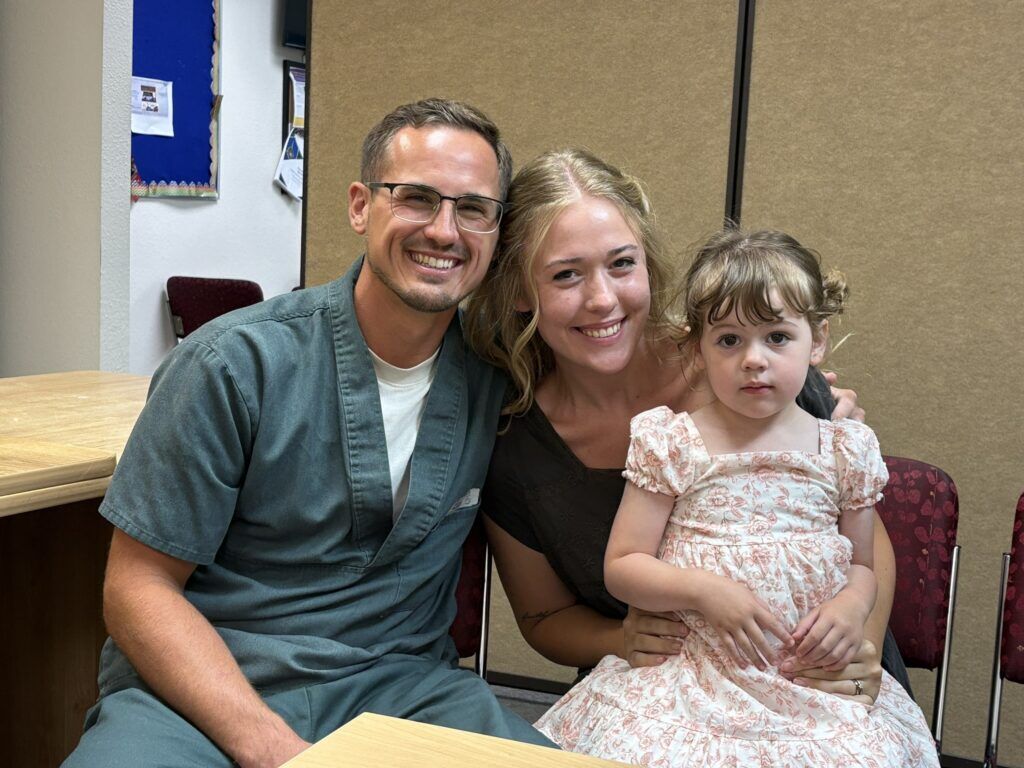
Notary has become a CrossFit trainer through a program known as Redemption Road CrossFit, which focuses on health, wellness and personal redemption. He’s used that experience to mentor others — to get them away from drug addictions or other mental health struggles.
Notary said the experience gave him something he needed.
“It helped me focus. There’s a lot more to life, including learning to focus on ourselves,” he said.
Still, it’s hard to be a father and husband behind bars, he said.
“(But) when a child and a wife love and support someone that much, it drives everything. I’m doing everything I can to get home to them and be the best father I can be,” he said.
The prison walls had been a big change from his life outside.
Outside, Notary said he was working constantly, devoting all his time to the job.
“It took me away from (my family), and it didn’t give me a chance to really think about what it was like to be a parent,” he said.
His time in Trinidad has pushed him to think deeply about what fatherhood means, who he wants to be once he is released and the choices ahead for his daughter, given the path that he had carved out for his family.
“I don’t want her to see somebody that’s not what I would want her to choose to be with one day. You want to set that good example for her,” he said.
Major Alex Sample, Trinidad’s operations manager, told Colorado Politics that reunification through something special like a father-daughter dance has been done at the federal level but never at the state level in Colorado.
“It’s a better opportunity for offenders to engage with their families,” he said.
Notary is now eligible for placement in a halfway house. He hopes for a spot in Jefferson or Adams County, which would significantly reduce the burden of travel for his wife and child.
The toughest part of being at Trinidad?
Watching his wife and daughter leave.
A hands-on father grapples with separation
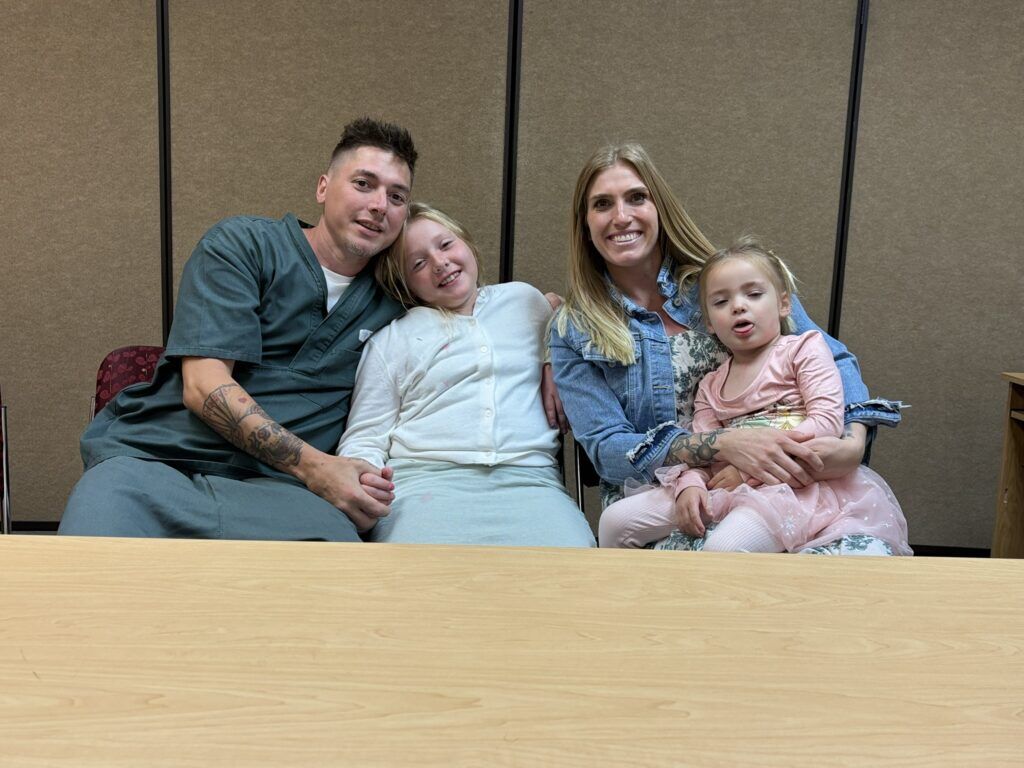
Luture Evan is serving an eight-year sentence for money laundering and pimping connected to a human trafficking case in Colorado Springs. He has completed about 18 months and plans to apply for halfway-house placement next year.
His wife Allison and their two children currently live in Colorado Springs to be as close as possible to the Trinidad facility. He also has two adult children in Denver.
It hasn’t always been easy to see his family, Evans said.
“At first it was very difficult, but at this juncture that we’re at now, we get visits every week and they get to come see me,” he said.
Both of Evans’ children are under 5. At their age, he said, they don’t really grasp what’s happening.
“I was already a good father, but this separation from my kids has taught me what they mean to me even more and that I shouldn’t put myself in certain situations to be apart from them.”
Luture Evans
“I try to keep them in the dark as much as possible until they’re a little older. Right now, they just assume I’m at work,” Evans said.
Being apart has been difficult, as he had been a full-time father and around his children all day and night.
“I never left their side,” he said. “I was just a hands-on father for sure. So, this time apart has really been hard on me and hard on the kids. And eye-opening for me, too.”
Evans said that being in prison hasn’t taught him how to be a father. What it has taught him is not to put himself in situations that take him away from his kids.
“I was already a good father, but this separation from my kids has taught me what they mean to me even more and that I shouldn’t put myself in certain situations to be apart from them,” he said.
For Allison Evans, the situation has been a wake-up call.
“It’s honestly taught me to grow up,” she said.
It’s been tough to earn a living while managing the family on her shoulders.
“I’ve just had to take on a lot of responsibility, grow up and just kind of get through it,” she said.
And they lack a strong support system outside of the prison, although she has family in Denver. Allison said she continues to rely on Evans.
“Even though he’s in here, we’re always a team,” she said.
Once he gets out, Evans said he wants to get a job, be the father that he knows he can be and be the best husband he can be for Allison.
‘We’re not doing normal family things’
James McDonald has two children, a daughter with wife Ashley and an older daughter from a previous relationship.
He has been in Trinidad for three years on a 12-year sentence for a conviction for vehicular homicide in Douglas County. The crash took the life of a backseat passenger. It was his second offense.
McDonald is appealing his sentence.
Ashley was six months pregnant with their daughter when the crash happened.
James said missing the birth of his youngest daughter — and losing the chance to bond with her — was traumatic. He worries constantly about his family.
For now, the couple has explained his predicament to his youngest this way: Daddy is at work and can’t come home right now.
“She doesn’t grasp it,” Ashley said.
The older daughter, on the other hand, understands some of what’s going on. Her visits are more limited, as she lives with her mom.
Ashley said there’s little support around them. His family is in Las Vegas, hers in Iowa, leaving her largely on her own.
“I just got nothing,” she said.
She relies on nannies, which cost about $2,000 a month. She’s responsible for covering the family’s expenses, including rent.
She does what she can to maintain the family relationships but “it’s hard because we’re not doing normal family things,” she said.
Those financial pressures mean the family can only go to Trinidad about once a month.
“It’s a miserable trip,” she said, though she pointed out that the younger daughter gets excited to be around her dad.
They’re hopeful for a new trial or a plea deal to accept the time he has already served. He might become eligible for the halfway house in January.
Being away from the family is more than frustrating, McDonald said.
“You lose touch with each other. It’s been four years. We’re trying, but you can only do so much over the phone,” he said.
“I would love to take her to school tomorrow,” he said of his daughter.
Navigating childbirth and motherhood from inside
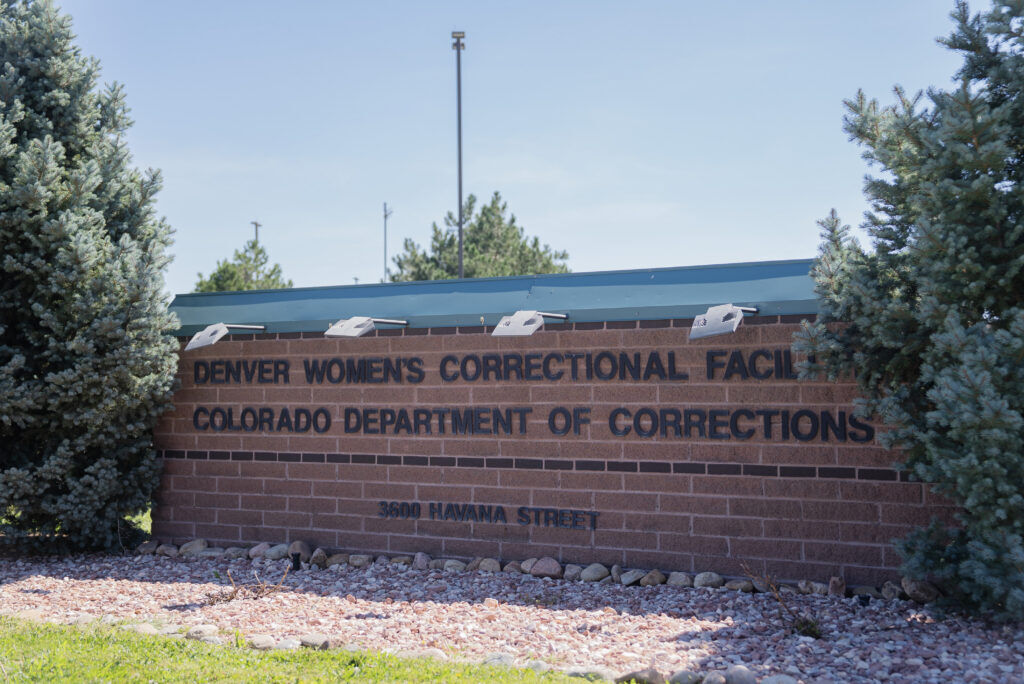
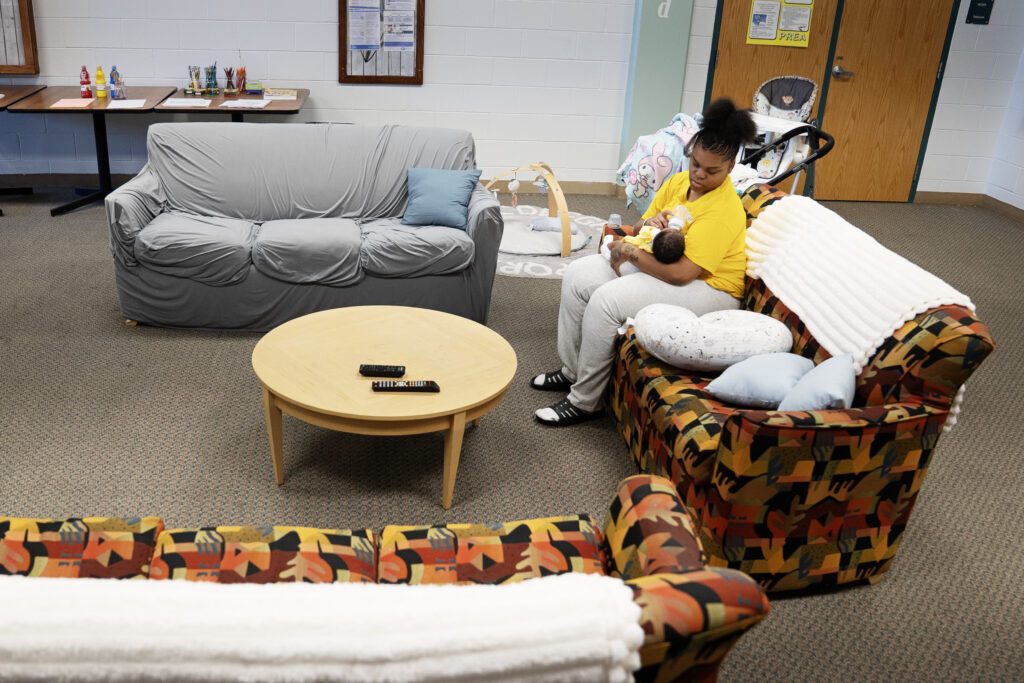
The challenges look different but no less intense at the Denver Women’s Correctional Facility, where most inmates are mothers.
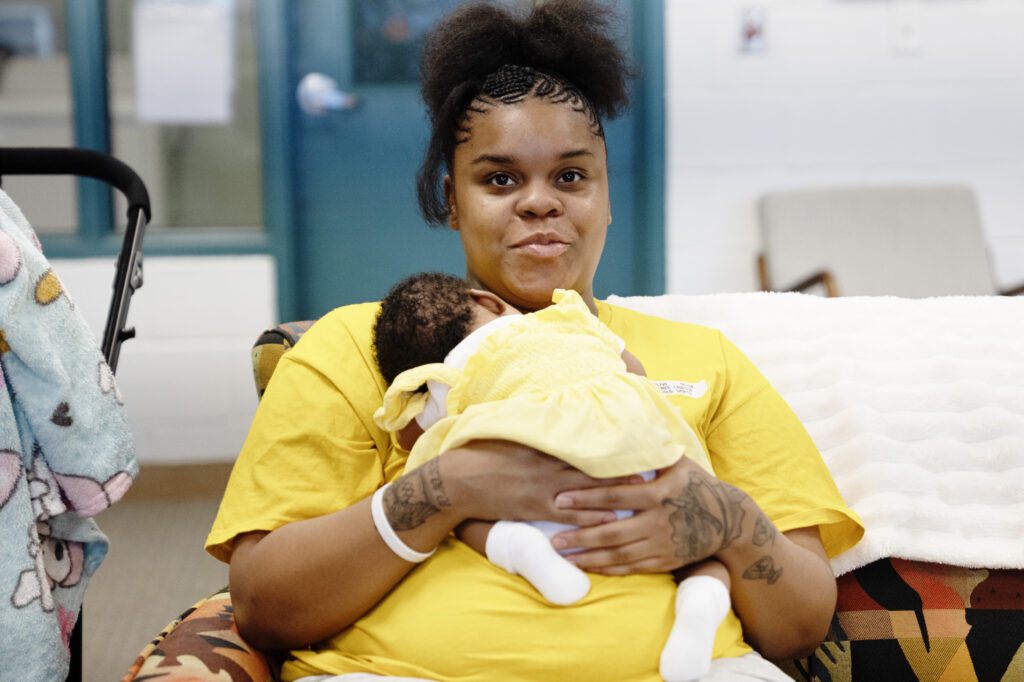
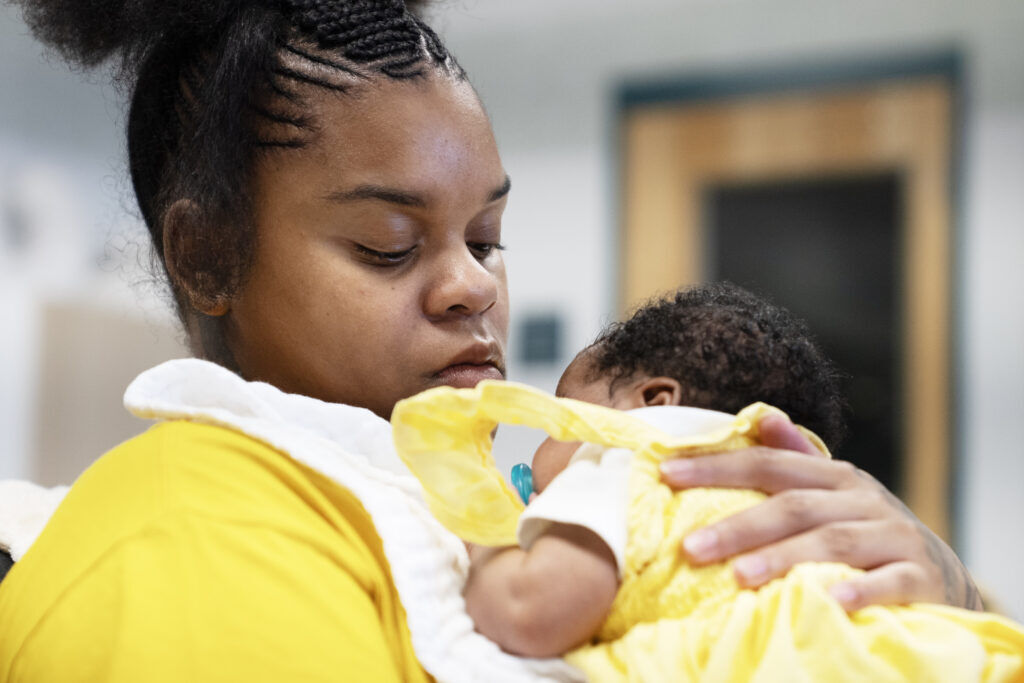
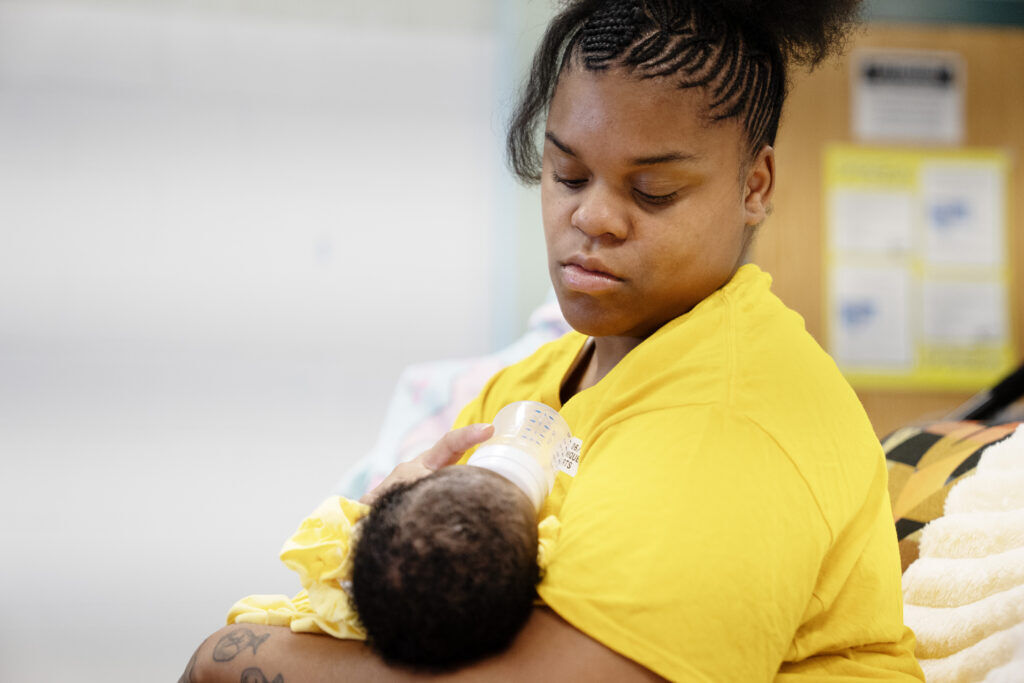
Women who give birth while in prison receive 28 daytime-only days with their newborns before shifting to weekend visits.
The Mother Bonding Unit provides parenting, mental-health, childbirth and lactation support to help ease the strain of separation, but the distance and missed milestones weigh heavily on the inmates. Some mothers haven’t seen their other children in months because no one in their family meets the background-check requirements to bring them.
Across both facilities, parents described the same struggles: staying connected to their children from behind prison walls and doing everything they can to remain part of their lives.
LaNique James, who is housed at the Denver Women’s Correctional Facility in northeast Denver, is serving a three-year sentence for assault — her first conviction — which began Jan. 15.
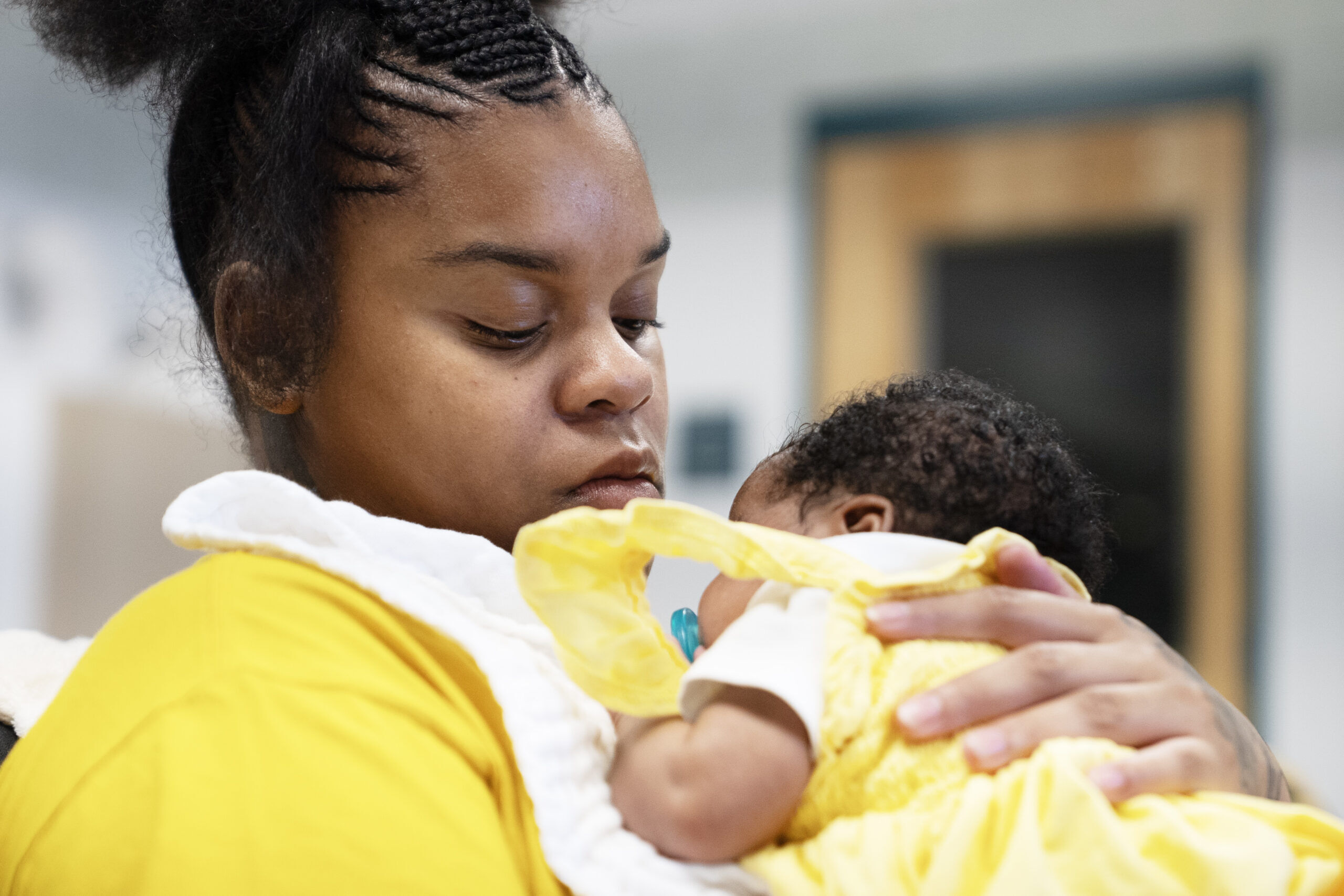
In July, she gave birth to her fifth child, a daughter.
Mothers who deliver while in prison get 28 days with their newborns, but only during daytime hours. James said she pumps breast milk each day for her daughter, which her mother takes home.
After the 28 days were up, she would only get to see her new daughter on weekends.
James knew she was pregnant when she was sentenced, but she didn’t think she was going to get prison time. She was devastated when she was handed three years.
The first few months were depressing, she said. To get through it, she talked to her peer-support specialist and a mental health person.
“I got used to what everyday life would be here,” she said. “It’s been different. I’ve never been incarcerated or pregnant while being incarcerated. So, it was just like a different change in experience. But having her with me these 28 days has been like a relief.”
She gave birth at University Hospital. Normally, offenders go to Denver Health, but her contractions were so close that there wasn’t enough time.
There were two officers in the room, one male and one female, while she gave birth, although the male officer stepped out of the room during certain procedures.
This is as sensitive as it gets, said Major Todd Crist, the administrative services manager at women’s corrections.
When an offender is in labor, the policy is for direct supervision while she’s at the hospital, he said.
Denver Health does have a secure ward for admission. James stayed in a mom-baby unit under supervision at University Hospital.
James hasn’t seen her other four children, including a 1-year-old, since going to prison, due to not having someone who qualifies to bring them to the prison. That means clearing a background check with no active warrants or fines, according to Holly Kaiser, a social work counselor in women’s corrections.
The two oldest children understand where she is, but the two youngest, both under 5, don’t.
“It was kind of hard for my oldest two,” she said.
James said she has missed milestones — “her continuation, her birthdays, their first day back at school.” It’s been hard on the children, she added, because they’re not getting their mother’s daily presence. Still, her family has stepped in to support them.
The best part of her day, she said, is the time she gets to spend with her newborn daughter.
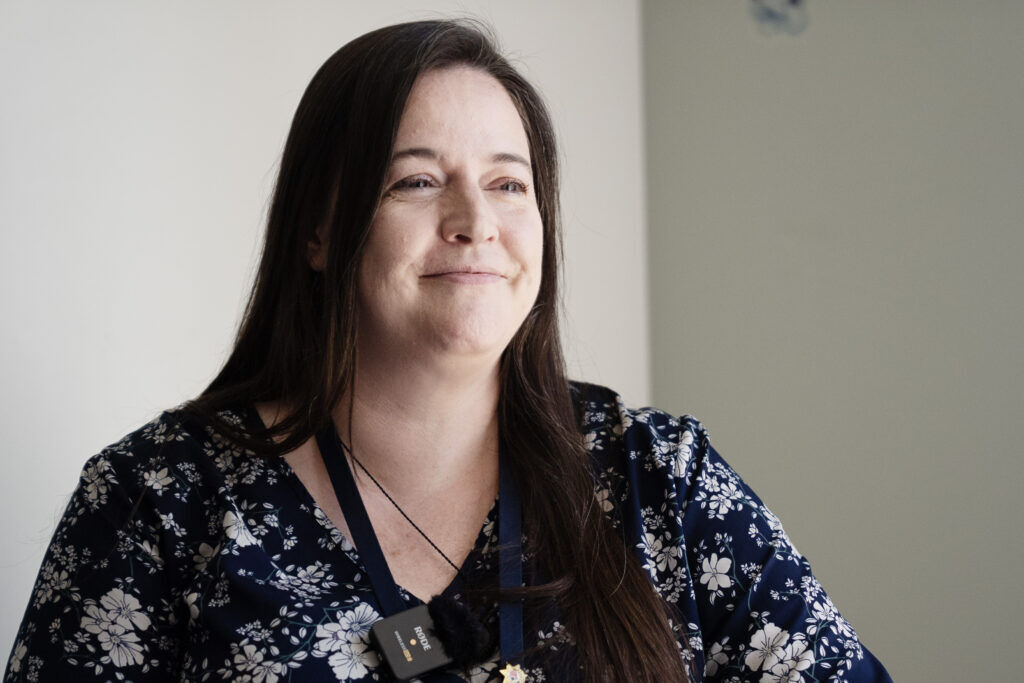
Kaiser noted that most women in Colorado prisons are mothers — with fewer than a dozen in the nearly 800-bed facility who aren’t.
In addition to providing new mothers with a dedicated space to be with their babies, the Mother Bonding Unit at the Denver Women’s Correctional Facility offers parenting and mental health support, along with childbirth, pregnancy and parenting education, plus lactation and dietary assistance.
Kaiser said the goal is simple: to help ease the strain of being separated from children.
The unit is arose out of Senate Bill 23-039. Kaiser said the legislation, along with volunteer programs, has made women’s correctional facilities more manageable.
“They have access to care, time, opportunities,” she said.
If they’re participating in these programs, she added, they’re not getting into trouble.
Mental health support is critical once that 28-day visitation is over. Some suffer from depression or anxiety, Kaiser said. The program encourages video visitation whenever possible to help the mothers stay connected with their children.
Some women handle it better than others, she said. Some are motivated to do well because of their kids.
Others struggle.
Kaiser said she tells newly arrived women that the best thing they can do for their children — beyond staying connected — is to serve their time well and stay focused on getting home.
The better their behavior, the more they work and participate in programming, the sooner they get out, she said.
And that’s their best bet for reuniting with their children faster, she added.
Learning to be sorry
Juana Rodriguez spent 28 years working in corrections — 17 in the private prison system and the past 11 with the Colorado Department of Corrections at the Bent and Arkansas Valley facilities — before moving to Trinidad, where she now works as a case manager.
Reunification events have been part of the programming at the facility since about 2017.
Trinidad offers 18 offender-led programs and educational opportunities. That includes classes offered by nearby Trinidad State College, where 22 offenders graduated with either college degrees or GEDs in May.
The prison allowed extended visitations for those graduation ceremonies to allow families to celebrate that milestone, she said.
“We’re very driven to encourage that positive social behavior and try to really get them where they need to be. We want them to change where their thought processes are so we can get them out and be productive,” Rodriguez said.
The father-daughter dance and similar events help the inmates remember that they’re still fathers, she added.
“We’re not just going to remember you for your crime,” she said, adding the goal of is to motivate the inmates to make the changes they need to be successful outside.
Sometimes, the most difficult part is taking that first step, she noted.
Rodriguez told the story of a prisoner who hadn’t spoken to his adult children in years. He was close to getting out. She asked him what he would need once outside.
He responded, “I got nothing.”
He had no family waiting for him.
She worked with the inmate and first suggested he write a letter. He did and initially got no response. But after several months, he finally got one, Rodriguez said.
She and the inmate talked about what broke the relationship in the first place and then moved on to learning to say “I’m sorry.”
Part of that process, she said, is taking accountability.

Colorado House ethics committee issues ‘stern letter’ to Democrat over caucus funds mismanagement
Marianne Goodland
marianne.goodland@coloradopolitics.com
Updated 11 hours ago
The Colorado House ethics committee on Friday voted unanimously to issue a “stern letter” to Rep. Mandy Lindsay, D-Aurora, regarding her mismanagement of House Democratic caucus funds. The committee further voted to request that Lindsay resign as Democratic Caucus co-chair...
State seeks $50K penalty against GOP candidate Victor Marx over alleged campaign finance violations
Deborah Grigsby
deborah.smith@denvergazette.com
Updated 6 hours ago
Republican gubernatorial candidate Victor Marx is looking at more than $50,000 in fines in what the Elections Division of the Office of the Secretary of State calls “unprecedented” campaign finance violations. The state has not imposed that fine yet, and...

Judge puts Colorado Libertarians’ secretary of state candidate on ballot after party’s 1st nominee drops out
Ernest Luning
ernest.luning@coloradopolitics.com
Updated 10 hours ago
A Denver judge ruled Friday that the Colorado Libertarian Party’s pick for secretary of state will appear on the November ballot after the party’s original nominee withdrew one day after the deadline to replace minor party candidates. Following a hearing...

Regulators knew this marijuana product was harming people. It stayed on shelves for more than a year
Christopher Osher
chris.osher@gazette.com
Updated 12 hours ago
Colorado’s Marijuana Enforcement Division can take months or even years to issue formal safety warnings about marijuana products even when it receives reports that the products are harming people’s health, The Denver Gazette and ProPublica found. This article was produced...

Douglas County commissioners reject challenge to ballot language for 3 to 5 petition
Nicholas Fogleman
nicholas.fogleman@denvergazette.com
Updated 13 hours ago
Douglas County commissioners denied a challenge Thursday to the language of a ballot initiative that would expand the board from three to five members. Following a contentious hearing that saw multiple audience members escorted out by police for disruptions, commissioners...

Favorability rating of Mayor Mike Johnston, Denver City Council slides
Nico Brambila
nico.brambila@denvergazette.com
Updated 15 hours ago
Denver Mayor Mike Johnston’s favorability rating fell 7 percentage points over the past year, while the City Council’s favorability rating dropped 3 percentage points, a new poll has found. A little more than a year after taking office, Johnston had...

Judge orders home confinement for Barry Morphew
Dennis Huspeni
dennis.huspeni@gazette.com
Updated 1 day ago
An Alamosa County district judge has ordered home confinement for Barry Morphew, who is accused of murdering his wife. Barry Morphew, 59, faces a first-degree murder charge in the death of his wife, Suzanne Morphew, who disappeared Mother’s Day weekend...

Ikon Pass company Alterra to move into former Denver Post building, create downtown ‘outdoor hub’
Bernadette Berdychowski
bernadette.berdychowski@denvergazette.com
Updated 2 days ago
What was once the home of two of Colorado’s longest-running daily newspapers could soon become a central location for the state’s ski resort and outdoor companies, city and state leaders said Thursday. Alterra Mountain Co. is moving its headquarters to...

Fentanyl sentencing, tax overhauls and transgender‑related issues anchor Colorado’s 14 ballot measures
Marissa Ventrelli
marissa.ventrelli@coloradopolitics.com
Updated 2 days ago
Fourteen statewide ballot measures await Colorado voters this November, offering a mix of criminal justice crackdowns, tax overhauls, and constitutional tweaks that ensure no one will accuse the ballot of being boring this year. Colorado’s 14 statewide ballot measures match...

Colorado sues to stop Trump’s ban on Medicaid dollars paying for minors’ transgender transition
Thelma Grimes
thelma.grimes@coloradopolitics.com
Updated 1 day ago
Colorado on Wednesday filed yet another lawsuit against the Trump administration — this time to stop a new rule that prohibits Medicaid dollars from paying for transgender transition services for minors. The question of transgender services has increasingly become a...