

Fentanyl sentencing, tax overhauls and transgender‑related issues anchor Colorado’s 14 ballot measures
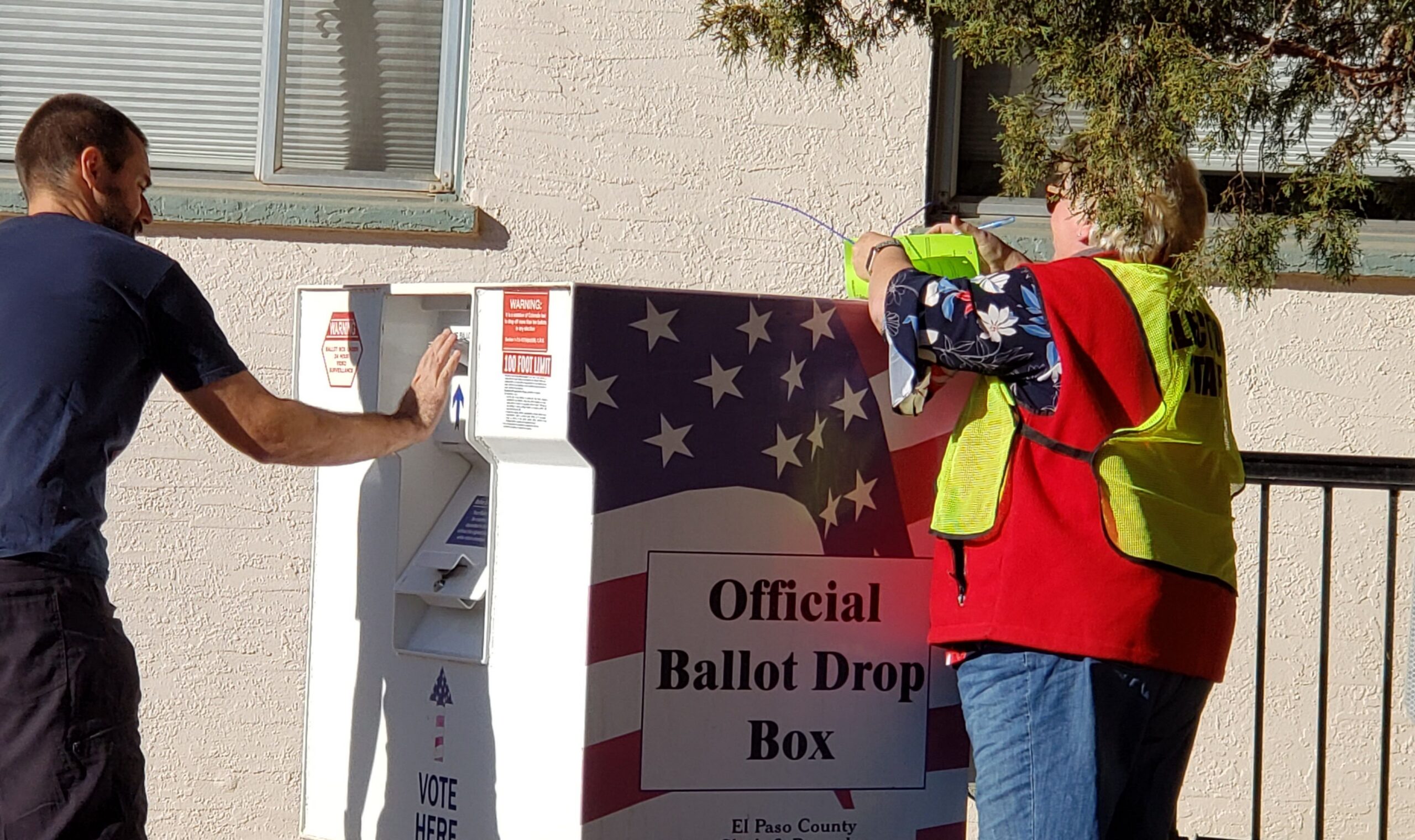
Fourteen statewide ballot measures await Colorado voters this November, offering a mix of criminal justice crackdowns, tax overhauls, and constitutional tweaks that ensure no one will accuse the ballot of being boring this year.
Colorado’s 14 statewide ballot measures match the 2024 election for the most in recent state history. The all‑time record still belongs to 1912, when voters faced 32 measures.
Here is a brief rundown of what each measure would do and what proponents and opponents are saying.
Initiative No. 85: Penalties for fentanyl crimes
Backed by the special interest group Advance Colorado, Initiative No. 85 would make the sale of any amount of fentanyl a Class 1 felony, punishable by up to 32 years in prison. It would also mandate court-ordered substance use treatment for individuals convicted of possession of up to 1 gram of fentanyl.
Proponents of the initiative, including law enforcement agencies and some district attorneys, argue the measure is necessary to reduce opioid overdoses, which are the leading cause of death for 18-to-44-year-olds, according to the Centers for Disease Control and Prevention.
“It’s time to hold the people that are peddling poison to our children accountable, and it’s time to get help to those people that need help,” said Sen. Byron Pelton, R-Sterling, who attended a press conference about the ballot measure last winter. “It must stop with the current state of affairs, with the people lying in the streets, dying from fentanyl overdoses.”
Opponents of Initiative No. 85, including criminal justice reform advocates, say the measure will actually increase overdoses. According to the Colorado Criminal Justice Reform Coalition, the measure would not increase penalties for the highest-level drug traffickers and instead require harsh sentences for minor offenses.
The coalition says the measure would mean an 18‑year‑old who shares a single pill with a friend could face the same 8‑ to 32‑year sentence as a top‑level trafficker, even if they didn’t know the pill contained fentanyl.
The organization also notes a nonpartisan legislative council cost estimate that found Initiative 85 could increase the state’s prison population by 900 people per year, costing the state about $433 million over the next five years.
Read more about Initiative No. 85 here.
Initiative No. 95: Law enforcement reporting requirements to federal authorities
Also backed by Advance Colorado, Initiative No. 95 would amend the state constitution to require law enforcement to notify federal immigration officials when they charge a person who is in the country illegally and the alleged offense is a violent crime, or when the individual has previously been charged with a felony. This also applies when the person’s legal status could not be determined.
That practice has been prohibited under state law since 2019, when state lawmakers passed House Bill 19-1124, which bars Colorado law enforcement from arresting someone solely on the basis of a civil “immigration detainer” request.
“Democrat leaders across the nation have repeatedly called for this standard, agreeing that violent and repeat criminals should not be allowed to remain in the state or country,” said Michael Fields, Advance Colorado’s executive director. “Initiative 95 would put their calls to action into law, reversing Colorado’s current out-of-touch standard that allows a $50,000 fine for law enforcement officers who proactively communicate with federal authorities, with no exception for reporting a dangerous offender.”
A number of groups have come out in opposition to the measure, including Rocky Mountain Equality and the Bell Policy Center.
“This initiative is not about public safety; it’s about fear and targeting,” said Bruce Parker, executive director of Rocky Mountain Equality. “Reporting someone to ICE the moment they are charged, before any conviction, before any due process, is a dangerous overreach that will make our communities less safe, not more. In fact, we have absolutely no reason to believe that the paramilitary, masked, and armed force known as ICE is capable of making any community safer.”
Read more about Initiative No. 95 here.
Initiative No. 108: Penalties for human trafficking of a minor
Backed by the special interest group Protect Kids Colorado, Initiative No. 108 would establish mandatory life sentences for individuals convicted of sexual trafficking of a minor.
The current penalty for human trafficking of a minor for sexual or involuntary servitude is a Class 2 felony, carrying a mandatory minimum of eight years in prison and a maximum of 24 years, with eligibility for parole and fines that can reach $1 million. Six states now impose mandatory life sentences without parole for sexual trafficking of minors.
Proponents of the measure argue that individuals who engage in sex trafficking of minors should spend life in prison and note that the harsh sentence could deter those considering engaging in human trafficking.
Opponents argue sentencing decisions should remain with judges and warn the measure could also affect trafficking victims who were forced to participate in trafficking others.

Demonstrators outside the Supreme Court during arguments on transgender sports cases.
Initiative No. 109: Male and female participation in sports
Also supported by Protect Kids Colorado, Initiative No. 109 would require students to participate on sports teams that align with their biological sex, with an exception allowing a female athlete to participate on a boys’ team if no girls’ team is available.
The initiative also prohibits government entities and athletic associations from investigating a school for maintaining separate sports for females.
Protect Kids Colorado argues the biological differences between males and females make it unfair for biological males to participate on female sports teams and can increase risk of injury.
“Bigger, stronger biological males are invading girls’ sports in Colorado, taking away our girls’ dignity, safety, and opportunity,” the organization’s website states. “Our ballot measure ensures girls’ sports are protected, requiring sports leagues and teams be specifically designated male, female, or co-ed.”
The LGBTQ rights group Rocky Mountain Equality argues the measure is unnecessary and will prevent transgender kids from participating in sports with their friends.
Mardi Moore, the organization’s CEO, called the initiative “an attack on Colorado families modeled after national extremist efforts.”
“Coloradans believe in fairness, freedom, and the right of every person to live their lives,” Moore said. “We will work tirelessly between now and November to make sure voters understand exactly what this effort is about. It’s about bullying little kids and taking opportunities away from a handful of people.”
Read more about Initiative No. 109 here.
Initiative No. 110: Prohibit certain surgeries on minors
Protect Kids Colorado’s third and final ballot measure, Initiative No. 110, would prohibit gender reassignment surgeries on minors and ban government funding and insurance coverage from being used to pay for such treatments.
Children lack the maturity to make permanent, life-altering medical decisions, the initiative’s legislative declaration states, adding that several European countries, including Sweden, Finland and the United Kingdom, require individuals to be at least 18 to receive gender reassignment treatments.
“We set age limits on many things in Colorado — from voting, to drinking, to signing a contract,” Protect Kids Colorado’s website states. “It’s too early. For something this serious and permanent, let’s wait until age 18.”
Rocky Mountain Equality called the measure an attempt by outside interests to tell Colorado parents how to raise their children.
“In the coming months we are going to hear intentional lies from anti-trans extremists about this ballot measure,” said Bruce Parker, the organization’s executive director. “They aren’t being honest about their agenda to erode privacy and access to credible medical care they don’t agree with. Their next targets are care for trans adults and abortion services if we let them get away with this.”
Read more about Initiative No. 110 here.

Initiative 177: Right to natural gas
Another Advance Colorado measure, Initiative No. 177 would establish a right to sell and purchase natural gas in the Colorado Constitution.
Proponents argue the initiative is necessary to protect consumer choice and ensure the state doesn’t entirely phase out fossil fuels.
“Natural gas is a clean, reliable and affordable form of energy that more than 70% of Colorado homes use today,” said Fields, Advance Colorado’s executive director. “That right should be protected.”
Opponents, including some Democratic lawmakers and the environmental organization Conservation Colorado, argue the measure is too broad and could block future clean energy projects.
Read more about Initiative No. 177 here.
Initiative No. 195: Graduated income tax
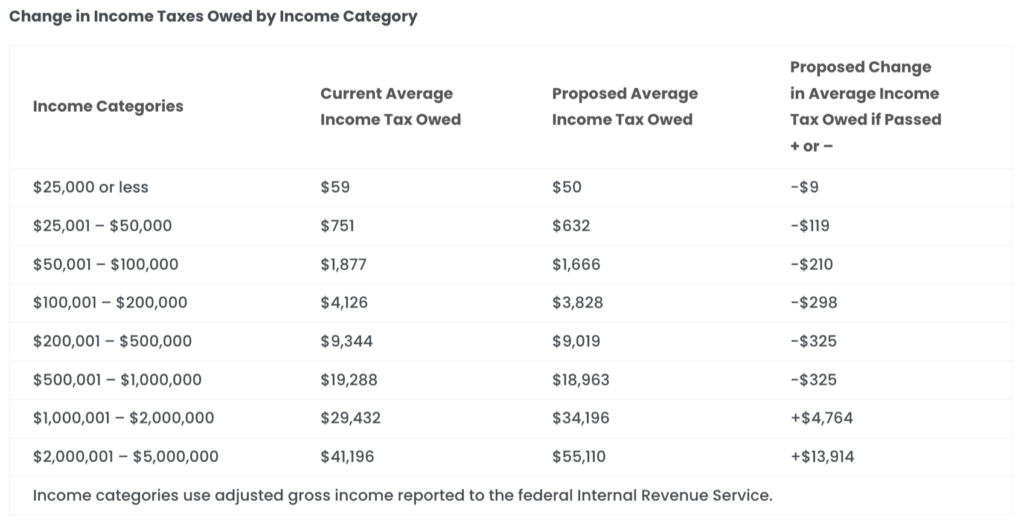
Backed by the special interest group Protect Colorado’s Future, Initiative No. 195 would replace Colorado’s flat income tax rate with a graduated tax rate in which individuals are taxed different amounts based on their income.
According to Protect Colorado’s Future, Initiative No. 195 would cut taxes for 97% of taxpayers, raise $2 billion annually for K-12 education, healthcare and childcare and increase taxes only on the wealthiest 3% of individuals and largest 5% of corporations that make more than $500,000 annually.
Proponents of the measure, including the nonprofit organization Bell Policy Center, argue Colorado’s current tax system is unfair.
“A nurse or teacher making $50K pays the same rate as a millionaire or big corporation,” the organization wrote in a post on X. “Under Initiative 195, 97% of taxpayers get a tax cut, & no one under $500K pays a penny more.”
“Young people in Colorado are facing increasing rent costs, stagnating wages and the programs we rely on being cut, all while the wealthiest keep getting wealthier,” added Protect Colorado’s Future co-chair Christina Soliz of New Era Colorado. “Initiative 195 qualifying for the ballot means voters have the opportunity to create a fairer tax code that rebalances the scales.”
Opponents of Initiative No. 195 argue it will drive Colorado’s wealthiest residents and businesses out of the state and make it less competitive to states with flat tax rates.
Jon Caldara of the Independence Institute told Colorado Politics that if the measure passes, it would be a “death knell” for Colorado’s economy, adding that it would come at a time when states across the country are fighting to be either low-tax or no-tax at all.
“If this were to pass, we would join California and New York as an exit state for businesses and people,” he said.
Read more about Initiative No. 195 here.
Initiative No. 232: Income tax rate cap
Introduced by Advance Colorado in response to the graduated tax proposal, Initiative No. 232 would cap the state’s income tax at its current rate of 4.4%.
Fields called the measure “a clear counter to the far left’s attempt to hike taxes in Colorado, price people out of the state we love, and drive business out.”
Opponents of the measure argue it prevents the state from collecting additional tax revenue from the highest earners and using it for education, health care, and child care.
If both initiatives pass, the one with the higher vote total would take effect. That means a victory for Initiative No. 195 would move Colorado to a graduated income tax system, while a win for Initiative No. 232 would allow income tax cuts but prohibit increases.
Read more about Initiative No. 232 here.
Initiative No. 234: Plain language ballot questions
Initiative No. 234 would require all ballot measures to be written at no higher than an eighth-grade reading level.
The measure, backed by Advance Colorado, would also prohibit any state law from interfering with the provision by mandating that certain language appear in ballot initiatives.
Initiative No. 256: Congressional redistricting
Backed by former Deputy Secretary of State Suzanne Taheri, Initiative 256 would prohibit congressional redistricting for the 2028 election and beyond unless approved by the Congressional Redistricting Commission and the Supreme Court.
The measure was originally introduced in response to proposed ballot measures that would have redrawn the state’s congressional districts for the 2028 election, which were ultimately blocked by the Colorado Supreme Court for violating the constitutional single-subject requirement.
Read more about Initiative No. 256 here.
Initiative No. 302: Constitutional right to hunt and fish
Backed by the out-of-state group International Order of T. Roosevelt, Initiative No. 302 would amend the Colorado Constitution to include language establishing the people’s right to “hunt, fish, and take fish and wildlife” by the use of “traditional methods,” except when prohibited by state or federal law.
The amendment also states that hunting and fishing are the “preferred means of responsibly managing fish and wildlife populations” and underscores that it does not limit the authority of any state agency responsible for regulating fishing, hunting, or wildlife management.
Proponents of the measure say it’s necessary to prevent activist groups from banning hunting and fishing in Colorado, something they attempted in Oregon, albeit unsuccessfully.
“Hunting and fishing is part of Colorado’s heritage,” said Luke Hilgemann, executive director of International Order of T. Roosevelt. “It’s something that the state traces its roots back to, and we want to make sure that those are forever protected against an onslaught of threats that have come from the anti-hunting and fishing groups, not only in Colorado, but nationwide.”
Opponents of the measure, including a group called Protect Colorado’s Constitution, are concerned that its use of the term “traditional methods” could repeal previously banned hunting and trapping methods deemed cruel or unfair to animals.
Good wildlife management requires a full toolbox,” said Gary Skiba, a former state wildlife agency bighorn sheep biologist from Durango. “Hunting and fishing can be important and effective tools. But so are habitat conservation and restoration, preventing disease transmission, limiting hunting in some cases to recover wildlife populations, relocation, nonlethal coexistence measures and other management tools. The Constitution should not declare one wildlife management tool preferred above all the others.”
Read more about Initiative No. 302 here.

Initiative No. 308: Designate sporting goods sales tax revenue for conservation
Backed by Brendan Witt, a policy advisor at the environmental nonprofit Western Resource Advocates, and Aaron Citron, a policy director at the Nature Conservancy, Initiative 308 would allow the state to retain sales tax revenue from the sale of sporting goods like bicycles, athletic equipment, and fishing supplies, and use it to fund land conservation, wildfire prevention, water conservation and outdoor recreation.
A fiscal analysis estimates that the measure would generate about $175 million in tax revenue starting in Fiscal Year 2027-28.
Vote Yes on Prop 137, a group that includes several environmental and outdoor recreation organizations, argues that additional funding is necessary to protect the Colorado outdoors. According to the group’s website, the state needs an estimated $100 to $200 million more every year for land and water conservation.
“While the state is a leader on conservation and boasts a world-class state parks system, more funding is urgently needed to protect landscapes, clean water resources, and wildlife habitat, and to keep our communities safe from the threat of wildfire,” the website states. “Sustainably funding watershed and drinking water protection, wildfire risk reduction, land conservation, outdoor recreation, and access to nature is the best way to protect the Colorado we know and love.”
Opponents argue the measure would interfere with the Taxpayers Bill of Rights (TABOR), reduce taxpayer refunds, and allow the state to spend more money than it should.

Initiative No. 362: Mail ballot voter identification
Backed by El Paso County Treasurer Chuck Broerman and former Deputy Secretary of State Suzanne Taheri, Initiative No. 362 would require voters to include either the last four digits of their Social Security number, driver’s license number, or REAL ID number on mail-in ballots.
Currently, Colorado law requires voters to sign mail ballots, which are verified through a state database. In-person Colorado voters are also required to present identification, such as a driver’s license, passport or birth certificate, while those who vote by mail for the first time must provide a photocopy of their identification documents.
Supporters of the measure argue additional verification is necessary to avoid fraudulent ballots from being cast. Opponents, meanwhile, have argued that Colorado’s elections are already secure and the initiative could lead to voter disenfranchisement.
Read more about Initiative No. 362 here.
Reporter Marianne Goodland contributed to this story.
Editor’s note: A previous version of this story included a quote from David Kane, which has been removed as he is no longer involved in the campaign against Initiative No. 302.


Judge puts Colorado Libertarians’ secretary of state candidate on ballot after party’s 1st nominee drops out
Ernest Luning
ernest.luning@coloradopolitics.com
Updated 1 hour ago
A Denver judge ruled Friday that the Colorado Libertarian Party’s pick for secretary of state will appear on the November ballot after the party’s original nominee withdrew one day after the deadline to replace minor party candidates. Following a hearing...

Regulators knew this marijuana product was harming people. It stayed on shelves for more than a year
Christopher Osher
chris.osher@gazette.com
Updated 23 hours ago
Colorado’s Marijuana Enforcement Division can take months or even years to issue formal safety warnings about marijuana products even when it receives reports that the products are harming people’s health, The Denver Gazette and ProPublica found. This article was produced...

Judge orders home confinement for Barry Morphew
Dennis Huspeni
dennis.huspeni@gazette.com
Updated 21 hours ago
An Alamosa County district judge has ordered home confinement for Barry Morphew, who is accused of murdering his wife. Barry Morphew, 59, faces a first-degree murder charge in the death of his wife, Suzanne Morphew, who disappeared Mother’s Day weekend...

Ikon Pass company Alterra to move into former Denver Post building, create downtown ‘outdoor hub’
Bernadette Berdychowski
bernadette.berdychowski@denvergazette.com
Updated 22 hours ago
What was once the home of two of Colorado’s longest-running daily newspapers could soon become a central location for the state’s ski resort and outdoor companies, city and state leaders said Thursday. Alterra Mountain Co. is moving its headquarters to...

Colorado sues to stop Trump’s ban on Medicaid dollars paying for minors’ transgender transition
Thelma Grimes
thelma.grimes@coloradopolitics.com
Updated 20 hours ago
Colorado on Wednesday filed yet another lawsuit against the Trump administration — this time to stop a new rule that prohibits Medicaid dollars from paying for transgender transition services for minors. The question of transgender services has increasingly become a...

Castle Rock Town Council passes measure expanding authority over school-designated land and funds
Nicholas Fogleman
nicholas.fogleman@denvergazette.com
Updated 22 hours ago
The Castle Rock Town Council passed an ordinance Tuesday that gives the council broader authority to repurpose land and cash designated for school facilities. Douglas County School District officials argue the move would allow the town to do so without...

Denver plans to spend $50M on improvements to Sloan’s Lake
Nicole C. Brambila
nicole-c-brambila@coloradopolitics.com
Updated 2 days ago
Denver plans to spend $50 million for Sloan’s Lake improvements. Mayor Mike Johnston and Councilmembers Amanda P. Sandoval and Jamie Torres announced the project’s launch steps from the lake’s shore near the jetty in the park on Wednesday morning. “After...

Wildlife commissioner pushes for tougher penalties after hunter accidentally kills Colorado wolf
Marianne Goodland
marianne.goodland@coloradopolitics.com
Updated 2 days ago
Colorado wildlife officials on Wednesday revisited the agency’s handling of violations involving protected species, prompting renewed debate over whether current penalties are sufficient. Colorado Parks and Wildlife Commissioner Rebecca Niemiec on Wednesday urged the agency to impose stronger penalties —...

Petitions seek to place noise restrictions, surveillance cameras and water limits on Colorado Springs ballot
Brennen Kauffman
brennen-kauffman@coloradopolitics.com
Updated 22 hours ago
Petitioners in Colorado Springs are preparing to gather signatures to place restrictions on noise levels, developments that use a large volume of water and surveillance cameras that use automatic tracking technology. The City Clerk’s office on Monday gave final approval...

Colorado’s Parks and Wildlife chair’s decision to limit public comments sparks backlash from fellow commissioners
Marianne Goodland
marianne.goodland@coloradopolitics.com
Updated 2 days ago
Last week, the chairman of Colorado’s wildlife commission unilaterally decided to limit public comments, complaining, in particular, that elected officials often “grandstand” at meetings and noting that the election season is well underway. This week, the commission overturned its chair’s...
PREV
PREVIOUS

Colorado sues to stop Trump’s ban on Medicaid dollars paying for minors’ transgender transition
Colorado on Wednesday filed yet another lawsuit against the Trump administration — this time to stop a new rule that prohibits Medicaid dollars from paying for transgender transition services for minors. The question of transgender services has increasingly become a core election matter in Colorado. This November, residents will vote on two measures that implicate […]

Ikon Pass company Alterra to move into former Denver Post building, create downtown ‘outdoor hub’
What was once the home of two of Colorado’s longest-running daily newspapers could soon become a central location for the state’s ski resort and outdoor companies, city and state leaders said Thursday. Alterra Mountain Co. is moving its headquarters to Upper Downtown after considering leaving Colorado for Salt Lake City. That possibility compelled city and […]