

Q&A with Jeffco Public Schools’ interim superintendent on budget deficit, federal investigation
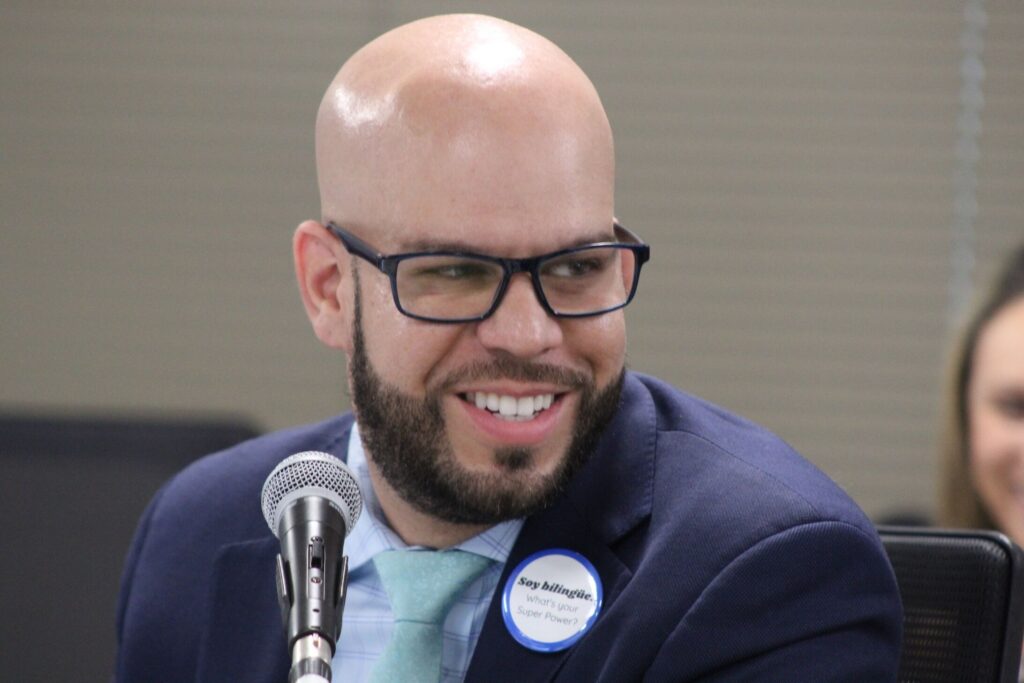
For the upcoming school year, Robert Stein will serve as Jeffco Public Schools’ superintendent.
The 66-year-old Denver native has been semi-retired for the last few years. He spent 40 years in education, as both a teacher and administrator. Most recently, he spent nine years as superintendent of the Roaring Fork School District in Carbondale, where his wife of 37 years still teaches.
Stein left the district in 2022. He and his wife have been splitting time between Denver and Carbondale since then as Stein has worked intermittently as a consultant for districts on non-school-based issues, such as immigration, health and family engagement.
While Jeffco will continue to search for a permanent replacement for Tracey Dorland, who left the district earlier this month, Stein said he won’t be throwing his hat in the ring for that job and will strictly serve as interim superintendent for the 2026-27 school year.
Stein sat down for an interview with The Denver Gazette to outline his goals for the upcoming school year, which could prove a challenging one as Jeffco faces a budget deficit as well as a federal investigation that could result in money being lost for the district.
Portions of this interview have been edited for clarity and question sequencing.

Q: What do you think are some problems facing education today, particularly public education?
Stein: Lack of goal clarity. As a nation, we don’t know what we want out of our schools. Our goals have expanded to an infinite laundry list, which means a lack of focus.
Fundamentally, schools are about some form of academic learning, giving kids the knowledge and skills that they need to be able to solve future problems, answer their own questions and make their own decisions in life. There’s also other key ingredients like social-emotional learning. Kids have to be able to work well with others. They have to be able to regulate their own emotions. They have to be good, be self-aware, and aware of those around them. So those are also core skills that I think kids really develop in schools.
But then you get to the laundry list of social and political issues, and schools are being pulled in all directions. Other countries with super high-performing education systems are not also the primary health service for children. Things like athletics, which I think are a great developmental experience for kids, if you look at those schools around the world that are outperforming the U.S. according to international measures, usually athletics is not a school thing; it’s an outside-of-school thing.
So on down the list, so all those things that it takes to become a healthy, thriving human being, we’ve asked our schools to take them on. And I’d be in favor of taking on all those things. I’d also be in favor of paying for them. When you think I’m an educator, no, I’m managing all these additional systems that are way outside of the scope of a traditional set of goals for a school system or for an education system.
Q: For this upcoming school year, what would you say are some of the biggest challenges that Jeffco is facing?
Stein: Schools are a river sport, and so you have to paddle hard just to stay in place. What that means is that we have a lot of work just to stay the course on our strategic plan. I like the strategic plan a lot. I think it’s very thoughtful. It’s actually strategic. There are key performance indicators built in, and so I think my number one thing is let’s keep the focus on the good work that’s been happening and the results that we’re starting to see are evidence of that.
Are there other things that might challenge us? Funding is a big one, and so you know the board is soon going to have to make a very high-stakes decision about a mill levy override and how that will affect our ability to pay for the work that we need to do, and I think there are two categories of need. One is paying competitive wages to our teachers and staff, and the other is making sure that we can maintain our facilities.
So that’s a key priority. We have federal government intervention around a series of questions that are going to be probably a serious distraction for us to navigate and figure out how to respond to. And then I don’t think this is a problem. I think this is the environment, but there are always community concerns that need a lot of attention to address. I mean, it’s not unique. It’s a universal constant.
Q: What are some of those community concerns, and how do you plan on addressing them to make the community more at ease?
Stein: There are questions about adult misconduct. There are political and cultural issues that remain unresolved. One is related to the (Office of Civil Rights) complaint. I think the geographic diversity in Jeffco. I’m still learning about this, but it presents sort of where you live, where you’re living on the mountain, looking down on the prairie, you living in the city, looking up at the mountains. Those are kinds of different perspectives that we have to constantly be navigating and brokering. If not compromises, some kind of way forward.
Those things are real, and a lot of that is making sure that our community knows that we all, not just me, are aware of them. That we’re listening to those things. That we’re trying to foster better communication among stakeholder groups.
Q: How do you think Jeffco is going about that?
Stein: I’ll be super simplistic about it. I think there are at least two categories. Most important to me is the proactive. What are we doing to build an environment where every kid feels known, like they feel they belong? And what are we doing to educate kids to make sure that they have the social-emotional skills to manage their own behavior and their own emotions in ways that don’t lead to either low-level conflict or very high-level violence? And then, what are we putting in place in terms of knowing kids well enough to be able to see warning signs and intervene early?
So all of that is the educative approach. Then we have the law enforcement and the safety and the security and the monitoring, and there are architectural things I want to know about that I just haven’t learned. Can we monitor who’s coming and going in every school when we have a threat? Do we have a rigorous assessment and plan in place? How dialed in are we with our law enforcement agencies to be ready to respond?
Q: Something that has really dominated the news cycle in the past few years has been these sexual misconduct cases. What are some ways Jeffco is trying to approach this problem?
Stein: I think it’s what the team has already done. Because I’m new, I’m still trying to learn. But it feels to me like our HR team and all of our managers are really looking at our systems and making sure that whenever there’s any inkling of misconduct, are we taking it seriously? Are we investigating?
Before that, there’s a whole proactive piece: Are we educating every staff member about appropriate boundaries? Are we educating about their obligations to report and all those things? From what I’m feeling already, but I want to know more, is that a lot of those systems have been put into place.
I just went through my mandatory training, which is quite extensive. There was an in-person piece and an online piece, and last night I completed some on mandatory reporting and on sexual misconduct. And so I know, just as a new employee, I had to go through an online training, and then I had to pass an online assessment to make sure I understood the material, and so those kinds of safety net procedures I’m experiencing as a new employee are in place.
I can’t speak to what of that is new and what of that is from the course of business. But it’s important to me that we understand, and that we look very carefully to see that our students and staff members are safe at all times.
Q: You mentioned the proposal to possibly ask for a $135 million tax rate increase to address funding shortfalls. Jeffco has historically had issues getting voters to approve that. Is there any way you plan to approach this with people who live in the district to explain to them why this is needed?
Stein: My philosophy is that the board represents the community. So if they decide to put something on the ballot, they’re doing it on behalf of the community, and then it’s on all of us, maybe a little more on you and me, to explain it to the community, our reasoning, and to give them an opportunity to decide.
It’s two parts. That one part isn’t just the deficit; it’s also compensation increases, so salary and benefits increase. Because we have to stay competitive, and because of the way the state funding formula works for schools, Jeffco has lower per-pupil funding, which is how our money comes in for every student.
I think most, if not all, of our regional school districts, which you consider our comparison school districts, make it very hard for us to have a level playing field in terms of competing for talent.
But then the other part is facilities’ needs. School districts always do this because budgets are so tight; they tend to defer maintenance. And if we don’t address some of those maintenance issues, then we’re going to see system failures in HVAC and roofing, which could in some cases threaten closing buildings and not being able to hold school. And I would much rather get ahead of it than wait until it happens on a winter’s day or on a summer’s day, and then say “How are we going to have school tomorrow?”
Q: Speaking of OCR and the Department of Education, you mentioned earlier that you see it as a potential distraction for this upcoming school year. Why?
Stein: I meant in terms of our time as professionals who are here to educate kids. This is very much an adult dispute, and it is a dispute really that doesn’t belong to the school district in most ways.
(The Office of Civil Rights) asked the district to hand over a whole lot of documents, and in those documents were some athletic rosters, and in the rosters it showed, as they alleged, 61 students, boys playing on girls’ sports teams.
Well, the purpose of those rosters was not like who’s on the team competing on the field. The purpose of those rosters is really who we dismiss from class to get on the bus to go to the games. So they included trainers, mascots, nonathlete positions in auxiliary and support roles. We looked at the 61 names. They weren’t on the playing field with girls.
So we’ve been trying to correct facts like that with the Office of Civil Rights, and they have not responded. But they’ve proceeded to communicate to us, in some cases through their own press releases and in some cases, just ignoring our request for clarifying the facts and sort of increasingly escalated the threats to the point where it’s now withholding our federal funding.
So that’s a serious threat to our district. $52 million of money that is really supposed to go to the most vulnerable and needy students in our community, but it would hit across all schools and all kids would feel the impact were they to just suddenly cut off those funds.
Our policies and our practices are 100% aligned with state law. We’re caught between really the federal government’s reading of Title IX and our state law, and it’s playing out here in our school district. But it’s really not about us or our kids. It’s really a dispute between the state and the federal government.

Evergreen High School marks one year since shooting on campus
Kyla Pearce
kyla.pearce@gazette.com
Updated 3 days ago
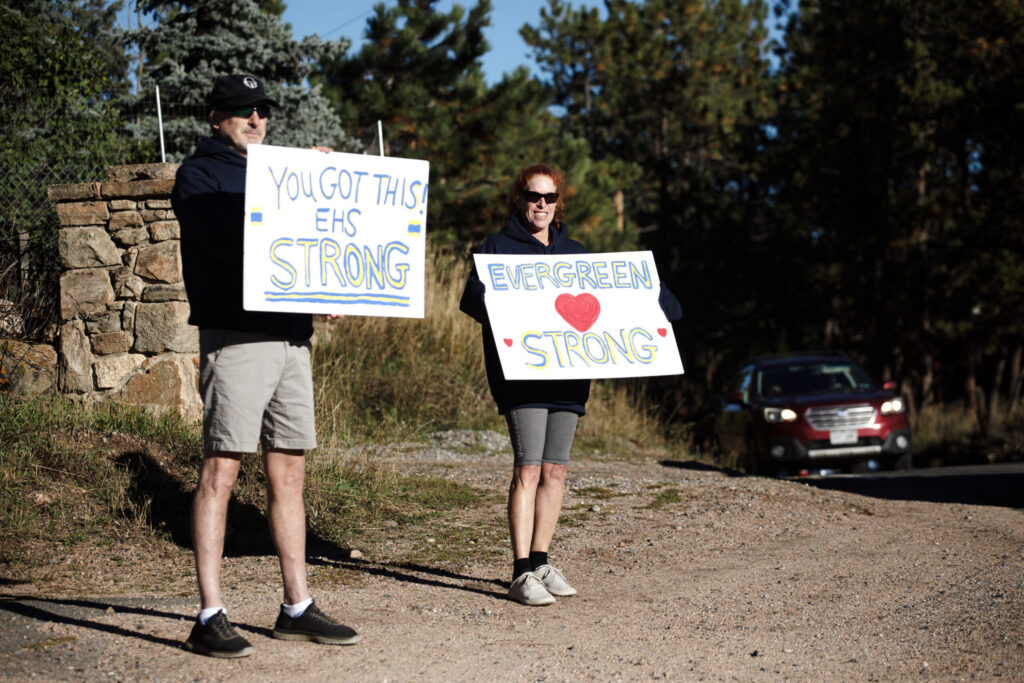
Thursday marks one year since the Evergreen High School shooting that injured two students and left the shooter dead. On Sept. 10, 2025, Desmond Holly, 16, entered the school armed with a Smith & Wesson .38 revolver and opened fire...
Jeffco Public Schools eliminated 350 jobs as part of budget cuts
Matt Kyle
matt.kyle@denvergazette.com
Updated 4 days ago
Jeffco Public Schools eliminated 350 full-time positions as part of ongoing budget cuts between last school year and this school year. The district has operated in a budget deficit in the range of tens of millions of dollars over the...
Parenting from prison: Inmates hope to be present in their children’s lives, while physically absent
Marianne Goodland
marianne.goodland@coloradopolitics.com
Updated 3 days ago
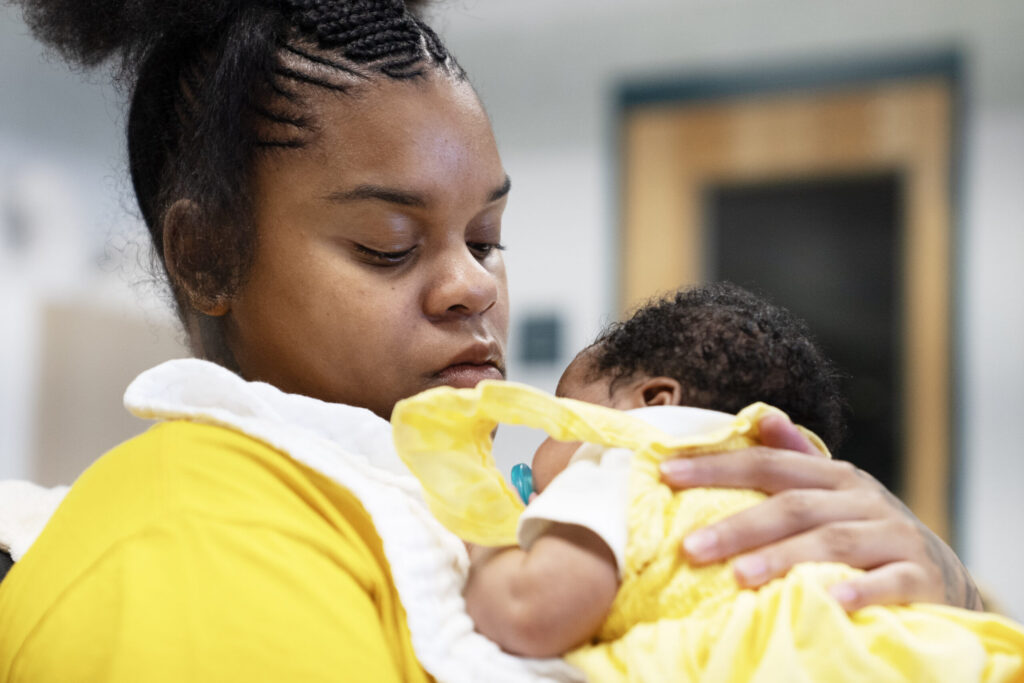
The room was decorated with balloons, the tables sparking bright with colors as the smell of pizza and cake wafted through the air. As did music. This was, after all, a father-daughter dance. Except this was not a typical father-daughter...

Colorado schools are losing students as births, migration slow
Nico Brambila
nico.brambila@denvergazette.com
Updated 2 weeks ago
Colorado public schools went from adding roughly 3,500 students a year before the COVID-19 pandemic in 2020 to losing nearly 4,000 students a year afterward. As more than 870,000 Colorado students return to the classroom for another school year, they...

Aurora student journalist cleared of disciplinary charges after ignoring ‘gag order’
Kyla Pearce
kyla.pearce@gazette.com
Updated 2 weeks ago
A Community College of Aurora student who accused the college of putting an “unconstitutional gag order” on his student-run publication was cleared of disciplinary charges against him. CCA student Andrew Green tried to register his independent student publication, called “FoxTalk,”...
DPS meets Marrero’s academic goals, but most students remain below state standards
Nico Brambila
nico.brambila@denvergazette.com
Updated 2 weeks ago
The majority of Denver Public Schools students do not meet state standards — and the academic goals set by Superintendent Alex Marrero’s administration do not expect them to. Marrero’s first strategic road map in 2021 set a goal of 10%...

Douglas County School District, Castle Rock clash over school land and fee use
Nicholas Fogleman
nicholas.fogleman@denvergazette.com
Updated 2 weeks ago
The Town of Castle Rock and the Douglas County School District are at odds over a proposed ordinance change that would give the town greater discretion over how land and cash dedicated for school facilities can be used. Under Castle...

Federal science agency gives CU Boulder $37.5M to supercharge its quantum studies
Bernadette Berdychowski
bernadette.berdychowski@denvergazette.com
Updated 2 weeks ago
The University of Colorado Boulder was awarded $37.5 million from a federal research agency to propel its quantum research, the U.S. National Science Foundation announced Tuesday. The school was one of eight academic institutions to receive a total of $290...

Denver Public Schools welcomes 89,000 students back to the classroom
Elizabeth Pond
elizabeth.pond@denvergazette.com
Updated 3 weeks ago
A swarm of students — some happily greeting teachers and reuniting with friends, others nervously clinging to their parents’ legs and rubbing bleary eyes — kicked off the first day of the new school year on Monday at Newlon Elementary...

Colorado schools reopen with measles vaccination rates below protective threshold
Nico Brambila
nico.brambila@denvergazette.com
Updated 3 weeks ago
Colorado is entering the new school year without active measles transmission, but health officials remain concerned as kindergarten MMR coverage sits at just 87.8% and most counties fall below the 95% threshold considered protective against outbreaks. “These declining vaccination rates,...
PREV
PREVIOUS

Gov. Polis celebrates Colorado’s first-place education ranking by U.S. News
Colorado officials said they have something to celebrate this week, in addition to the state’s sesquicentennial birthday on Saturday. U.S. News & World Report on Tuesday gave Colorado its top ranking for education efforts from pre-K to postsecondary, though it didn’t fare well in other areas, such as health access and crime. Gov. Jared Polis […]

Colorado National Guard, Swiss Armed Forces celebrate partnership
Colorado’s National Guard marked a year of partnership with the Swiss Armed Forces at the Governor’s Mansion on Monday. “This anniversary marks one strong year of friendship and collaboration between the State of Colorado and Switzerland,” said Gov. Jared Polis. “Our National Guard members play such an important role in protecting our state at home […]