

Colorado schools are losing students as births, migration slow

Colorado public schools went from adding roughly 3,500 students a year before the COVID-19 pandemic in 2020 to losing nearly 4,000 students a year afterward.
As more than 870,000 Colorado students return to the classroom for another school year, they are part of a shrinking population since enrollment peaked in 2019. Colorado has 40,000 fewer students today than it did at its apex.
The Denver Gazette compared districts’ average annual enrollment gains or losses in the five years before and after the pandemic to identify where enrollment trends changed the most.
The forces that long fueled Colorado’s enrollment boom — births and migration — have lost momentum.
Nationally, enrollment peaked in 2019 with 50.7 million students. Enrollment peaked that same year in Colorado with its 913,223 students, according to the Colorado Department of Education.
It’s fallen every year since.
Colorado is hardly alone.
“This is a national phenomenon,” Sofoklis Goulas, an economist who has studied declining school enrollment and school closures, said. “It’s happening to everyone.”
Among The Denver Gazette’s findings:
- Cherry Creek School District experienced the largest reversal among traditional school districts, going from adding an average of 369 students annually before the pandemic to losing 429 after
- Douglas County School District went from adding an average of 102 students a year to losing 585
- Jeffco Public Schools, already shrinking before the pandemic, saw its decline accelerate to an average loss of 1,074 students annually
- Aurora Public Schools moved in the other direction: Its average annual loss slowed from about 540 students before the pandemic to about 64 after.
- Denver Public Schools remained technically in the growth category, but the arrival of immigrant students — whose families illegally crossed in the U.S. and ended up in metro Denver — temporarily interrupted an underlying decline.
- Colorado Springs School District 11 bucked the statewide trend, going from losing, on average, about 474 students annually before the pandemic to gaining about 23 after.
Declining enrollment has financial consequences because state funding follows students.
Marguerite Roza, director of Georgetown University’s Edunomics Lab, said districts across the country are confronting a mismatch between the number of students they serve and the number of schools they operate.
“The U.S. has too many schools now, and many of them are going to close,” Roza said.
In Colorado, however, closures remain concentrated in a minority of districts.
Despite widespread concern about declining enrollment, school closures have not touched most Colorado districts. Data from the state education agency show 70 of the state’s 178 school districts — 39% — have closed at least one school since the 2015-16 school year. DPS and Jeffco lead the pack with 35 and 33 closures, respectively.
‘Built out’
For years, Colorado’s fastest-growing suburban school districts could count on steadily rising enrollment. The Denver Gazette’s analysis shows that trend reversing.
Cherry Creek and Douglas County experienced the largest shifts among traditional school districts.
Cherry Creek officials attribute much of the reversal to changing demographics and development patterns: The housing boom that once fueled enrollment growth on the district’s east side has largely run its course.
“The district experienced sustained growth for many years due to the construction of large housing developments on the east side of the district that drew new families into the district,” Abbe Smith, a Cherry Creek spokesperson, said in an email. “We are essentially ‘built out’ when it comes to residentially zoned land within the district.”
JeffCo, meanwhile, was already losing students before the pandemic. Its decline accelerated afterward, giving the district the steepest post-pandemic annual enrollment losses among traditional districts that were already shrinking.
The prolonged decline has forced the district to adjust its spending.
“To be responsible stewards of taxpayer funds, the Board of Education has made budget reductions over the past several years and continues to identify reductions to align with fewer enrolled students,” Devra Ashby, a Jeffco spokesperson, said in an email.
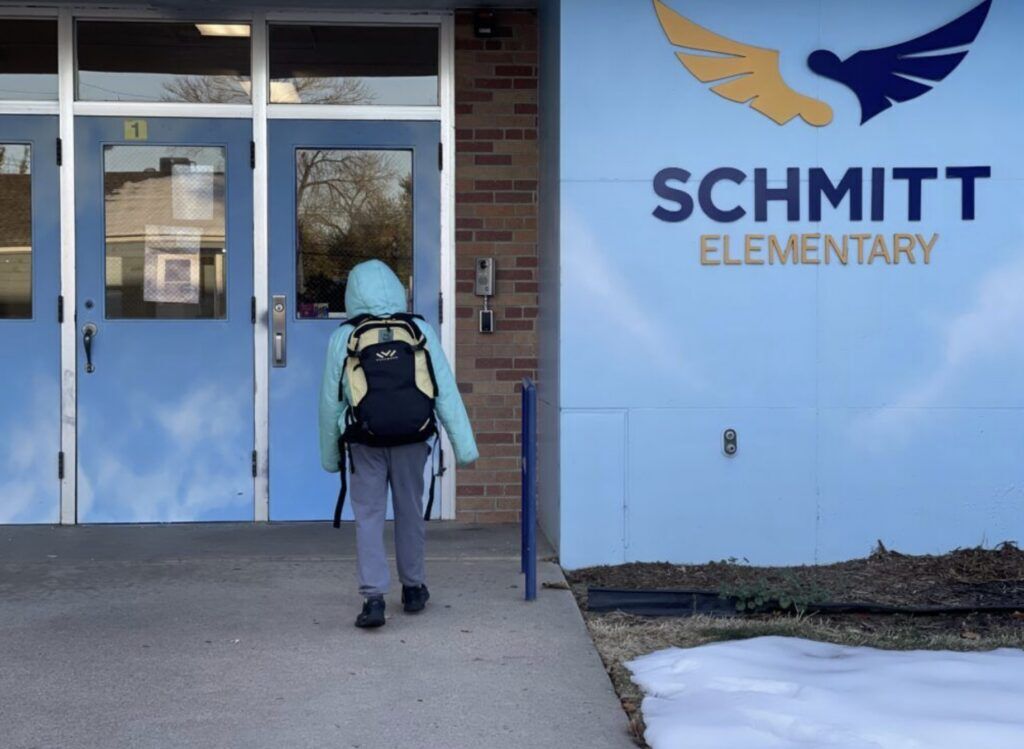
Denver Public Schools is a special case.
Although classified as a growth-growth district based on average annual change, post-pandemic enrollment was volatile and included a temporary increase associated with the arrival of the immigrant families.
Denver started seeing an influx of immigrants — primarily from South and Central America — in December 2022, with more than 40,000 arriving over a roughly two-year period. Their arrival was part of the surge of people who illegally crossed America’s southern borders and traveled deep into the country’s interior, including Colorado, Illinois and New York.
DPS added more than 2,300 students over those two years, Bill Good, a DPS spokesperson, said in an email.
“It’s impossible to know precisely, but I believe it’s safe to say we would have seen a steeper overall decline in the past five years without the influx, with consistently fewer students year over year rather than the up-and-down trend we have experienced instead,” Good said.
Colorado Springs School District 11 has moved in the opposite direction.
After nearly two decades of declining enrollment, the district has added students each year since 2022, according to district officials. The Denver Gazette analysis found D-11 went from losing more than 450 students annually before the pandemic to modest annual growth afterward — a swing of nearly 500 students a year.
Jessica Wise, D-11’s executive director of engagement, attributed the turnaround in part to an expansion of educational choices, including STEM and STEAM programs, arts integration, outdoor learning and career-focused programs.
“Families are responding to a broader range of school models and learning opportunities across the district,” Wise said in an email.
District officials said the growth is not concentrated in a single neighborhood, grade level or student population and they expect enrollment to continue growing.
Aurora Public Schools offers a different picture.
The district remained among those experiencing enrollment declines in the years just before and after the pandemic. But The Denver Gazette analysis found its average annual enrollment loss noticeably slowed after the pandemic.
From 2010 to 2015, Aurora underwent a dramatic enrollment transformation — adding 3,644 students, a 9% increase. Aurora’s enrollment peaked earlier than most districts examined by The Denver Gazette, reaching 42,249 students in 2015-16. Most of the others didn’t begin declining until 2019 or later.
Enrollment then fell by 4,342 students or about 10%, reaching a low of 37,907 in 2020-21. Since then, enrollment has largely stabilized, hovering between roughly 38,000 and 40,000 students.
“I believe we’ve leveled off from the material changes in our enrollment,” Brett Johnson, Aurora Public Schools’ chief financial officer, said.
“I think the dust has settled on that.”
Officials considered the district’s current enrollment close to the new baseline established after that decline.
A dramatic spike in the cost of living drew those priced out of Denver to Aurora. Additionally, Johnson said, the Fitzsimons Innovation Community has also done a lot to attract families to the city. This has had the effect of creating two corridors: an older, established one aging in place in the west and a younger, developing one in the east.
“Aurora has experienced, depending on what side of town you’re looking at, growth or contraction,” Johnson said.
‘We need to adjust to the trends’
The largest numeric enrollment declines among districts that were shrinking before and after the pandemic are heavily concentrated along the Front Range, where many of Colorado’s largest school districts are located.
The decline has implications beyond public school enrollment.
U.S. Census Bureau estimates show Colorado’s population of 5- to 17-year-olds fell from 927,318 in 2019 to 901,507 in 2024. That’s a decline of nearly 26,000 children or about 3%.
At the same time, an increasing number of Colorado families are educating their children outside of public schools. The number of homeschooled students increased from 7,880 in 2019 to 9,826 in 2024 — a 25% spike, state data shows.
The pandemic — in which school officials shut down classrooms and adopted remote learning — produced an even larger, temporary surge in homeschooling, but the number never returned to its pre-pandemic level after kids returned to the classroom. As The Denver Gazette previously reported, families increasingly cite concerns about school safety, bullying and drugs among their reasons for homeschooling.
That leaves public schools contending with two trends: fewer school-age children overall and more families choosing alternatives to public schools.
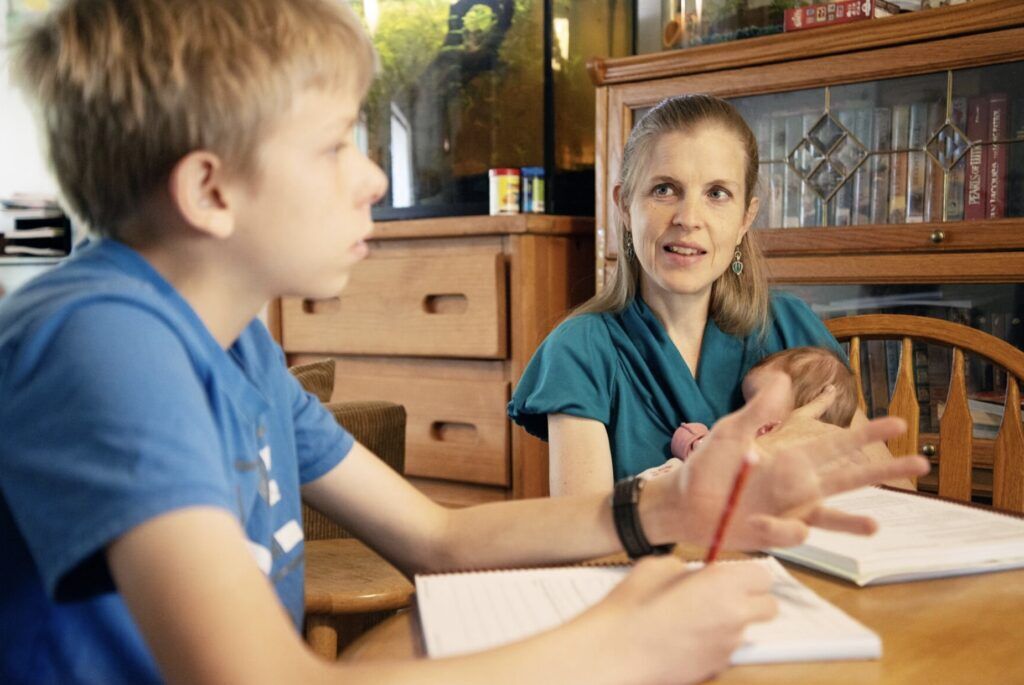
Over the past two decades, women have been waiting longer to have children and having fewer when they do, State Demographer Neal Marquez said. Migration among young families moving to Colorado has also slowed.
Birth rates nationally have slowed since 2007. Researchers have linked the decline, at least in part, to the Great Recession and the economic uncertainty, although Marquez cautioned against attributing the trend to any single factor.
Colorado’s fertility rate has fallen particularly among teenagers and women in their 20s, while people increasingly are postponing childbirth into their 30s, Marquez said.
Migration helped offset that decline for years, as young adults and families moved to Colorado. That, too, has slowed.
The result is an aging state. Colorado’s population under 18 is declining, while its population of 65 and older is its fastest growing age group.
Birth rates falling below what’s called “the replacement level” — roughly 2.1 children per woman — have greater implications than school enrollment. Demographers warned this can reshape the workforce, economy and social systems.
Getting back to that level isn’t as simple as encouraging people to have more children, Marquez said.
Much of Colorado’s fertility decline has occurred among teenagers and women in their 20s. Reversing it would require, among other things, more pregnancies among those younger women.
“That’s probably not a policy that most people are interested in taking on,” Marquez said.
Instead, the state and its institutions need to prepare for the demographic changes already underway.
“We need to adjust to the trends,” Marquez said.


Aurora student journalist cleared of disciplinary charges after ignoring ‘gag order’
Kyla Pearce
kyla.pearce@gazette.com
Updated 4 days ago
A Community College of Aurora student who accused the college of putting an “unconstitutional gag order” on his student-run publication was cleared of disciplinary charges against him. CCA student Andrew Green tried to register his independent student publication, called “FoxTalk,”...
DPS meets Marrero’s academic goals, but most students remain below state standards
Nico Brambila
nico.brambila@denvergazette.com
Updated 4 days ago
The majority of Denver Public Schools students do not meet state standards — and the academic goals set by Superintendent Alex Marrero’s administration do not expect them to. Marrero’s first strategic road map in 2021 set a goal of 10%...
Douglas County School District, Castle Rock clash over school land and fee use
Nicholas Fogleman
nicholas.fogleman@denvergazette.com
Updated 4 days ago
The Town of Castle Rock and the Douglas County School District are at odds over a proposed ordinance change that would give the town greater discretion over how land and cash dedicated for school facilities can be used. Under Castle...

Federal science agency gives CU Boulder $37.5M to supercharge its quantum studies
Bernadette Berdychowski
bernadette.berdychowski@denvergazette.com
Updated 5 days ago
The University of Colorado Boulder was awarded $37.5 million from a federal research agency to propel its quantum research, the U.S. National Science Foundation announced Tuesday. The school was one of eight academic institutions to receive a total of $290...

Denver Public Schools welcomes 89,000 students back to the classroom
Elizabeth Pond
elizabeth.pond@denvergazette.com
Updated 7 days ago
A swarm of students — some happily greeting teachers and reuniting with friends, others nervously clinging to their parents’ legs and rubbing bleary eyes — kicked off the first day of the new school year on Monday at Newlon Elementary...

Colorado schools reopen with measles vaccination rates below protective threshold
Nico Brambila
nico.brambila@denvergazette.com
Updated 1 week ago
Colorado is entering the new school year without active measles transmission, but health officials remain concerned as kindergarten MMR coverage sits at just 87.8% and most counties fall below the 95% threshold considered protective against outbreaks. “These declining vaccination rates,...
Jeffco Public Schools board votes to put $133M mill levy override before voters
Matt Kyle
matt.kyle@denvergazette.com
Updated 1 week ago
Voters in Jefferson County will decide this November whether or not to approve a $133 million mill-levy override that Jeffco Public Schools officials say is needed to cover funding shortfalls in the district. The Jeffco Public Schools Board of Education...
District 49 dissolves longtime provider of special services
Eric Young
eric.young@gazette.com
Updated 2 weeks ago
A longtime education service provider that has been subject to recent public and government scrutiny is shutting down. School District 49’s Board of Education approved the dissolution of the Education ReEnvisioned Board of Cooperative Education Services (ERBOCES) during a special...
Colorado math scores hit record high as Denver-area districts show gains
Nico Brambila
nico.brambila@denvergazette.com
Updated 2 weeks ago
Despite gains, the majority of students do not meet or exceed expectations in math or English Math emerged as a bright spot in Colorado’s latest standardized test results, with students posting record scores in a subject where they have historically...
District 49 dissolves longtime provider of special services
Eric Young
eric.young@gazette.com
Updated 2 weeks ago
A longtime education service provider that has been subject to recent public and government scrutiny is shutting down. School District 49’s Board of Education approved the dissolution of the Education ReEnvisioned Board of Cooperative Education Services (ERBOCES) during a special...
PREV
PREVIOUS

Englewood mayor pro tem dies while hiking
Joe Anderson, Englewood’s mayor pro tem, died Friday while on a hike in Summit County, according to city officials. The Summit County Sheriff’s Office responded to the lower slopes of Quandary Peak around 6:40 a.m. Friday to reports of an unconscious hiker who had stopped breathing. Authorities did not release the hiker’s name but reported […]

Gazette family of papers rakes in 64 awards at 2025 Better News Contest, Colorado Politics wins Best in Editorial Excellence
The Gazette family of newspapers won 64 awards in the Colorado Press Association’s annual Better News Contest — a whopping 36 more than the three papers collectively won last year. Colorado Politics raked in 27, The Colorado Springs Gazette took home 21 and The Denver Gazette brought in 16. Colorado Politics also received the Best in […]