As education conflicts abound across Colorado, who puts the kids first? | Paula Noonan
Elected school boards and the Colorado Department of Education (CDE) have hit the headlines with fired superintendents, superintendent resignations, failures of oversight, and misdirected dollars. Cherry Creek School District’s superintendent was fired. Jefferson County Schools’ superintendent found a less stressful job. CDE let $100 million fly out the door to Education reEnvisioned BOCES (ERBOCES) for faux programs for homeschoolers and authorized religious schools as public schools.
Then there’s Denver Public Schools (DPS), always a favorite press target. In this most recent act in the ongoing DPS drama, newly elected board members DJ Torres, Monica Hunter and Amy Klein Molk, along with board member and former DPS principal John Youngquist, are testing the foundational principles which underlie the superintendent’s work. This disruption goes against what voters in 2025 expected. They voted for a board that would offer professionalism in orderly decision-making and governance. Voters have gotten the opposite.
The tension is over who runs the ship. Call it separation of states. The board’s state of action is to set policy and direction and to monitor its administration. The superintendent’s state of action is implementation and management. Though the superintendent reports to and is governed by the board, no individual board member is his boss, even though individual board members may think they’re boss. The superintendent cannot do his job with seven versions of “the man” pulling him in different, often competing, directions.
This conflict over who runs the ship stresses the system and disrupts operations. Potshots from former board members who don’t seem to understand they are no longer on the board, including Theresa Peña, Rosemary Rodriguez, Mary Seawell and Elaine Gantz Berman, along with griping from former Denver mayor Federico Peña, compound the disruption. The political goals of these “formers” who support the charter movement and Trump’s voucher system have been voted down in two recent elections. No matter.
To further confuse DPS’s situation, its portfolio system of public, charter and innovation schools creates a messy potpourri of competing schools with competing boards, because former superintendents Michael Bennet and Tom Boasberg decided competition was how they would improve academic results.
Superintendent Alex Marrero, along with the DPS board, is responsible for these unconnected entities even though he does not have daily authority to manage them. Dr. Marrero faced the results of this hodgepodge when he and a previous board agreed they had to close schools. Under state policy, only district schools faced closings. These actions left the superintendent holding the bag of unhappy parents, and parents with kids scrambling for schooling alternatives, a harsh and unfair version of school choice.
Into this backdrop have dropped the three recently elected board members endorsed by the Denver Classroom Teachers Association. These three, along with Youngquist who applied for and didn’t get Marrero’s job, have sniped at the superintendent, asserted their own policy initiatives, and crossed lines established to allow Dr. Marrero to do his job.
Xochitl Gaytán, current president of the board, has received communication from Dr. Marrero documenting these breaches. He asserts violations of open-meeting laws. He describes instances when board members have gone to schools without agreed-to notice. He’s identified unreasonable requests for data and reports by individual board members. The superintendent has detailed board behavior that started as meddling and has moved to interference.

With this conflict emerging into the public square, along with job opportunities for the superintendent in Chicago and Miami, the usual suspects have joined forces to question the superintendent’s work. The question is “why?” The district has demonstrably improved its results in key areas, and in some instances outperforms its peers. Take for example state CMAS testing. Denver’s test-taking participation rate exceeds its peers in the metro area, in some cases by a lot. Student test scores have risen. Graduation rates have increased. Denver has moved from “needs improvement” to “performance” status in the state’s district rating system, an exceedingly difficult achievement.
These accomplishments are significant. They demonstrate the superintendent’s integrity related to supporting state policy for assessment and accountability. Yet board member Klein Molk claims a lack of accountability and transparency in DPS. This is interesting because she and the other two new board members sent a letter to the superintendent telling him how to implement union negotiating efforts. He noted the letter as evidence of an open-meeting violation. Molk denied the violation as did Monica Hunter. How the three, including Torres, wrote and signed the letter without violating open-meeting laws remains a mystery. Molk has also attempted, herself, to influence how policy related to antisemitism is administered.
The most recent meeting on the superintendent’s status forced him to return to Denver from his authorized time off. Three board members chose to join the meeting remotely: Youngquist, Torres and Hunter. Torres interrupted Board President Gaytán when she apologized to the public for the non-physical presence of the directors. Torres loudly rejected that apology, waving his physically non-present hands at her.
At the end, board member Marlene De La Rosa asked fellow directors to confirm their commitment to putting kids first. Torres left the meeting early, so that remains an open question for him.
Paula Noonan owns CapitolCommons.ai, the state’s premier legislature tracking platform.

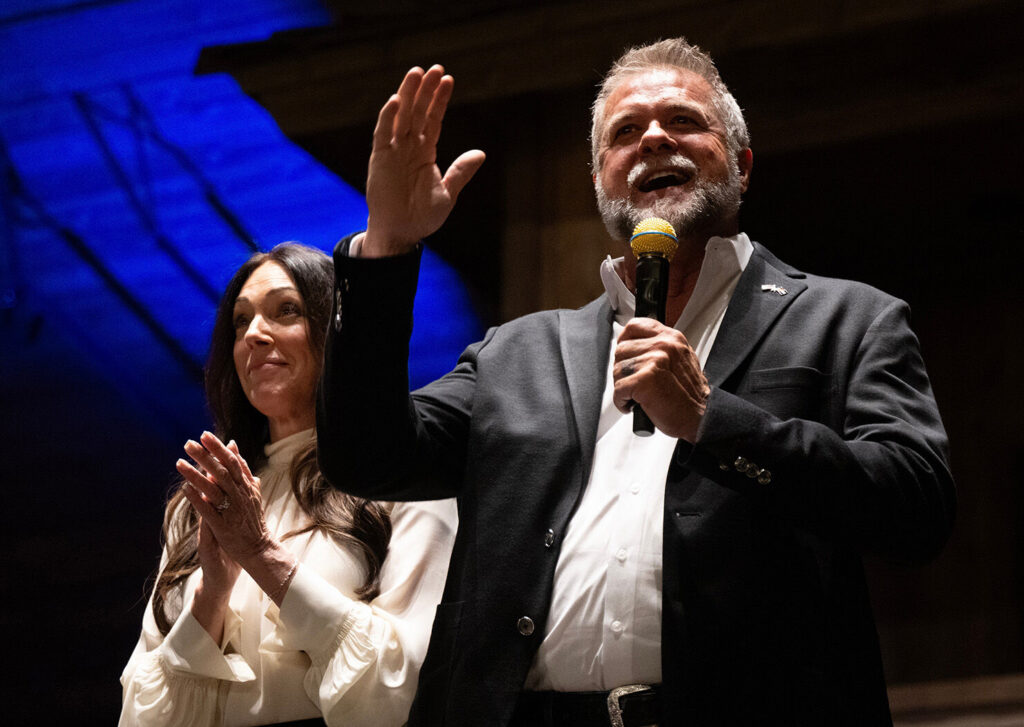
Victor Marx says he’ll only debate Phil Weiser once in Colorado governor’s race — without a moderator
Ernest Luning
ernest.luning@coloradopolitics.com
Updated 8 hours ago
Colorado Republican gubernatorial nominee Victor Marx said on Tuesday that he will participate in only one debate with Attorney General Phil Weiser before the November election — and he challenged the Democratic nominee to hold the event without a moderator....

Clock is ticking on Colorado’s new AI rules | PODIUM
Colorado Politics
colorado-politics@coloradopolitics.com
Updated 8 hours ago
By Aashis Luitel On Jan. 1, organizations using covered automated systems must begin complying with Senate Bill 26-189, Colorado’s new Automated Decision-Making Technology Act. They can identify those systems and start building the processes the statute clearly requires. What they...

Atop taxes, here’s how much each Colorado resident pays in fees
Marissa Ventrelli
marissa.ventrelli@coloradopolitics.com
Updated 1 day ago
Each Colorado resident paid nearly $5,000 in state-sanctioned fees last year, according to a report by a policy think tank. The report, which analyzed how fees have affected Colorado’s economy, found that fee revenue has more than tripled since 2008...

Gov. Polis celebrates Colorado’s first-place education ranking by U.S. News
Marianne Goodland
marianne.goodland@coloradopolitics.com
Updated 9 hours ago
Colorado officials said they have something to celebrate this week, in addition to the state’s sesquicentennial birthday on Saturday. U.S. News & World Report on Tuesday gave Colorado its top ranking for education efforts from pre-K to postsecondary, though it...
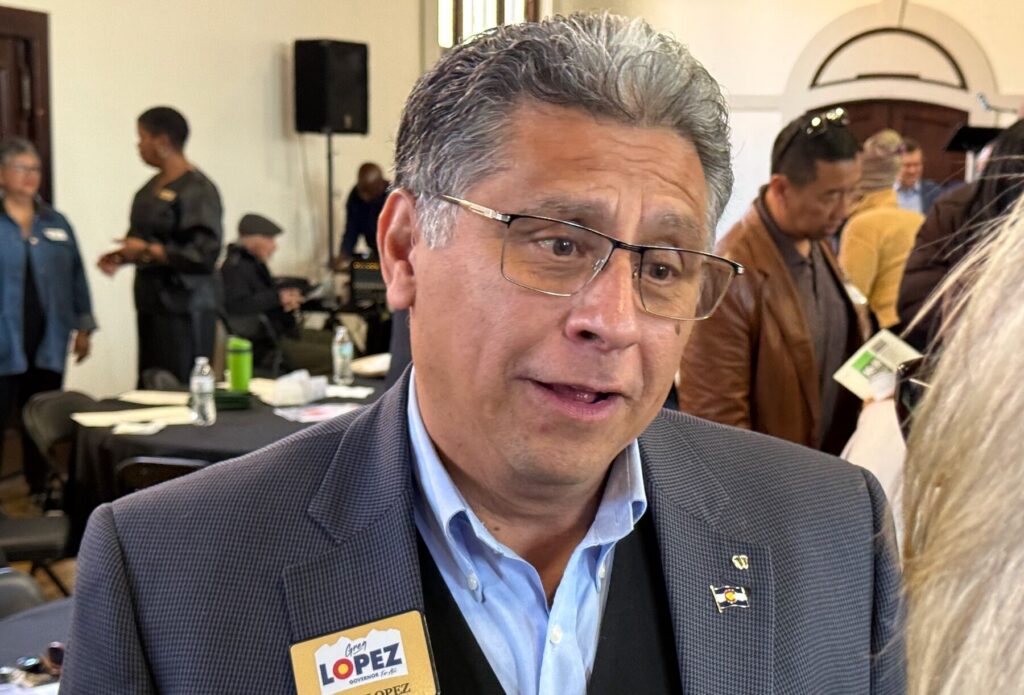
Independent gubernatorial candidate Greg Lopez, a former GOP congressman, qualifies for Colorado ballot
Ernest Luning
ernest.luning@coloradopolitics.com
Updated 1 day ago
Unaffiliated gubernatorial candidate Greg Lopez, a former Republican congressman from Elizabeth who left the GOP to run as an independent, has qualified for the ballot by submitting enough petition signatures, the Colorado Secretary of State’s Office said Tuesday. He’ll face...

Meghan Shay on recovery, responsibility and second chances | The OpEdge Podcast
Tony Olivero
tony.olivero@gazette.com
Updated 2 days ago
Step Denver and Step Springs CEO Meghan Shay joins The OpEdge to explore addiction recovery, homelessness, and the role of accountability in lasting change. Shay tells host and investigative columnist Jimmy Sengenberger why she believes recovery is built on personal...
The outrages mount | Hal Bidlack
Hal Bidlack
hal-bidlack@coloradopolitics.com
Updated 2 days ago
My kindly and forgiving editors understand that, from time to time, I can’t help myself from leaping atop my rickety soapbox to vent. And, like many other political commentators have already done, I could easily fill this entire missive with...

Rural Colorado deserves a tax holiday | GUEST COLUMN
Eric Mulder
jstooksberry@gmail.com
Updated 2 days ago
Spend enough time in Colorado’s Eastern Plains, the San Luis Valley, or the Western Slope, and you’ll see boarded-up storefronts, schools consolidating classrooms, and small rural communities stretching every dollar to keep basic services afloat. Once the backbone of Colorado’s...

Colorado board permits state to appeal injunction against arthritis drug price cap
Marissa Ventrelli
marissa.ventrelli@coloradopolitics.com
Updated 2 days ago
A Colorado board voted Friday to allow the Attorney General’s Office to fight an injunction against a price cap on a drug that treats arthritis. A U.S. district court judge had granted the company Amgen a preliminary injunction, temporarily blocking...

Colorado schools receive $24 million for free meals program
Marissa Ventrelli
marissa.ventrelli@coloradopolitics.com
Updated 1 day ago
The Colorado Department of Education is providing Colorado schools with nearly $24 million in grant funding to implement a free lunch program. Approved by voters in 2022, the Healthy School Meals for All provides free breakfast and lunch to all...