

Rural Colorado deserves a tax holiday | GUEST COLUMN

Spend enough time in Colorado’s Eastern Plains, the San Luis Valley, or the Western Slope, and you’ll see boarded-up storefronts, schools consolidating classrooms, and small rural communities stretching every dollar to keep basic services afloat. Once the backbone of Colorado’s economy, these communities are losing population and wealth while staring down an uncertain future.
But there’s one possible solution to get these struggling communities back on their feet: a tax holiday. By allowing financially struggling communities to keep more of their own money, they can begin to write their own comeback story.
Take Otero County as an example. The sparsely populated southeastern Colorado county is home to 17,680 residents (down about 10% from a decade ago) and a whole lot of economic hardships.
La Junta, the county seat, is ground zero for this financial adversity. Arkansas Valley Regional Medical Center, La Junta’s largest employer, laid off 5% of its staff. Drought conditions have decimated local agriculture, harking back to the county’s troubled past during the Dust Bowl era.
And these communities can’t rely on big government for assistance.
The federal government, in particular, hasn’t been much help. Local residents have endured contaminated groundwater for years, inspiring the construction of the Arkansas Valley Conduit, a 130-mile water pipeline designed to provide 50,000 Coloradans with clean drinking water. The project incurred significant costs, including hefty federal loans. President Donald Trump vetoed legislation that would have extended the repayment period for those loans, leaving these Eastern Colorado communities financially exposed and uncertain about their future.
Meanwhile, the state of Colorado isn’t much help, either. For decades, the state’s answer has been the same: collect taxes from every corner of Colorado, funnel the money to Denver, and force struggling communities to compete for limited grants and loans.
But where does the state get this money to fund these projects? Too often, locals pay state taxes to fund these projects. In 2025, Otero County garnered about $251.5 million in net taxable sales, meaning — after the 2.9% tax — residents paid more than $7.3 million in sales tax. Meanwhile, Otero received only $4.6 million in state assistance from the Colorado Department of Local Affairs.
This doesn’t add up as a genuine economic growth tactic.
Even worse, this money doesn’t necessarily return to the community. Too often, outside consultants pocket the money and, in return, draft strategic plans and feasibility studies that collect dust in municipal archives.
It’s time to try something different — something that trusts local communities instead of allowing distant bureaucracies to micromanage them from afar.
A yearlong reprieve from Colorado’s state sales tax could do just that.
Here’s how it would work. Cities and counties that meet clear, objective criteria for economic distress — population decline, long-term income stagnation, household income below the state median, above-average unemployment, or the recent loss of a major employer — would qualify for a one-year exemption from the state’s 2.9% sales tax.
During that year, the community decides what to do with the savings. Thanks to Colorado’s Taxpayer’s Bill of Rights, voters have the final word on how to spend the money.
They could approve a temporary local sales tax of up to 2.9% to replace revenue that previously went to the state. That money should go toward a specific purpose: hiring teachers, fixing roads and bridges, upgrading water systems, expanding EMS coverage, backing an economic development project, or preventing cuts to essential services.
The community could also reject the local tax increase — thanks again, TABOR. Instead, Otero residents could pocket the $7.3 million they spent last year on state sales tax. This money would go a long way, especially at a time when affordability is everybody’s biggest concern.
Either way, the decision belongs to the people enduring the economic hardship, not some displaced grant committee in Denver.
Assuredly, this isn’t a long-term solution. Comprehensive tax reform — ensuring that collection is just, fair and efficient — should be the ultimate goal.
But in the meantime, we can begin to unravel the bureaucracies that simply aren’t helping rural Colorado. Building resilient, thriving communities doesn’t require a new government agency. It requires trusting the good people of these towns with the power and the resources to solve their own problems.
Rural Colorado isn’t looking for another handout. Instead, they want the chance to keep what’s already theirs and decide, together, how to use it. Local priorities deserve local funding, and the less the state extracts from struggling communities in the first place, the more those communities can invest in their own futures — on their own terms.
Eric Mulder is the Libertarian nominee for Colorado governor. For more information, visit mulderforgovernor.org.


Immigration reporting measure fuels debate over Colorado’s role with ICE
Marissa Ventrelli
marissa.ventrelli@coloradopolitics.com
Updated 26 minutes ago
A coalition of advocacy groups and several district attorneys rallied outside the Colorado Capitol on Thursday to oppose a ballot measure that, if approved by voters in November, would require state and local law enforcement to cooperate with federal immigration...

Ballot measure aims to shift Colorado sporting-goods tax revenue to land, water and wildfire projects
Marissa Ventrelli
marissa.ventrelli@coloradopolitics.com
Updated 31 minutes ago
Colorado voters this November will decide whether to direct a share of sales tax revenue from sporting goods — including bicycles and skiing equipment — toward land and water conservation, wildfire prevention and expanding outdoor recreation. Supporters say the measure...

Fighting for every Colorado rural hospital on the eastern plains | GUEST COLUMN
Colorado Politics
colorado-politics@coloradopolitics.com
Updated 2 days ago
By Lauren Boebert After touring Melissa Memorial Hospital in Holyoke and Wray Community District Hospital — two of more than a dozen rural hospitals in my district — I was again reminded why I fight for them in Washington. The...

Fix Colorado without shortchanging taxpayers | GUEST COLUMN
Colorado Politics
colorado-politics@coloradopolitics.com
Updated 22 hours ago
By Lisa Frizell If we truly want to fix Colorado, we must respect taxpayers, demand accountability and prioritize classroom results. Proposition NN fails the test. The far left put forth this measure, presenting it as the only way to fund public...

New anti-gun legislation is about preventing firearm ownership, not safety | GUEST COLUMN
Colorado Politics
colorado-politics@coloradopolitics.com
Updated 2 days ago
By Ava Flanell It’s been a little more than a month since the most radical anti-gun legislation went into effect in Colorado history: Senate Bill 25-003. Originally intended as an “assault weapons ban,” Colorado Democrat sponsors settled for a complicated...
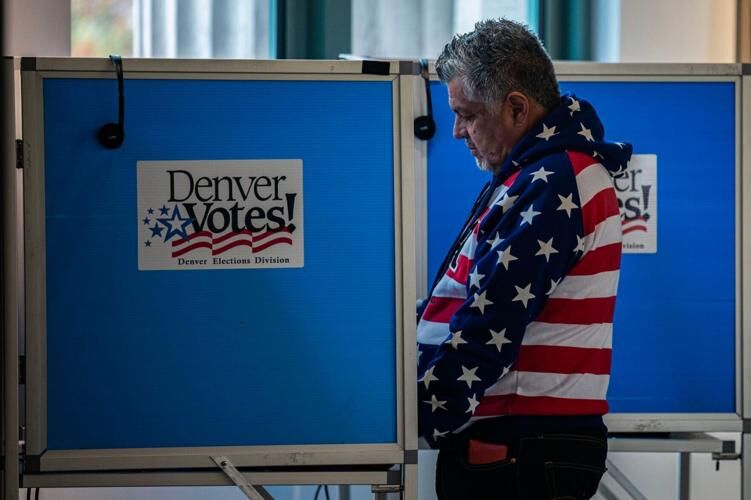
Denver sues Trump to block armed ICE agents from polling sites
Deborah Grigsby
deborah.smith@denvergazette.com
Updated 2 days ago
The city of Denver, along with several groups, sued the Trump administration Thursday, seeking to block U.S. Immigration and Customs Enforcement officers who are armed from polling sites during the upcoming midterm elections. In fact, there are no official orders...
Colorado doctors, dentists challenge state law on gender‑transition services in new federal lawsuit
Marissa Ventrelli
marissa.ventrelli@coloradopolitics.com
Updated 13 hours ago
A group of Christian doctors and dentists has filed a federal lawsuit challenging a Colorado law they say requires them to provide gender‑transition services that conflict with their religious and ethical beliefs. The lawsuit, filed by the Christian Medical and...
Colorado ed department must up its competence to prevent waste, fraud, abuse | Paula Noonan
Paula Noonan
paula-noonan@coloradopolitics.com
Updated 2 days ago
The Colorado Department of Education let $24 million fly from its checking accounts from January 2017 through June 2026 to CHE, aka Colorado Homeschool Enrichment. The details show how easily CHE and Education Re-Envisioned BOCES re-envisioned how to convert public...

Remember the injustice of forced unionism | GUEST COLUMN
Colorado Politics
colorado-politics@coloradopolitics.com
Updated 2 days ago
By Mark Mix This Labor Day we celebrated the men and women whose hard work keeps the country running. But in Colorado, many of those same workers face a real threat: pay union dues or lose their job. That’s because...

Should we always blame voters for low civic participation in elections? | GUEST COLUMN
Roland Halpern
roland-halpern@coloradopolitics.com
Updated 2 days ago
This year, like every election cycle, we hear the same complaints — enough citizens don’t vote. Voter turnout is too low. People are disengaged. Citizens are shirking their civic responsibility. If only voters cared more, democracy would work better. Fair...
PREV
PREVIOUS
Colorado board permits state to appeal injunction against arthritis drug price cap
A Colorado board voted Friday to allow the Attorney General’s Office to fight an injunction against a price cap on a drug that treats arthritis. A U.S. district court judge had granted the company Amgen a preliminary injunction, temporarily blocking Colorado from imposing a price cap on Enbrel, an injectable commonly used to treat arthritis. […]

The outrages mount | Hal Bidlack
My kindly and forgiving editors understand that, from time to time, I can’t help myself from leaping atop my rickety soapbox to vent. And, like many other political commentators have already done, I could easily fill this entire missive with page after page commenting on a certain insecure and increasingly tottering orange-hued president who seems […]