

‘Be prepared to march in the streets’ | Miller Hudson

It was early in 1974 when I first met Tim Wirth as he announced his candidacy for Congress, challenging Republican incumbent Don Brotzman. Although I had only resided in Colorado two years, I was drafted to serve as a Democratic precinct committeeman the year before. Brotzman’s congressional district was comprised primarily of Jefferson County and a fat slice of Denver, west of Federal Boulevard. Therefore, Tim would become my congressman, if elected. Pat Schroeder preceded Tim in Washington, representing the remainder of the city, two years earlier. Although born in Santa Fe, Wirth had grown up and attended school in Denver. A graduate of Harvard, he served as a White House intern under Lyndon Johnson, followed by an appointment as deputy assistant secretary of education during the Nixon administration.
He launched his campaign with an outdoor announcement in Jefferson Park at 23rd and Federal in North Denver, a heavily Democratic legislative district where he would need a heavy turnout in November. At that time this neighborhood was a little seedy, located close to the old Mile High Stadium, with its decaying clapboard housing stock. None of us could have envisioned the gentrification that would make these homesites sell for nearly a million dollars in the 21st century. At 35, Wirth cut a youthful and dashing presence. The equally attractive Gary Hart, who had managed the doomed McGovern presidential campaign in 1972, led the off-year Colorado ticket and his shirttails pulled Tim to a narrow 52-48 victory. It didn’t take long for Wirth to make a splash in D.C., partnering with fellow “newbies” Norman Mineta, Leon Panetta and Dick Gephardt to organize a “Freshman Revolt” that booted a handful of “old bull” Committee chairs and then were dispatched as a group to the House Budget Committee where they wreaked more havoc.
Although it was in the Senate that Hart and several colleagues were labeled as the “Atari Democrats,” it was Wirth who would find his way to the chairmanship of the House Telecommunications Subcommittee, a position from where he could launch a carefully plotted strategy to break up AT&T’s Bell System. This was not a challenge for the faint of heart. Ma Bell was the nation’s largest private employer and commanded a virtual monopoly on telephone and associated services across the country. The cable streaming industry that was emerging in the same space was headquartered in Denver and, for the most part, cheered Tim on as he attempted to pry open the Bell System monopoly to competition. Also in the wings was MCI (Microwave Communications, Inc.) which was using the courts to force its entry into the long-distance market, with a link between St. Louis and Chicago — thus, its reputation as a law firm with a microwave dish on the roof.
AT&T was hidebound and resistant to the introduction of new equipment and new technology. Working for Mountain Bell at the time, there were several in-house jokes: “you can get a telephone in any color you want as long as its black” and a marketing department that only knew how to take orders as noted. In “if you don’t know what you want, you probably won’t get it.” Although there were a few bumps in the road, on balance the divestiture of the seven “Baby Bells” was a benefit for consumers. One of those is free long-distance calling — no one with a cell phone pays a premium for those calls today. Recently, a friend took my call from Turkey. In 1986, Tim moved up to the Senate in a close race with Republican Congressman Ken Kramer from El Paso County. He left the Senate nearly mid-campaign in 1992 announcing that the rat race for raising dollars wasn’t worth the job.
Tim went on to serve in Bill Clinton’s State Department as the first undersecretary for global affairs, moving both democracy and climate change to the front of foreign policy discussions. In 1997, Ted Turner who had pledged a billion dollars from the sale of this telecommunications empire to the United Nations, tapped Tim to organize a foundation to distribute his largesse, where he stayed until retirement in 2013. In all those years, Wirth was never a man to run through the hallways crying “fire.” His leadership was measured, thoughtful and far-sighted. He quietly forged the coalition that nearly eliminated measles until the current administration and health acre’s black knight, Robert Kennedy, arrived to dismantle the world’s finest public health institutions in service to voodoo medical theories.
Therefore, I was surprised last month when I stumbled across a joint statement from Tim and his former Missouri cohort, Rich Gebhardt, raising the alarm regarding Republican threats to interfere in our upcoming mid-term elections. Then, a longer warning from the former Colorado senator appeared in the Sunday Denver Post last week alluding to an expanded list of horrors — several of which were new to me, and I try to pay attention. An “Interagency Working Group” under the supervision of the anti-immigrant zealot, Stephen Miller, and directed by the crackpot, Sebastian Gorka, as well as the FBI’s Kash Patel are gearing up an anti-terrorism campaign. Their target is not Islamists or anarchists but the enemy within — protestors, liberal activists and pretty much anyone willing to criticize the president or his policies.
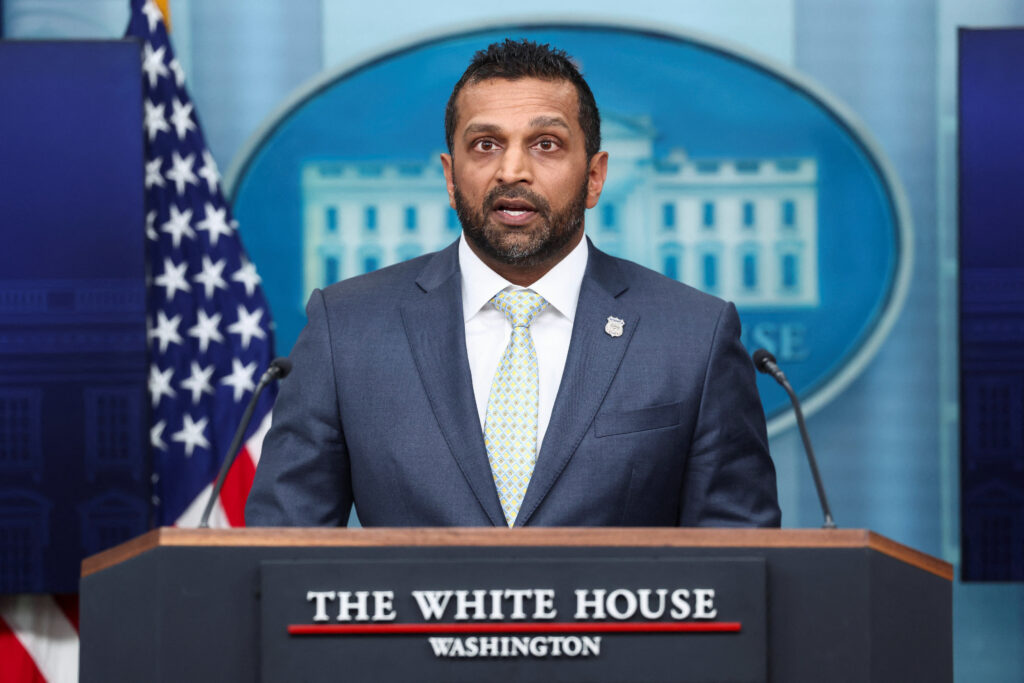
Tim draws our attention to NPSM-7, issued last September, a national security directive that decrees any individual or organization that espouses “anti-American, anti-capitalist, or anti-Christian” views or opinions contrary to those of the administration can and will be dealt with as terrorists. So much for the First Amendment. While we all know that ICE has been beefing up its detention facilities to accommodate undocumented immigrants prior to deportation, Wirth points out that the Federal Bureau of Prisons has been acquiring massive additional jail cells. Wirth calls our attention to, “a network of public and private prisons far beyond projected conventional incarceration requirements by the Bureau of Prisons. Prisons for political prisoners.” For whom are these needed, I wonder — probably scriveners like me, for starters. At least, I should meet many of my friends there.
Wirth and a distinguished national board, including Colorado’s Gary Hart and David Skaggs, have posted a website for Keep Our Republic (keepourrepublic.org) as a communications hub for those concerned enough to prepare for the exercise of presidential emergency powers. They are not alone in their concerns, however. Thom Hartmann is using his newsletter to ring the bell on what may lie ahead. “Trump has recently declared, officially that Democrats are traitors, communists, potential terrorists and should be deported (even if citizens). The only thing he hasn’t demanded is for Democrats to be arrested for our politics, and that may well come in just a few months.”
Former evangelical preacher John Pavlovitz, now a progressive, writes, “…we need to stop pretending that November will bring some magical emancipation from these Christo-fascists and tech bro oligarchs. We need to prepare our collective response to their inevitable refusal to release their stranglehold on our barely breathing Republic.”
Due to Colorado’s reliance on mail-in balloting, there will be no armed ICE officers intimidating voters at polling places but drop boxes could be harassed. It’s rumored Democrats met secretly in Washington this week to develop a strategy for resisting election interference. Whether our governor and attorney general are also briefing election officials, the State Patrol and the National Guard is unknown but seems advisable. Speaking with former Boulder Congressman Skaggs, he advises voters, “Make sure you vote. Then, make sure your vote is counted.” I would add: be prepared to march in the streets.
Miller Hudson is a public affairs consultant and a former Colorado legislator.

Was there ever a Colorado city that required racial segregation by law? | BOB LOEVY
Bob Loevy
bob-loevy@coloradopolitics.com
Updated 1 day ago
The answer is “yes.” The Black Racial Equity Study Commission, led by Colorado Senate President James Coleman, has learned the city of Fruita had laws forbidding black people from being on the city streets at night and from being buried...

Immigration reporting measure fuels debate over Colorado’s role with ICE
Marissa Ventrelli
marissa.ventrelli@coloradopolitics.com
Updated 10 hours ago
A coalition of advocacy groups and several district attorneys rallied outside the Colorado Capitol on Thursday to oppose a ballot measure that, if approved by voters in November, would require state and local law enforcement to cooperate with federal immigration...

Ballot measure aims to shift Colorado sporting goods tax revenue to land, water and wildfire projects
Marissa Ventrelli
marissa.ventrelli@coloradopolitics.com
Updated 10 hours ago
Colorado voters this November will decide whether to direct a share of sales tax revenue from sporting goods — including bicycles and skiing equipment — toward land and water conservation, wildfire prevention and expanding outdoor recreation. Supporters say the measure...

Fighting for every Colorado rural hospital on the eastern plains | GUEST COLUMN
Colorado Politics
colorado-politics@coloradopolitics.com
Updated 2 days ago
By Lauren Boebert After touring Melissa Memorial Hospital in Holyoke and Wray Community District Hospital — two of more than a dozen rural hospitals in my district — I was again reminded why I fight for them in Washington. The...

Fix Colorado without shortchanging taxpayers | GUEST COLUMN
Colorado Politics
colorado-politics@coloradopolitics.com
Updated 2 days ago
By Lisa Frizell If we truly want to fix Colorado, we must respect taxpayers, demand accountability and prioritize classroom results. Proposition NN fails the test. The far left put forth this measure, presenting it as the only way to fund public...

New anti-gun legislation is about preventing firearm ownership, not safety | GUEST COLUMN
Colorado Politics
colorado-politics@coloradopolitics.com
Updated 2 days ago
By Ava Flanell It’s been a little more than a month since the most radical anti-gun legislation went into effect in Colorado history: Senate Bill 25-003. Originally intended as an “assault weapons ban,” Colorado Democrat sponsors settled for a complicated...
Denver sues Trump to block armed ICE agents from polling sites
Deborah Grigsby
deborah.smith@denvergazette.com
Updated 2 days ago
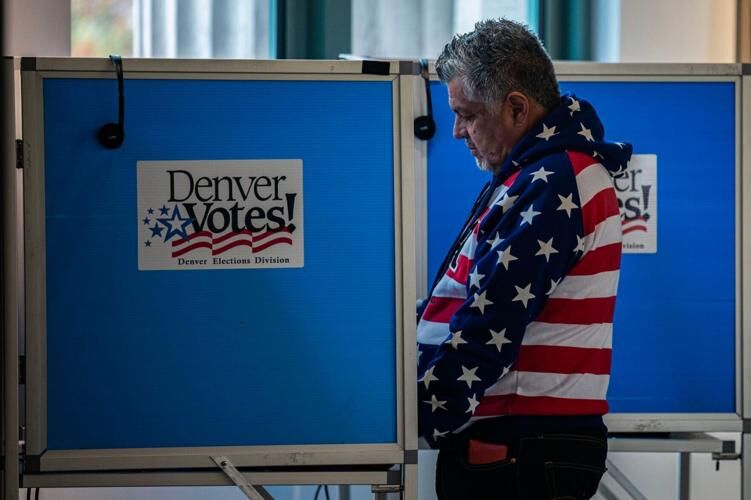
The city of Denver, along with several groups, sued the Trump administration Thursday, seeking to block U.S. Immigration and Customs Enforcement officers who are armed from polling sites during the upcoming midterm elections. In fact, there are no official orders...
Colorado doctors, dentists challenge state law on gender‑transition services in new federal lawsuit
Marissa Ventrelli
marissa.ventrelli@coloradopolitics.com
Updated 7 hours ago
A group of Christian doctors and dentists has filed a federal lawsuit challenging a Colorado law they say requires them to provide gender‑transition services that conflict with their religious and ethical beliefs. The lawsuit, filed by the Christian Medical and...
Colorado ed department must up its competence to prevent waste, fraud, abuse | Paula Noonan
Paula Noonan
paula-noonan@coloradopolitics.com
Updated 3 days ago
The Colorado Department of Education let $24 million fly from its checking accounts from January 2017 through June 2026 to CHE, aka Colorado Homeschool Enrichment. The details show how easily CHE and Education Re-Envisioned BOCES re-envisioned how to convert public...
Remember the injustice of forced unionism | GUEST COLUMN
Colorado Politics
colorado-politics@coloradopolitics.com
Updated 3 days ago
By Mark Mix This Labor Day we celebrated the men and women whose hard work keeps the country running. But in Colorado, many of those same workers face a real threat: pay union dues or lose their job. That’s because...
PREV
PREVIOUS

A Colorado history lesson for Victor Marx | Dick Wadhams
Victor Marx, who narrowly won the Republican nomination for governor by one half 1% after boasting of a massive 44-point lead, is just as misguided on Colorado political history. During the primary, Marx made a clumsy attempt to denigrate his opponent, state Sen. Barbara Kirkmeyer, as a “great candidate for the 1990s” whom he would […]

Colorado schools receive $24 million for free meals program
The Colorado Department of Education is providing Colorado schools with nearly $24 million in grant funding to implement a free lunch program. Approved by voters in 2022, the Healthy School Meals for All provides free breakfast and lunch to all public school students in the state, as well as wage increases for cafeteria staff. The […]