

Colorado bill allowing THC beverages to be sold at grocery stores, restaurants pulled by sponsor
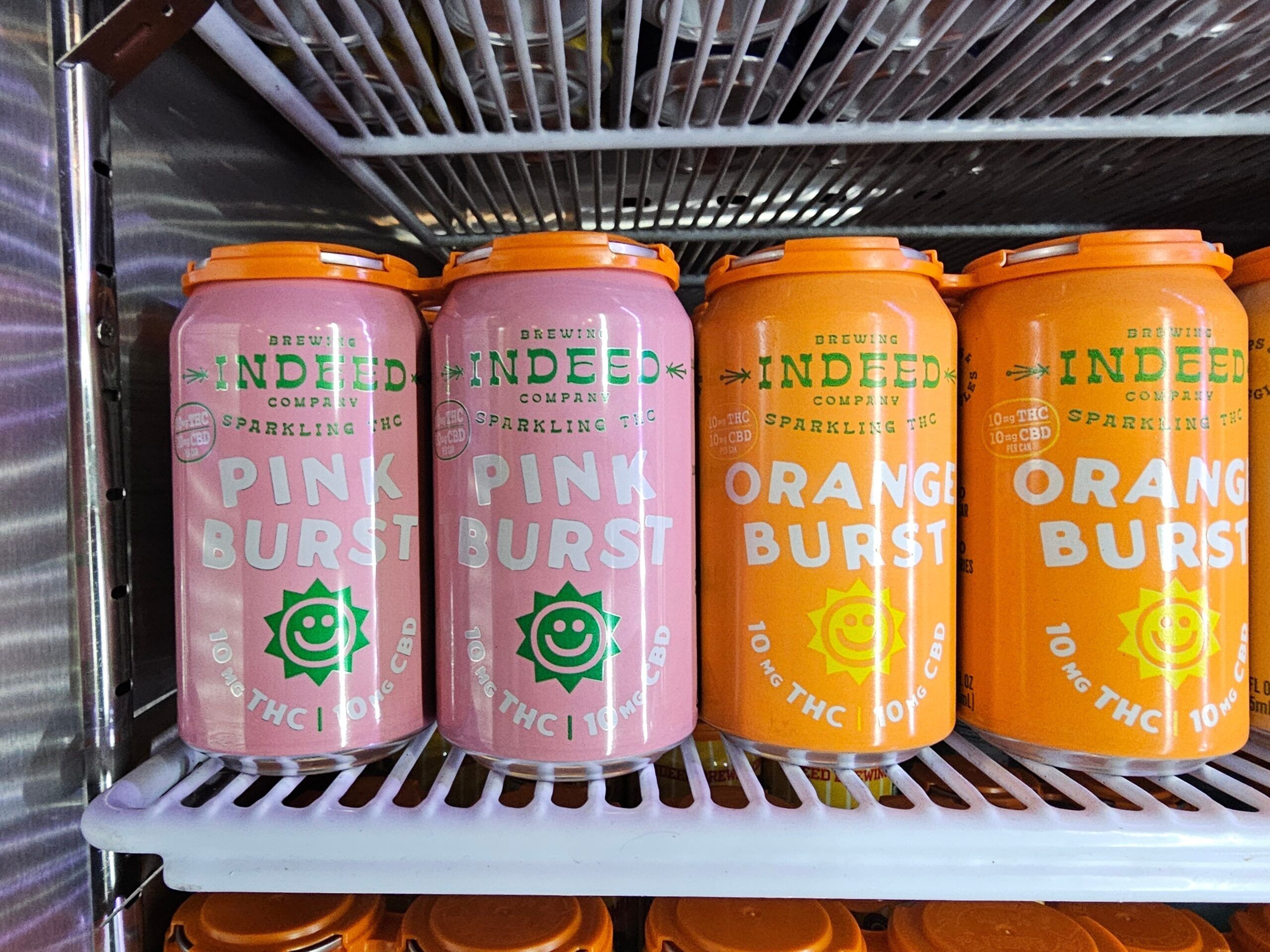
A Denver Democrat decided on Tuesday to pull a proposal that would have allowed beverages with tetrahydrocannabinol or THC to be sold at locations like grocery stores, restaurants, and entertainment venues.
THC is the psychoactive substance in cannabis, the chemical that gives people a high.
Senate Bill 164 would have established a regulatory framework for the manufacture, distribution, sale, and consumption of THC beverages, which are infused with the psychoactive compound found in the cannabis plant and have an intoxicating effect.
Colorado already allows for the sale of hemp beverages with up to 1.75 milligrams of THC to be sold in liquor stores. Senate Bill 164 would have increased that cap to 10 milligrams and allowed THC beverages to be sold wherever alcohol is legally available.
Both Minnesota and Tennessee allow for the sale of THC beverages for on-premises consumption, according to Sen. Julie Gonzales, D-Denver.
Additionally, the bill would have directed the Colorado Department of Public Health and Environment to adopt rules on labeling, packaging, and consumer notice requirements for THC beverages and to set licensing requirements.
Supporters defended the proposal as establishing a “clear and responsible regulatory framework” for their sale, while critics said they worry about adding another intoxicating product that could end up in the hands of children.
Opponents: Bill is ‘fundamentally a giveaway to out-of-state hemp companies‘
Dawn Reinfeld of the youth advocacy organization Blue Rising expressed worries about the ease with which children could get their hands on THC beverages if they’re sold at places like restaurants and grocery stores.
“We hear from parents that it is easy to walk into a grocery store and stroll out with alcohol, so why would these intoxicating THC substances be any different?” she asked.
State law prohibits alcohol from being sold with marijuana products, and Reinfeld argued THC beverages should be regulated the same way.
Young people are already being subjected to “misinformation” about marijuana, she added.
“To add into this toxic mix another intoxicating substance that is allowed to operate outside of the regulated marijuana market will compound this issue,” she said.
Representatives from the marijuana industry also expressed concerns about the legislation.
Adam Foster of the Responsible Cannabis Coalition called the measure a “ploy” by out-of-state hemp companies to sell intoxicating THC products in Colorado, while avoiding the state’s regulations and taxes on the marijuana industry.
“We ask that you stick with the common-sense idea that all intoxicating THC products should be regulated the same under Colorado law,” Foster told the committee.
Supporters: THC beverages offer an opportunity to recover lost revenue
THC beverages do not compete with marijuana, said Christopher Lackner of the Hemp Beverage Alliance. If anything, they compete with alcohol, which is seeing record-low consumption rates, he said.
“They’re enjoyed like alcohol, they’re marketed and sold to 21-plus adults like alcohol, and the price point and experience is like alcohol,” Lackner said.
THC beverages provide a modern alternative to alcohol, said Paige Ross of Flying Kites, a THC beverage company based in Iowa.
As alcohol consumption hits a 90-year low and the state faces a financial deficit, THC beverages could provide a new revenue source for Colorado, Ross said.
“By passing this bill, Colorado can supplement that declining tax base with a modern alternative,” Ross said.
The industry is asking to be regulated, Ross added.
“We are not asking for an advantage over marijuana. We would love a level playing field. We believe THC beverages, regardless of the source, be it hemp or marijuana, should be held to the same rigorous safety standards as any other adult product in Colorado,” Ross said.
Gonzales cited the “energy, momentum, and interest” in the policy over the past several months.
However, she didn’t feel she had the votes to pass the bill, she said, adding, “What is lacking here is not interest. What is lacking is not expertise. What is lacking is political will.”
The news came on the heels of public safety issues being raised in the marijuana industry. A Denver Gazette and ProPublica investigation in January reported that, despite Colorado becoming one of the first states to ban intoxicating hemp products made by chemical processing, the legislature and regulators failed to adopt many regulations that other states have employed to keep hemp products off marijuana dispensary shelves.
Creating the liquid distillate for vapes and edibles from hemp is much cheaper than using marijuana, giving companies a competitive advantage.
Regulators said they’re worried because manufacturers rely on toxic and potentially hazardous chemicals to convert the non-intoxicating compound CBD that is prevalent in hemp into THC, the psychoactive compound that makes people feel high. Regulators have banned such chemical synthesis because they say they fear chemical residues could remain in finished products, imperiling the public.
Colorado manufacturers have exploited the state’s regulatory gaps to continue using hemp to make THC distillate that goes in products marketed as marijuana, even though doing so is against state law, according to investigations by regulators, previous agency bulletins and testimony and lab test results contained in several lawsuits.
In 2024, state investigators found that one popular brand of marijuana vapes sold in dispensaries was actually derived from hemp, even though it was marketed and sold as coming from marijuana. Regulators found that the vapes were contaminated with methylene chloride, which is prohibited by Colorado’s marijuana regulators and banned for most uses by the U.S. Environmental Protection Agency because it can cause liver and lung cancer and damage the nervous, immune and reproductive systems. The chemical is often used to convert CBD from hemp into THC.
Denver Gazette Investigative Team Editor Christopher Osher contributed to this article.


New Colorado laws going into effect cover AI disclosures, medical marijuana access and gambling limits
Marissa Ventrelli
marissa.ventrelli@coloradopolitics.com
Updated 14 hours ago
More than 100 new Colorado laws take effect Aug. 12, bringing changes to chatbot safety rules, psychedelic research, campus wellness checks and sports betting restrictions. Here is a look at some of those laws set to take effect. The law:...

Early bird pricing ends soon for Fill a Plate for Hunger fundraiser | NONPROFIT REGISTER
Joanne Davidson Special to Colorado Politics
joanne-davidson-special-to-colorado-politics@coloradopolitics.com
Updated 2 days ago
WE DON’T WASTE Denver News: Early bird pricing for Fill a Plate for Hunger, the signature fundraiser for We Don’t Waste, ends on Aug. 10 when the Foodie-level tickets jump in price from their current $225. The 15th edition of this popular event takes place Sept. 10...

Pickleball, anyone? It’s for a good cause | NONPROFIT REGISTER
Joanne Davidson Special to Colorado Politics
joanne-davidson-special-to-colorado-politics@coloradopolitics.com
Updated 2 days ago
ROCKY MOUNTAIN CHILDREN’S HEALTH FOUNDATION Arvada News: Pickleball is still quite the rage, and to capitalize on its popularity, the Rocky Mountain Children’s Health Foundation will host its first fundraising tournament on Aug. 23. It will be from 2-5 p.m. at Chicken & Pickle, 14225...

Colorado joins 2 lawsuits against Trump administration over TANF, tariffs authority
Marissa Ventrelli
marissa.ventrelli@coloradopolitics.com
Updated 2 days ago
Colorado has joined a coalition of states in filing two new lawsuits against the Trump administration. The first lawsuit alleges the Trump administration’s move to expand the U.S. health department’s oversight of the Temporary Assistance for Needy Families would illegally...

Colorado farmers, ranchers wrestle with hurdles amid extreme drought conditions
Shen Wu Tan (Special to The Denver Gazette)
shen-wu-tan@gazette.com
Updated 3 days ago
Some producers take drastic steps to adapt to dry climate, record-low snowpack This is the first time that Jim Magnuson, who operates a family farm in the rural town of Eaton, can ever recall planting only 75% of his acreage. ...

Federal biotech commission examines Colorado’s role in critical minerals production
Scott Weiser
scott.weiser@gazette.com
Updated 6 days ago
China’s dominance over critical mineral supplies has left U.S. manufacturers vulnerable. Colorado’s biotech and research community is working to ease that dependence. Leaders from the National Security Commission on Emerging Biotechnology met last week at the Colorado School of Mines...

Douglas County schools to consolidate administrative offices into $29M headquarters to cut costs
Nicholas Fogleman
nicholas.fogleman@denvergazette.com
Updated 6 days ago
The Douglas County School Board is moving forward with a $29 million plan to consolidate district administrative operations into a new headquarters. It’s part of an effort to reduce annual costs as the district faces ongoing budget pressures. In June,...

Veo scooter clutter, sidewalk riders frustrate Denverites
Deborah Grigsby
deborah.smith@denvergazette.com
Updated 6 days ago
Denver resident Mike Miller was on a downtown sidewalk recently when a Veo scooter rider traveling at full speed passed him as the scooter blasted a “do not ride on sidewalks” warning. In a letter to Veo Policy and Partnerships...

Colorado’s 72-hour social media warrant law takes effect Aug. 12
Marissa Ventrelli
marissa.ventrelli@coloradopolitics.com
Updated 7 days ago
A law requiring social media platforms to respond to search warrants within 72 hours goes into effect on Aug. 12. Senate Bill 011 also requires platforms to create a staffed hotline for Colorado law enforcement agencies to contact regarding pending...

El Paso County rejects multi-family zoning request near Monument Academy
Savannah Eller
savannah-eller@coloradopolitics.com
Updated 1 week ago
The El Paso County Board of Commissioners narrowly rejected a developer’s bid to convert land from low- to high-density residential zoning. The request, made by MA Infrastructure, LLC, would have allowed 12 units per acre on half of a 14-acre...
PREV
PREVIOUS

Corrections officials may be sued for employee's alleged abuse of detainee, federal judge rules
High-level corrections officials may be sued for their own alleged failures to prevent or respond to an employee’s sexual misconduct toward a detainee, a federal judge decided last month. Rajae Bouhamidi was incarcerated at the Denver Women’s Correctional Facility. In late 2022, corrections officer Justin Torres allegedly began to sexually harass her. Eventually, he ordered […]

Selling dogs, cats in pet stores now banned in Colorado
Gov. Jared Polis signed a bill into law last week prohibiting pet stores from selling dogs and cats. House Bill 1011 would still allow pet stores to house pets available for adoption through local shelters. Eight states and 26 Colorado towns have banned pet stores from selling animals, such as dogs, cats, and rabbits. According […]