

Selling dogs, cats in pet stores now banned in Colorado
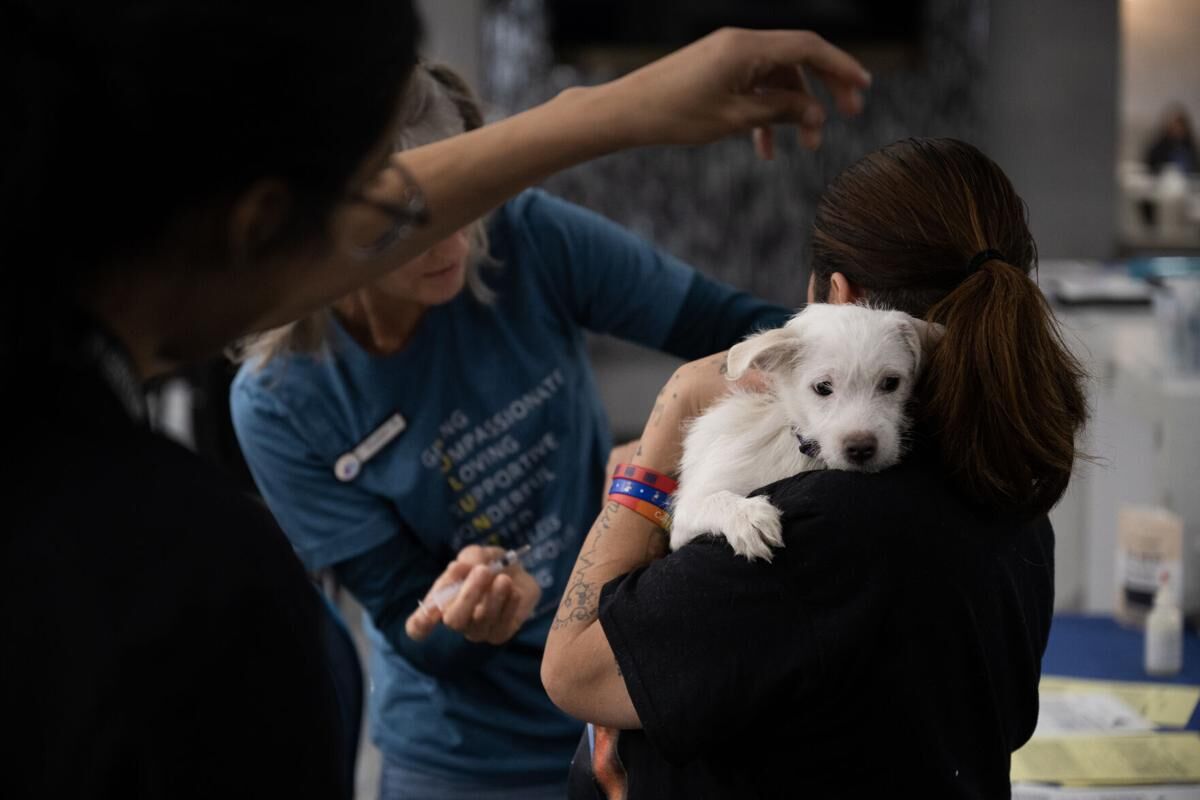
Gov. Jared Polis signed a bill into law last week prohibiting pet stores from selling dogs and cats.
House Bill 1011 would still allow pet stores to house pets available for adoption through local shelters.
Eight states and 26 Colorado towns have banned pet stores from selling animals, such as dogs, cats, and rabbits. According to the bill’s sponsors, seven pet stores in Colorado sell dogs and cats from brokers.
“Colorado’s furry four-legged friends deserve loving homes,” said Polis. “We are stopping the harmful overbreeding of dogs and cats in terrible conditions in the puppy mill industry, and encourage Coloradans to adopt, not shop or purchase from a legitimate breeder. I am grateful to the sponsors of this bill for standing up for these animals, helping them find a forever home in our Colorado for all.”
Opponents of the measure argued it targets small businesses, rather than the real culprits, puppy mills.
“Underground” puppy sales significantly increased after California passed a similar law in 2017, according to the Los Angeles Times
“Since I was elected, I’ve worked hard to promote animal welfare and close the puppy mill pipeline,” said House Majority Leader Monica Duran, D-Wheat Ridge, one of the bill’s sponsors. “Promoting the health of our pets and protecting consumers has been the primary goal of this bill. The Pistol the Pomeranian Protection Act, named after my beloved puppy mill survivor, will take a monumental step forward by ending the cruel practice of selling dogs and cats in stores for profit.”
Commercial breeding facilities and brokers are licensed through the U.S. Department of Agriculture.
The agency has cited numerous facilities — including several in Colorado — for repeated violations, including extreme temperatures, failing to treat animals’ medical conditions, overcrowding, and unsanitary conditions, Duran earlier told the House Agriculture, Water and Natural Resources Committee.
“Behind the glass in many retail stores is a national pipeline fueled by large-scale commercial breeding facilities,” she said. “This is not just another policy debate for me. It is personal. It’s about love, it’s about trust, and it’s about responsibility.”
Brandon Lenning, who owns one of the last remaining pet stores in the state that sells puppies, Pet Paradise in Pueblo, also told legislators earlier that he cares deeply about the health and well-being of every animal in his store and he is strongly opposed to puppy mills.
But, he argued, the legislation targets small businesses, rather than the real culprits.
“If the concern is puppy mills or unethical breeding practices, then let’s fight this together. Let’s strengthen inspections and increase penalties for violations,” he said. “Let’s create higher transparency requirements at the source, but do not remove customer choice and destroy legitimate livelihoods in the process.”
If pet stores are prohibited from selling puppies, people will likely seek alternative ways to purchase them, such as online or from unregulated sellers, Lenning said.
“We all have the same goal. We want to end animal cruelty,” he said. “I promise you, this is not the way to do it. This bill will not end demand for puppies, and it will not close the pipeline. It will shift the demand to unregulated online out-of-state transactions and underground markets where oversight is weaker.”
Pet stores are some of the most regulated businesses in Colorado, added Alyssa Miller-Hurley of Pet Advocacy Network.
Under the state’s Pet Animal Care and Facilities Act, pet stores are required to be licensed by the state and undergo regular inspections, as well as provide regular veterinary oversight. They must also adhere to certain animal welfare requirements.
Miller-Hurley said states like California and New York that have implemented pet store bans have seen increases in “black market” puppy sales.
The bill’s other sponsors are Rep. Karen McCormick, D-Hygiene, Senate Majority Leader Robert Rodriguez and Sen. Dylan Roberts, D-Frisco.


New Colorado laws going into effect cover AI disclosures, medical marijuana access and gambling limits
Marissa Ventrelli
marissa.ventrelli@coloradopolitics.com
Updated 11 hours ago
More than 100 new Colorado laws take effect Aug. 12, bringing changes to chatbot safety rules, psychedelic research, campus wellness checks and sports betting restrictions. Here is a look at some of those laws set to take effect. The law:...

Early bird pricing ends soon for Fill a Plate for Hunger fundraiser | NONPROFIT REGISTER
Joanne Davidson Special to Colorado Politics
joanne-davidson-special-to-colorado-politics@coloradopolitics.com
Updated 1 day ago
WE DON’T WASTE Denver News: Early bird pricing for Fill a Plate for Hunger, the signature fundraiser for We Don’t Waste, ends on Aug. 10 when the Foodie-level tickets jump in price from their current $225. The 15th edition of this popular event takes place Sept. 10...

Pickleball, anyone? It’s for a good cause | NONPROFIT REGISTER
Joanne Davidson Special to Colorado Politics
joanne-davidson-special-to-colorado-politics@coloradopolitics.com
Updated 1 day ago
ROCKY MOUNTAIN CHILDREN’S HEALTH FOUNDATION Arvada News: Pickleball is still quite the rage, and to capitalize on its popularity, the Rocky Mountain Children’s Health Foundation will host its first fundraising tournament on Aug. 23. It will be from 2-5 p.m. at Chicken & Pickle, 14225...

Colorado joins 2 lawsuits against Trump administration over TANF, tariffs authority
Marissa Ventrelli
marissa.ventrelli@coloradopolitics.com
Updated 2 days ago
Colorado has joined a coalition of states in filing two new lawsuits against the Trump administration. The first lawsuit alleges the Trump administration’s move to expand the U.S. health department’s oversight of the Temporary Assistance for Needy Families would illegally...

Colorado farmers, ranchers wrestle with hurdles amid extreme drought conditions
Shen Wu Tan (Special to The Denver Gazette)
shen-wu-tan@gazette.com
Updated 3 days ago
Some producers take drastic steps to adapt to dry climate, record-low snowpack This is the first time that Jim Magnuson, who operates a family farm in the rural town of Eaton, can ever recall planting only 75% of his acreage. ...

Federal biotech commission examines Colorado’s role in critical minerals production
Scott Weiser
scott.weiser@gazette.com
Updated 6 days ago
China’s dominance over critical mineral supplies has left U.S. manufacturers vulnerable. Colorado’s biotech and research community is working to ease that dependence. Leaders from the National Security Commission on Emerging Biotechnology met last week at the Colorado School of Mines...

Douglas County schools to consolidate administrative offices into $29M headquarters to cut costs
Nicholas Fogleman
nicholas.fogleman@denvergazette.com
Updated 6 days ago
The Douglas County School Board is moving forward with a $29 million plan to consolidate district administrative operations into a new headquarters. It’s part of an effort to reduce annual costs as the district faces ongoing budget pressures. In June,...

Veo scooter clutter, sidewalk riders frustrate Denverites
Deborah Grigsby
deborah.smith@denvergazette.com
Updated 6 days ago
Denver resident Mike Miller was on a downtown sidewalk recently when a Veo scooter rider traveling at full speed passed him as the scooter blasted a “do not ride on sidewalks” warning. In a letter to Veo Policy and Partnerships...

Colorado’s 72-hour social media warrant law takes effect Aug. 12
Marissa Ventrelli
marissa.ventrelli@coloradopolitics.com
Updated 7 days ago
A law requiring social media platforms to respond to search warrants within 72 hours goes into effect on Aug. 12. Senate Bill 011 also requires platforms to create a staffed hotline for Colorado law enforcement agencies to contact regarding pending...

El Paso County rejects multi-family zoning request near Monument Academy
Savannah Eller
savannah-eller@coloradopolitics.com
Updated 1 week ago
The El Paso County Board of Commissioners narrowly rejected a developer’s bid to convert land from low- to high-density residential zoning. The request, made by MA Infrastructure, LLC, would have allowed 12 units per acre on half of a 14-acre...
PREV
PREVIOUS

Colorado bill allowing THC beverages to be sold at grocery stores, restaurants pulled by sponsor
A Denver Democrat decided on Tuesday to pull a proposal that would have allowed beverages with tetrahydrocannabinol or THC to be sold at locations like grocery stores, restaurants, and entertainment venues. THC is the psychoactive substance in cannabis, the chemical that gives people a high. Senate Bill 164 would have established a regulatory framework for […]

Federal judge declines to end Denver sheriff employee's sex discrimination suit
A federal judge tentatively green-lit a former Denver Sheriff Department sergeant’s sex discrimination lawsuit for trial last month, based upon allegations that three female employees were promoted ahead of him despite his qualifications. U.S. District Court Judge Nina Y. Wang described the evidence of discrimination as “not robust,” but she determined plaintiff Joseph Bowen had […]