

Veto likely as union-backed bill heads to Colorado governor’s desk — again

For the second year in a row, a bill that would make it easier for labor organizations to impose fees on all workers, regardless of union membership, is headed for Gov. Jared Polis’ desk.
The governor, who vetoed the legislation last year, has indicated he would do so again — unless business representatives and labor organizations reach an agreement.
The state legislation does not deal with unionization per se, which is government by federal laws. Those laws dictate that a simple majority of workers must vote in favor of union formation.
What sets Colorado’s 80 year-plus labor law apart from other states is the requirement for a second election to permit the establishment of a union “security agreement” in a unionized workplace. Under such an agreement, all workers will pay union dues, whether or not they are union members.
That election requires a higher threshold of 75% to pass. House Bill 1005 would repeal that second election requirement.
The legislation passed through both chambers last session, and Polis vetoed it, citing worries about mandatory dues deductions and the lack of compromise between labor and business interests.
Business and labor have been divided on the measure since it was introduced last year. At the time, the governor told both groups he would not sign the measure into law unless they could reach a compromise. As the end of session loomed, the governor pushed for a deal — to no avail.
“At its core, this is about who has a say in whether union dues are deducted from employee paychecks,” he had said in his veto statement. “Mandatory dues deduction should require a high bar of both participation and support, particularly at a time when hardworking Coloradans are concerned about the cost of groceries, the economy, and their job security.”
Democrats argued the change would strengthen workers’ ability to organize and negotiate higher wages, while Republicans countered that eliminating the second vote would force employees to pay union representation fees without sufficient consent.
House Bill 1005 passed through a 42-22 party-line vote in the House, where it was sponsored by Rep. Javier Mabrey, D-Denver, and Assistant Majority Leader Jennifer Bacon, D-Denver.
On the Senate floor, sponsor Sen. Jessie Danielson, D-Wheat Ridge, described the current law — called the Labor Peace Act — “creative union-busting, but union-busting all the same.”
Workers trying to form a union face harassment, retaliation, punishment, and firings in the weeks leading up to their election, Danielson said. That harassment magnifies when there are two required elections, the Democrat said.
“Colorado workers power the state, and yet the state has a burdensome, bureaucratic barrier to accessing the power of a union,” she told her colleagues. “It is high time that we break down that barrier for workers who wish to join a union.”
Sen. Iman Jodeh, D-Aurora, who is sponsoring the bill alongside Danielson, said union membership allows workers to negotiate for better pay and a safer workplace.
“This is how we can keep the American dream alive for hundreds of thousands of Colorado workers,” she said. “Let’s make sure the people who keep Colorado running can afford to live here, raise a family, and build a secure future.”
Opponents of the measure argue it will make Colorado a less attractive state for businesses. Business organizations have also claimed that the proponents’ framing of the legislation is misleading — since the legislation does not actually deal with workers’ ability to form a union.
Sen. John Carson, R-Highlands Ranch, said 98 companies have recently left the state or decided not to relocate to Colorado, and their decisions have cost the state about 13,000 lost jobs.
“I think it’s pretty clear that Colorado is becoming a less desirable state for companies to move to and to remain in and create jobs,” Carson said. “The entrepreneurial spirit that we have had in this state as a great western state for many decades, I think, quite frankly, is fading, and a lot of people are realizing that.”
“They’re asking themselves whether Colorado is the best place to keep their business and create jobs and opportunities,” Carson said. “Why do we want to upset a system that’s worked quite well for our state historically?”
Eliminating the second election requirement would disproportionately impact small businesses, argued Sen. Lisa Frizell, R-Castle Rock. Those businesses will have to choose between closing their doors or increasing their prices, she said.
“Our cost of living is one of the highest in the country, so we’re gonna make it worse?” she asked. “Is that what we want to do?”
Frizell introduced an amendment that would allow employees to refuse union representation and be exempt from paying any dues or fees.
Danielson said that would be illegal, arguing federal law requires all workers to pay into a union regardless of membership, citing the point labor organizations have raised — that unions, once established, are legally required to represent all employees.
The bill was debated on third reading on May 1, which is International Workers’ Day.
Sen. Julie Gonzales, D-Denver, called the two election requirement “Orwellian.”
While it is clear that Polis had “made his preference known,” Gonzales expressed hope that the next governor would sign the bill into law when they take office next session.
The bill passed on a 23-12 party-line vote.


Early bird pricing ends soon for Fill a Plate for Hunger fundraiser | NONPROFIT REGISTER
Joanne Davidson Special to Colorado Politics
joanne-davidson-special-to-colorado-politics@coloradopolitics.com
Updated 2 hours ago
WE DON’T WASTE Denver News: Early bird pricing for Fill a Plate for Hunger, the signature fundraiser for We Don’t Waste, ends on Aug. 10 when the Foodie-level tickets jump in price from their current $225. The 15th edition of this popular event takes place Sept. 10...

Pickleball, anyone? It’s for a good cause | NONPROFIT REGISTER
Joanne Davidson Special to Colorado Politics
joanne-davidson-special-to-colorado-politics@coloradopolitics.com
Updated 2 hours ago
ROCKY MOUNTAIN CHILDREN’S HEALTH FOUNDATION Arvada News: Pickleball is still quite the rage, and to capitalize on its popularity, the Rocky Mountain Children’s Health Foundation will host its first fundraising tournament on Aug. 23. It will be from 2-5 p.m. at Chicken & Pickle, 14225...
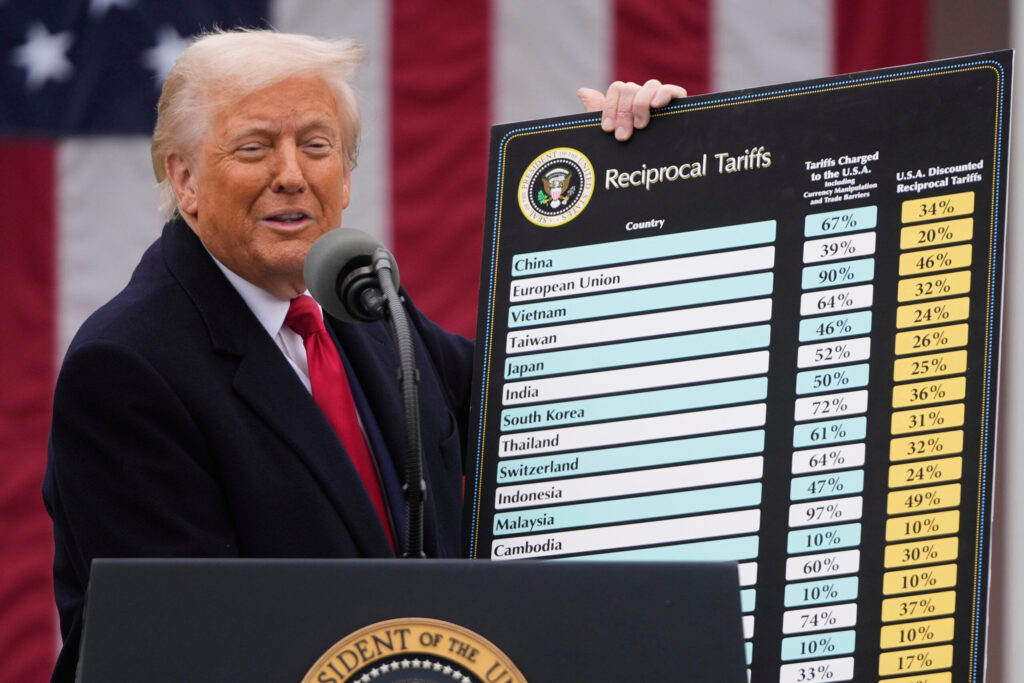
Colorado joins 2 lawsuits against Trump administration over TANF, tariffs authority
Marissa Ventrelli
marissa.ventrelli@coloradopolitics.com
Updated 22 hours ago
Colorado has joined a coalition of states in filing two new lawsuits against the Trump administration. The first lawsuit alleges the Trump administration’s move to expand the U.S. health department’s oversight of the Temporary Assistance for Needy Families would illegally...

Colorado farmers, ranchers wrestle with hurdles amid extreme drought conditions
Shen Wu Tan (Special to The Denver Gazette)
shen-wu-tan@gazette.com
Updated 1 day ago
Some producers take drastic steps to adapt to dry climate, record-low snowpack This is the first time that Jim Magnuson, who operates a family farm in the rural town of Eaton, can ever recall planting only 75% of his acreage. ...

Federal biotech commission examines Colorado’s role in critical minerals production
Scott Weiser
scott.weiser@gazette.com
Updated 4 days ago
China’s dominance over critical mineral supplies has left U.S. manufacturers vulnerable. Colorado’s biotech and research community is working to ease that dependence. Leaders from the National Security Commission on Emerging Biotechnology met last week at the Colorado School of Mines...
Douglas County schools to consolidate administrative offices into $29M headquarters to cut costs
Nicholas Fogleman
nicholas.fogleman@denvergazette.com
Updated 4 days ago
The Douglas County School Board is moving forward with a $29 million plan to consolidate district administrative operations into a new headquarters. It’s part of an effort to reduce annual costs as the district faces ongoing budget pressures. In June,...

Veo scooter clutter, sidewalk riders frustrate Denverites
Deborah Grigsby
deborah.smith@denvergazette.com
Updated 4 days ago
Denver resident Mike Miller was on a downtown sidewalk recently when a Veo scooter rider traveling at full speed passed him as the scooter blasted a “do not ride on sidewalks” warning. In a letter to Veo Policy and Partnerships...

Colorado’s 72-hour social media warrant law takes effect Aug. 12
Marissa Ventrelli
marissa.ventrelli@coloradopolitics.com
Updated 5 days ago
A law requiring social media platforms to respond to search warrants within 72 hours goes into effect on Aug. 12. Senate Bill 011 also requires platforms to create a staffed hotline for Colorado law enforcement agencies to contact regarding pending...
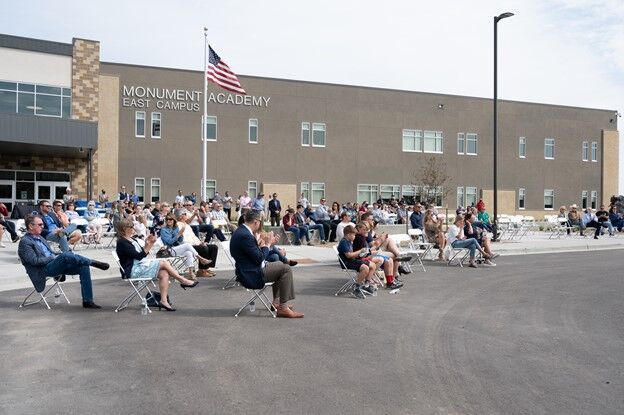
El Paso County rejects multi-family zoning request near Monument Academy
Savannah Eller
savannah-eller@coloradopolitics.com
Updated 6 days ago
The El Paso County Board of Commissioners narrowly rejected a developer’s bid to convert land from low- to high-density residential zoning. The request, made by MA Infrastructure, LLC, would have allowed 12 units per acre on half of a 14-acre...

Denver City Council sends Xcel franchise deal to voters
Deborah Grigsby
deborah.smith@denvergazette.com
Updated 1 week ago
This November, Denver voters will decide whether to renew the city’s longstanding franchise agreement with Xcel Energy. Members of the Denver City Council approved on Monday sending a proposed 20-year franchise agreement with Xcel that would deliver more than $180...
PREV
PREVIOUS

Aurora mental health nonprofit cuts 100-plus jobs after Colorado agency reduces reimbursement rate
A nonprofit that provides services through 11 mental health centers in Aurora announced Thursday that it is eliminating 111 jobs effective June 30, the result of federal and state budget reductions. Aurora Mental Health & Recovery said the positions being eliminated are mostly administrative and support service jobs. That includes 91 jobs currently held by […]

Fight over credit card 'swipe fees' attracts nearly 200 lobbyists in Colorado
One of the most expensive fights of the 2026 session got a little closer to being over on Friday, when the Colorado Senate took a second final vote on the proposal to eliminate “swipe fees” on sales taxes. It’s not exactly a David and Goliath story. It’s more like Goliath versus Goliath. Also known as […]