

Judge’s students create AI apps, solicitors general gather for group discussion | COURT CRAWL

Welcome to Court Crawl, Colorado Politics’ roundup of news from the third branch of government.
A federal judge’s law students created artificial intelligence-powered apps to address access-to-justice issues, plus half a dozen current and former solicitors general of Colorado spoke about the unique role.
State Supreme Court news
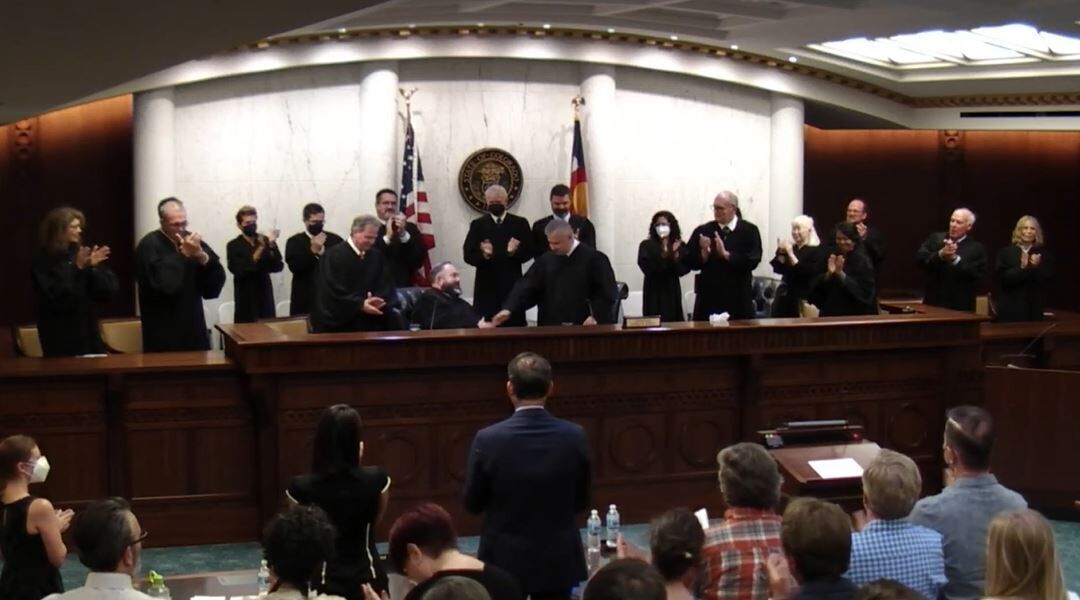
• The Colorado Supreme Court decided that lifetime sex offender registration can’t be cruel and unusual punishment because it isn’t “punishment.” However, two justices asked the legislature to reconsider the accuracy of the tool used to assess someone’s risk of recidivism.
• That assessment “is not evidence-based and is not normed on people with disabilities or women. We hope that the legislature will look at other evidence-based approaches that make people in Colorado safer.” —Jessica Meza, board member of the Colorado Criminal Defense Bar
• The Supreme Court concluded car rental companies that offer insurance policies aren’t insurers under state law, nor was Hertz acting as an insurer in the circumstances of two injured plaintiffs.
• “Insurance rates have skyrocketed in Colorado, largely because of liability-expanding laws and court decisions. The Supreme Court’s ruling takes a welcome step back from that trend.” —Evan Stephenson, attorney for the American Car Rental Association
• Finally, the Supreme Court ruled that insurance companies don’t have to give policyholders notice and an opportunity to address any non-cooperation in a claims investigation if the policy specifically requires the customer to do something.
• “The practical effect of this decision is that insureds may now be forced to give up fundamental legal rights simply to preserve coverage. That is not what Colorado consumers reasonably expect when they purchase insurance, and it is an outcome that benefits insurance companies, not policyholders.” —Scott Anderson, attorney for plaintiff Anthony Wenzell
Heard on appeal
• The Court of Appeals clarified that the rule automatically extending deadlines in civil cases when the final day falls on a weekend or a holiday also applies to the 28-day window for seeking judicial review of governmental decisions.
In federal news
• The U.S. Court of Appeals for the 10th Circuit dismissed a malicious prosecution lawsuit from two men who were arrested as the perpetrators of a shooting when, in fact, they appeared to be the targets of the shooting.
• Aurora is not liable for a suspended officer’s attack on a woman at an apartment complex, the 10th Circuit ruled.
• A federal judge declined to allow the Colorado Republican Party to exclude unaffiliated voters from the approaching primary election.
• A judge confirmed that Colorado will not immediately enforce a 2024 law regulating artificial intelligence amid a challenge from Elon Musk and the Trump administration.
• High-level corrections officials may be sued for an employee’s alleged sexual assaults of a detainee, a federal judge decided.
• A jury will consider whether the Denver Sheriff’s Department passed over a male sergeant for promotion due to his sex, a judge concluded.
AI in the law
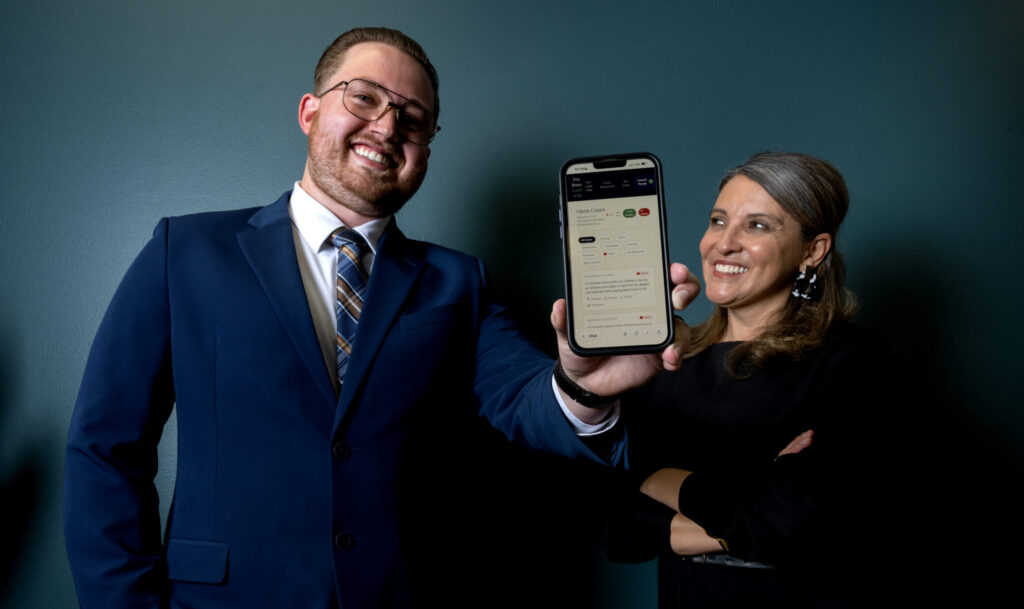
• U.S. Magistrate Judge Maritza Dominguez Braswell has become a national leader on the subject of artificial intelligence in the legal profession, and this spring her students at the University of Denver’s law school created two AI-powered tools in a “design sprint.”
• The projects were aimed at addressing access-to-justice problems. One team created a clearinghouse of immigration law updates, and the other created an intake tool to help lawyers decide whether to assist litigants in civil cases.
• “Most people can’t access our system in the way that it was designed to be accessed with a lawyer. So, (the class involved) thinking about how AI could potentially provide a solution to that, and then giving them the tools along the way to actually make that work,” said Braswell.
Solicitors general panel
• Six current and former solicitors general of Colorado, dating to the early 1990s, gathered on a virtual panel to discuss the job and how it has changed over time.
• When he was the SG, “the role was to represent the cabinet officers, basically, in legal matters. There was no legal policy. There was no association with other states. There was no legal policy advancement. It was very much a dry and desiccated position,” said Judge Timothy M. Tymkovich of the U.S. Court of Appeals for the 10th Circuit. “And (Attorney General) Gale Norton’s vision of it, and one that I subscribed to, was to open it up as an innovative actor within the state of Colorado and a player in the national scene in a capacity that hadn’t been thought of before this era.”
Vacancies and appointments
• The governor appointed Arapahoe County Magistrate Beth A. Elliott-Dumler to succeed retiring District Court Judge Ben L. Leutwyler in the 23rd Judicial District (Douglas, Elbert, and Lincoln counties).
• The governor also selected Arapahoe County Magistrate W. Casey Brown for a newly created seat on the Douglas County Court.
• There are three finalists for a newly created seat on the Larimer County Court: Luke Douglas Birky, Magistrate Donald P. Delaney, and Heather K. Siegel.
• There are also three candidates for a new seat on the Arapahoe County District Court: Magistrate James Christopher Boeckx, Niceta Elizabeth Bradburn, and County Court Judge Amy Danielle Touart.
• Finally, there are three contenders for a new seat on the Weld County District Court: Catharine “Katie” Ann Allsup-Armstrong, Sean James Lacefield, and Keren Courtney Weitzel.
• Applications are due by May 15 to succeed District Court Judge Sarah E. Stout in the 17th Judicial District (Adams and Broomfield counties), who is retiring less than three years into her appointment.
• Applications are also due by June 10 to succeed retiring El Paso County Court Judge D. Denise Peacock.
• Marizela Cano, the court clerk for Boulder County, starts today as the new clerk of the Colorado Supreme Court, following the quiet retirement last month of clerk Cheryl Stevens.
Miscellaneous proceedings
• Following voters’ approval of a 2024 constitutional amendment revising the judicial discipline process, the first adjudicative trial of a judge has been scheduled to take place in August.
• Defense lawyers for a Boulder County murder defendant have moved to dismiss a renewed set of charges due to allegedly destroyed evidence and misconduct from the government.
Editor’s note: This article has been updated to correct the name of the court to which W. Casey Brown was appointed.

Colorado justices confirm leaving-the-scene prosecutions require no proof of driver’s knowledge
Michael Karlik
michael.karlik@coloradopolitics.com
Updated 2 hours ago
The Colorado Supreme Court confirmed on Tuesday that its 20-year-old decision involving drivers who leave the scene of an accident remains good law and prosecutors do not have to prove that such defendants knew they were involved in an accident....

Judge blocks Colorado’s proposed ban on using SNAP benefits for soda
Marissa Ventrelli
marissa.ventrelli@coloradopolitics.com
Updated 1 hour ago
A federal judge has temporarily blocked Colorado and several other states from enforcing a proposed “Healthy Choice Waiver” that would have barred Supplemental Nutrition Assistance Program (SNAP) recipients from using their benefits to buy soda and other sugary drinks. Under...
Boulder police overreached in interrogating suspect, Colorado Supreme Court finds
Michael Karlik
michael.karlik@coloradopolitics.com
Updated 1 hour ago
Two Boulder detectives violated a man’s constitutional rights by interrogating him at his home using a court order that solely authorized the collection of his DNA evidence, the Colorado Supreme Court concluded on Tuesday. The ruling curtailed the ability of...
Property owners may access evidence before eminent domain decisions, Colorado justices conclude
Michael Karlik
michael.karlik@coloradopolitics.com
Updated 1 hour ago
The Colorado Supreme Court ruled on Tuesday that a Douglas County judge incorrectly believed he lacked the authority to allow a property owner to pursue evidence challenging a government entity’s legal right to take its property through eminent domain. In...
Missy Woods accepts plea deal, avoids trial on 102 felony counts
Jenny Deam
jenny.deam@gazette.com
Updated 2 hours ago
The former top Colorado Bureau of Investigation forensic scientist accused of altering and deleting DNA evidence in scores of criminal cases across the state for years pleaded guilty to four criminal counts Tuesday in Jefferson County. Yvonne “Missy” Woods, 65,...

10th Circuit grants Boulder-Weld district’s fire chief immunity for firing union leader
Michael Karlik
michael.karlik@coloradopolitics.com
Updated 1 day ago
The Denver-based federal appeals court decided on Monday that the chief of a fire protection district spanning Boulder and Weld counties could not be held liable for terminating a union leader through the process outlined in the collective bargaining agreement....

State Supreme Court oral arguments, 10th Circuit nominee recuses from cases | COURT CRAWL
Michael Karlik
michael.karlik@coloradopolitics.com
Updated 23 hours ago
Welcome to Court Crawl, Colorado Politics’ roundup of news from the third branch of government. The state Supreme Court will hear its last set of oral arguments this week before breaking for the summer, and the nominee for a vacancy...

Appeals court adopts federal standard for jail deaths under Colorado law
Michael Karlik
michael.karlik@coloradopolitics.com
Updated 22 hours ago
Colorado’s second-highest court decided last month that the standard used by federal courts for assessing whether government officials may be liable for constitutional violations upon the death of a jail detainee also applies to claims made under the Colorado Constitution....
Trump’s 10th Circuit nominee recuses from cases against federal government without explanation
Michael Karlik
michael.karlik@coloradopolitics.com
Updated 2 days ago
President Donald Trump’s nominee to fill a vacancy on the Denver-based federal appeals court recused himself without a clear explanation from nine cases against the executive branch while he was undergoing vetting by the White House this spring. U.S. District...
Adams County murder conviction reversed due to faulty jury instruction
Michael Karlik
michael.karlik@coloradopolitics.com
Updated 2 days ago
Colorado’s second-highest court overturned an Adams County defendant’s murder conviction last month because the instruction provided to the jury about a trespasser’s right to use self-defense did not accurately reflect Colorado law. A person is justified in using force to...
PREV
PREVIOUS

While growth slows statewide, small-town populations in Colorado boom
A proposed housing project could more than double the population of Calhan, a town of just 760 on the Eastern Plains outside Colorado Springs. For some small towns on the Front Range, it’s a familiar situation. Colorado’s overall population growth was just 0.4% last year. At a time when net migration has stagnated statewide, several […]

Colorado justices confirm water-related enterprises may condemn private property
The Colorado Supreme Court confirmed on Monday that water-related enterprises have the legal authority to exercise the governmental power of eminent domain over private property. An enterprise is a government-owned business that provides fee-based services. In 1993, lawmakers authorized the creation of “water activity enterprises” to provide a secure water supply for residents. The enterprises […]