

Colorado Supreme Court narrows consumer protection law for insurance claims
The Colorado Supreme Court ruled on Monday that the legislature’s consumer protections requiring insurance companies to take certain steps before they allege a policyholder failed to cooperate do not apply to any obligation specifically laid out in the policy.
In 2020, the legislature changed state law to limit insurance companies’ ability to assert a failure-to-cooperate defense when they are sued for withholding benefits. Among other things, an insurer must give a policyholder time to address any specifically identified failures to cooperate in the claim investigation.
Plaintiff Anthony Wenzell and the groups supporting him argued the law captures an insurer’s allegation of noncooperation across the board, including obligations laid out in the insurance policy. The defendants — insurers State Farm and USAA — and their allies countered that extending the law’s protections to cover things the policyholder is already aware of would spawn unnecessary legal disputes.
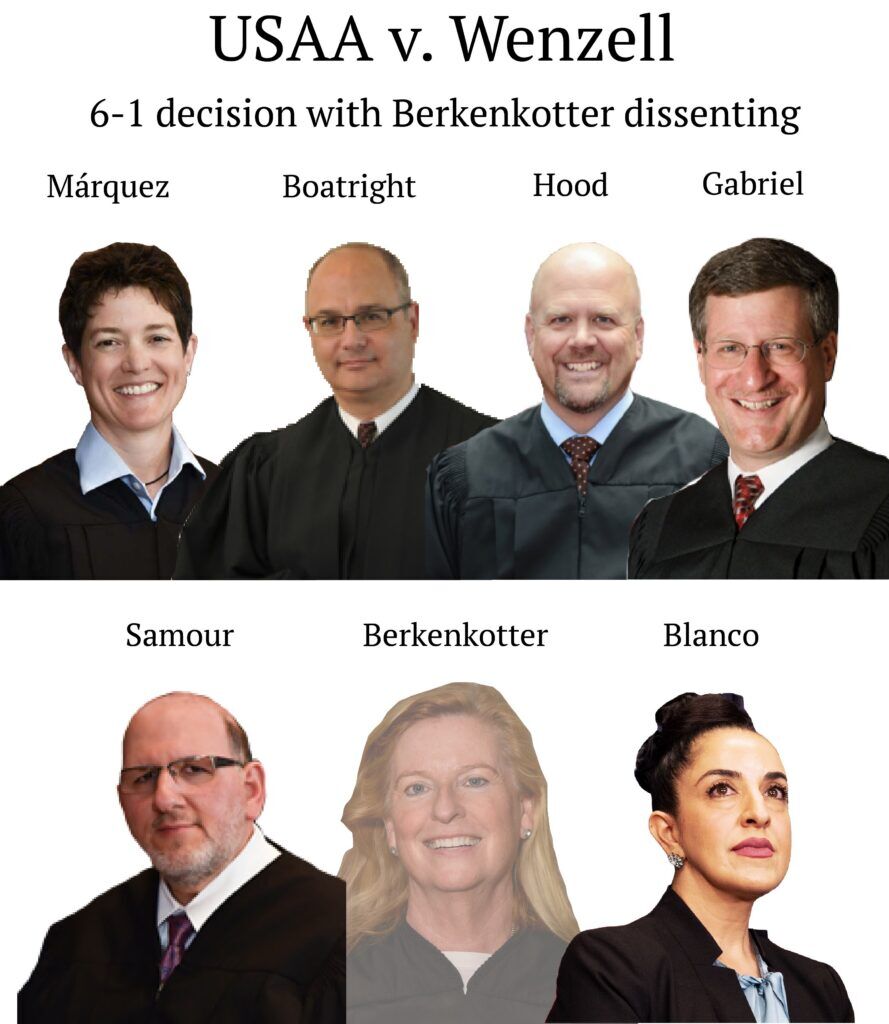
By 6-1, the Supreme Court sided with the insurance companies.
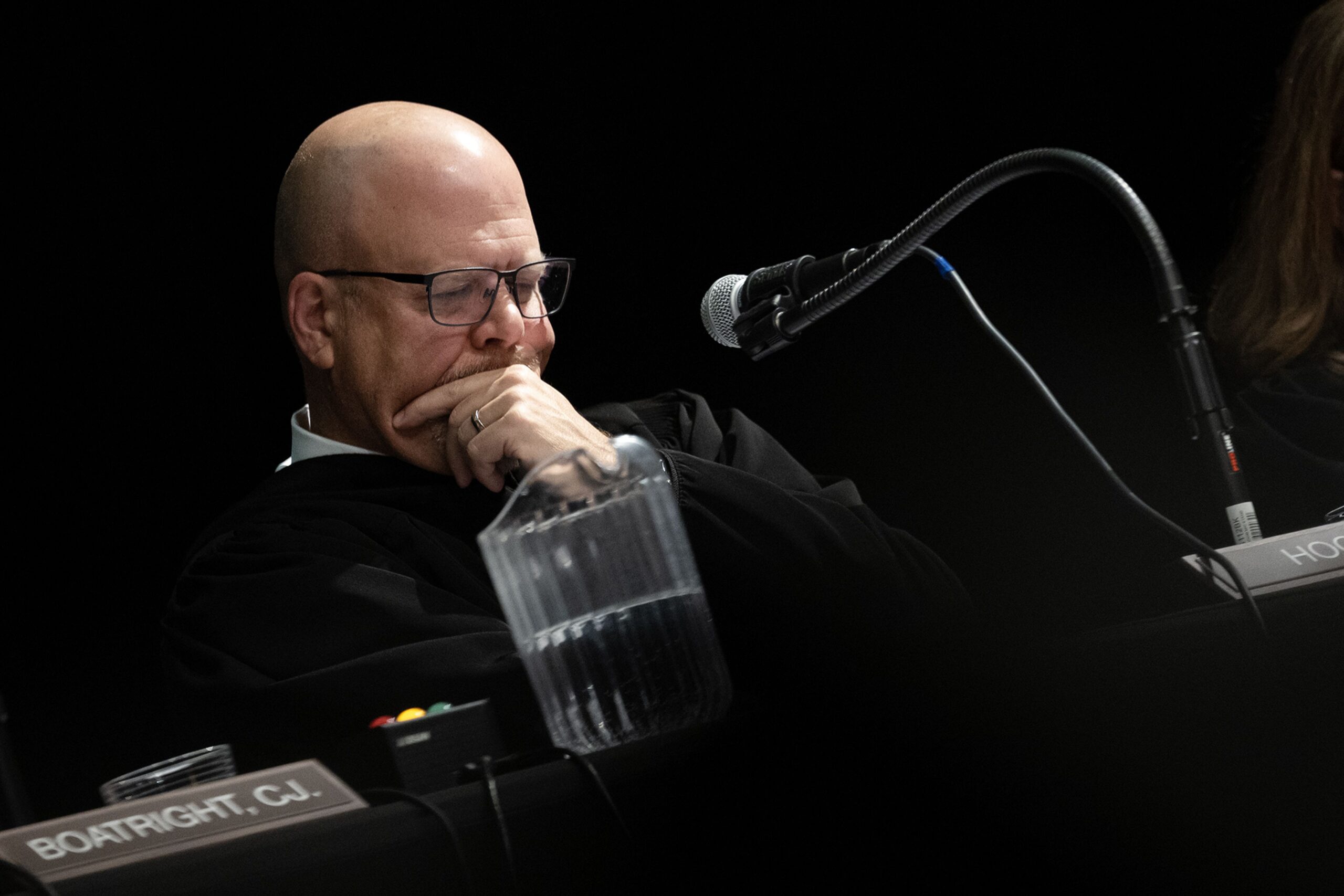
“Policyholders are on notice of the enumerated conditions precedent in their policies requiring them to engage in specific conduct — like the duty to provide a comprehensive medical release — without additional notice from the insurer,” wrote Justice William W. Hood III in the April 27 opinion.
Justice Maria E. Berkenkotter dissented, arguing the majority’s interpretation ran contrary to the legislature’s goal in preventing insurance companies from using technical noncompliance to void entire claims.
“The statute means what it says: If an insurer claims that the insured has failed to provide information that a reasonable person would conclude was necessary to adjust the insured’s claim, the insurer must provide the insured notice and an opportunity (to) cure,” she wrote. “It is undisputed that did not happen here.”

In the underlying case, Wenzell was seriously injured in a 2014 car accident. He underwent surgery nearly 2.5 years later and in April 2017, Wenzell’s doctor determined he was healing well. But the following day, a driver rear-ended Wenzell again, causing a new round of injuries.
Wenzell’s estimated damages from the second collision exceeded $2.7 million. Consequently, he sought benefits from his primary insurance company, State Farm, which had a limit of $1 million. Wenzell also pursued benefits from USAA, which provided secondary coverage up to $300,000.
State Farm sought various documents, including medical records, that Wenzell’s policy obligated him to share. While Wenzell provided some information, he contended other requests were inappropriate or unnecessary to investigate the claim. He filed suit for breach of contract and delay of benefits.
Consequently, State Farm moved to end Wenzell’s lawsuit in its favor, contending he had not satisfied the contractual provision. USAA, meanwhile, also moved to end the case, as Wenzell could not recover money from his secondary insurer if he had not gone through the process with his primary insurer first.
An El Paso County judge agreed with the insurance companies, but a three-judge Court of Appeals panel reinstated the lawsuit. It relied on the 2020 law requiring insurers to notify Wenzell of information a “reasonable person would determine the insurer needs,” and to give him time to fulfill the request.
“Neither insurer did so here,” wrote Judge Terry Fox. “The insurer must clearly identify perceived deficiencies, so the insured is given notice — and a deadline — to provide what is needed to evaluate a claim or risk its denial.”
She added that USAA had its own duty to investigate Wenzell’s claim because, even if State Farm had granted him full benefits under its policy, Wenzell’s injuries were costly enough to trigger his secondary USAA coverage.
The insurance companies appealed, contending lawmakers only sought to address situations where an insurer alleged a policyholder failed to cooperate generally, without an opportunity to fix the problem.
“When the policy specifically requires the insured to release medical records, however, there is no possible ambiguity about whether the insured must do so,” wrote attorney Katherine C. Yarger for State Farm.
The majority agreed with her.
“Our holding today should not be understood as an invitation to insurers to try to circumvent (the law) by establishing novel or unduly onerous conditions,” wrote Hood, adding that insurance companies could still be liable if they craft contractual provisions in bad faith.
Berkenkotter argued that lawmakers intended to protect policyholders across the board from allegations of noncooperation.
“Alleged gamesmanship by insurers concerning requests for blanket medical release authorizations — the type of noncooperation at issue here — was specifically mentioned by proponents of (the law) no fewer than ten times during the hearing in the House,” she wrote. “The majority’s analysis turns the legislature’s intent on its head.”
In addition, all justices agreed that USAA, as the secondary insurer, had the obligation to evaluate Wenzell’s claim if his “undisputed damages” exceeded the limits in the State Farm policy.
The case is United Services Automobile Association et al. v. Wenzell.

Federal judge green-lights civil trial against ex-Fort Collins DUI officer
Michael Karlik
michael.karlik@coloradopolitics.com
Updated 2 days ago
A federal judge ruled on Thursday that Fort Collins’ former “DUI officer” will face a civil trial for allegedly investigating a motorist for impaired driving without any reasonable suspicion to do so. In recent years, several people arrested by Officer...

Colorado Supreme Court suspends Mesa County judge pending misconduct investigation
Michael Karlik
michael.karlik@coloradopolitics.com
Updated 23 hours ago
The Colorado Supreme Court suspended Mesa County Court Judge Michael J. Grattan on Thursday amid a misconduct investigation. The court’s Sept. 10 order gave Grattan 21 days to explain why his paid suspension should not continue through the end of...
Colorado Supreme Court changes course, dismisses case about special district bonds
Michael Karlik
michael.karlik@coloradopolitics.com
Updated 23 hours ago
The Colorado Supreme Court declined on Friday to decide a dispute between a large-scale Commerce City development and the various districts financing it, after initially showing interest in the ongoing case. Colorado has roughly 2,800 special districts, which are local...
10th Circuit tosses GEO Group’s pretrial appeal in human trafficking lawsuit
Michael Karlik
michael.karlik@coloradopolitics.com
Updated 3 days ago
The Denver-based federal appeals court dismissed an attempt by The GEO Group on Wednesday to appeal a trial judge’s non-existent decision two months before the company is scheduled to face a civil trial over alleged trafficking violations at the Aurora...
Denver sues Trump to block armed ICE agents from polling sites
Deborah Grigsby
deborah.smith@denvergazette.com
Updated 3 days ago
The city of Denver, along with several groups, sued the Trump administration Thursday, seeking to block U.S. Immigration and Customs Enforcement officers who are armed from polling sites during the upcoming midterm elections. In fact, there are no official orders...

Federal judge takes no action against ICE in Colorado after hearing about mistakes, not ‘blatant violations’
Michael Karlik
michael.karlik@coloradopolitics.com
Updated 21 hours ago
A federal judge declined to take action against U.S. Immigration and Customs Enforcement on Thursday after hearing that a pattern of alleged lawbreaking amounted to mistakes and a misunderstanding of the government’s position in court. For nearly a year, Colorado’s...
Colorado doctors, dentists challenge state law on gender‑transition services in new federal lawsuit
Marissa Ventrelli
marissa.ventrelli@coloradopolitics.com
Updated 18 hours ago
A group of Christian doctors and dentists has filed a federal lawsuit challenging a Colorado law they say requires them to provide gender‑transition services that conflict with their religious and ethical beliefs. The lawsuit, filed by the Christian Medical and...
Federal judge directs plaintiff to revise complaint alleging Denver officers’ constitutional violations
Michael Karlik
michael.karlik@coloradopolitics.com
Updated 20 hours ago
A federal judge directed a plaintiff to revise his allegations on Wednesday to more precisely state what two Denver officers and the city itself allegedly did to violate his constitutional rights by facilitating his prosecution for murder until prosecutors dropped...

Lawsuit challenges Douglas County commissioners’ ballot actions
Nicholas Fogleman
nicholas.fogleman@denvergazette.com
Updated 3 days ago
A new lawsuit against Douglas County commissioners seeks to invalidate the board’s intervention in efforts to expand the commission from three members to five and restore the original ballot language approved by more than 20,000 petition signers. The suit marks...
Federal judge explores new sanctions against ex-Colorado judicial discipline director
Michael Karlik
michael.karlik@coloradopolitics.com
Updated 23 hours ago
A federal judge on Wednesday directed Colorado’s former judicial discipline director, for the third time this year, to explain why she should not sanction him for his latest conduct in his litigation against the state’s judiciary. Christopher S.P. Gregory, who served...
PREV
PREVIOUS

Car rental companies are not 'insurers,' Colorado Supreme Court rules
The Colorado Supreme Court decided on Monday that car rental companies offering insurance policies are not also “insurers” under state law, who may be sued for their failure to pay out benefits on claims. By 4-3, the justices further concluded that Hertz Corp. was not a “de facto” insurer simply because it was heavily involved […]

City service, housing, safety top Denver budget proposals for 2027
Denver’s 2027 budget season got underway Monday, with City Council members presenting a handful of proposed new budget policies and funding proposals. With eight budget priorities outlined for 2027, council members used this week’s Budget and Policy Committee meeting to explain, rather than pitch, their proposals, which focus on eight pre-selected priorities: public safety, community […]