

Colorado justices uphold strict interpretation of consumer protection law against debt collector
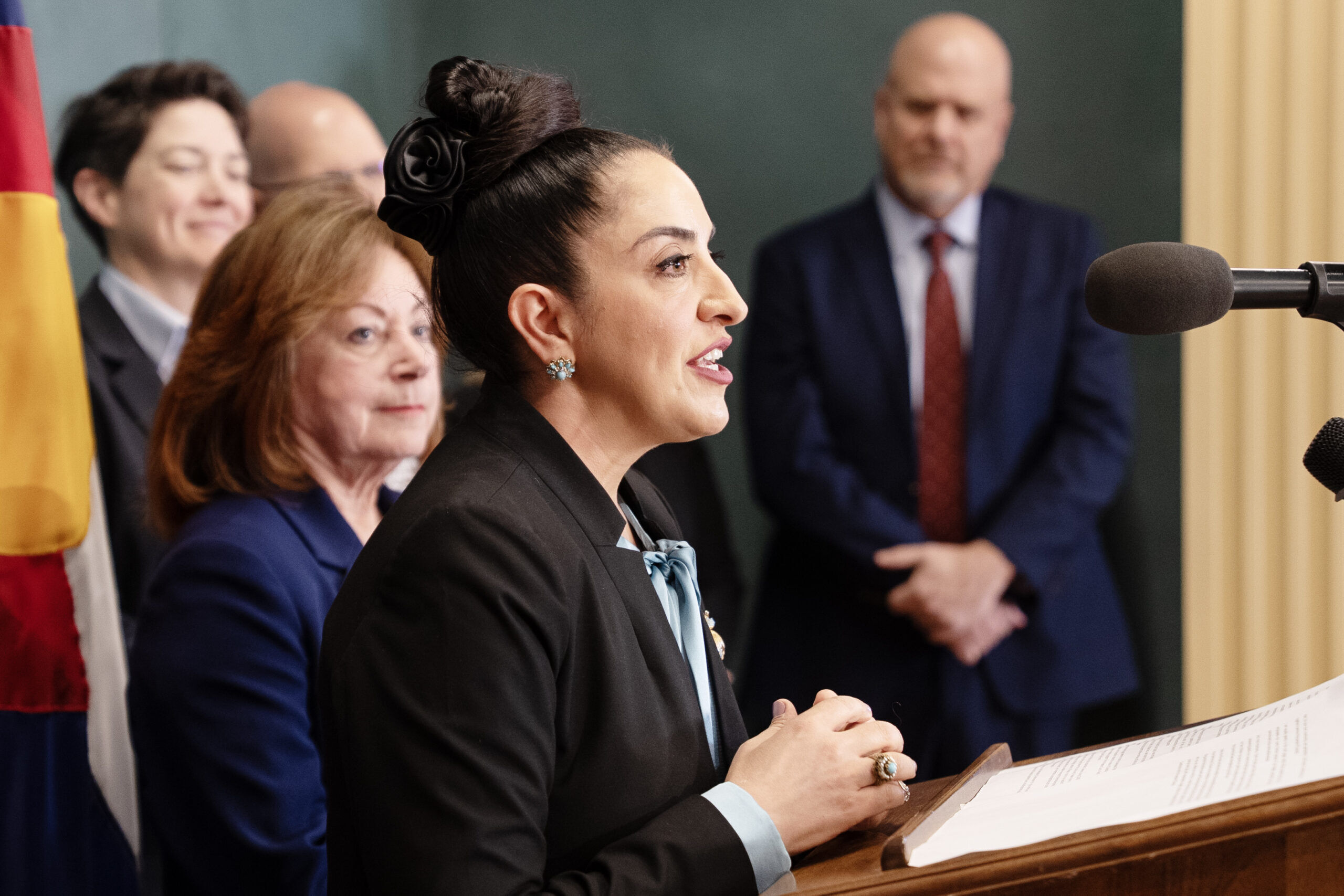
The Colorado Supreme Court concluded last month that a debt collector failed to comply with state law by suing a woman for an unpaid credit card debt without documentation that it owned her account.
Portfolio Recovery Associates LLC filed a complaint to collect on a $671 debt from the credit card account of Felicia Wright. It is alleged that Wright failed to pay the amount to Comenity Bank, which later sold the account to the debt collector. Wright, in turn, filed claims alleging PRA violated the Colorado Fair Debt Collection Practices Act.
State lawmakers have outlined what a creditor must include when bringing a legal action against a debtor. The creditor must attach the “contract, account-holder agreement, or other writing” that shows the original debt, if such documentation exists. The materials also must show an “unbroken chain of ownership” if ownership of the debt changed hands.
Problematically for PRA, the bill of sale it attached to its complaint against Wright lacked specific documentation about her account, beyond the statements of a single employee.
On May 26, the Supreme Court concluded PRA failed to comply with the law when it filed suit against Wright.
“Although PRA’s complaint included a bill of sale showing that it purchased some debt from Comenity Bank, it did not establish that PRA purchased Wright’s debt. Thus, there was insufficient information to give Wright notice that PRA owns the debt that she originally incurred with Comenity Bank, undermining the legislative intent,” wrote Justice Susan Blanco.
Blanco joined the court in March, filling a vacancy in the middle of the Supreme Court’s September-June term. Wright’s case marked Blanco’s first time authoring a majority opinion for the court, although she previously wrote a concurring opinion within weeks of her appointment.

After a trial, Boulder County Court Judge Jonathon P. Martin found PRA was the owner of Wright’s debt, despite “ambiguities, even inconsistencies in the attached documents.” He also declined to find PRA in violation of Colorado’s debt collection law.
District Court Judge J. Keith Collins upheld that ruling on appeal. He agreed PRA’s documentation of the debt “contained some ambiguity,” but that Martin had “considered the inconsistencies in the documents and the reliability of the documents when making its findings that the inconsistencies (do) not undermine the authenticity.”
Wright then appealed to the Supreme Court, asking it to review the conclusion that PRA had complied with the law and was allowed to collect on the debt.
Attorney Frederick R. Yarger, representing PRA, argued that the law, broadly, is intended to ensure a fair process for everyone. He said PRA gave Wright notice of the debt, and there was no deception in her case.
Lawmakers’ goal in requiring certain information from debt collectors was to allow consumers to “make a reasonable decision about what to do: whether to contest it or whether to seek a settlement of the debt,” Yarger said during oral arguments. “There’s really no other information that can be provided that allows a debtor to make a different decision.”
However, the court was skeptical that lawmakers intended for debt collectors to abide by the law’s spirit alone.
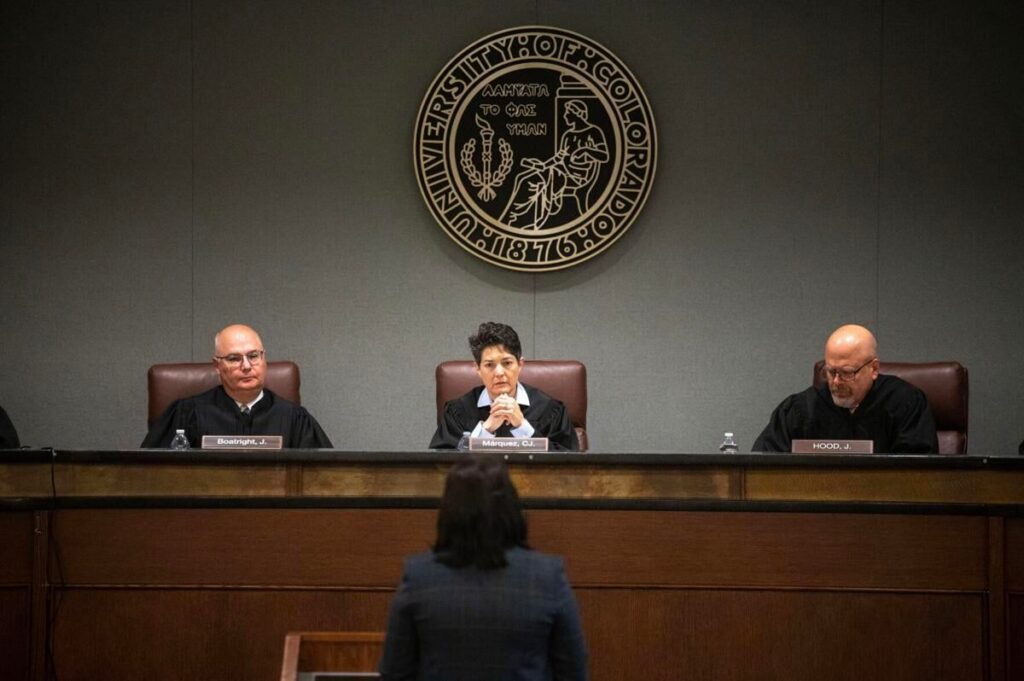
“Given these pretty robust and specific requirements with the pleadings, and given the consequences of failing to comply with everything in the statute,” said Chief Justice Monica M. Márquez, “tell me where you look to in the statute to discern where the General Assembly was good with ‘close enough.'”
“Isn’t the purpose of this statute to connect the dots for the consumer?” added Blanco. “How did you give proper notice to this individual who PRA even is?”
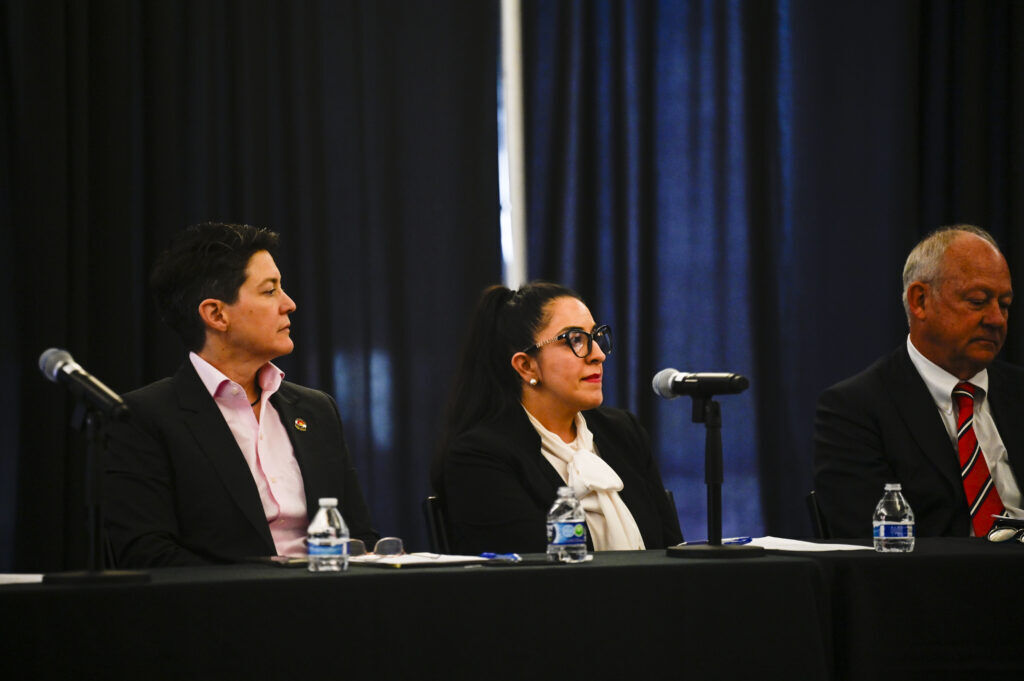
Ultimately, the Supreme Court determined that the documentation PRA provided, showing that it owned Wright’s specific debt, was insufficient. Although an employee submitted an affidavit alleging that Comenity had sold and transferred Wright’s debt to PRA, Blanco noted that such declarations are not a substitute for the required documentation.
“PRA’s complaint did not establish that PRA was the owner of Wright’s debt. Accordingly, PRA’s complaint did not comply,” she wrote.
Because PRA violated Colorado law in attempting to collect on the debt, the Supreme Court also concluded the lower court judges were wrong to side against Wright on her counterclaims against the company.
The case is Wright v. Portfolio Recovery Associates, LLC.

Federal judge green-lights civil trial against ex-Fort Collins DUI officer
Michael Karlik
michael.karlik@coloradopolitics.com
Updated 2 days ago
A federal judge ruled on Thursday that Fort Collins’ former “DUI officer” will face a civil trial for allegedly investigating a motorist for impaired driving without any reasonable suspicion to do so. In recent years, several people arrested by Officer...

Colorado Supreme Court suspends Mesa County judge pending misconduct investigation
Michael Karlik
michael.karlik@coloradopolitics.com
Updated 1 day ago
The Colorado Supreme Court suspended Mesa County Court Judge Michael J. Grattan on Thursday amid a misconduct investigation. The court’s Sept. 10 order gave Grattan 21 days to explain why his paid suspension should not continue through the end of...
Colorado Supreme Court changes course, dismisses case about special district bonds
Michael Karlik
michael.karlik@coloradopolitics.com
Updated 1 day ago
The Colorado Supreme Court declined on Friday to decide a dispute between a large-scale Commerce City development and the various districts financing it, after initially showing interest in the ongoing case. Colorado has roughly 2,800 special districts, which are local...
10th Circuit tosses GEO Group’s pretrial appeal in human trafficking lawsuit
Michael Karlik
michael.karlik@coloradopolitics.com
Updated 3 days ago
The Denver-based federal appeals court dismissed an attempt by The GEO Group on Wednesday to appeal a trial judge’s non-existent decision two months before the company is scheduled to face a civil trial over alleged trafficking violations at the Aurora...
Denver sues Trump to block armed ICE agents from polling sites
Deborah Grigsby
deborah.smith@denvergazette.com
Updated 3 days ago
The city of Denver, along with several groups, sued the Trump administration Thursday, seeking to block U.S. Immigration and Customs Enforcement officers who are armed from polling sites during the upcoming midterm elections. In fact, there are no official orders...
Federal judge takes no action against ICE in Colorado after hearing about mistakes, not ‘blatant violations’
Michael Karlik
michael.karlik@coloradopolitics.com
Updated 1 day ago
A federal judge declined to take action against U.S. Immigration and Customs Enforcement on Thursday after hearing that a pattern of alleged lawbreaking amounted to mistakes and a misunderstanding of the government’s position in court. For nearly a year, Colorado’s...
Colorado doctors, dentists challenge state law on gender‑transition services in new federal lawsuit
Marissa Ventrelli
marissa.ventrelli@coloradopolitics.com
Updated 1 day ago
A group of Christian doctors and dentists has filed a federal lawsuit challenging a Colorado law they say requires them to provide gender‑transition services that conflict with their religious and ethical beliefs. The lawsuit, filed by the Christian Medical and...
Federal judge directs plaintiff to revise complaint alleging Denver officers’ constitutional violations
Michael Karlik
michael.karlik@coloradopolitics.com
Updated 1 day ago
A federal judge directed a plaintiff to revise his allegations on Wednesday to more precisely state what two Denver officers and the city itself allegedly did to violate his constitutional rights by facilitating his prosecution for murder until prosecutors dropped...

Lawsuit challenges Douglas County commissioners’ ballot actions
Nicholas Fogleman
nicholas.fogleman@denvergazette.com
Updated 3 days ago
A new lawsuit against Douglas County commissioners seeks to invalidate the board’s intervention in efforts to expand the commission from three members to five and restore the original ballot language approved by more than 20,000 petition signers. The suit marks...
Federal judge explores new sanctions against ex-Colorado judicial discipline director
Michael Karlik
michael.karlik@coloradopolitics.com
Updated 1 day ago
A federal judge on Wednesday directed Colorado’s former judicial discipline director, for the third time this year, to explain why she should not sanction him for his latest conduct in his litigation against the state’s judiciary. Christopher S.P. Gregory, who served...
PREV
PREVIOUS

Denver students face 'bell-to-bell' ban on cellphones
Starting next school year, Denver students will not be able to use their cellphones during school hours. The Denver Public Schools (DPS) Board of Education unanimously passed a “bell-to-bell” ban Monday after a third reading. “Policies like this succeed not because of enforcement alone, but because people trust the adults implementing them,” Director DJ Torres […]

House District 16: Conservative educators compete in GOP primary
Two conservative educators are competing in the June 30 Republican primary race for House District 16 in central Colorado Springs. Retired history teacher and School District 11 Board Member Jill Haffley is running against Jamie Koch, the practical government school coordinator for Charis Bible College, to replace state Rep. Rebecca Keltie, who isn’t seeking reelection. […]