

Colorado justices grill debt collector about compliance with law
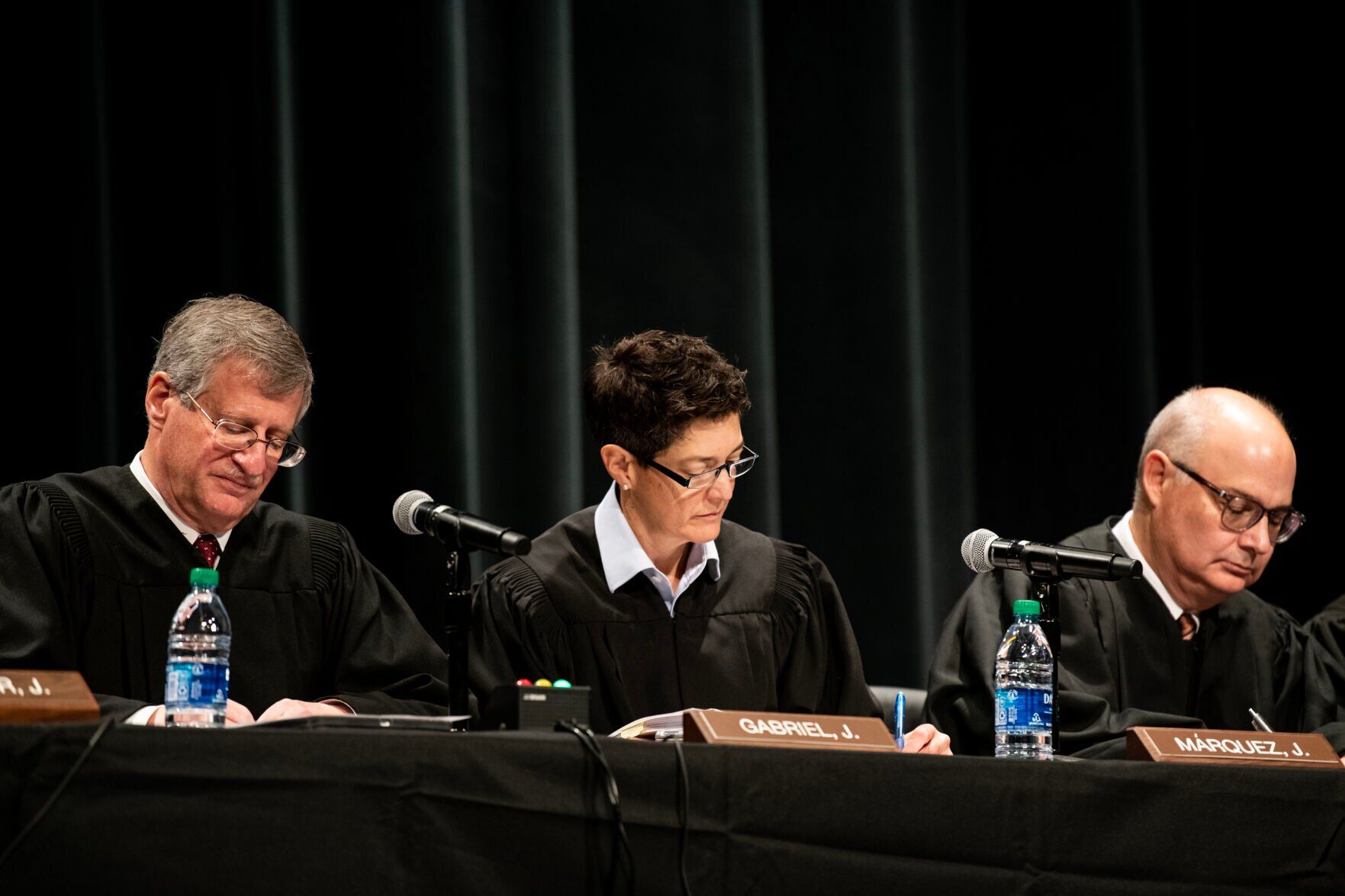
The Colorado Supreme Court repeatedly pressed a debt collection company last week to explain how its lawsuit against a Boulder woman for an unpaid credit card balance complied with the specific requirements that state lawmakers have created.
Portfolio Recovery Associates, LLC filed a complaint to collect on a $671 debt from the credit card account of Felicia Wright. It alleged Wright failed to pay the amount to Comenity Bank, who later sold the account to the debt collector. Wright, in turn, filed claims alleging PRA violated the Colorado Fair Debt Collection Practices Act.
Specifically, lawmakers have outlined what a creditor needs to include when they bring a legal action against a debtor. The creditor must attach the “contract, account-holder agreement, or other writing” that shows the original debt, if such documentation exists. The materials also must show an “unbroken chain of ownership” if ownership of the debt changed hands.
Problematically for PRA, the bill of sale it attached to its complaint against Wright lacked specific documentation about her account, beyond the statements of a single employee.
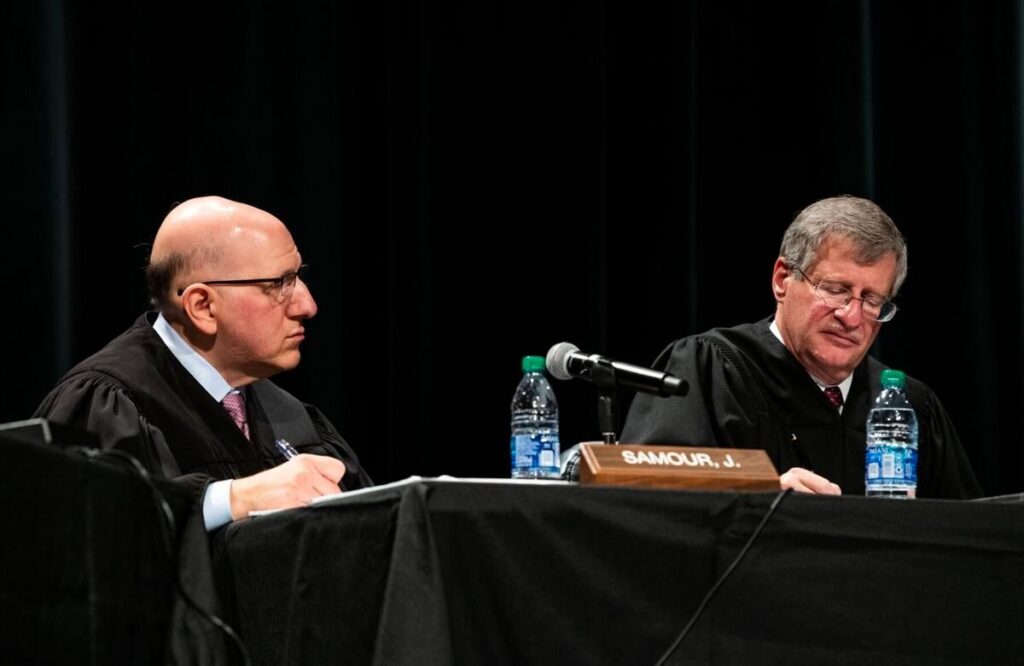
“How did you comply with that?” asked Justice Brian D. Boatright during the March 10 oral arguments. “Is PRA the owner of the debt? Where is that attached to the complaint?”
“Isn’t the purpose of this statute to connect the dots for the consumer?” added Justice Susan Blanco. “How did you give proper notice to this individual who PRA even is?”
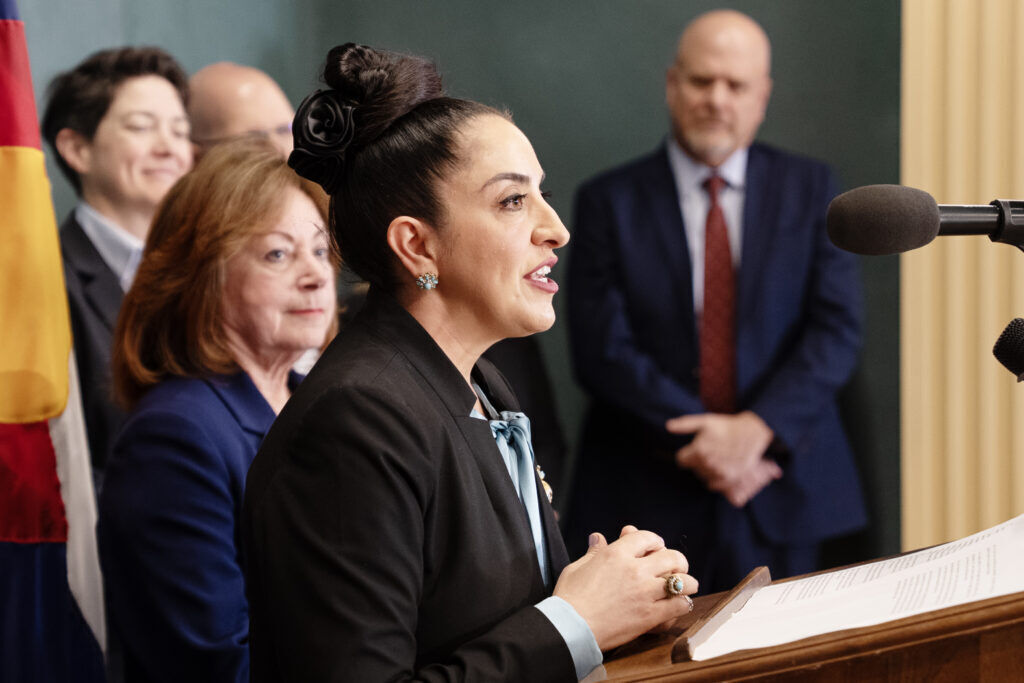
Attorney Frederick R. Yarger, representing PRA, argued that the law, broadly, is intended to ensure a fair process for everyone. He said PRA gave notice to Wright about the debt, and there was no deception in her case.
Lawmakers’ goal in requiring certain information from debt collectors is to allow consumers to “make a reasonable decision about what to do: whether to contest it or whether to seek a settlement of the debt,” Yarger said. “There’s really no other information that can be provided that allows a debtor to make a different decision.”
However, the court was skeptical that lawmakers intended debt collectors to abide by the spirit of the law alone.
“Given these pretty robust and specific requirements with the pleadings, and given the consequences of failing to comply with everything in the statute,” said Chief Justice Monica M. Márquez, “tell me where you look to in the statute to discern where the General Assembly was good with ‘close enough.'”
After a trial, Boulder County Court Judge Jonathon P. Martin found PRA was the owner of Wright’s debt, despite “ambiguities, even inconsistencies in the attached documents.” He also declined to find PRA in violation of Colorado’s debt collection law.
District Court Judge J. Keith Collins upheld that ruling on appeal. He agreed PRA’s documentation of the debt “contained some ambiguity,” but that Martin had “considered the inconsistencies in the documents and the reliability of the documents when making its findings that the inconsistencies (do) not undermine the authenticity.”
Wright then appealed to the Supreme Court, asking it to review the conclusion that PRA had complied with the law and was allowed to collect on the debt.
Multiple outside entities weighed in on Wright’s appeal.

ACA International, an association of debt buyers and collectors, argued that requiring a signed agreement to be attached to a court complaint “would actually hinder debt collectors/buyers acting in good faith in their attempt to collect validly owed debt by creating an additional hurdle in the already highly regulated debt collection process.”
“Any creditor, including debt buyers, should be expected and required to come to court prepared, just like claimants in other cases,” countered a group of consumer and legal advocacy organizations, including Colorado Legal Services and the National Consumer Law Center.
Justice Richard L. Gabriel asked Wright’s attorney whether the legislature intended for debt collectors to attach the original agreement when a consumer applies for a credit card.
“What if she buys an item four months later on this credit card and there’s a challenge?” he wondered. “It would seem to me the original application would not evidence the debt at issue.”
Justice William W. Hood III also worried about prioritizing the technical requirements of the law over its seeming purpose.
“If the objective is to give a debtor notice of the debt, then that happened here,” he said. “How is anything that they’re doing abusive?”
However, Boatright observed the materials PRA included showed that Wright owed money to her credit card company, and not that she owed anything to PRA.
“Today on my cell phone, I got a notice that I have an unpaid parking ticket and I owe so-and-so money,” he said. “It was clearly spam. But they sent me a notice. Is that proof that I owe them?”
“If you attached even one line that showed the last four digits of Ms. Wright’s account number, you’ve got a stronger case,” added Gabriel. “How does the bill of sale show that PRA owns Ms. Wright’s debt?”
The case is Wright v. Portfolio Recovery Associates, LLC.

Trump’s judicial nominee orders bond in wave of cases after 10th Circuit rejects government’s position
Michael Karlik
michael.karlik@coloradopolitics.com
Updated 1 day ago
Within 24 hours of the Denver-based federal appeals court rejecting the government’s expansive view of its immigration detention authority, the lone judge in Colorado to embrace that view ordered bond hearings for detainees in at least 20 cases. U.S. District...
10th Circuit agrees Colorado satisfied jury award after intercepting money for restitution
Michael Karlik
michael.karlik@coloradopolitics.com
Updated 1 day ago
The Denver-based federal appeals court agreed last week that Colorado satisfied its obligations by not paying a man directly for violating his rights, but rather crediting the jury’s multimillion-dollar award toward the crime victim restitution he still owed in his...
Colorado justices ponder whether insurer should save company from asbestos suits
Michael Karlik
michael.karlik@coloradopolitics.com
Updated 1 day ago
Some members of the Colorado Supreme Court appeared skeptical last week that an insurance policy that reaches beyond the limits and coverage of a company’s other policies must “step down into the shoes” of those policies after they become insolvent....
Colorado justices weigh ‘extreme’ proposals for civil jury trial requests
Michael Karlik
michael.karlik@coloradopolitics.com
Updated 2 days ago
Members of the Colorado Supreme Court grappled last week with two vastly different proposals for evaluating when it is appropriate for a civil litigant to ask for a jury trial, as opposed to a bench trial before a judge. The...
Colorado justices weigh ‘extreme’ proposals for civil jury trial requests
Michael Karlik
michael.karlik@coloradopolitics.com
Updated 2 days ago
Members of the Colorado Supreme Court grappled last week with two vastly different proposals for evaluating when it is appropriate for a civil litigant to ask for a jury trial, as opposed to a bench trial before a judge. The...
10th Circuit reverses perjury conviction, warns prosecutors to watch their questioning
Michael Karlik
michael.karlik@coloradopolitics.com
Updated 2 days ago
The Denver-based federal appeals court reversed a defendant’s perjury conviction last week, warning prosecutors that it is better to follow up on imprecise or unclear answers than to criminally charge a witness for their response. A jury convicted Lori Milliron...
10th Circuit rebuffs government, rules against shift to mandatory immigration detention
Michael Karlik
michael.karlik@coloradopolitics.com
Updated 2 days ago
The Denver-based federal appeals court ruled on Tuesday against the government’s broad assertion of authority to keep people in immigration custody without the opportunity to demonstrate their suitability for release on bond. Although the regional appeals courts have reached different...

Appeals court revives tenants’ lawsuit over landlords’ illegal fee demands
Michael Karlik
michael.karlik@coloradopolitics.com
Updated 3 days ago
Colorado’s second-highest court revived a proposed class-action lawsuit against landlords and other entities last month, concluding that state law did not permit the practice of demanding that tenants pay attorney fees in certain eviction proceedings. In 2021, lawmakers enacted a...
Appeals court reverses Jeffco assault convictions due to omitted jury instruction
Michael Karlik
michael.karlik@coloradopolitics.com
Updated 3 days ago
Colorado’s second-highest court agreed last month that a Jefferson County defendant’s assault convictions could not stand because his jury should have been allowed to consider whether he used force against a bar patron to defend his girlfriend from inappropriate touching....
Colorado Supreme Court tosses man’s lawsuit over daughter’s traffic death
Michael Karlik
michael.karlik@coloradopolitics.com
Updated 3 days ago
The Colorado Supreme Court applied a confusing matrix of conditions and deadlines in state law to conclude on Monday that a man waited too long to sue after his daughter was rendered unconscious and later died from a vehicle accident....
PREV
PREVIOUS

Artificial intelligence working group agrees on framework to replace Colorado law
A group that has been working on artificial intelligence policy has reached an agreement on a framework that would replace the regulations adopted by Colorado legislators two years ago. The agreement has the backing of Gov. Jared Polis, who reluctantly signed the AI law in 2024. The agreement reached by the Colorado AI Policy Work […]

10th Circuit rejects 'potential for violence' when police arrest vehicle occupant's romantic partner
The Denver-based federal appeals court rejected the idea on Tuesday that a vehicle occupant poses a danger to police solely because they are romantically involved with another occupant who officers are arresting. By 2-1, a three-judge panel of the U.S. Court of Appeals for the 10th Circuit concluded Denver police lacked reasonable suspicion to conduct […]