

Colorado justices consider whether fraud claims belong in corporate dispute
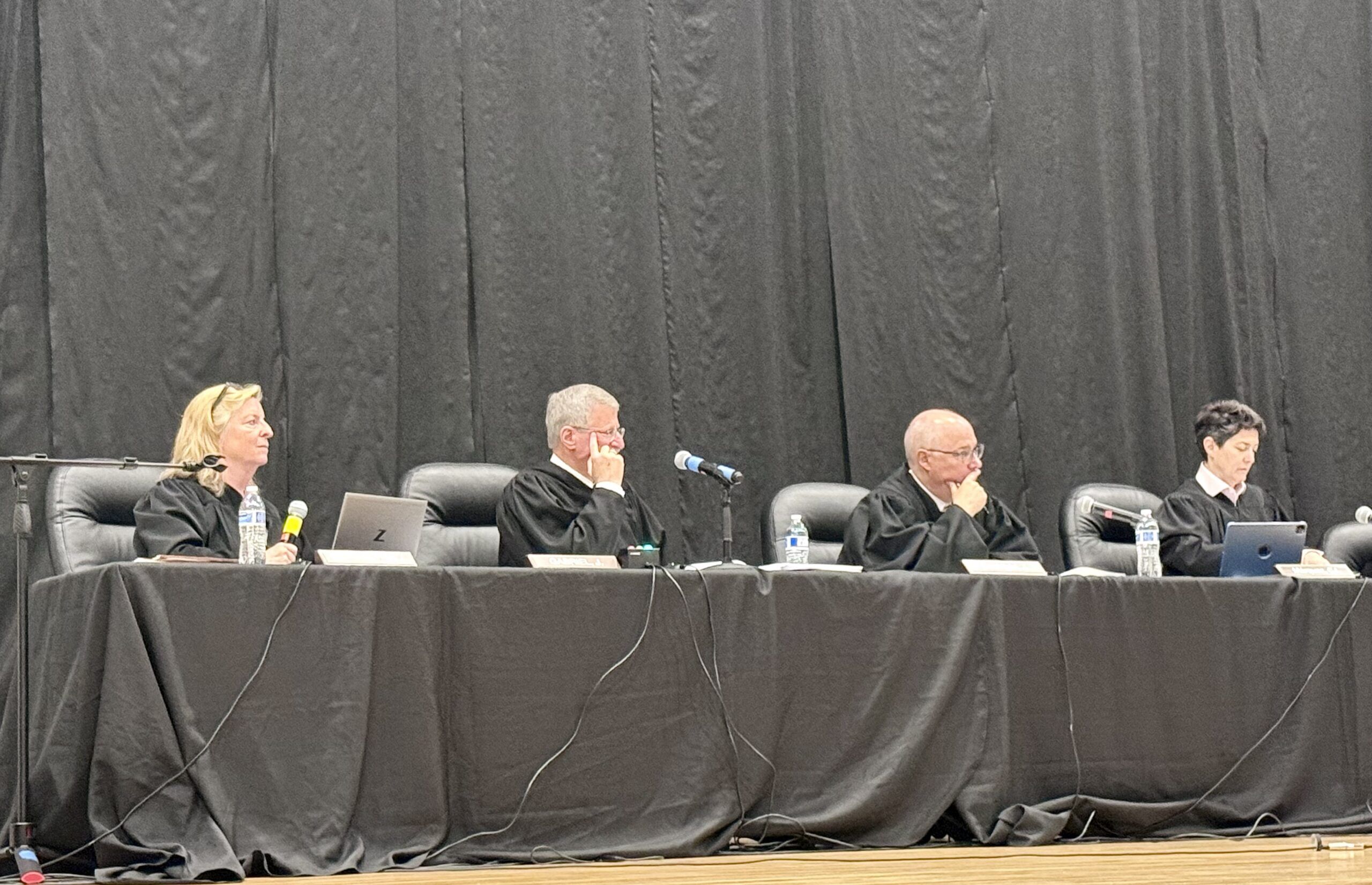
The Colorado Supreme Court considered on Tuesday whether it is possible for a corporate plaintiff to pursue fraud claims over conduct that could be covered by a contract or by a set of interrelated business agreements leading up to the contract.
Previously, the Court of Appeals found that Veolia Water Technologies, Inc. had a duty, independent from any contract, to avoid misrepresenting or fraudulently concealing its ability to provide an agreed-upon wastewater project with a solid salt byproduct. Consequently, the court upheld a $215 million damages award to plaintiff Antero Resources Corp. based on Veolia’s fraud and its breach of contract.
During oral arguments to the Supreme Court, Veolia maintained that the fraud findings were improper. Further, the liability created consequences for its insurance and government contracting abilities, even if the breach-of-contract damages remained intact.
“This was a project with a new technology. And Veolia tried hard to make this work,” said attorney Nicole A. Saharsky. But “the remedy that Antero is seeking are fraud remedies beyond what the contract provides.”
“There is a huge difference between producing salt in a way that they could dispose of it as a solid versus what’s been described — kind of like this soupy mush,” said Justice Susan Blanco. “So, at the level that you knew that you can’t perform, and you’re negotiating and withholding that information, I mean, you are talking about this as if it’s just a performance issue. The problem is, you knew you couldn’t perform, from the sound of the record, before you negotiated the contract, right?”
Veolia entered into a contract to build a wastewater treatment facility for the hydraulic fracturing operations of Antero in West Virginia. The final product fell short, however, and Antero canceled the contract after the treated water produced “soupy” salt, rather than solid salt that could be placed in landfills.
After a three-week trial, Denver District Court Judge Marie Avery Moses found Veolia breached its contract and committed fraud. Antero received approximately $215 million in damages.
Among other things, Veolia raised the “economic loss rule,” which dictates that litigants who suffer financial losses from a breach of contract must stick to that claim, and cannot sue on other grounds unless the law provides a basis for doing so.
Although there were various documents between the parties prior to the master design-build agreement, Moses did not believe they were a “network of interrelated contracts.” Therefore, she concluded Veolia’s fraudulent misrepresentations occurred before the execution of the design-build agreement, so the rule did not apply.
A three-judge Court of Appeals panel disagreed with her reasoning, concluding the various agreements were interrelated after all. However, the panel determined the rule did not block the fraud claims because Veolia’s misrepresentations pertained to things it had no discretion to alter.
Further, the contract “explicitly permitted additional damages in the event of fraud — an intentional decision bargained for by two sophisticated commercial parties that would be greatly undermined if all fraud claims were barred,” wrote Judge Terry Fox.
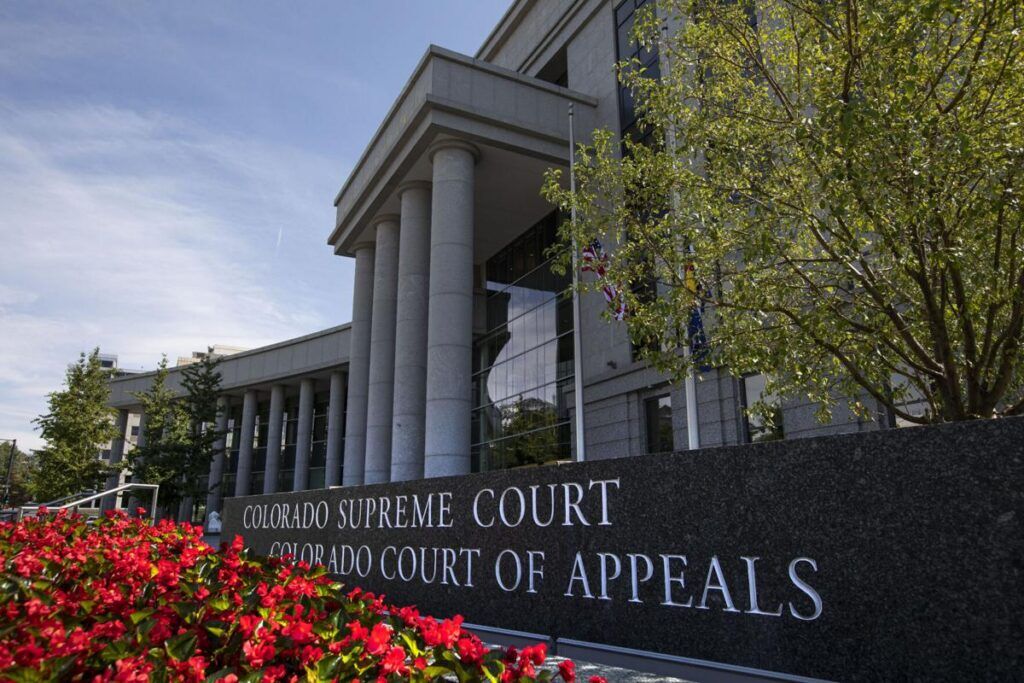
Veolia turned to the Supreme Court, arguing the fraudulent conduct was covered under the contract. Finding the economic loss rule did not apply would “undermine the certainty and predictability of Colorado contracts and risk turning every breach of contract case into a fraud case,” Veolia wrote.
The justices seemed hesitant to agree with the Court of Appeals that all of the companies’ interactions before the design-build agreement amounted to a single contractual arrangement.
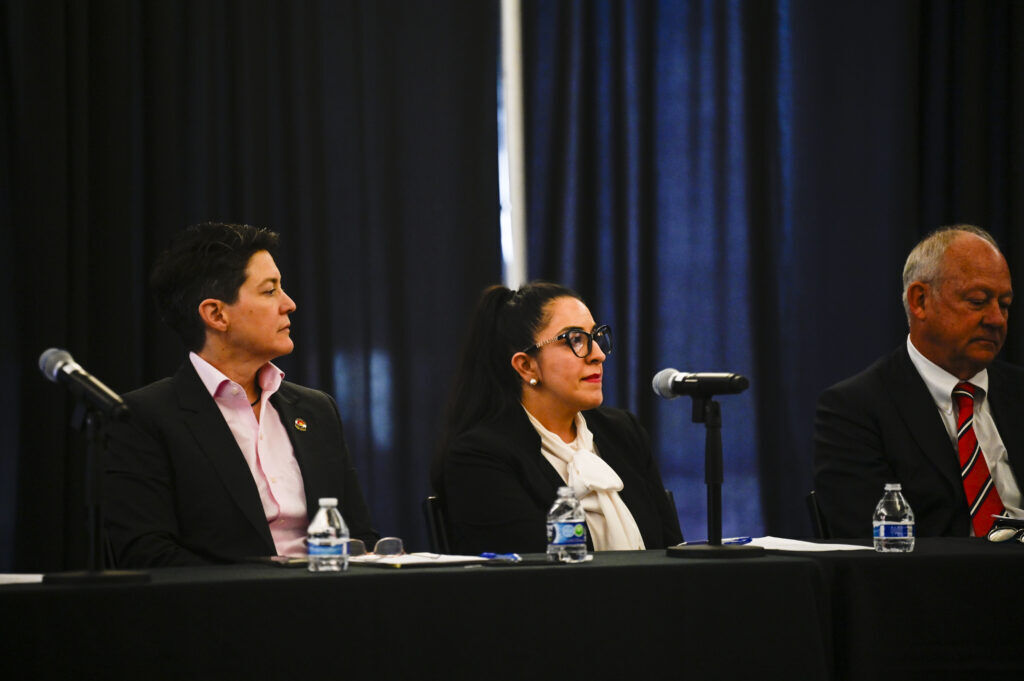
“Don’t we create an incentive for parties to intentionally defraud the opposition after the two initial, preliminary contracts have been entered into?” asked Justice Carlos A. Samour Jr. “These parties are in a contractual relationship, so there’s no more fraud in the inducement. So, at that point, your client has every incentive to defraud the other side intentionally. What do they have to lose?”
Marie R. Yeates, representing Antero, suggested the interrelatedness of the agreements would not make a difference to the assertions of fraud.
“The fraudulent inducement is wrongfully inducing us into a contract we wouldn’t have made,” she said. “We wouldn’t have entered into a contract with them if they told us the truth.”
Blanco appeared to agree that the fraudulent behavior could be separated from Veolia’s contractual breaches.
“The problem is that it seems like nobody was really honest about the inability to deliver. And so that’s the fraudulent inducement, which is really different than failure to perform, right?” she said.
Justice Brian D. Boatright did not attend the arguments. In response to a question from Colorado Politics, the court’s clerk said Boatright was “not available.”
The case is Veolia Water Technologies, Inc. v. Antero Treatment LLC et al.


10th Circuit partially revives lawsuit over 2020 Denver protest injuries
Michael Karlik
michael.karlik@coloradopolitics.com
Updated 4 hours ago
The Colorado-based federal appeals court revived a man’s claims against Denver on Friday after concluding a trial judge resolved the case in the city’s favor without analyzing two of the three instances of alleged excessive force and other constitutional violations....
Federal judges find Colorado immigration judge violated several orders
Michael Karlik
michael.karlik@coloradopolitics.com
Updated 1 day ago
Multiple federal judges in Colorado have freed people from immigration custody after determining that one immigration judge violated their directives for properly conducting bond hearings. For nearly a year, Colorado’s U.S. District Court has faced a flood of habeas corpus petitions...

Misconduct complaints from ex-Colorado judicial discipline director dismissed against federal judges
Michael Karlik
michael.karlik@coloradopolitics.com
Updated 3 days ago
The administrative body for the Denver-based federal appeals court upheld a finding last week that misconduct complaints against Colorado’s chief federal trial judge and the chief appeals judge warranted dismissal and appeared to be a “litigation tactic” by the complaining...

First-ever Red Rocks naturalization ceremony draws most diverse group of new citizens
Michael Karlik
michael.karlik@coloradopolitics.com
Updated 23 hours ago
Colorado’s federal trial court held its first-ever naturalization ceremony for nearly 300 new citizens on Thursday at Red Rocks Park and Amphitheatre. “We’re doing it to commemorate the 250th anniversary of the Declaration of Independence and the United States. Red...
Jeffco taxpayers could be on the hook for a possible child sex assault settlement
Matt Kyle
matt.kyle@denvergazette.com
Updated 2 days ago
Taxpayers may end up on the hook for a child sexual assault settlement, possibly worth up to $15 million, after Jeffco Public Schools failed to notify its insurance company in a timely manner about the case. The incident stems from...
10th Circuit finds no fair housing violation by Littleton landlord for worker’s alleged rape of tenant
Michael Karlik
michael.karlik@coloradopolitics.com
Updated 1 day ago
The Denver-based federal appeals court concluded on Monday that Littleton’s housing authority could not be held liable for a maintenance worker’s alleged rape of a tenant, as the worker’s employment did not provide any special access to the victim. A...

Jeffco Public Schools sues Trump administration to protect funding after alleged transgender policies violation
Matt Kyle
matt.kyle@denvergazette.com
Updated 3 days ago
In the wake of several threats by the Trump administration to revoke federal funding, Jeffco Public Schools filed a lawsuit against the Department of Education seeking to protect that badly needed money. Jeffco has been under investigation by the DOE’s...
Denver detox center did not violate man’s rights with 10-hour hold, 10th Circuit says
Michael Karlik
michael.karlik@coloradopolitics.com
Updated 5 days ago
The Colorado-based federal appeals court concluded on Tuesday that Denver’s detoxification facility did not violate a man’s rights by holding him against his will for 10 hours until his blood alcohol content was projected to reach zero. Unusually, Brian Garrett’s...

Federal judge clarifies ex-GOP treasurer candidate’s burden to prove defamation claims
Michael Karlik
michael.karlik@coloradopolitics.com
Updated 5 days ago
A federal judge clarified last week that businessman and former Republican statewide candidate Brian Watson will need to surmount a higher hurdle in proving his claim that a party guest’s alleged description of him as a “criminal” amounted to defamation....
Colorado board permits state to appeal injunction against arthritis drug price cap
Marissa Ventrelli
marissa.ventrelli@coloradopolitics.com
Updated 5 days ago
A Colorado board voted Friday to allow the Attorney General’s Office to fight an injunction against a price cap on a drug that treats arthritis. A U.S. district court judge had granted the company Amgen a preliminary injunction, temporarily blocking...
PREV
PREVIOUS

State legislator seeks to criminalize display of sexually explicit material to children | A LOOK BACK
by Rachael Wright Forty-Five Years Ago This Week: Legislation sponsored by Rep. Bev Scherling, R-Aurora, sought to prohibit sexually explicit material from being distributed to minors. Scherling’s House Bill 81-1310 stated that the “sale, loan, or display to persons under the age of 18 of depictions of sexually explicit material would be a class 2 […]

Development fees not limited to brand new construction, Colorado court rules
Colorado’s second-highest court ruled last month that local governments’ ability to impose fees on “new development” is not limited solely to construction projects that occur on empty land. Under state law, local governments that issue development permits are empowered to impose an impact fee that reflects governmental spending on “capital facilities needed to serve new […]