

Colorado Supreme Court to decide whether out-of-state defendant may be prosecuted for in-state crime
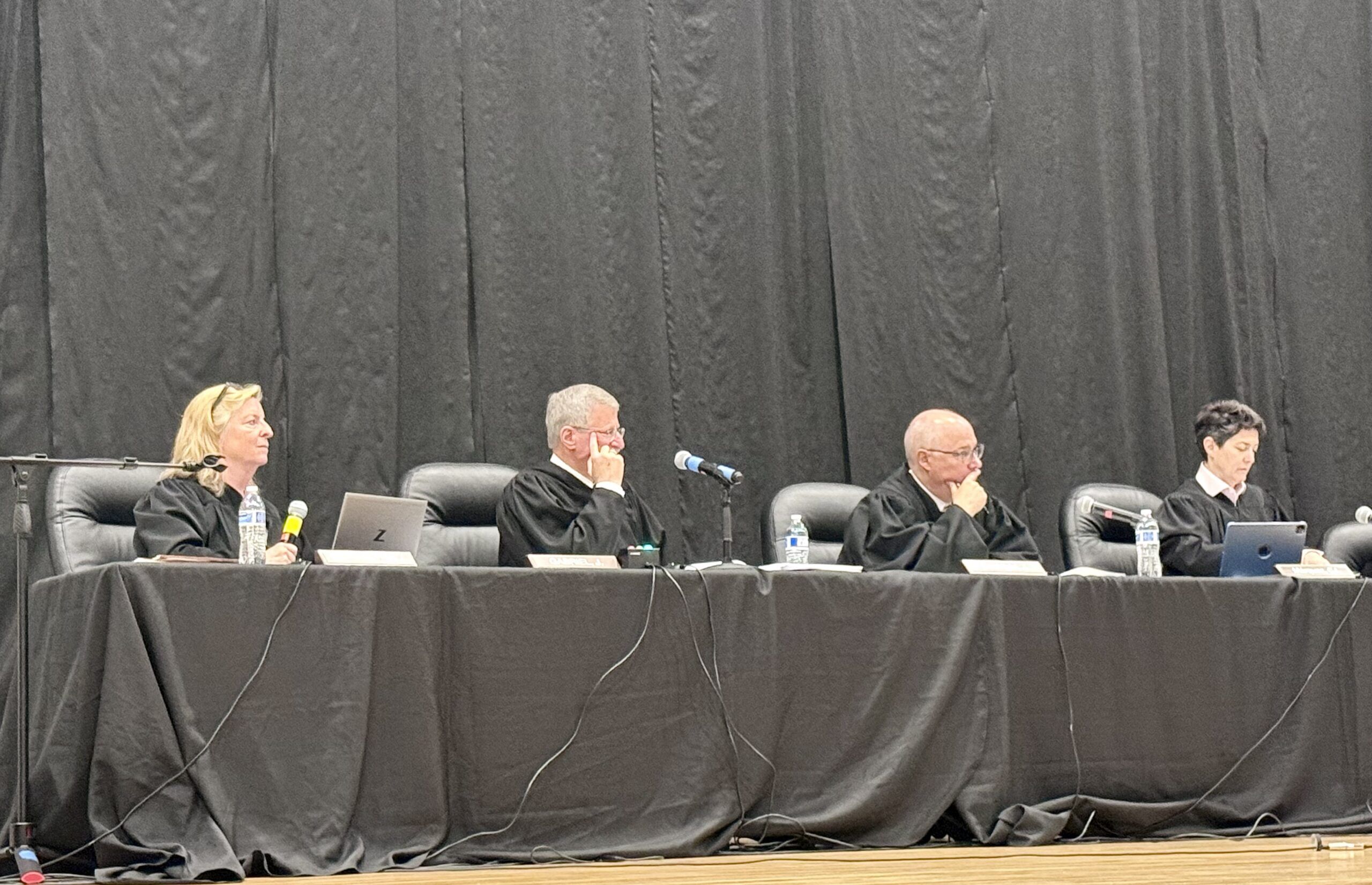
The Colorado Supreme Court recently announced that it will decide whether Douglas County prosecutors had grounds to pursue criminal charges against a woman in New York whose conduct occurred outside of Colorado.
Erin Brennan and her children lived in New York, and her ex-husband moved to Colorado after their divorce. In 2022, she proposed a budget to send their children to summer camp, but her ex-husband balked at the cost. Months later, he noticed a charge of more than $10,000 on his credit card statement. Brennan had authorized Camp Ramaquois in New York to charge a partial payment of camp expenses to the card, which was already on file from the prior year.
Brennan’s ex-husband reported the charge to law enforcement and prosecutors initiated criminal proceedings. A jury convicted her in 2023 for unauthorized use of a financial device and identity theft. Brennan received a suspended prison sentence, on the condition that she pay a fine and restitution and attend a victim empathy class.
Prior to trial, the defense argued that Colorado lacked authority to prosecute Brennan because no part of her alleged crimes occurred “wholly or partly within the state,” as Colorado law requires.
Then-District Court Judge Patricia Herron denied the motion to dismiss without explanation. At trial, the defense renewed its motion, but Christopher J. Munch, a retired judge assigned to take over the case, determined there was a “sufficient nexus” to Colorado because the victim was in-state.
To a three-judge Court of Appeals panel, the government argued that Brennan “received notice from Colorado” from her ex-husband that he objected to his card being used to pay for the camp. By acting anyway, she committed a crime “at least partly” in Colorado.
“She was in New York when she did that,” responded Judge Katharine E. Lum during oral arguments.
Ultimately, the panel agreed with Brennan that her prosecution was improper.
“Thus, her unlawful use of a financial device involved calling the camp and telling it to use a credit card it already had on file — conduct that solely occurred in New York,” wrote Judge Lino S. Lipinsky de Orlov.
The government turned to the Supreme Court, arguing the circumstances of Brennan’s alleged crimes had Colorado connections, such as her email to her Colorado-based ex-husband.
The Court of Appeals’ decision “unreasonably limits prosecutors’ ability to charge out-of-state actors who target Coloradans, particularly for financial crimes and identity theft,” argued Trina K. Kissel of the Colorado Attorney General’s Office.
The Supreme Court will address the issue.
The case is People v. Brennan.

10th Circuit dismisses woman’s lawsuit following 10-year attempt to undo restraining order
Michael Karlik
michael.karlik@coloradopolitics.com
Updated 2 days ago
The Denver-based federal appeals court rejected a woman’s challenge on Friday to a restraining order imposed on her more than a decade ago, finding that she cannot credibly claim she will be prosecuted for violating the restraining order through her...
10th Circuit dismisses woman’s lawsuit following 10-year attempt to undo restraining order
Michael Karlik
michael.karlik@coloradopolitics.com
Updated 2 days ago
The Denver-based federal appeals court rejected a woman’s challenge on Friday to a restraining order imposed on her more than a decade ago, finding that she cannot credibly claim she will be prosecuted for violating the restraining order through her...
Colorado equal pay law does not require plaintiffs to allege gender-based retaliation, appeals court finds
Michael Karlik
michael.karlik@coloradopolitics.com
Updated 20 hours ago
The 2019 Colorado law aimed at rooting out pay discrimination on the basis of sex does not require a plaintiff to allege their employer retaliated against them for sex- or gender-related reasons, the state’s second-highest court decided on Thursday. Lawmakers...
Hudson faces lawsuit over ICE detention facility
Nicole C. Brambila
nicole-c-brambila@coloradopolitics.com
Updated 2 days ago
A nonprofit organization filed a lawsuit against the Town of Hudson Wednesday, challenging plans to reopen a former federal prison in the town as a U.S. Immigration and Customs Enforcement detention facility. Together Colorado, along with Janet E. Carlson, filed...
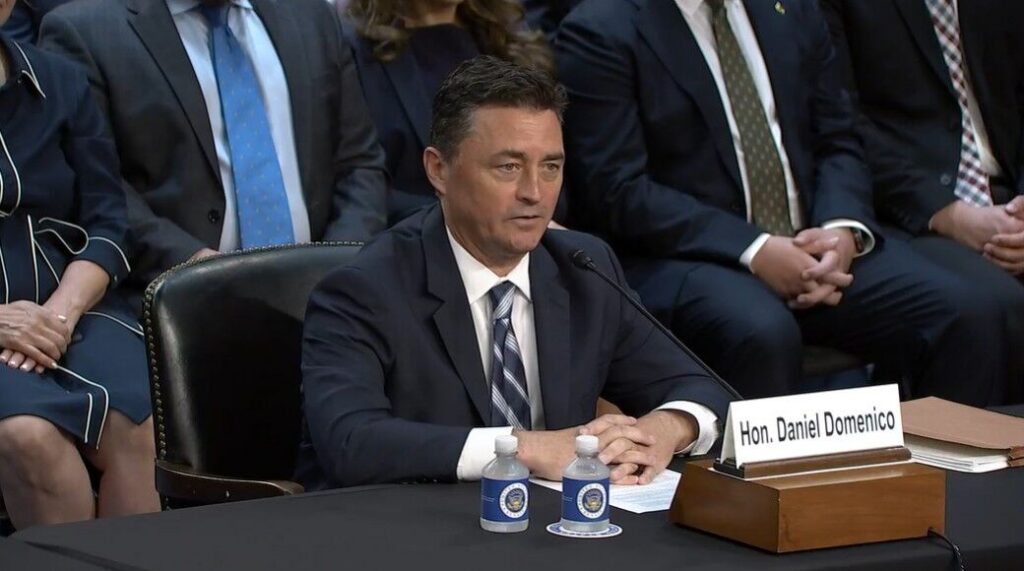
Senate committee advances Trump’s 10th Circuit nominee, as Domenico responds to questions about delays
Michael Karlik
michael.karlik@coloradopolitics.com
Updated 2 days ago
The U.S. Senate Judiciary Committee advanced President Donald Trump’s nominee to the Denver-based federal appeals court on Thursday by a party-line vote of 12-10. U.S. District Court Judge Daniel D. Domenico, who was Trump’s first-term appointee to Colorado’s federal trial...
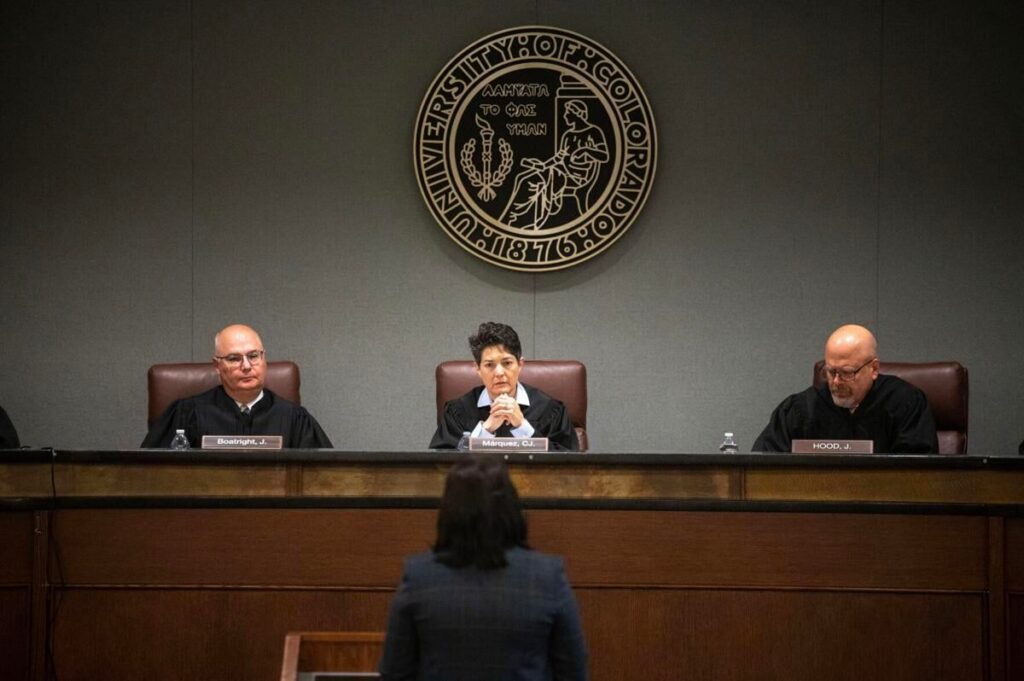
Colorado justices to hear embryonic donation dispute
Michael Karlik
michael.karlik@coloradopolitics.com
Updated 3 days ago
The Colorado Supreme Court announced on Monday that it will decide whether lower court judges properly applied its framework for adjudicating disputes over the fate of pre-embryos, in which one person wants to use them to become a parent and...
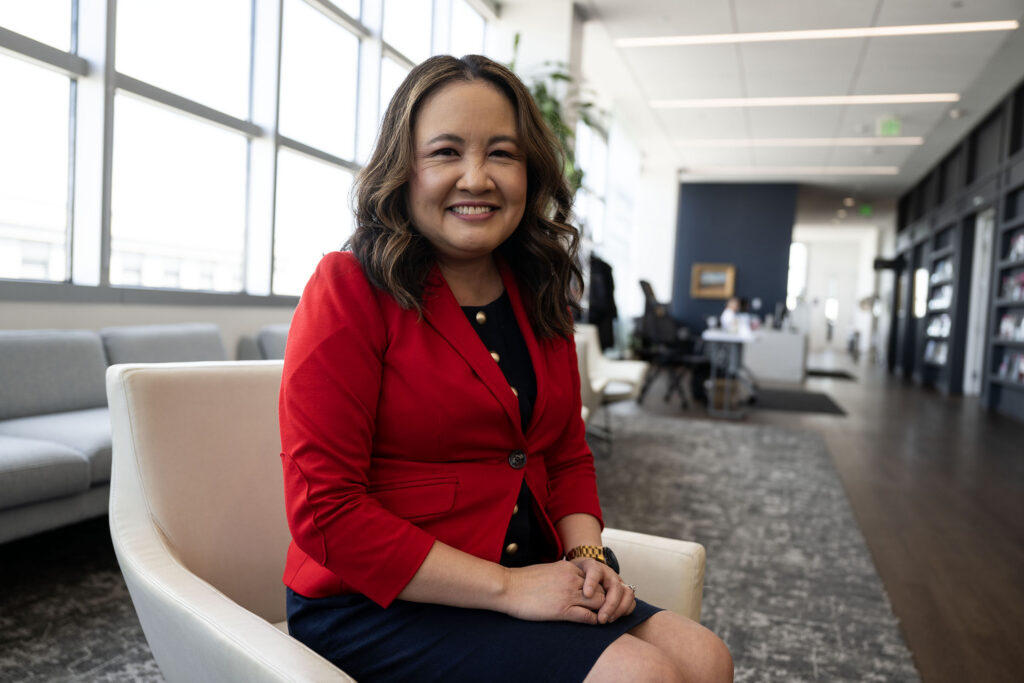
Isolation, emotion, persona: Colorado judicial programming prepares people for life on the bench
Michael Karlik
michael.karlik@coloradopolitics.com
Updated 3 days ago
As a trial judge and now as a member of the Colorado Supreme Court, Justice Carlos A. Samour Jr. has heard the view that being a judge is isolating. “In neither court have I felt isolated. I’ve always interacted a...

Federal judge dismisses Colorado county sheriff’s challenge to law limiting immigration cooperation
Michael Karlik
michael.karlik@coloradopolitics.com
Updated 20 hours ago
A federal judge dismissed a challenge from Mesa County Sheriff’s Office leaders last week to a Colorado law limiting public employees’ cooperation with immigration authorities, concluding that the plaintiffs did not allege they engage in any conduct that the law...
10th Circuit raises bar for fraud victims to sue debt collectors over inaccurate information
Michael Karlik
michael.karlik@coloradopolitics.com
Updated 16 hours ago
The Denver-based federal appeals court wiped away a jury’s $500,000 award to a fraud victim on Monday and made it more difficult for consumers to hold companies liable for disseminating inaccurate credit information. The Fair Credit Reporting Act regulates credit...
Montezuma County judge’s censure, suspension approved by discipline panel
Michael Karlik
michael.karlik@coloradopolitics.com
Updated 4 days ago
A three-member disciplinary panel accepted, on Monday, an agreement between a Montezuma County judge and the Colorado Commission on Judicial Discipline that specifies he will receive a censure, a suspension, and additional education for his admitted instances of misconduct. Under...
PREV
PREVIOUS

Colorado justices, 4-2, say defendant cannot be retried after judge rejected jury's partial acquittal
If a jury clearly indicates that it has acquitted a defendant of certain charges while remaining deadlocked on others, judges must accept that partial acquittal verdict, a divided Colorado Supreme Court ruled on Monday. Justice William W. Hood III, in the June 8 majority opinion, acknowledged that judges ordinarily may not ask a deadlocked jury […]

Primary ballots hit mailboxes in high-stakes election year in Colorado
County clerks began mailing primary ballots to voters on Monday, as Colorado wades deeper into a crowded election year. Voters will face a long list of choices in both the June 30 primary and the November general election. Every major state‑level office — the governor’s seat, notably — is on the ballot, while Colorado’s 8th […]