

Colorado justices, 4-2, say defendant cannot be retried after judge rejected jury’s partial acquittal
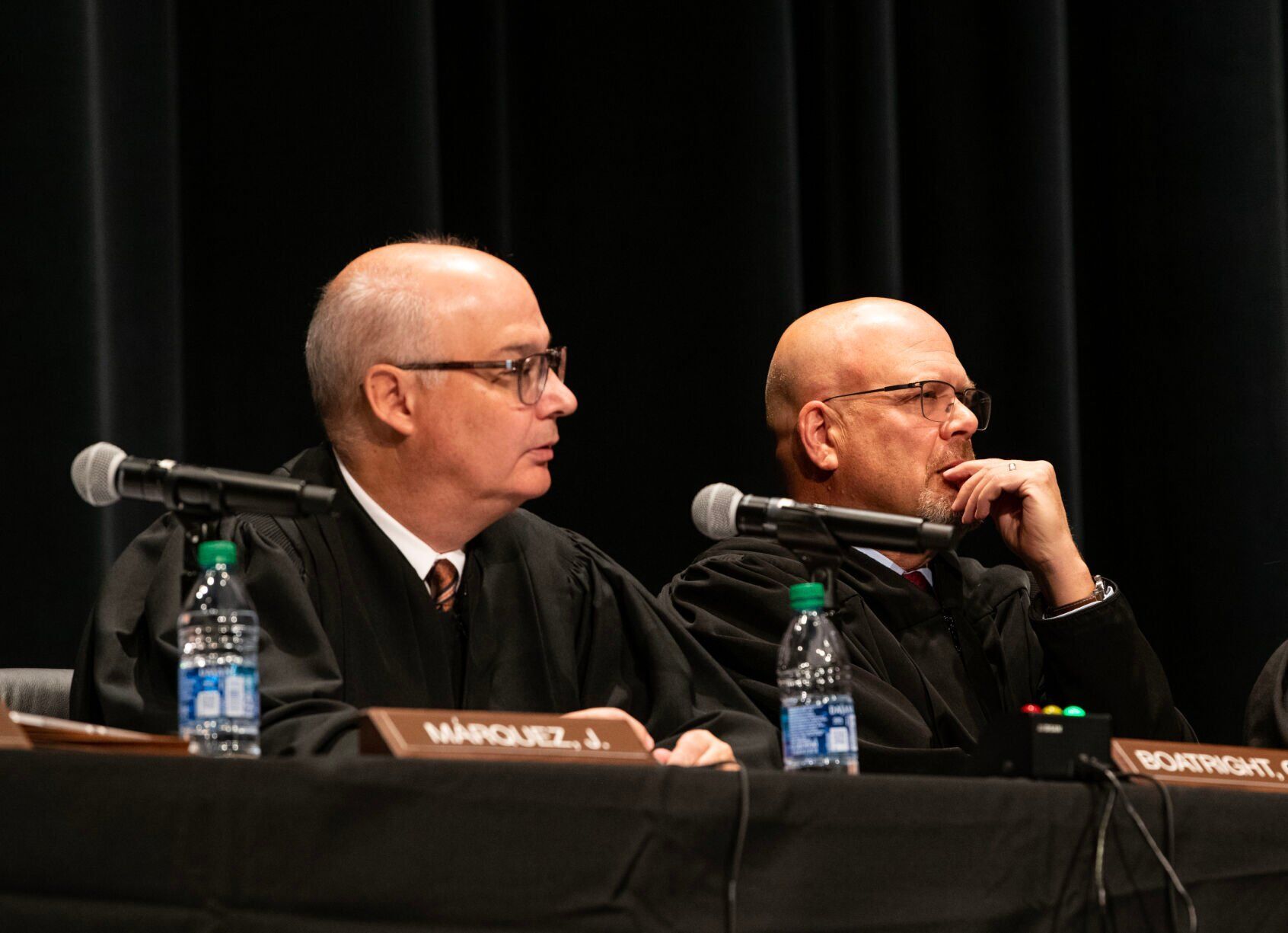
If a jury clearly indicates that it has acquitted a defendant of certain charges while remaining deadlocked on others, judges must accept that partial acquittal verdict, a divided Colorado Supreme Court ruled on Monday.
Justice William W. Hood III, in the June 8 majority opinion, acknowledged that judges ordinarily may not ask a deadlocked jury to disclose the counts on which it cannot reach agreement. But the circumstances are different when jurors tell a judge unprompted that they have arrived at a not-guilty verdict for specific charges.
Therefore, the jury’s disclosure that it had acquitted Larimer County defendant Omar Alexander Mena of three counts meant that the Colorado Constitution prohibited the government from putting him on trial a second time.
“Other state high courts also require trial courts to accept partial verdicts that are spontaneous and unequivocal in describing the offenses to which they apply,” wrote Hood.
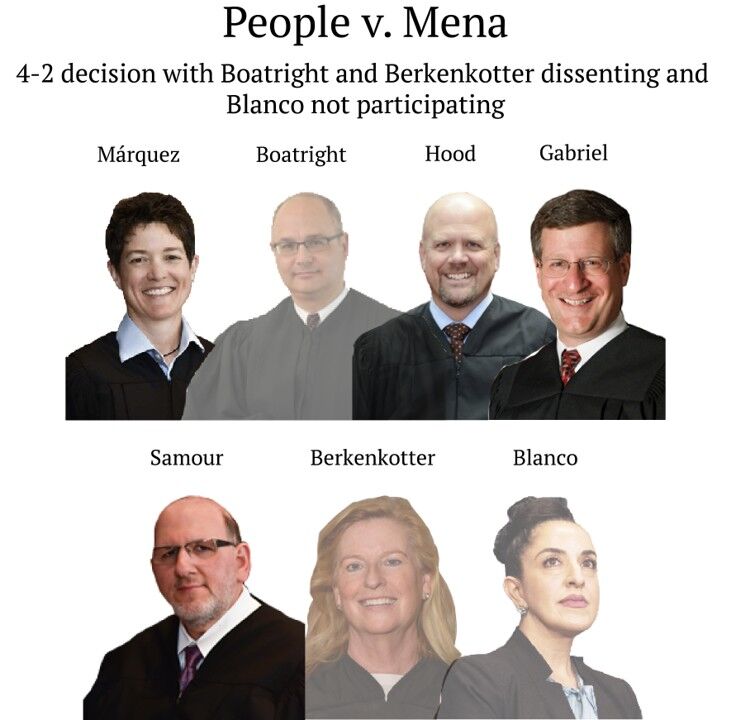
Justice Brian D. Boatright dissented. Although he did not dispute that retrying Mena for the acquitted counts might violate Mena’s right to be free from double jeopardy, Boatright believed the trial judge should be the one to decide that question first.
Mena stood trial last summer for three counts of sexual assault. After the evidence concluded, the prosecution asked for the jury to also be instructed that it could find Mena guilty of a lesser offense of attempted sex assault for each charge. Over the defense’s objection, District Court Judge Sarah B. Cure gave jurors the option of finding Mena guilty of either assault or of attempted assault for each count, or to find him not guilty for both.
On the second day of deliberations, the jury told Cure it had unanimously agreed on the “primary” charges but not the “secondary” ones. After Cure asked jurors to clarify what they meant and sent them home for the night, the jury indicated the next day that it reached a unanimous verdict on the assault charges, but not the attempt charges.
The defense asked Cure to provide the jurors with a modified form to enter their unanimous verdict on the assault charges. Given the jury’s instructions, an acquittal was the only logical outcome. But Cure declined, and instead declared a mistrial for all counts.
Mena then turned directly to the Supreme Court.
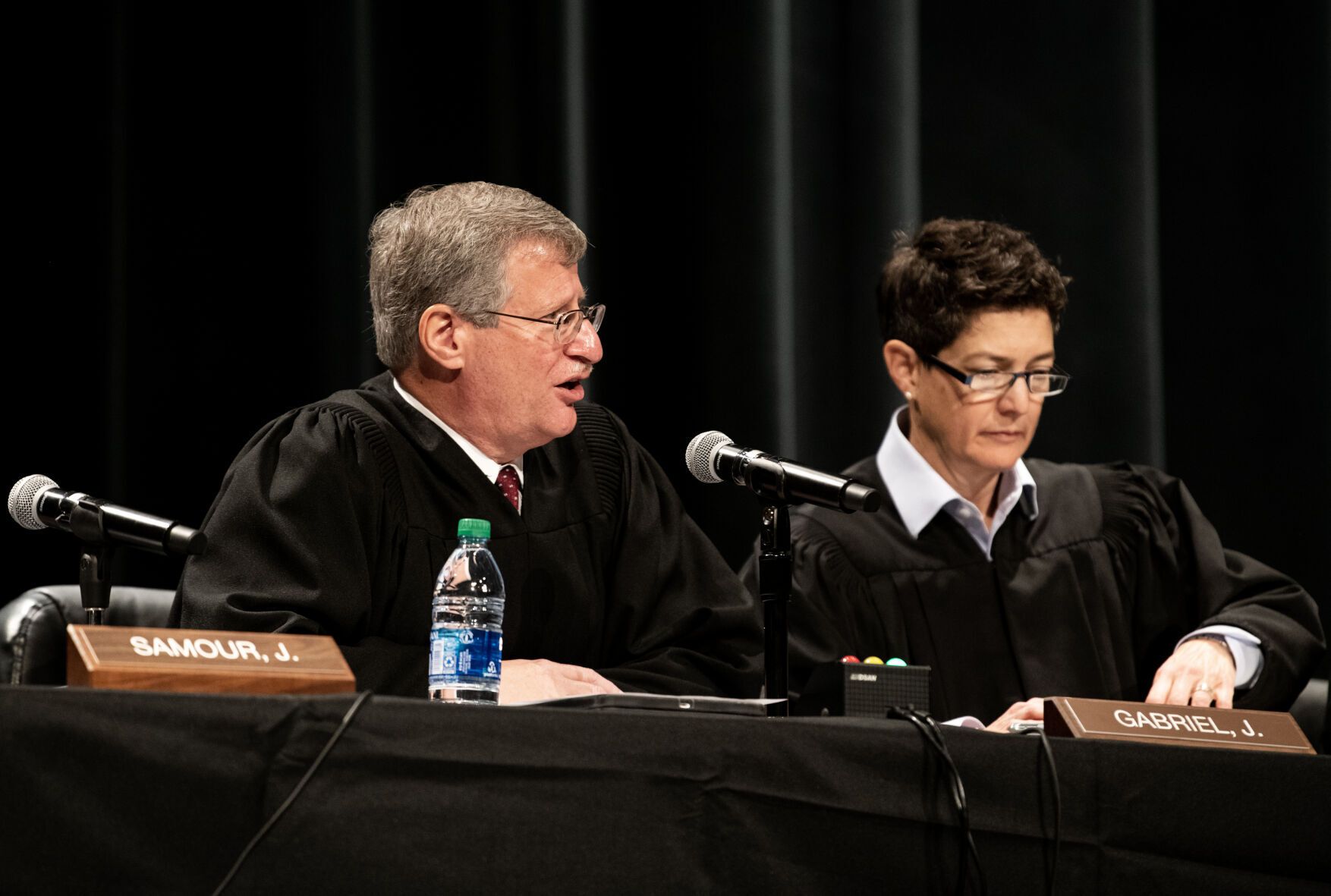
“I am concerned here on whether the focus was on doing justice for Mr. Mena or making sure the prosecution didn’t lose. And that’s troubling to me,” said Justice Richard L. Gabriel during oral arguments in February.
In the 2008 decision of People v. Richardson, the Supreme Court held that a trial judge does not have to accept a partial verdict from jurors when they have indicated a decision on some charges and are deadlocked on others. Then-Justice Alex J. Martinez dissented, warning that jurors would have no way to register an acquittal and the defendant would be unaware he was being placed in jeopardy a second time.
The “better procedure would provide an opportunity for the jury to render a partial verdict and thereby shield the defendant from retrial on offenses for which he was in actuality acquitted,” Martinez wrote.
Defense attorney Cassandra P. Monahan noted Mena’s case was different from Richardson, and the jury had given a more explicit description of where it stood. Because of the options on the verdict form, it was evident that jurors had not found him guilty of sexual assault, and were only conflicted about the lesser attempt charges.
“We had a verdict,” she told the justices. “The trial court’s actions here prevented that verdict from being effectuated.”
The Supreme Court’s majority agreed that, under the circumstances, trying Mena again for the sex assault charges would be a double jeopardy violation.
“Armed with the jury’s response to the clarifying question, the only logical inference from the jury’s communication is that it had unanimously acquitted Mena of the completed acts,” wrote Hood.
Boatright, writing for himself and Justice Maria E. Berkenkotter, argued that the majority’s decision would create an incentive for defense attorneys to ask that jurors be allowed to register a partial verdict whenever there appears to be a deadlock. He added that Cure did not act unreasonably by following existing precedent, and he believed she should decide the double jeopardy question if the prosecution sought to try Mena again.
Justice Susan Blanco did not participate in the case. As is the Supreme Court’s practice, there was no reason provided for her recusal.
The prosecution may now retry Mena only for the attempted sex assault offenses on which the jury could not reach a verdict.
The case is People v. Mena.

Colorado justices to hear appeal in Kendrick Castillo death lawsuit, ‘fugitive’ rule
Michael Karlik
michael.karlik@coloradopolitics.com
Updated 2 hours ago
The Colorado Supreme Court announced on Tuesday that it will decide whether it was proper to dismiss a lawsuit over the 2019 shooting death of Kendrick Castillo after the defendants paid the maximum amount of damages available to Castillo’s parents,...
Arapahoe County judge’s frustration with defense lawyer not grounds for new trial
Michael Karlik
michael.karlik@coloradopolitics.com
Updated 4 hours ago
Colorado’s second-highest court decided last week that an Arapahoe County judge’s repeated rebukes of a defense attorney and orders to “be quiet” did not rise to the level of bias or a violation of the defendant’s due process rights. A...
Divided appeals court upholds vehicle theft conviction despite unclear origin of car’s value
Michael Karlik
michael.karlik@coloradopolitics.com
Updated 4 hours ago
Colorado’s second-highest court upheld a defendant’s conviction for aggravated motor vehicle theft last week, even though it was unclear how the Thorton Police Department estimated the value of the stolen car. Officer Marc Faivre encountered Ashley Shelee Gibbens-Martinez in a...
Disgraced ex-CBI analyst Missy Woods sentenced to prison in DNA scandal
Jenny Deam
jenny.deam@gazette.com
Updated 4 hours ago
A Jefferson County district court judge on Tuesday sentenced a disgraced former Colorado Bureau of Investigation DNA analyst to a decade in prison for altering and deleting data in scores of criminal cases over several years. Jefferson County District Judge...
Parenting from prison: Inmates hope to be present in their children’s lives, while physically absent
Marianne Goodland
marianne.goodland@coloradopolitics.com
Updated 9 hours ago
The room was decorated with balloons, the tables sparking bright with colors as the smell of pizza and cake wafted through the air. As did music. This was, after all, a father-daughter dance. Except this was not a typical father-daughter...
Appeals court confirms Colorado judges can compel electronic records from out of state
Michael Karlik
michael.karlik@coloradopolitics.com
Updated 2 days ago
Colorado’s second-highest court clarified on Thursday that judges are empowered to compel out-of-state companies to produce electronic records under state law. El Paso County jurors convicted Mischa Jargowsky on three counts of money laundering and one violation of Colorado’s organized...
10th Circuit upholds finding of no racial discrimination against family at Denver Chili’s
Michael Karlik
michael.karlik@coloradopolitics.com
Updated 4 days ago
The Denver-based federal appeals court agreed on Wednesday that a Black plaintiff failed to show that a Chili’s manager’s request for her family to provide valid payment at the outset of their meal amounted to racial discrimination. Markesha Futrell-Smith filed...
Appeals court reinstates Mesa County defendant’s request for DNA testing under new Colorado law
Michael Karlik
michael.karlik@coloradopolitics.com
Updated 5 days ago
Colorado’s second-highest court revived a Mesa County defendant’s petition for DNA testing in his three-decade-old attempted murder case on Thursday, concluding that a trial judge wrongly interpreted a recent Colorado law in dismissing the request outright. Jurors convicted Billy Joe...
Appeals court reverses Denver juvenile’s conviction due to improper expert testimony
Michael Karlik
michael.karlik@coloradopolitics.com
Updated 3 days ago
Colorado’s second-highest court reversed a juvenile defendant’s conviction for unlawful sexual contact on Thursday after an expert witness’s testimony improperly suggested the child victim was telling the truth. The defendant, identified as S.H-S., was around 16 years old when he...

Judge orders home confinement for Barry Morphew
Dennis Huspeni
dennis.huspeni@gazette.com
Updated 5 days ago
An Alamosa County district judge has ordered home confinement for Barry Morphew, who is accused of murdering his wife. Barry Morphew, 59, faces a first-degree murder charge in the death of his wife, Suzanne Morphew, who disappeared Mother’s Day weekend...
PREV
PREVIOUS

Colorado governor nixes bills on swipe fees, suing feds and firefighter benefits
Gov. Jared Polis vetoed three bills Wednesday, rejecting measures on credit‑card swipe fees, immigration enforcement lawsuits, and firefighter cancer coverage. In doing so, the governor set a new personal record for vetoes in a single session, having now rejected 12 bills that were passed this year. Among those bills was Senate Bill 134, which would […]
Colorado Supreme Court to decide whether out-of-state defendant may be prosecuted for in-state crime
The Colorado Supreme Court recently announced that it will decide whether Douglas County prosecutors had grounds to pursue criminal charges against a woman in New York whose conduct occurred outside of Colorado. Erin Brennan and her children lived in New York, and her ex-husband moved to Colorado after their divorce. In 2022, she proposed a […]