

Internal appeals of parole revocation must come before judicial review, Colorado justices conclude
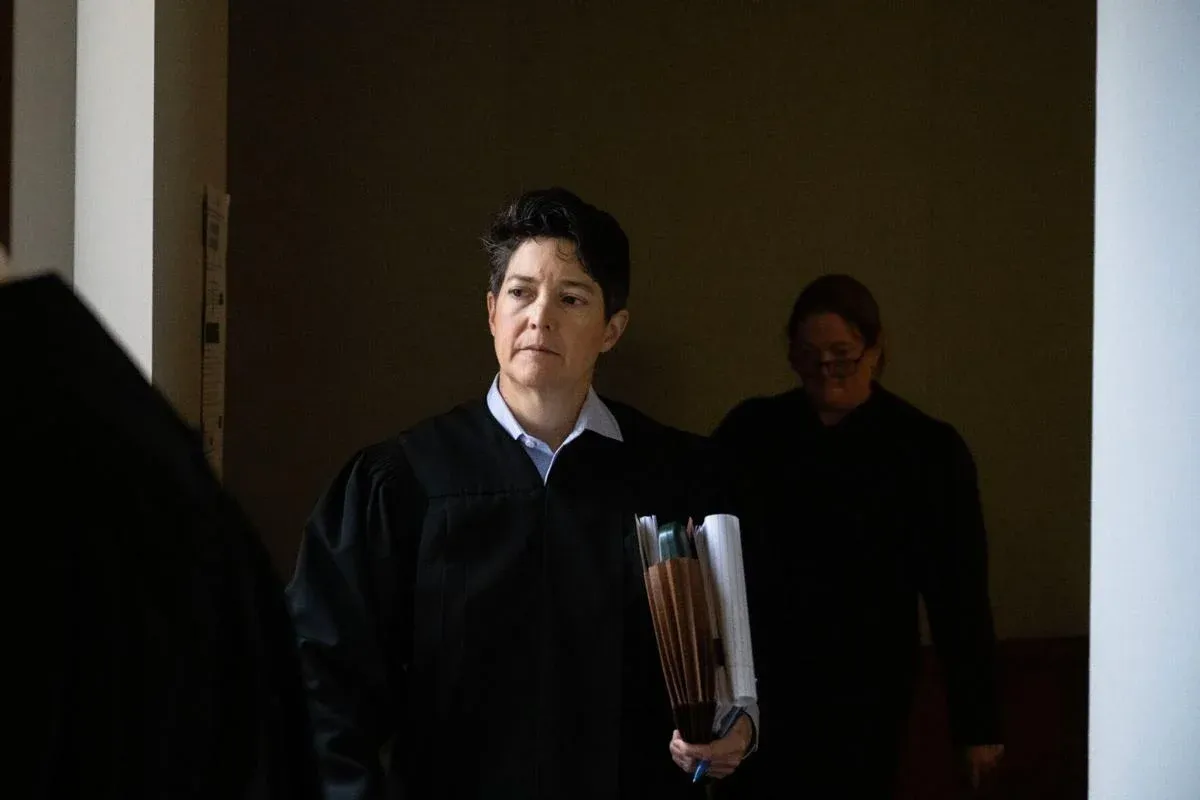
The Colorado Supreme Court ruled last month that criminal defendants whose parole is revoked must appeal the decision internally to the state’s parole board before seeking review by a judge.
The process for returning someone to incarceration for violating the conditions of their parole first entails a hearing by one member of the Colorado State Board of Parole. Afterward, the defendant “may appeal” the decision to two other members of the parole board. Separately, defendants can file a petition for postconviction relief in the courts based on “unlawful revocation of parole.”
But if a defendant “may appeal” with the parole board and chooses not to, can he seek judicial review directly?
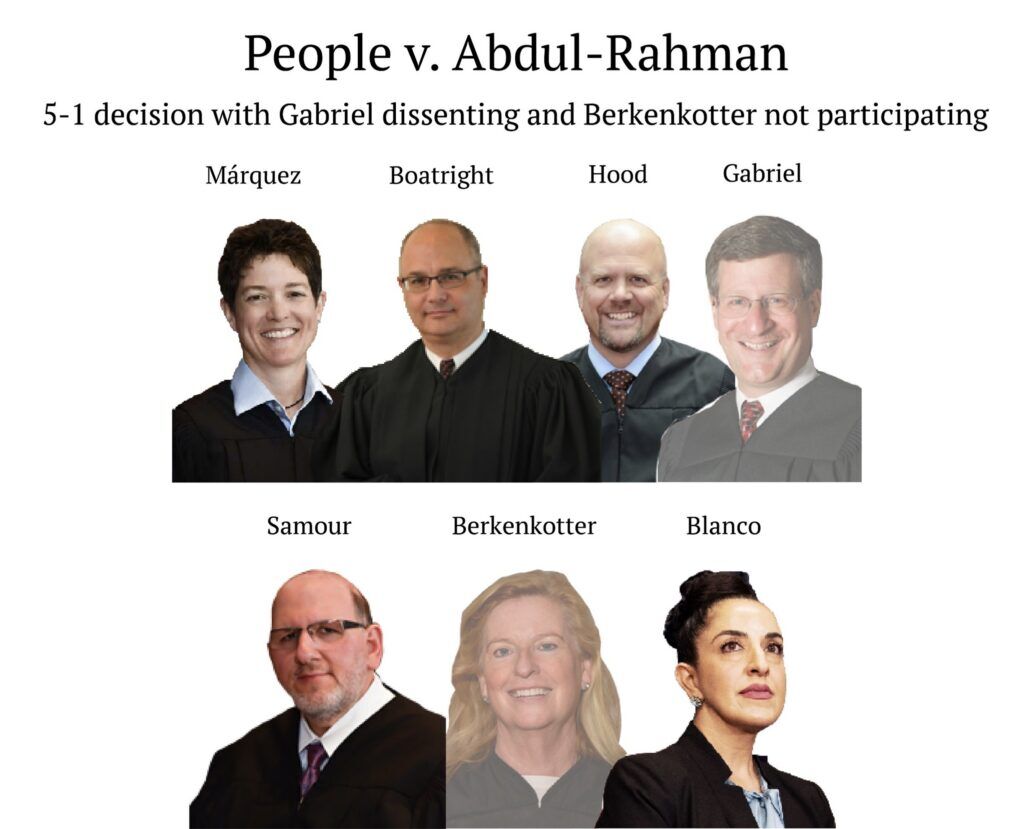
By 5-1, the Supreme Court answered in the negative.
Lawmakers “intended to provide the option to appeal the Board’s revocation decision — but that, if pursued, the appeal must be to the Board’s appellate body,” wrote Chief Justice Monica M. Márquez in the May 26 opinion.
In 2024, a divided three-judge panel of the Court of Appeals ruled for the first time that judges may hear challenges to parole revocations without the defendant needing to go through a parole board appeal. The majority concluded that the law did not require one.
Judge Grant T. Sullivan dissented, worrying that the ability of defendants to “leapfrog” a parole board appeal would result in negative consequences.
“For example, allowing parolees to bypass the appellate body’s review will deprive the Board of its ability to correct errors committed by the single Board member who presided over the initial revocation hearing, potentially leading to even more protracted litigation that could have been avoided,” he wrote.
Sullivan added that the requirement in other contexts for a person to go through an executive agency’s internal grievance process, known as “exhaustion,” is intended to promote efficiency, allow subject matter experts to weigh in first, and conserve judicial resources.

The Colorado Attorney General’s Office appealed, arguing that it is a defendant’s choice whether to accept the revocation or challenge it. However, that challenge must first go through the parole board.
By going straight to the courts, defendant Shams Abdul-Rahman “had to wait for three years now to get the decision,” said Assistant Attorney General Fellow Leo T. Nguyen during oral arguments. “The appellate body process would have afforded him potentially quicker relief.”
Abdul-Rahman’s lawyer argued that requiring an extra step for parolees may cause them to miss the opportunity to seek judicial review forever.
The Supreme Court’s majority agreed with the state. Márquez wrote that requiring an internal appeal falls “squarely within” Colorado’s longstanding practice of allowing agencies to correct their own mistakes and apply their expertise prior to judicial review.
“Furthermore, requiring a parolee to appeal first to the Board’s appellate body provides the parolee with more process in an expedited time frame and helps to ensure that the factual record will benefit a court if judicial review is sought,” she continued. “Unlike the uncertain timeline for postconviction review, which may take years (as was true in the present case), the Board’s appellate body must render its decision within twenty-five working days after a parolee files an appeal.”
Justice Richard L. Gabriel dissented. He suggested that he had not voted for the Supreme Court to hear the case to begin with.
Noting that the government had not called into question the courts’ jurisdiction to hear Abdul-Rahman’s petition until it reached the Court of Appeals, Gabriel believed the state had relinquished the argument it was now making. Further, he observed, the Court of Appeals ultimately sided with the state in finding Abdul-Rahman’s petition meritless.
“I am unaware of any other case in which we have granted (review) to rule that a party should have won on a different basis below, and I would not now set a precedent encouraging parties to seek (review) if they prefer to have won on different grounds,” Gabriel wrote. “Therefore, and as a matter of judicial restraint, I would have deferred consideration of the exhaustion of administrative remedies issue to a case in which it was properly and necessarily before us.”
Justice Maria E. Berkenkotter did not participate in the case. As is the Supreme Court’s practice, there was no explanation provided for her recusal. However, the docket in Abdul-Rahman’s underlying criminal case showed that Berkenkotter presided over his jury trial in her prior role as a district judge.
The case is People v. Abdul-Rahman.

Federal judge green-lights excessive force, retaliation claims for trial against Fort Collins officers
Michael Karlik
michael.karlik@coloradopolitics.com
Updated 22 hours ago
A federal judge green-lit a jury trial last week against multiple Fort Collins police officers on claims that they used excessive force on one man who was standing unarmed in his underwear, and retaliated against another man for exercising his...
10th Circuit revives wage violation lawsuit against Papa John’s operator
Michael Karlik
michael.karlik@coloradopolitics.com
Updated 18 hours ago
The Denver-based federal appeals court on Tuesday reinstated a former Papa John’s delivery driver’s lawsuit alleging violations of federal and state wage law. Steve Mighell worked for one month at a Denver Papa John’s location in summer 2023. He alleged...
Colorado appeals judge’s delays in releasing opinions noted by performance commission
Michael Karlik
michael.karlik@coloradopolitics.com
Updated 1 day ago
The citizen-led performance commission that provides guidance to voters about whether to retain members of Colorado’s second-highest court raised concerns by judges and attorneys that Judge Elizabeth L. Harris sometimes struggles with releasing opinions promptly. Harris, who joined the Court...

Colorado judge explores sanctions against DOJ, ICE for rearresting man 4 days after release on bond
Michael Karlik
michael.karlik@coloradopolitics.com
Updated 22 hours ago
A federal judge in Colorado is considering sanctions against the government after immigration agents rearrested a man four days after an immigration judge found him suitable for release on bond. On July 28, U.S. Magistrate Judge N. Reid Neureiter ordered...
Divided disciplinary panel censures Montezuma County judge after agreement reached
Michael Karlik
michael.karlik@coloradopolitics.com
Updated 21 hours ago
A disciplinary panel formally imposed a public censure, suspension, and further training on Montezuma County Court Judge Ian J. MacLaren on Tuesday by a 2-1 vote. Under constitutional Amendment H, which voters adopted in November 2024, MacLaren was set to...
Colorado’s Western Slope magistrate judges describe unique role in federal judiciary
Michael Karlik
michael.karlik@coloradopolitics.com
Updated 3 days ago
Two of Colorado’s federal judges stationed on the Western Slope spoke to lawyers on Wednesday about their unique roles, the ways their workloads differ, and the need for more criminal defense lawyers to take cases outside the Front Range. “Here...

Denver sues Philip Morris, other tobacco companies over cigarette butt litter
Deborah Grigsby
deborah.smith@denvergazette.com
Updated 1 day ago
Denver is demanding that some of the biggest tobacco companies in the world pay for the cleanup of discarded cigarette butts on its streets, following a similar campaign that cities in other states have pursued. Denver’s lawsuit, filed this week...

Federal judge rules that request for bond hearing not necessary to challenge immigration detention
Michael Karlik
michael.karlik@coloradopolitics.com
Updated 21 hours ago
A federal judge in Colorado ruled last week that it is not mandatory for a person to seek a bond hearing with an immigration judge before they challenge the lawfulness of their detention in federal court. For the past year,...

Boulder Valley School District introduces new policies following antisemitism lawsuit
Marissa Ventrelli
marissa.ventrelli@coloradopolitics.com
Updated 21 hours ago
The chief of Boulder Valley School unveiled new policies for the 2026-2027 school year following a lawsuit filed on behalf of a student alleging antisemitic harassment. In June, the Anti-Defamation League filed a federal civil rights complaint against the school...

Colorado NRA chapter seeks injunction against new gun‑training requirement
Marissa Ventrelli
marissa.ventrelli@coloradopolitics.com
Updated 2 days ago
The Colorado chapter of the National Rifle Association is seeking an injunction to stop the state from enforcing a new law that took effect earlier this month. The new law requires anyone buying or selling certain firearms to first complete...
PREV
PREVIOUS

Aurora council votes to require periodic detention center inspections
The Aurora City Council moved forward with ordinances Monday requiring periodic inspections of and more regulated disease reporting from detention facilities in the city, including the GEO Immigration and Customs Enforcement facility. Both ordinances, sponsored by Councilmember Gianina Horton, passed Monday with four “no” votes from Councilmembers Francoise Bergan, Angela Lawson, Curtis Gardner and Stephanie […]

Colorado Springs may be sued for faulty intersection, state Supreme Court rules
The Colorado Supreme Court decided last month that Colorado Springs can be sued over a collision that occurred as a result of traffic lights that were functioning normally in one direction, but were inoperative in the perpendicular direction. The question for the Supreme Court was whether the traffic arrangement provided “conflicting” signals to plaintiff Bernard […]