

Colorado justices acknowledge judge’s misunderstanding of law in eminent domain case
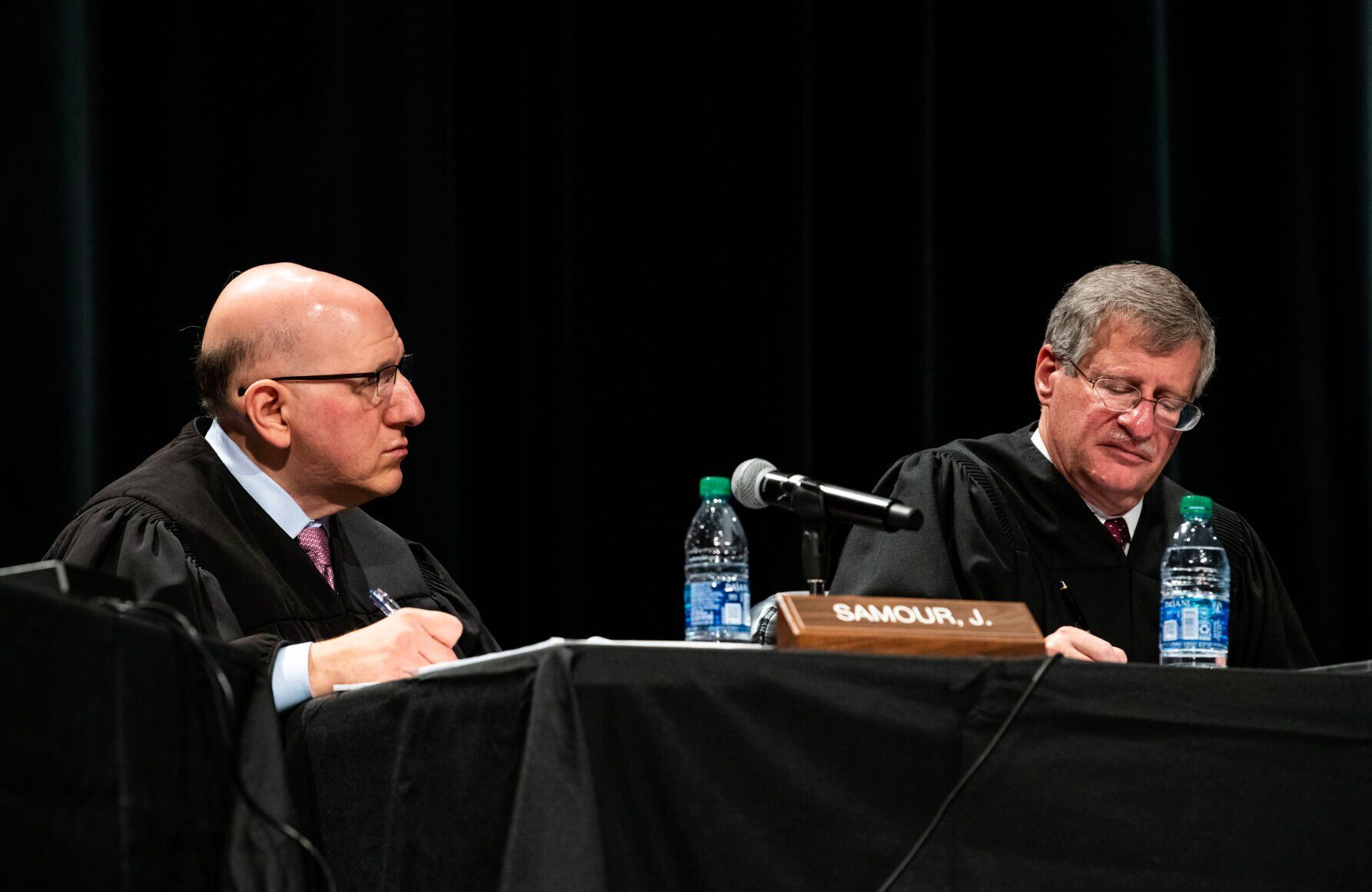
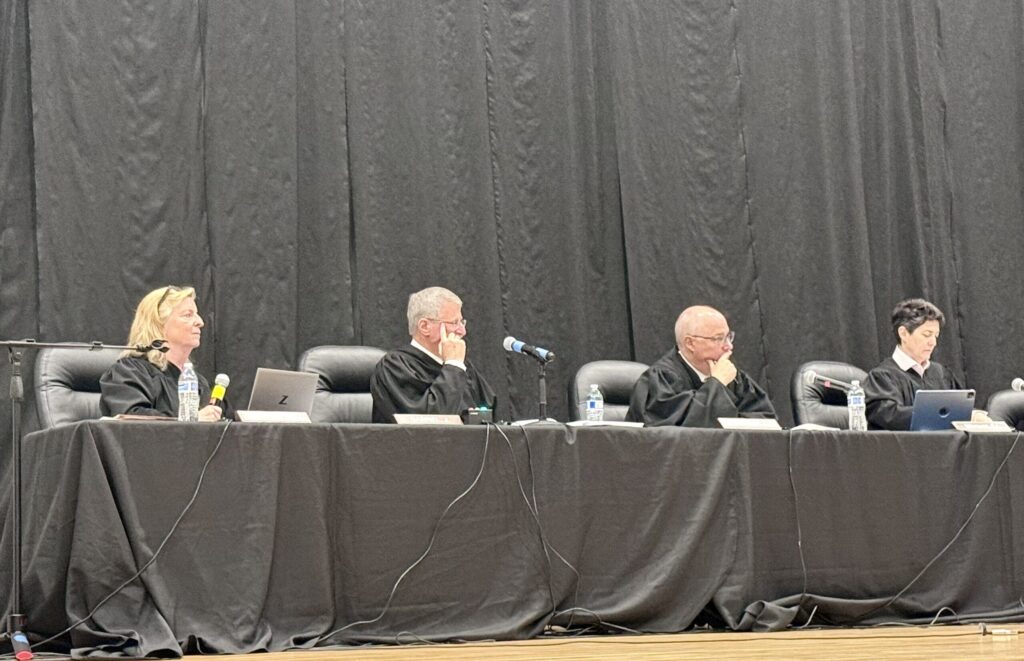
Members of the Colorado Supreme Court appeared to agree on Tuesday that a Douglas County judge incorrectly believed he lacked the authority to allow a property owner to pursue evidence challenging a government entity’s legal right to take the property through eminent domain.
But during oral arguments, multiple justices bristled when an attorney for the Arrowhead Colorado Metropolitan District claimed that the judge had, in fact, denied the property owner’s request after considering the relevant information.
“That’s not true. That is not what happened here. I feel like I’ve stepped into a different world here, like we’re looking at two different things,” responded Justice Carlos A. Samour Jr. “That’s not what the court said. Just because you write it in your brief doesn’t make it accurate. The court said, ‘I have no authority to grant this.'”
The principle of eminent domain empowers governments to take possession of private property for public use, so long as they provide proper compensation. There are two phases to such proceedings in Colorado: a ruling on the government entity’s ability to possess the property, and a trial to determine the amount of compensation.
Last year, the Arrowhead Colorado Metropolitan District filed a petition to condemn property owned by the Roxborough Park Foundation, which controls and maintains common areas within Roxborough Park. A private company that owns a 35-acre parcel formed the metropolitan district to create infrastructure for a proposed “Nordic spa.”
The foundation quickly sought to obtain evidence before the decision on the land’s possession. The request encompassed design documents, studies, and communications between the metropolitan district and the private company. The foundation sought to determine if the condemnation was for a legally authorized purpose.
In December, District Court Judge Ben Leutwyler blocked the request for evidence. He concluded the law and the rules governing civil cases “make no provision for discovery in a condemnation action prior to the immediate possession hearing or otherwise.”
The Roxborough Park Foundation turned to the Supreme Court. Without the justices’ intervention, the foundation argued, the metropolitan district could take possession of the property and alter it immediately, and the foundation could only appeal that decision after the eventual trial for compensation. Moreover, no prior court case addressed whether a landowner has the right to the discovery of evidence before a possession decision.
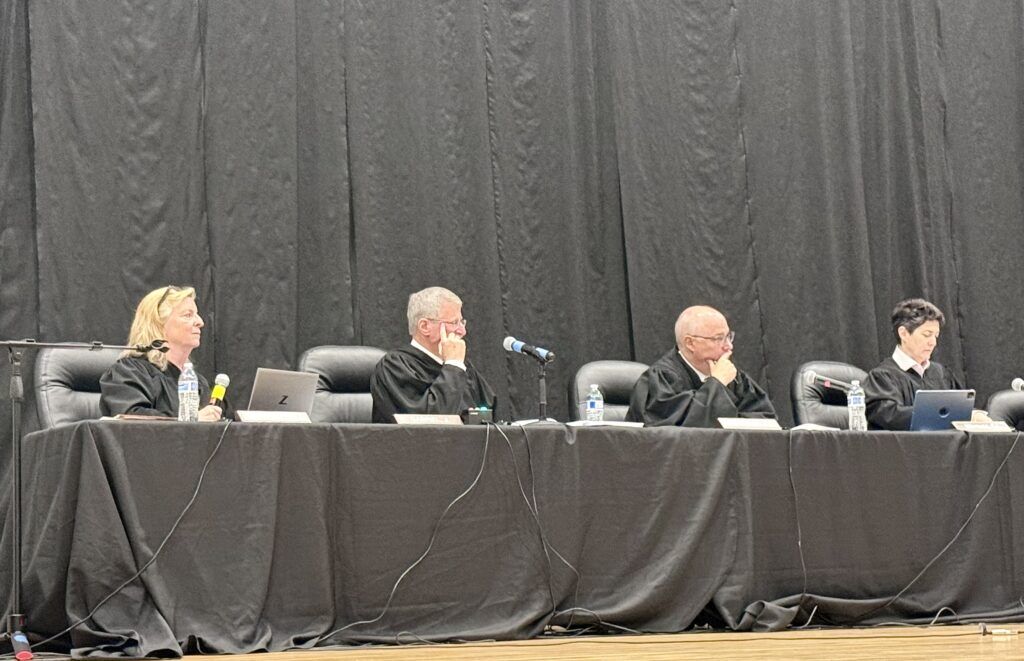
During oral arguments, multiple justices pointed out that Leutwyler’s belief that he could not allow discovery was incorrect. Justice Richard L. Gabriel quoted from the order and said that, while Leutwyler was a “very, very fine trial judge,” the rules do permit the discovery of evidence in certain circumstances.
“I don’t think the court intended exactly what you just summarized,” said attorney Joshua T. Mangiagli for the metropolitan district.
“I just read it,” countered Gabriel.
“There is a mechanism as a matter of law. No question,” added Justice Maria E. Berkenkotter. “This is just, for whatever reason, the court misunderstood the law.”
At the same time, the justices puzzled over the position taken by the Roxborough Park Foundation that the Supreme Court should recognize a general right to discovery in eminent domain cases. Gabriel noted that Leutwyler’s misunderstanding of the law could be addressed straightforwardly with instructions to revisit his decision.
“Why are you arguing more than that?” Gabriel wondered. “I would have a lot of trouble adopting a rule that says the landowner gets discovery in any case. Period, hard stop.”
“You’re asking us not just to correct the trial court by reiterating that they have that discretion,” added Justice Susan Blanco, “but you’re asking us to do one more step and essentially find that in these circumstances, discovery should be commenced. Is that accurate?”
“That’s precisely accurate,” responded attorney Steven Nagy.
Justices Brian D. Boatright and William W. Hood III were not present for the arguments. The court’s clerk did not respond to a question about their whereabouts.
The case is Arrowhead Colorado Metropolitan District v. Roxborough Park Foundation et al.

Trump’s judicial nominee orders bond in wave of cases after 10th Circuit rejects government’s position
Michael Karlik
michael.karlik@coloradopolitics.com
Updated 2 hours ago
Within 24 hours of the Denver-based federal appeals court rejecting the government’s expansive view of its immigration detention authority, the lone judge in Colorado to embrace that view ordered bond hearings for detainees in at least 20 cases. U.S. District...

10th Circuit agrees Colorado satisfied jury award after intercepting money for restitution
Michael Karlik
michael.karlik@coloradopolitics.com
Updated 21 minutes ago
The Denver-based federal appeals court agreed last week that Colorado satisfied its obligations by not paying a man directly for violating his rights, but rather crediting the jury’s multimillion-dollar award toward the crime victim restitution he still owed in his...
Colorado justices ponder whether insurer should save company from asbestos suits
Michael Karlik
michael.karlik@coloradopolitics.com
Updated 6 hours ago
Some members of the Colorado Supreme Court appeared skeptical last week that an insurance policy that reaches beyond the limits and coverage of a company’s other policies must “step down into the shoes” of those policies after they become insolvent....
Colorado justices weigh ‘extreme’ proposals for civil jury trial requests
Michael Karlik
michael.karlik@coloradopolitics.com
Updated 1 day ago
Members of the Colorado Supreme Court grappled last week with two vastly different proposals for evaluating when it is appropriate for a civil litigant to ask for a jury trial, as opposed to a bench trial before a judge. The...
Colorado justices weigh ‘extreme’ proposals for civil jury trial requests
Michael Karlik
michael.karlik@coloradopolitics.com
Updated 22 hours ago
Members of the Colorado Supreme Court grappled last week with two vastly different proposals for evaluating when it is appropriate for a civil litigant to ask for a jury trial, as opposed to a bench trial before a judge. The...
10th Circuit reverses perjury conviction, warns prosecutors to watch their questioning
Michael Karlik
michael.karlik@coloradopolitics.com
Updated 22 hours ago
The Denver-based federal appeals court reversed a defendant’s perjury conviction last week, warning prosecutors that it is better to follow up on imprecise or unclear answers than to criminally charge a witness for their response. A jury convicted Lori Milliron...
10th Circuit rebuffs government, rules against shift to mandatory immigration detention
Michael Karlik
michael.karlik@coloradopolitics.com
Updated 1 day ago
The Denver-based federal appeals court ruled on Tuesday against the government’s broad assertion of authority to keep people in immigration custody without the opportunity to demonstrate their suitability for release on bond. Although the regional appeals courts have reached different...
Appeals court revives tenants’ lawsuit over landlords’ illegal fee demands
Michael Karlik
michael.karlik@coloradopolitics.com
Updated 2 days ago
Colorado’s second-highest court revived a proposed class-action lawsuit against landlords and other entities last month, concluding that state law did not permit the practice of demanding that tenants pay attorney fees in certain eviction proceedings. In 2021, lawmakers enacted a...
Appeals court reverses Jeffco assault convictions due to omitted jury instruction
Michael Karlik
michael.karlik@coloradopolitics.com
Updated 2 days ago
Colorado’s second-highest court agreed last month that a Jefferson County defendant’s assault convictions could not stand because his jury should have been allowed to consider whether he used force against a bar patron to defend his girlfriend from inappropriate touching....
Colorado Supreme Court tosses man’s lawsuit over daughter’s traffic death
Michael Karlik
michael.karlik@coloradopolitics.com
Updated 2 days ago
The Colorado Supreme Court applied a confusing matrix of conditions and deadlines in state law to conclude on Monday that a man waited too long to sue after his daughter was rendered unconscious and later died from a vehicle accident....
PREV
PREVIOUS

Colorado legislators pass bill that sponsors say would strengthen sex crime victim protections
A Colorado bill that supporters say would strengthen victim protections and mandate law enforcement training on how trauma can affect survivors of sex crimes and domestic violence is on its way to Gov. Jared Polis’ desk for signing. Senate Bill 26-095 recently passed unanimously in the Senate and was mostly unopposed in the House, where […]
Colorado legislators pass bill to strengthen sex crime victim protections
A Colorado bill that supporters say would strengthen victim protections and mandate law enforcement training on how trauma can affect survivors of sex crimes and domestic violence is on its way to Gov. Jared Polis’ desk for signing. Senate Bill 26-095 recently passed unanimously in the Senate and was mostly unopposed in the House, where […]