

Colorado justices skeptical of defendant’s challenge to flawed jury instruction
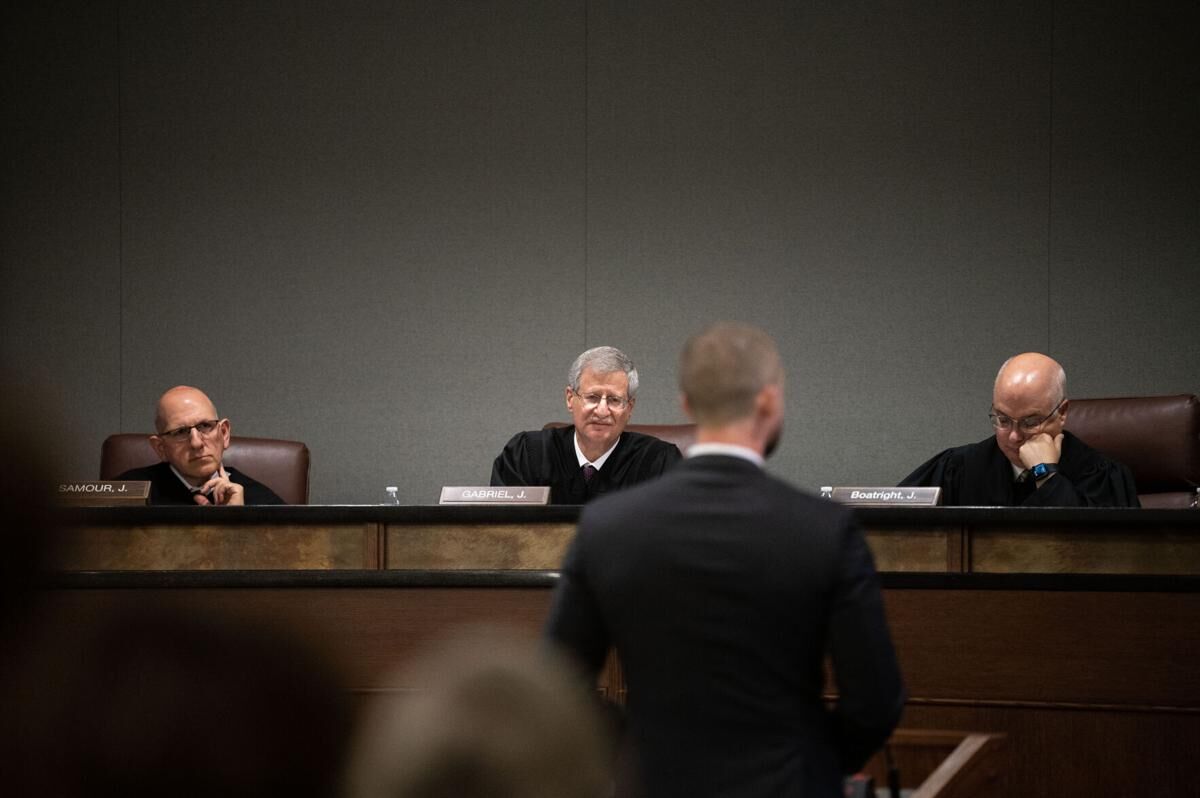
Members of the Colorado Supreme Court appeared willing to uphold a defendant’s vehicular eluding conviction on Tuesday, suggesting that an incorrectly worded jury instruction was not an obvious and harmful error in light of the defense’s choice not to dispute the evidence.
A Denver jury convicted Jeffery Sloan of killing Yasir Hasan and Mark Karla by running a red light and colliding with his victims on Colfax Ave. in 2019. Karla was the son-in-law of then-Colorado Springs Mayor John Suthers. Sloan received a 72-year prison sentence.
One of Sloan’s charges, vehicular eluding of police, is normally a class 5 felony. It turns into a more severe class 3 felony if a jury finds the vehicular eluding results in a person’s death. Sloan’s jury convicted him of the more serious offense.
However, the instructions did not ask jurors whether “the vehicular eluding” resulted in the victims’ deaths, but whether “the accident” resulted in their deaths. Although Sloan’s lawyers did not object at the time, he argued on appeal that the police officers who were initially pursuing him had disengaged by the time he crashed into his victims’ vehicle.
A three-judge Court of Appeals panel agreed with Sloan, noting the instruction focused on the “ramifications of the accident” rather than the alleged eluding. Judge Lino S. Lipinsky de Orlov acknowledged Sloan only contested at trial whether he was the driver, and not whether vehicular eluding occurred.
But the instruction “erroneously permitted the jurors to convict and the court to sentence Sloan for vehicular eluding resulting in death based on the accident, rather than vehicular eluding,” he wrote. “By shifting the jury’s focus from whether the victims’ deaths resulted from the vehicular eluding to whether their deaths resulted from the accident, the enhancer instruction tasked the jury with answering a question that could not enhance vehicular eluding from a class 5 felony to a class 3 felony.”
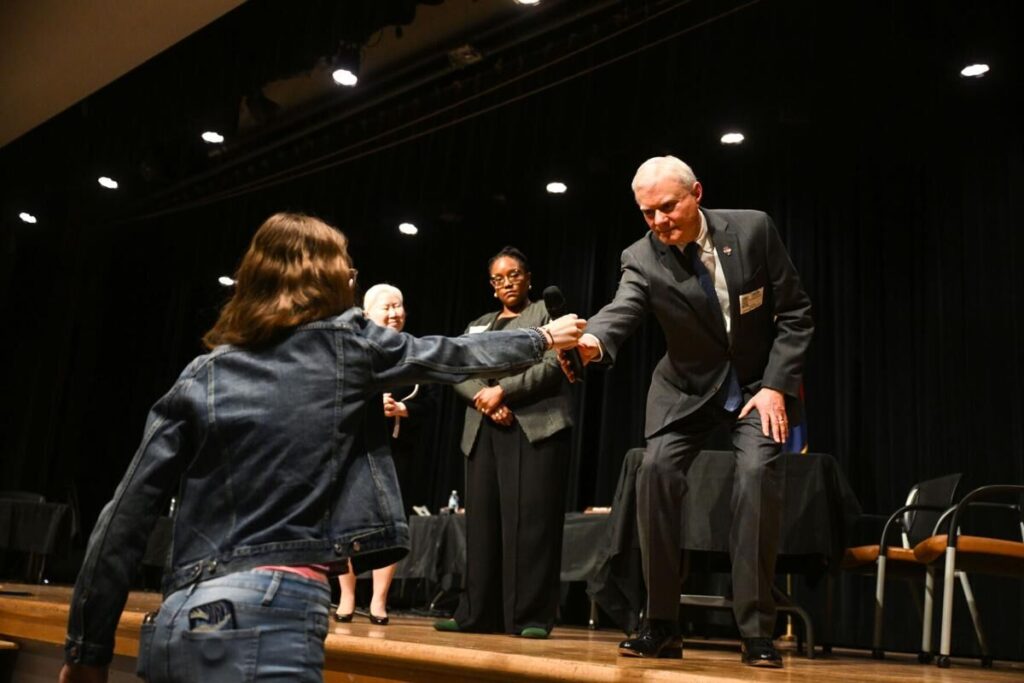
The panel reversed the eluding conviction, prompting the prosecution to appeal. During oral arguments to the Supreme Court, multiple justices signaled the faulty wording did not rise to the level of an obvious error requiring reversal.
“The whole theory of Mr. Sloan’s defense was, ‘It wasn’t me. I wasn’t driving.’ And so we have an instruction that, yeah, clearly wrong,” said Justice Richard L. Gabriel. “But if no one is challenging that the eluding resulted in death … how do we say that was obvious and substantial?”
Defense attorney Adrienne Teodorovic argued that, under the prosecution’s own evidence, police disengaged from chasing Sloan at least 32 seconds and one mile before the collision. While Sloan may have been guilty of reckless driving by continuing to speed down Colfax, he was not still eluding the police.
“Your logic is, eluding means ‘is being pursued,’ active pursuit. And if the active pursuit has ended,” said Chief Justice Monica M. Márquez, “there cannot be a (death resulting from the eluding) because that component has stopped.”
“The incentive for law enforcement is, don’t stop the chasing,” added Justice Carlos A. Samour Jr. “Regardless of safety reasons, keep chasing because otherwise the eluding crime goes away.”
“You have vehicular homicide” as an alternative charge, responded Teodorovic. “We have to remember that in this case, we have a man serving 10 years on a conviction that the jury never found. … He was convicted on some other, made-up crime.”
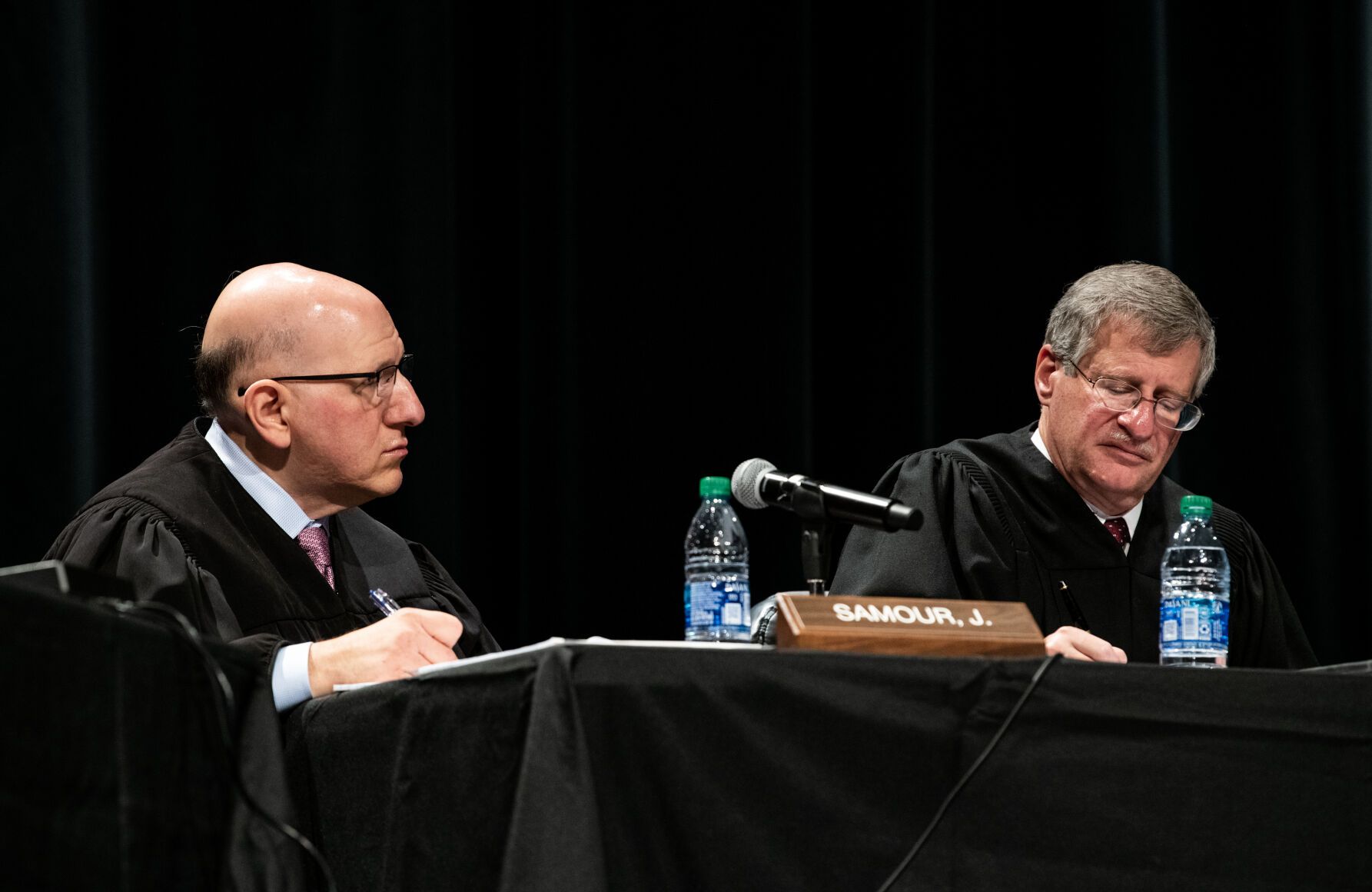
Gabriel said that he was having difficulty concluding that the evidence at trial failed to establish Sloan’s guilt, notwithstanding the flawed jury instruction.
“How does that death not result from vehicular eluding? There was eluding. The defendant knew they were being chased, etc. And they’re speeding away,” he said. “Just the fact that the police stopped the pursuit doesn’t stop the fact that there was eluding, and the eluding is what caused the death.”
Gabriel added that it would be “absurd” to find a defendant not liable for vehicular eluding resulting in death if someone caused a crash mere seconds after police disengaged.
“Just because the police stopped, it doesn’t mean the defendant isn’t still racing away. ‘I think they pulled off, let me get out of Dodge,'” he said.
Gabriel suggested that the Supreme Court could hold that an undisputed issue at trial cannot, by itself, constitute obvious error warranting reversal on appeal, so long as sufficient evidence supports the conviction.
Senior Assistant Attorney General William G. Kozeliski agreed with that proposal.
Justice Brian D. Boatright did not attend the arguments. Gabriel said Boatright “is, I think, listening, but he’s not here.”
The case is People v. Sloan.

Federal judge dismisses ex-Colorado judicial discipline director’s conspiracy lawsuit
Michael Karlik
michael.karlik@coloradopolitics.com
Updated 12 hours ago
A federal judge dismissed a lawsuit from Colorado’s former judicial discipline director on Tuesday, finding that he failed to adequately state claims for conspiracy or constitutional violations. Christopher S.P. Gregory, who served as the executive director of the Colorado Commission on Judicial...
Federal judge allows retaliation claims to proceed against prison officials
Michael Karlik
michael.karlik@coloradopolitics.com
Updated 10 hours ago
A federal judge agreed last week that a man incarcerated at Sterling Correctional Facility had credibly alleged that employees retaliated against him for filing grievances, including by taking away his disability accommodations and turning off his electricity. Louis Peoples Jr.,...

U.S. Rep. Lauren Boebert’s son arrested, faces charges of sexual exploitation of minor
Matt Kyle
matt.kyle@denvergazette.com
Updated 1 day ago
U.S. Rep. Lauren Boebert’s son Tyler Jay Boebert has been arrested and accused of recording and sharing a video depicting himself having intercourse with a minor, according to court records. The case originated in Garfield County in Western Colorado and...

Adams County water district may proceed with cost-recovery lawsuit against Denver for contamination
Michael Karlik
michael.karlik@coloradopolitics.com
Updated 22 hours ago
A federal judge rejected Denver’s arguments last week for pausing or dismissing a lawsuit brought by an Adams County special district seeking to recover its costs for addressing water contamination as a result of Denver firefighting activities. In January, the...
Federal judge declines to dismiss First Amendment retaliation claim against prison official
Michael Karlik
michael.karlik@coloradopolitics.com
Updated 22 hours ago
A federal judge agreed last month that an incarcerated Native American woman may pursue her claim of First Amendment retaliation against a prison official who allegedly interfered with her religious exercise. Yvonne Peterson resided at Buena Vista Correctional Facility for...

Colorado’s troubled guardianship office pursues ‘cultural reset’
Marianne Goodland
marianne.goodland@coloradopolitics.com
Updated 1 day ago
Colorado’s guardianship program, long criticized for mismanagement and high staff attrition, is undergoing a “cultural reset,” as its new director works to repair partnerships and prepare for a major expansion under recent legislation. Created by lawmakers in 2017, the Office...

Local party leaders, incoming judge among members of judicial performance commission that violated law
Michael Karlik
michael.karlik@coloradopolitics.com
Updated 4 days ago
A local Democratic leader and 2024 presidential elector. A legislative aide and leader in the Young Republicans. An incoming county court judge freshly appointed by the governor. They are among the eight members of the northeastern Colorado judicial performance commission...

Judge dismisses lawsuit seeking records from Colorado Democratic group
Marianne Goodland
marianne.goodland@coloradopolitics.com
Updated 5 days ago
A lawsuit seeking to obtain records from Democratic lawmakers affiliated with a caucus has been thrown out by a Denver District Court judge. On July 17, Judge Ericka Englert dismissed the April lawsuit filed by progressive activist Derrick Blanton, who...
Colorado Springs mother Deborah Nicholls’ murder conviction overturned
Nick Smith
nick-smith@coloradopolitics.com
Updated 5 days ago
A Colorado Springs mother convicted in 2008 of murdering her three children in a house fire might get a new trial after a judge ruled that prosecutors withheld key evidence that could have impacted the jury’s verdict. Deborah Nicholls, whose...
Colorado court overturns illegal $7,000 restitution order
Michael Karlik
michael.karlik@coloradopolitics.com
Updated 4 days ago
Colorado’s second-highest court overturned a Weld County defendant’s obligation to pay more than $7,000 in crime victim restitution on Thursday because a trial judge failed to issue a legally compliant restitution order at the time of sentencing. In Colorado, as...
PREV
PREVIOUS

Colorado lawmakers kill both major data center bills
Colorado lawmakers killed competing bills aimed at regulating large data centers, meaning regulation of the facilities is left in the hands of the Colorado Public Utilities Commission for now. The action leaves the state without new statewide rules even as those opposed to data centers warn the facilities could drive soaring electricity demand, higher utility […]

Hantavirus outbreak is not like COVID-19 pandemic, CDC says
Hantavirus is not a COVID-19 sequel. Infectious disease experts at the Centers for Disease Control and Prevention, who refer to the outbreak on the cruise ship that’s been in the news as the Andes virus, describe the risk to the American public as “extremely low” because it is not spread as easily from person-to-person as […]