

Judge tearing up during victim’s testimony does not warrant new trial, appeals court says
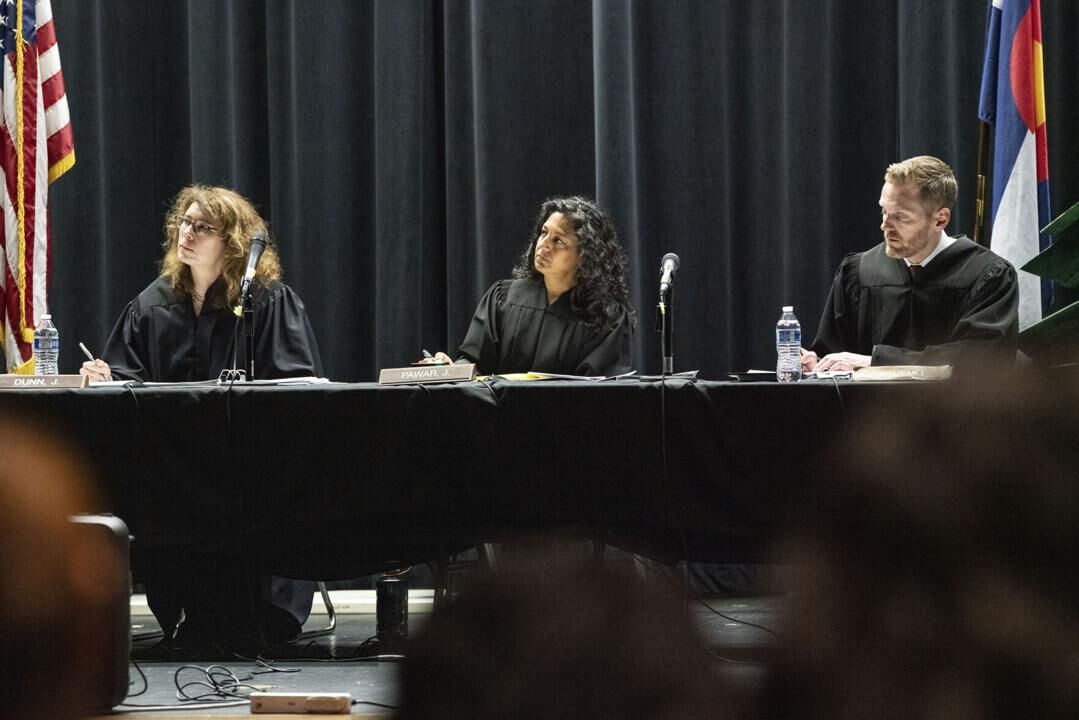
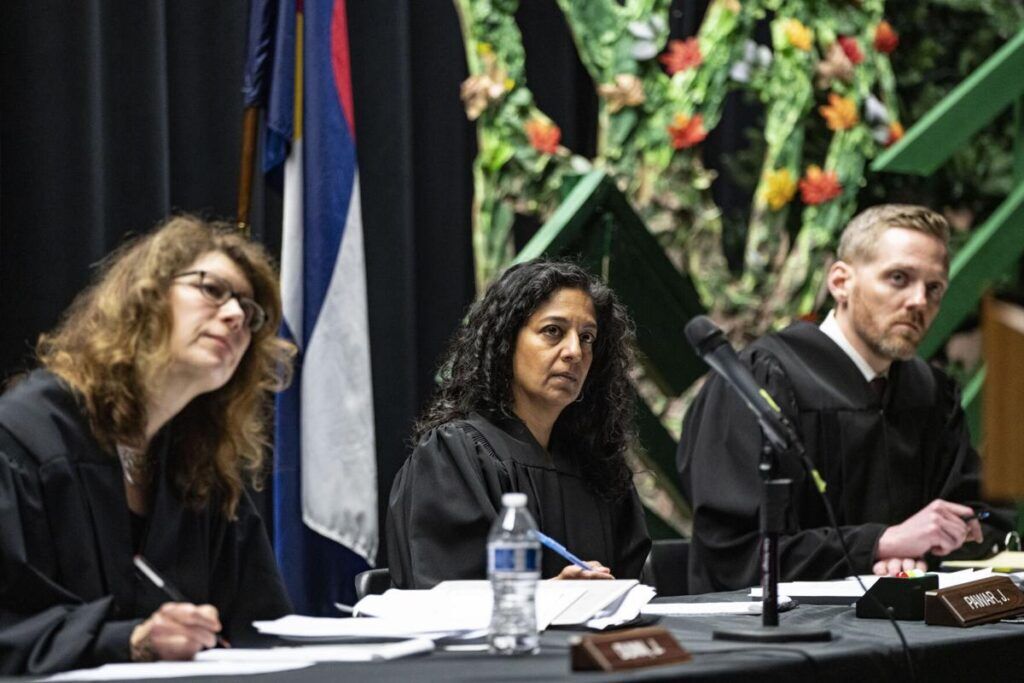
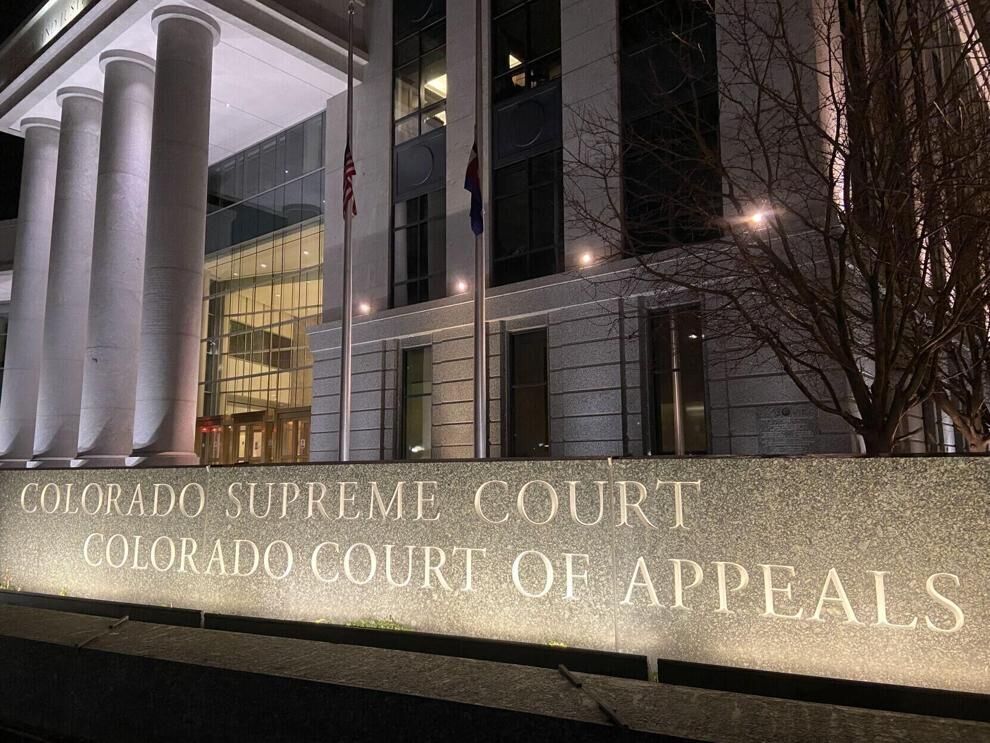
Colorado’s second-highest court concluded on Thursday that an Arapahoe County judge’s visible display of emotion during a child victim’s testimony should not trigger a new trial for the defendant.
A three-judge Court of Appeals panel found that defendant Philip Morgan had failed to show how the reaction by District Court Judge Ryan Stuart during trial was harmful to him.
“None of this is to suggest that we are unconcerned about this record. Courts must be fair and impartial,” wrote Judge Stephanie Dunn in the May 7 opinion. “And while no one is impervious to emotion, courts must maintain decorum and emotional control. Unfortunately, that doesn’t always happen. More commonly, emotions spill out in intemperate or ill-advised comments, leading to claims of bias and prejudice.”
Case: People v. Morgan
Decided: May 7, 2026
Jurisdiction: Arapahoe County
Ruling: 3-0
Judges: Stephanie Dunn (author)
Elizabeth L. Harris
Pax L. Moultrie
Jurors convicted Morgan in 2022 on two counts of sexual assault against a child. He received a sentence of 50 years to life in prison.
After the 12-year-old victim began testifying, there was a break in the proceedings. The defense attorney stated that he had seen Stuart “tearing up” while the child was speaking. The lawyer was concerned that Stuart’s reaction inappropriately signaled that he found the victim credible, and the defense moved for a mistrial.
Stuart acknowledged that he “felt tears welling up,” but “no tears ever came out.” He said that he had immediately grabbed a legal text and began to read to distract himself. Although Stuart noticed the defense lawyer looking at him, he did not see any jurors paying attention.
Stuart also clarified that the jury would have seen him from an angle, and his clerk had not noticed him tearing up. Stuart did not immediately rule on the request for a mistrial, and said he needed to research the issue.
The next day, Stuart said he allowed his emotions “to become temporarily observable to at least some people in the courtroom.”
“Any human being with any emotion or empathy feels emotion just hearing that testimony, regardless of whether you think it was true or not true,” he continued. “Now, I’m not saying that I should have displayed any emotion. I should not have. That was improper. It was certainly not intentional, and it came quickly and surprised me when it happened. But to believe that a juror would then make the leap that I found (the victim) more credible because I had a brief moment of not acting like a robot up here — I think that’s another assumption that I would have to make quite a leap and speculate.”
Stuart asked if the defense lawyer wanted to question the jury about what they saw. Although the lawyer expressed interest, he ultimately declined the offer. Stuart then denied the motion for a mistrial.

On appeal, Morgan argued Stuart’s reaction during the victim’s testimony violated his right to a fair trial.
“Even if a juror had noticed the court’s eyes — though the record does not suggest that any juror did — this would not have required a mistrial,” countered Assistant Attorney General Jaycey DeHoyos. There was “no evidence that the court’s slight and unobtrusive emotional reaction created an unacceptable risk of impacting the jury.”
“There is good reason why appellants need not prove prejudice: it’s impossible to precisely measure the impact of a judge signaling that he finds the complaining witness credible,” responded public defender River B. Sedaka.
The Court of Appeals panel concluded that Stuart’s reaction did not violate Morgan’s rights under the circumstances.
“To be sure, all agree — including the district court — that the court should not have expressed emotion during the victim’s testimony and that courts must exercise restraint over their conduct,” wrote Dunn. But nothing “shows that the jury — or anyone besides defense counsel — saw the court’s reaction.”
She added that the defense’s decision not to question the jurors meant that no one could determine if corrective action was necessary in the moment.
In the absence of “any indication that the jury saw the court’s emotional reaction to the victim’s testimony, we conclude that the district court didn’t abuse its considerable discretion by denying the mistrial motion,” Dunn wrote.
The case is People v. Morgan.


A new day? Colorado’s troubled guardianship office pursues ‘cultural reset’
Marianne Goodland
marianne.goodland@coloradopolitics.com
Updated 3 days ago
Colorado’s guardianship program, long criticized for mismanagement and high staff attrition, is undergoing a “cultural reset,” as its new director works to repair partnerships and prepare for a major expansion under recent legislation. Created by lawmakers in 2017, the Office...
Local party leaders, incoming judge among members of judicial performance commission that violated law
Michael Karlik
michael.karlik@coloradopolitics.com
Updated 1 day ago
A local Democratic leader and 2024 presidential elector. A legislative aide and leader in the Young Republicans. An incoming county court judge freshly appointed by the governor. They are among the eight members of the northeastern Colorado judicial performance commission...
Judge dismisses lawsuit seeking records from Colorado Democratic group
Marianne Goodland
marianne.goodland@coloradopolitics.com
Updated 2 days ago
A lawsuit seeking to obtain records from Democratic lawmakers affiliated with a caucus has been thrown out by a Denver District Court judge. On July 17, Judge Ericka Englert dismissed the April lawsuit filed by progressive activist Derrick Blanton, who...
Colorado Springs mother Deborah Nicholls’ murder conviction overturned
Nick Smith
nick-smith@coloradopolitics.com
Updated 3 days ago
A Colorado Springs mother convicted in 2008 of murdering her three children in a house fire might get a new trial after a judge ruled that prosecutors withheld key evidence that could have impacted the jury’s verdict. Deborah Nicholls, whose...
Colorado court overturns illegal $7,000 restitution order
Michael Karlik
michael.karlik@coloradopolitics.com
Updated 2 days ago
Colorado’s second-highest court overturned a Weld County defendant’s obligation to pay more than $7,000 in crime victim restitution on Thursday because a trial judge failed to issue a legally compliant restitution order at the time of sentencing. In Colorado, as...

Appeals court rejects former DougCo commissioner’s legal fee claim
Nicholas Fogleman
nicholas.fogleman@denvergazette.com
Updated 3 days ago
The Colorado Court of Appeals rejected a former Douglas County commissioner’s bid for reimbursement of attorney fees she incurred while responding to multiple investigations into her conduct. The dispute stemmed from a 2019 anonymous letter sent to county officials alleging...
Appeals court orders second look at Denver Water’s immunity for cyclist’s injury
Michael Karlik
michael.karlik@coloradopolitics.com
Updated 3 days ago
Colorado’s second-highest court ordered another look at a bicyclist’s negligence lawsuit against Denver Water on Thursday, concluding that a trial judge needed to evaluate the utility’s potential immunity using the state Supreme Court’s new guidance. Joseph A. “Joey” Scott alleged...
Labels, duration not definitive proof of ‘intimate relationship,’ Colorado court rules in domestic violence case
Michael Karlik
michael.karlik@coloradopolitics.com
Updated 2 days ago
Colorado’s second-highest court clarified on Thursday that the length of a couple’s relationship and the labels they attach to it are not conclusive evidence of whether it is an “intimate relationship” that can give rise to a domestic violence prosecution....

Colorado AG urges Supreme Court to let Boulder climate lawsuit proceed
Marissa Ventrelli
marissa.ventrelli@coloradopolitics.com
Updated 3 days ago
Colorado Attorney General Phil Weiser has filed a court brief with the U.S. Supreme Court in a lawsuit brought by Boulder city officials seeking to hold oil companies liable for their environmental impact. The case began in 2018, when the...
10th Circuit says landowner cannot sue ex-Routt County judge for statements in decision
Michael Karlik
michael.karlik@coloradopolitics.com
Updated 4 days ago
A Routt County landowner cannot sue a former judge for his allegedly inaccurate statements in a case where the landowner was not a party, the Denver-based federal appeals court decided on Wednesday. Anne Fitzsimmons, who lives in Germany, owns a...
PREV
PREVIOUS

Federal judge hears request to halt 'stewardship' transfer of NCAR supercomputer
A federal judge sought to understand last week how the government possesses the authority to transfer “stewardship” of a research and forecasting supercomputer from the Boulder-based operator of the National Center for Atmospheric Research. In the process, U.S. District Court Senior Judge R. Brooke Jackson raised questions about whether the decision is final, what “stewardship” […]
Mike Lindell's lawyer sanctioned again over flawed case citations
A federal judge financially sanctioned a lawyer for MyPillow CEO Mike Lindell for a second time on Thursday for including a “materially incorrect citation” in a case filing. U.S. District Court Judge Nina Y. Wang imposed a $5,000 fine on attorney Christopher Kachouroff and his law firm. Because Lindell, his media company, and Kachouroff’s co-counsel […]