

Mike Lindell’s lawyer sanctioned again over flawed case citations
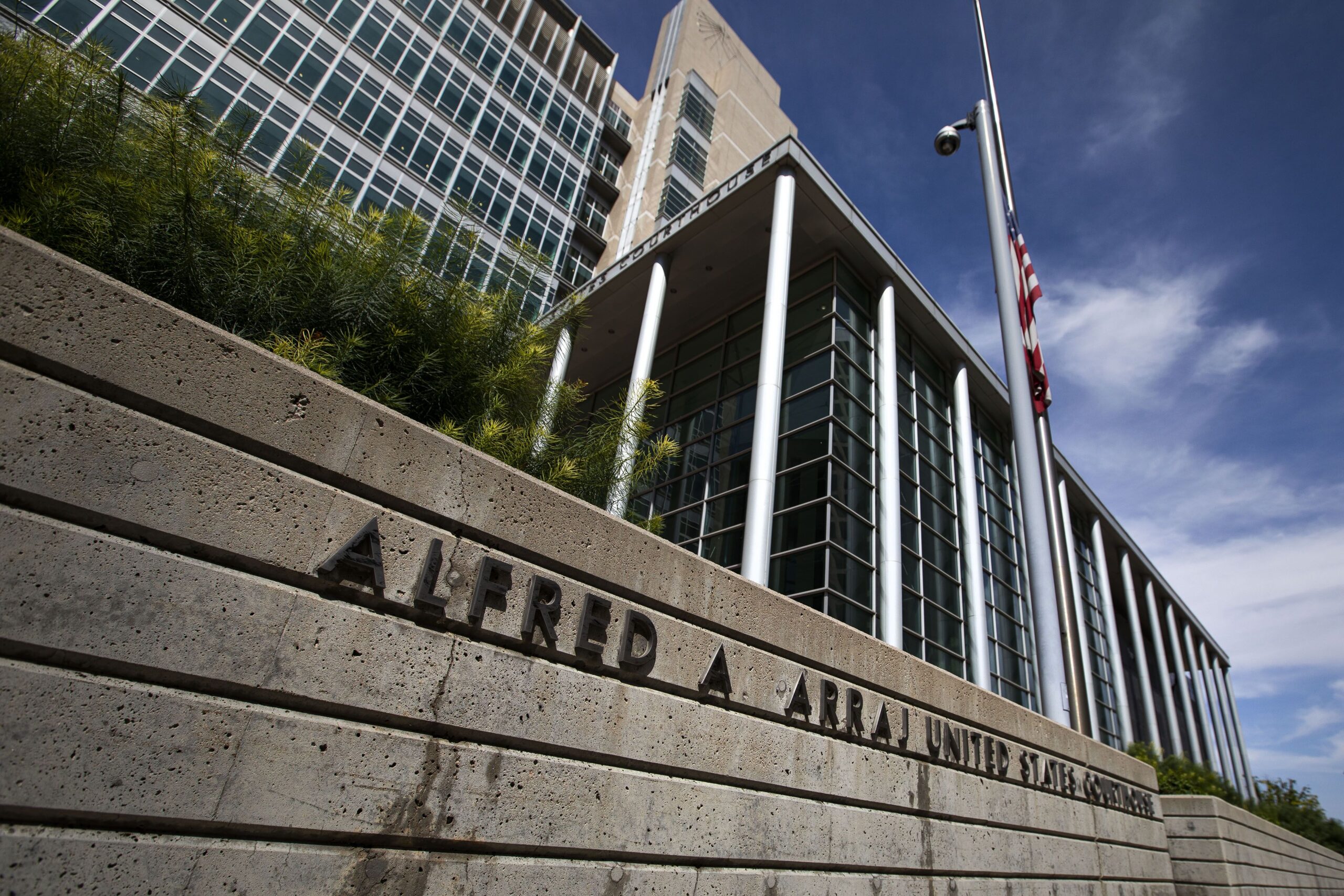
A federal judge financially sanctioned a lawyer for MyPillow CEO Mike Lindell for a second time on Thursday for including a “materially incorrect citation” in a case filing.
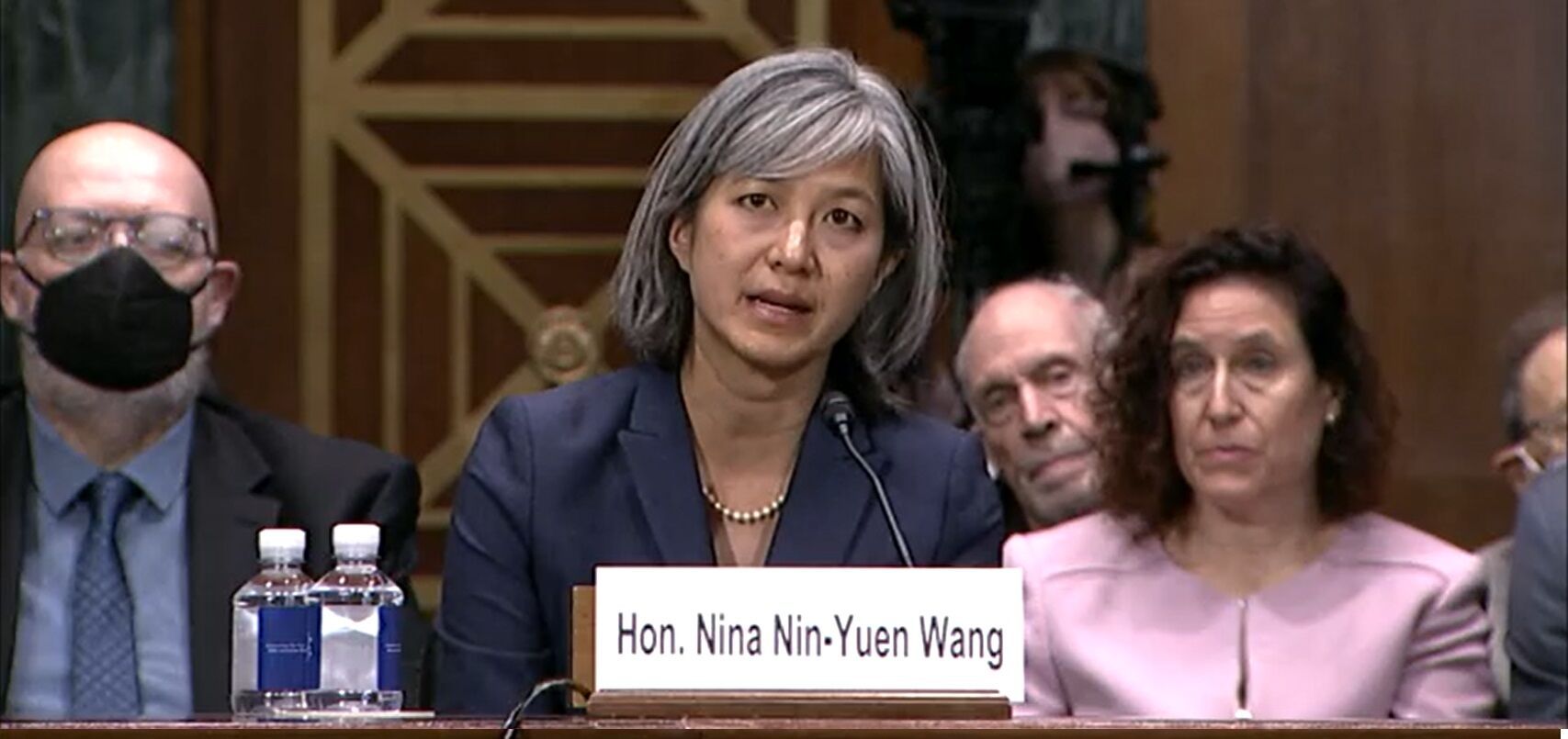
U.S. District Court Judge Nina Y. Wang imposed a $5,000 fine on attorney Christopher Kachouroff and his law firm. Because Lindell, his media company, and Kachouroff’s co-counsel were not responsible for the violation, Wang did not penalize them.
“As the Court has emphasized, Mr. Kachouroff has already been sanctioned twice for this exact type of error,” she wrote in a May 7 order. “He had ample notice of the importance of verifying the technical and substantive accuracy of his citations — particularly if and when AI has played a role in the research and drafting process.”
Last year, a jury in Colorado awarded plaintiff Eric Coomer $2.3 million in damages against Kachouroff’s clients, which included Lindell and his media platform FrankSpeech. Jurors found the defendants defamed Coomer, a former executive of Denver-based Dominion Voting Systems, by making or disseminating unproven statements of election-rigging and accusing him of treason.
During the litigation, Wang discovered approximately 30 “defective citations,” including misquotations, misrepresentations of law, and cases that did not exist in a filing submitted by Kachouroff and attorney Jennifer T. DeMaster. They alleged that they inadvertently filed an earlier draft of the document, and “human error” was to blame.
In July 2025, Wang ordered Kachouroff and his law firm to pay $3,000, and ordered DeMaster to pay $3,000 as well. She imposed the financial sanctions under the federal rule requiring lawyers to certify that they are presenting non-frivolous claims supported by law.
Shortly afterward, a federal judge in Wisconsin handed down financial sanctions against Kachouroff and DeMaster in a different case involving similar errors.
Then, while addressing a set of post-trial motions this year, Wang identified another problem with the defendants’ arguments. In response to a motion from the plaintiff’s attorneys, the defense cited a decision of the U.S. Court of Appeals for the 10th Circuit in their first paragraph, and repeatedly argued the decision meant that Wang should not unilaterally increase the jury’s damages award.
However, that case did not exist.
“The Court cannot ignore this reoccurring conduct simply because the trial is over,” wrote Wang in a March 25 order.
Wang directed Kachouroff and DeMaster to explain why she should not impose an additional $5,000 penalty for another violation of the rules. Wang also asked the attorneys to address why she should not refer them to the disciplinary bodies in their respective states.
Kachouroff took sole responsibility for the faulty citation. He wrote that the decision was “still a real” case, albeit from the trial courts instead of the appeals court.
The rules do not “contemplate sanctions for every minor or inconsequential citation defect,” Kachouroff argued. He also said the mistake was not “the same type of AI generated error” that arose previously.
“The Response Brief did not contain an improper or unsupported legal principle. This explanation by no means minimizes what the Court rightly perceives concerning imprecise citations,” Kachouroff continued, “but they are not the type of error that supports sanctions.”
In her order, Wang said she had “a significant amount of skepticism” that artificial intelligence played no role in the latest mistake. She also pointed to Kachouroff’s inconsistent statements throughout the case about his use of AI tools.
“The obviousness of the error alone indicates that Mr. Kachouroff failed to reasonably review the Response before filing it,” Wang wrote. “Regardless of whether or not generative AI was used, this is not the type of error a seasoned attorney would or should make.”
She determined that the pattern of conduct justified a more severe financial sanction. Wang cited other judges’ decisions imposing up to $15,000 in penalties for fictitious citations, but she decided $5,000 would be a sufficient deterrent.
Wang further noted she was declining to refer Kachouroff to his state bar for potential discipline.
The case is Coomer v. Lindell et al.


A new day? Colorado’s troubled guardianship office pursues ‘cultural reset’
Marianne Goodland
marianne.goodland@coloradopolitics.com
Updated 3 days ago
Colorado’s guardianship program, long criticized for mismanagement and high staff attrition, is undergoing a “cultural reset,” as its new director works to repair partnerships and prepare for a major expansion under recent legislation. Created by lawmakers in 2017, the Office...
Local party leaders, incoming judge among members of judicial performance commission that violated law
Michael Karlik
michael.karlik@coloradopolitics.com
Updated 14 hours ago
A local Democratic leader and 2024 presidential elector. A legislative aide and leader in the Young Republicans. An incoming county court judge freshly appointed by the governor. They are among the eight members of the northeastern Colorado judicial performance commission...
Judge dismisses lawsuit seeking records from Colorado Democratic group
Marianne Goodland
marianne.goodland@coloradopolitics.com
Updated 1 day ago
A lawsuit seeking to obtain records from Democratic lawmakers affiliated with a caucus has been thrown out by a Denver District Court judge. On July 17, Judge Ericka Englert dismissed the April lawsuit filed by progressive activist Derrick Blanton, who...
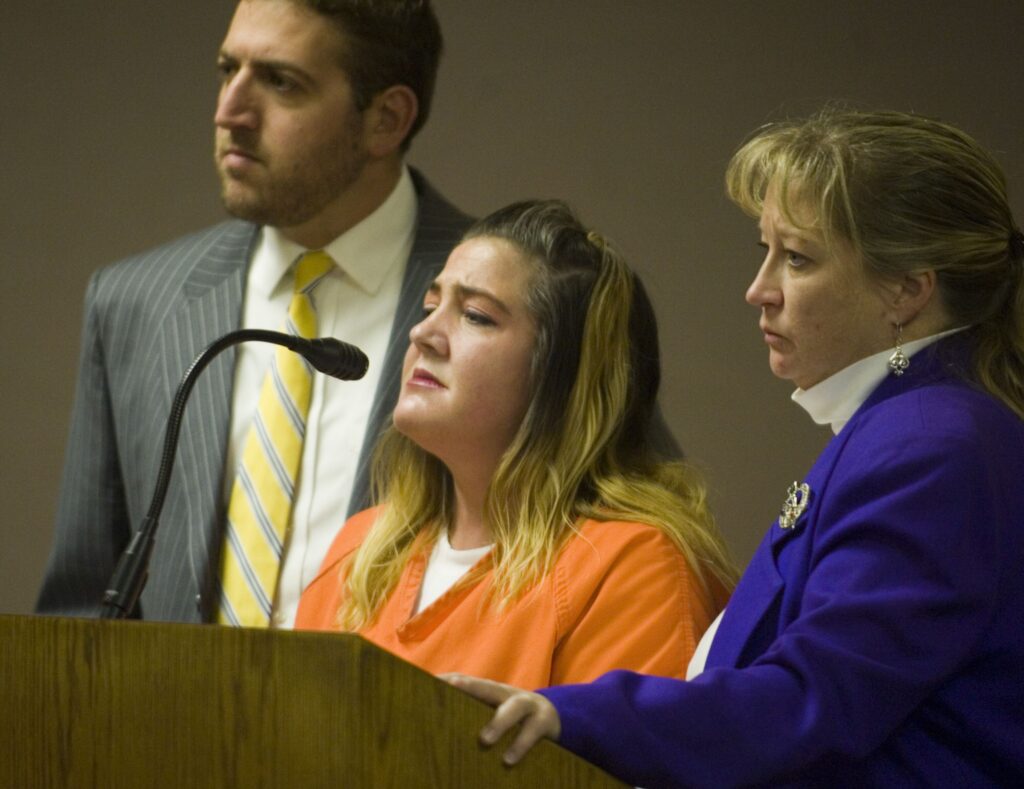
Colorado Springs mother Deborah Nicholls’ murder conviction overturned
Nick Smith
nick-smith@coloradopolitics.com
Updated 2 days ago
A Colorado Springs mother convicted in 2008 of murdering her three children in a house fire might get a new trial after a judge ruled that prosecutors withheld key evidence that could have impacted the jury’s verdict. Deborah Nicholls, whose...
Colorado court overturns illegal $7,000 restitution order
Michael Karlik
michael.karlik@coloradopolitics.com
Updated 1 day ago
Colorado’s second-highest court overturned a Weld County defendant’s obligation to pay more than $7,000 in crime victim restitution on Thursday because a trial judge failed to issue a legally compliant restitution order at the time of sentencing. In Colorado, as...

Appeals court rejects former DougCo commissioner’s legal fee claim
Nicholas Fogleman
nicholas.fogleman@denvergazette.com
Updated 2 days ago
The Colorado Court of Appeals rejected a former Douglas County commissioner’s bid for reimbursement of attorney fees she incurred while responding to multiple investigations into her conduct. The dispute stemmed from a 2019 anonymous letter sent to county officials alleging...
Appeals court orders second look at Denver Water’s immunity for cyclist’s injury
Michael Karlik
michael.karlik@coloradopolitics.com
Updated 2 days ago
Colorado’s second-highest court ordered another look at a bicyclist’s negligence lawsuit against Denver Water on Thursday, concluding that a trial judge needed to evaluate the utility’s potential immunity using the state Supreme Court’s new guidance. Joseph A. “Joey” Scott alleged...
Labels, duration not definitive proof of ‘intimate relationship,’ Colorado court rules in domestic violence case
Michael Karlik
michael.karlik@coloradopolitics.com
Updated 2 days ago
Colorado’s second-highest court clarified on Thursday that the length of a couple’s relationship and the labels they attach to it are not conclusive evidence of whether it is an “intimate relationship” that can give rise to a domestic violence prosecution....

Colorado AG urges Supreme Court to let Boulder climate lawsuit proceed
Marissa Ventrelli
marissa.ventrelli@coloradopolitics.com
Updated 2 days ago
Colorado Attorney General Phil Weiser has filed a court brief with the U.S. Supreme Court in a lawsuit brought by Boulder city officials seeking to hold oil companies liable for their environmental impact. The case began in 2018, when the...
10th Circuit says landowner cannot sue ex-Routt County judge for statements in decision
Michael Karlik
michael.karlik@coloradopolitics.com
Updated 3 days ago
A Routt County landowner cannot sue a former judge for his allegedly inaccurate statements in a case where the landowner was not a party, the Denver-based federal appeals court decided on Wednesday. Anne Fitzsimmons, who lives in Germany, owns a...
PREV
PREVIOUS
Judge tearing up during victim's testimony does not warrant new trial, appeals court says
Colorado’s second-highest court concluded on Thursday that an Arapahoe County judge’s visible display of emotion during a child victim’s testimony should not trigger a new trial for the defendant. A three-judge Court of Appeals panel found that defendant Philip Morgan had failed to show how the reaction by District Court Judge Ryan Stuart during trial […]

Bill permitting lawsuits against ICE agents reaches Gov. Jared Polis' desk
Colorado lawmakers advanced two high‑profile measures Thursday — one seeks to reshape how the state manages its strained prison population and another allows Coloradans to sue federal immigration agents for alleged constitutional violations. The state policymakers sent both bills to Gov. Jared Polis as the legislative session enters its final stretch. Prison population management Senate […]