

Federal judge proposes sanctions against Mike Lindell’s lawyers for continued fake citations
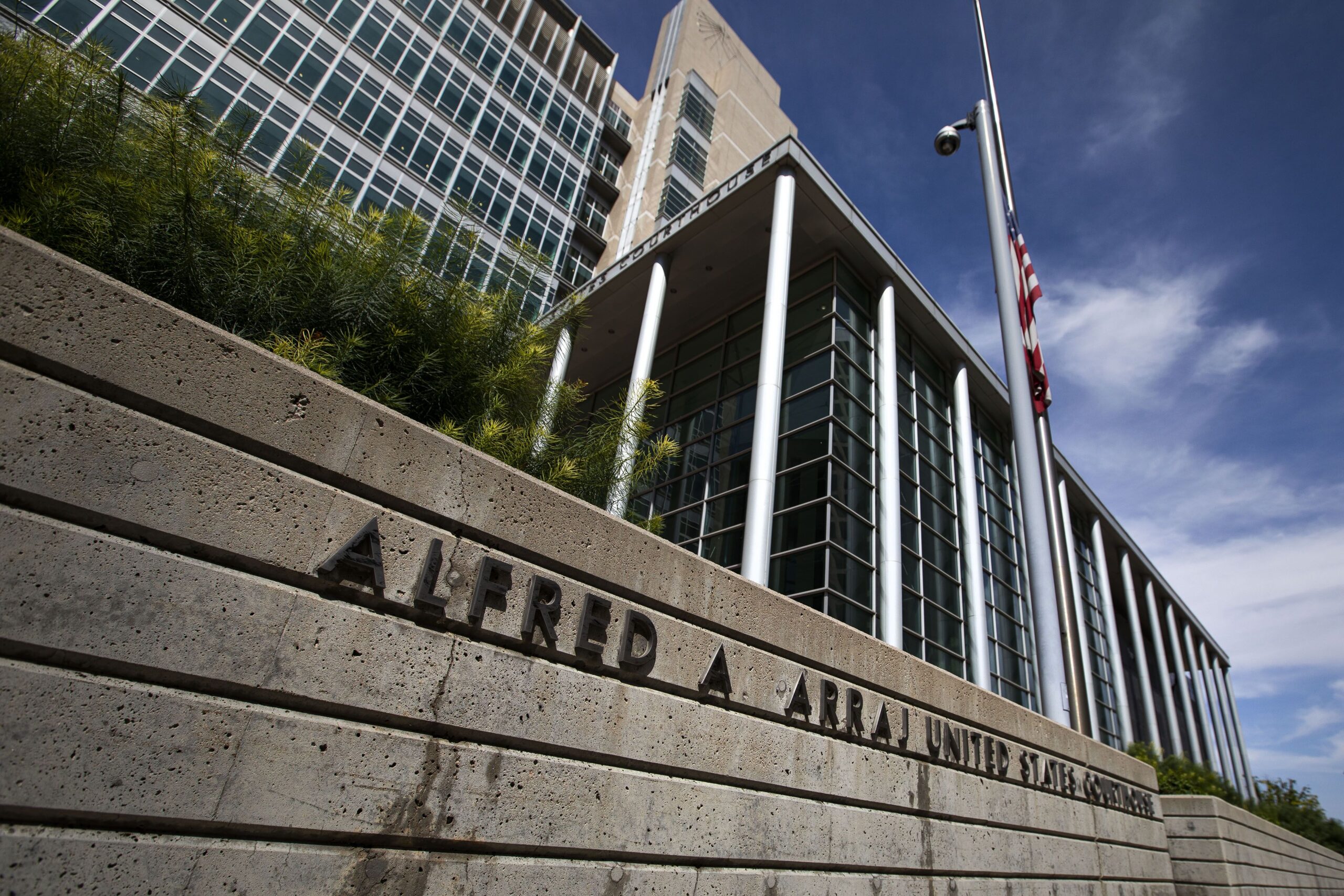
A federal judge is once again pursuing sanctions against lawyers for MyPillow CEO Mike Lindell for continuing to cite to court cases that do not exist, likely based on the faulty output of artificial intelligence tools.
Last year, a jury in Colorado awarded plaintiff Eric Coomer $2.3 million in damages against the defendants, Lindell and his media platform, formerly known as FrankSpeech. Jurors found the defendants defamed Coomer, a former executive of Denver-based Dominion Voting Systems, by making or disseminating unproven statements of election-rigging and accusing him of treason.
In addressing a set of post-trial motions, U.S. District Court Judge Nina Y. Wang identified a problem with the defendants’ arguments: They cited a case that did not exist. Further, she had already imposed monetary sanctions on the lawyers for the same conduct earlier in the case.
“At that time, defense counsel both admitted that their previous citation errors were produced by artificial intelligence but then claimed that the errors resulted from a one-off mistaken filing of the wrong draft, not a failure to properly review their citations for accuracy,” wrote Wang in a March 25 order. “The Court cannot ignore this reoccurring conduct simply because the trial is over.”
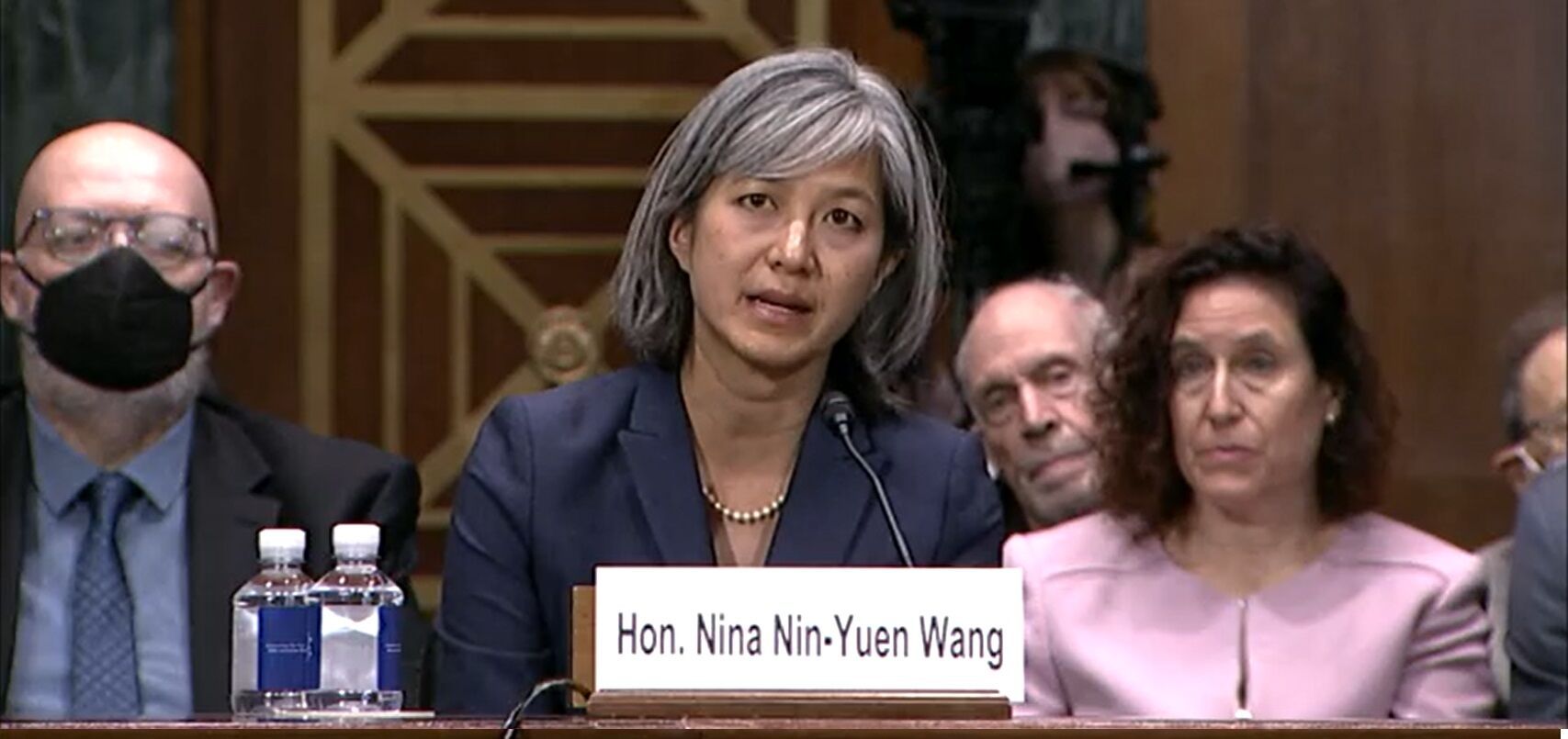
In July 2025, Wang ordered attorney Christopher I. Kachouroff and his law firm to pay $3,000, and attorney Jennifer T. DeMaster to also pay $3,000. The sanctions did not apply to Lindell and his companies, as they were unaware of the lawyers’ use of AI in preparing their court filings.
Wang found approximately 30 “defective citations,” including misquotations, misrepresentations of law, and cases that did not exist. Kachouroff and DeMaster alleged that they inadvertently filed an earlier draft of the document, and “human error” was to blame.
Kachouroff also submitted a declaration arguing it was “unfair” for Wang to “rapidly examine me with detailed questions about this document” in court.
Wang waved aside Kachouroff’s offense at her inquiry, and found no explanation for the attorneys’ actions other than “the use of generative artificial intelligence or gross carelessness.”
She imposed the financial sanctions under the federal rule requiring lawyers to certify that they are presenting non-frivolous claims supported by law.
After the trial, the defendants moved to overturn the jury’s verdict. They argued FrankSpeech was immune under the same provision of law that shields social media companies from liability for content posted by others. They also challenged the jury’s award of damages and the sufficiency of the evidence to prove defamation.
Coomer countered with his own motion to increase the jury’s damages award against FrankSpeech because of Lindell’s behavior while the lawsuit was pending. Specifically, Lindell continued to make statements accusing Coomer of criminality, posted to social media during the trial in violation of Wang’s order, and used the trial “as promotional material.”
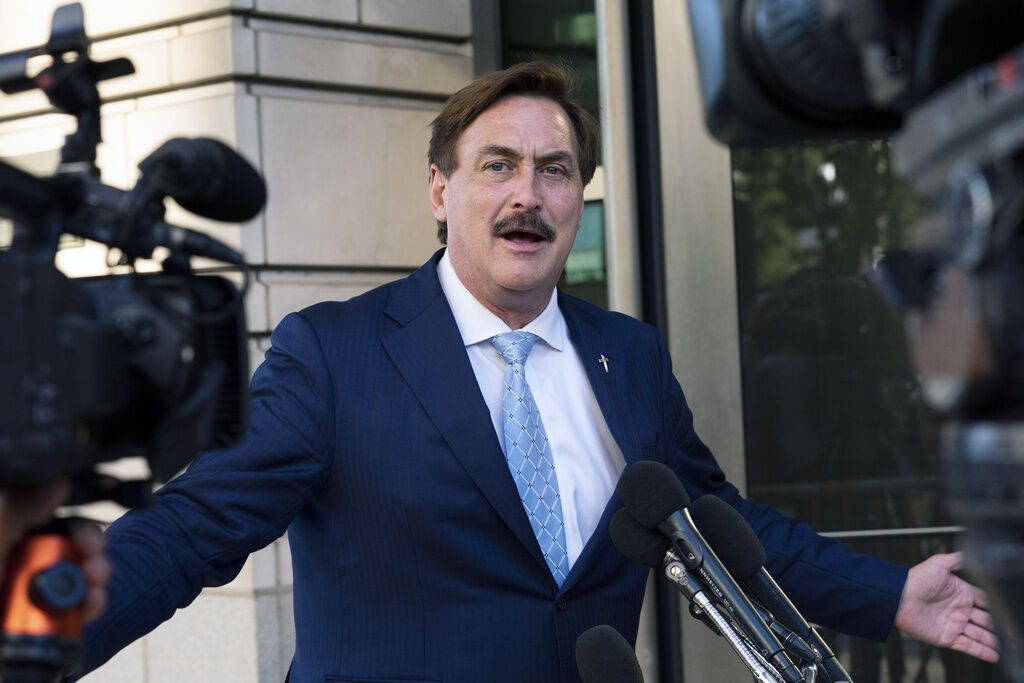
In response to Coomer’s motion, the defense attorneys cited a decision of the U.S. Court of Appeals for the 10th Circuit in their first paragraph, and repeatedly argued the decision meant that Wang should not unilaterally increase the jury’s damages award.
However, that case did not exist.
“Troublingly, given the background of this case, Frankspeech’s response brief misattributes a district court case to the Tenth Circuit,” wrote Wang in her latest order, adding that the lawyers’ description of the case was also inaccurate.
“Regardless of whether generative artificial intelligence was used or not, the Tenth Circuit has been clear that an attorney has a ‘fundamental duty’ to the Court to confirm that all legal authorities in submissions to the Court are accurately cited, reflect accurate quotations, and stand for the propositions for which they are cited,” she continued. “Here, it is inexplicable how these errors — the misrepresentation to the Court that this principle came from binding Tenth Circuit authority and the mis-citation of the case — occurred yet again.”
Wang directed Kachouroff and DeMaster to explain by April 8 why she should not impose an additional $5,000 penalty for another violation of the rules. Wang also asked the attorneys to address why she should not refer them to the disciplinary bodies in their respective states.
Otherwise, Wang denied both sides’ requests for post-trial relief. She determined FrankSpeech, with Lindell as its agent, was responsible for creating the defamatory statements, and not simply a conduit for third parties’ speech. Further, Wang found evidence to support the jury’s award of damages to Coomer.
As for Coomer’s request to augment the award to punish Lindell’s behavior, Wang did not find Lindell’s conduct increased Coomer’s level of damages. She also noted that some of the statements at issue were presented to the jury and, in turn, jurors found the defendants not liable.
“Imposing punitive damages for lawful speech — merely because other, similar statements were later found to be unlawful — would deter any speech related to the subject of a defamation lawsuit, not just defamatory speech,” Wang wrote.
The case is Coomer v. Lindell et al.

Federal judge hears arguments about Colorado’s 3-day gun purchase waiting period
Michael Karlik
michael.karlik@coloradopolitics.com
Updated 48 minutes ago
A federal judge heard arguments on Monday about the constitutionality of a 2023 Colorado law that generally imposes a three-day waiting period on firearm purchases after the initiation of a background check. The test that the U.S. Supreme Court created...
Colorado Supreme Court intervenes in Weld County prosecution dismissed due to Missy Woods misconduct
Michael Karlik
michael.karlik@coloradopolitics.com
Updated 16 hours ago
The Colorado Supreme Court ordered a Weld County trial judge last week to respond to the district attorney’s claim that he improperly dismissed a criminal case because of “outrageous” conduct by the Colorado Bureau of Investigation. Daniel Lee Eatinger stood...
Schoolchildren’s presence at child sex-related trial did not harm Arapahoe County defendant, appeals court says
Michael Karlik
michael.karlik@coloradopolitics.com
Updated 3 days ago
Colorado’s second-highest court decided on Thursday that the presence of a group of schoolchildren on the first day of a child sexual exploitation trial did not violate an Arapahoe County defendant’s constitutional right to a fair trial. Prosecutors charged Jerry...
Appeals court cites week-old Colorado law to reinstate child neglect case at child, father’s request
Michael Karlik
michael.karlik@coloradopolitics.com
Updated 2 days ago
Colorado’s second-highest court invoked a new state law for the first time on Thursday and reinstated a child neglect case that both the child and her father wished to reopen. House Bill 1227 took effect on Aug. 12, reversing a...
Colorado Supreme Court names William Hood as next chief justice
Michael Karlik
michael.karlik@coloradopolitics.com
Updated 4 days ago
The Colorado Supreme Court has selected Justice William W. Hood III to be the next chief justice, the judicial branch announced on Friday. Hood will succeed Chief Justice Monica M. Márquez, who took over the role in July 2024. “I...
Family of slain Lakewood teacher releases statement as murder suspect makes first court appearance
Matt Kyle
matt.kyle@denvergazette.com
Updated 23 hours ago
Patrick Theodore Barnett, the Lakewood man accused of killing his wife, a Jeffco Public Schools art teacher, made his first court appearance Friday morning as his wife’s family looked on. The status conference hearing was held before District Court Judge...
Appeals court upholds Park County trophy hunting conviction
Michael Karlik
michael.karlik@coloradopolitics.com
Updated 4 days ago
Colorado’s second-highest court clarified on Thursday that a defendant may stand convicted under the state’s trophy hunting laws if he abandons a bear carcass but returns later to remove the meat. Under Colorado law, it is a felony to detach...
Judge grants partial injunction to GEO in fight against state health inspection law
Kyla Pearce
kyla.pearce@gazette.com
Updated 5 days ago
A judge ruled Thursday that The GEO Group does not have to follow parts of a new state law requiring more frequent health and safety inspections at the U.S. Immigration and Customs Enforcement processing center in Aurora. Under the order...
Parker man faces 20 years to life for serial sexual assaults
Nicholas Fogleman
nicholas.fogleman@denvergazette.com
Updated 5 days ago
A 25-year-old Parker man who sexually assaulted three women in 2025 pleaded guilty Wednesday and will serve 20 years to life in prison. Javier Rodriguez-Andrade pleaded guilty to charges stemming from three sexual assaults involving women ages 19 to 24. ...
Divided appeals court upholds warrantless DNA collection in Colorado cold case, cautions of government overreach
Michael Karlik
michael.karlik@coloradopolitics.com
Updated 5 days ago
Colorado’s second-highest court upheld the warrantless collection of a suspect’s DNA from a discarded soda can as constitutional on Thursday, while warning about potential abuse of DNA privacy in the absence of further guardrails. By 2-1, a three-judge Court of...
PREV
PREVIOUS

Colorado Springs, other front Range cities oppose proposal to permit lot‑splitting
Colorado lawmakers are pressing ahead with a plan to let homeowners split their lots to make room for smaller, less expensive houses — a proposal that has drawn sharp opposition from Colorado Springs, Aurora, Denver and other Front Range cities that argue it undermines local control over land use. The legislation would change local land‑use […]

Hands-free law credited with preventing 600 crashes and 6 deaths in Colorado
New data shows Colorado’s hands-free law is curbing distracted driving on the state’s highways and has helped prevent nearly 600 crashes, more than 400 injuries and six fatalities statewide. A one-year analysis by Cambridge Mobile Telematics found that distracted driving declined 4.7% from 2024 to 2025 and dropped 8.3% in the first month after the […]