

Ex-attorney cannot remain anonymous while suing Colorado judicial branch, says 10th Circuit
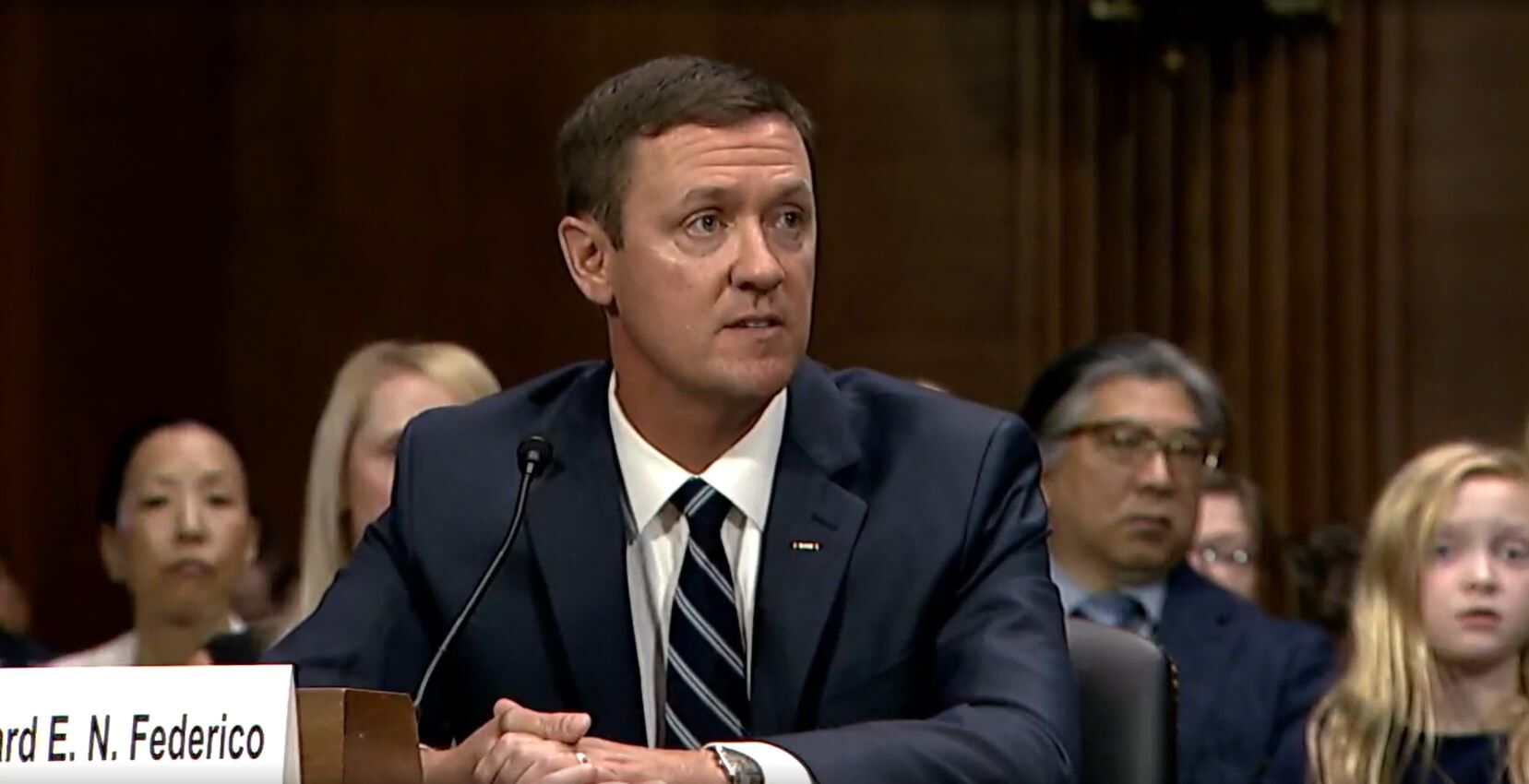
The Denver-based federal appeals court concluded last month that a former attorney cannot mask her identity while suing the Colorado Judicial Department for alleged improprieties in her disability and disbarment proceedings.
“Jane Roe,” representing herself, sued the Judicial Department and attorney regulators in 2024. She accused the defendants of discrimination, defamation, and violations of her constitutional rights in the proceedings that culminated in her disbarment.
Because Roe did not have an attorney, Colorado’s federal trial court routed her complaint through its screening process for self-represented litigants. U.S. Magistrate Judge Richard T. Gurley advised Roe that there need to be “exceptional” circumstances for plaintiffs to avoid using their real name in court.
“If Plaintiff wishes to proceed using a pseudonym, she must seek permission of the Court and demonstrate that she has an important privacy interest that should allow her to use this unusual procedure,” he wrote.
“Plaintiff is justifiably concerned about acts of reprisal that could further damage her personal and professional reputation and future endeavors and inflict additional and severe financial and/or mental harm,” Roe responded. “Plaintiff should also be permitted to proceed in this action anonymously because the public does not have a strong interest in knowing her identity.”
The Colorado Freedom of Information Coalition and Eugene Volokh, a First Amendment scholar and a Hoover Institution fellow at Stanford, objected to Roe’s request for anonymity.
“Plaintiff is claiming that she was mistreated in the attorney disciplinary process — but to evaluate that process one has to know her name, so as to find the decision explaining her disbarment and other decisions that provide a perspective on her alleged misbehavior,” they wrote. “If a decision against Defendants is rendered ‘behind closed doors,’ with details about the plaintiff ‘sealed from public view,’ that would understandably increase public skepticism about the fairness of the process.”
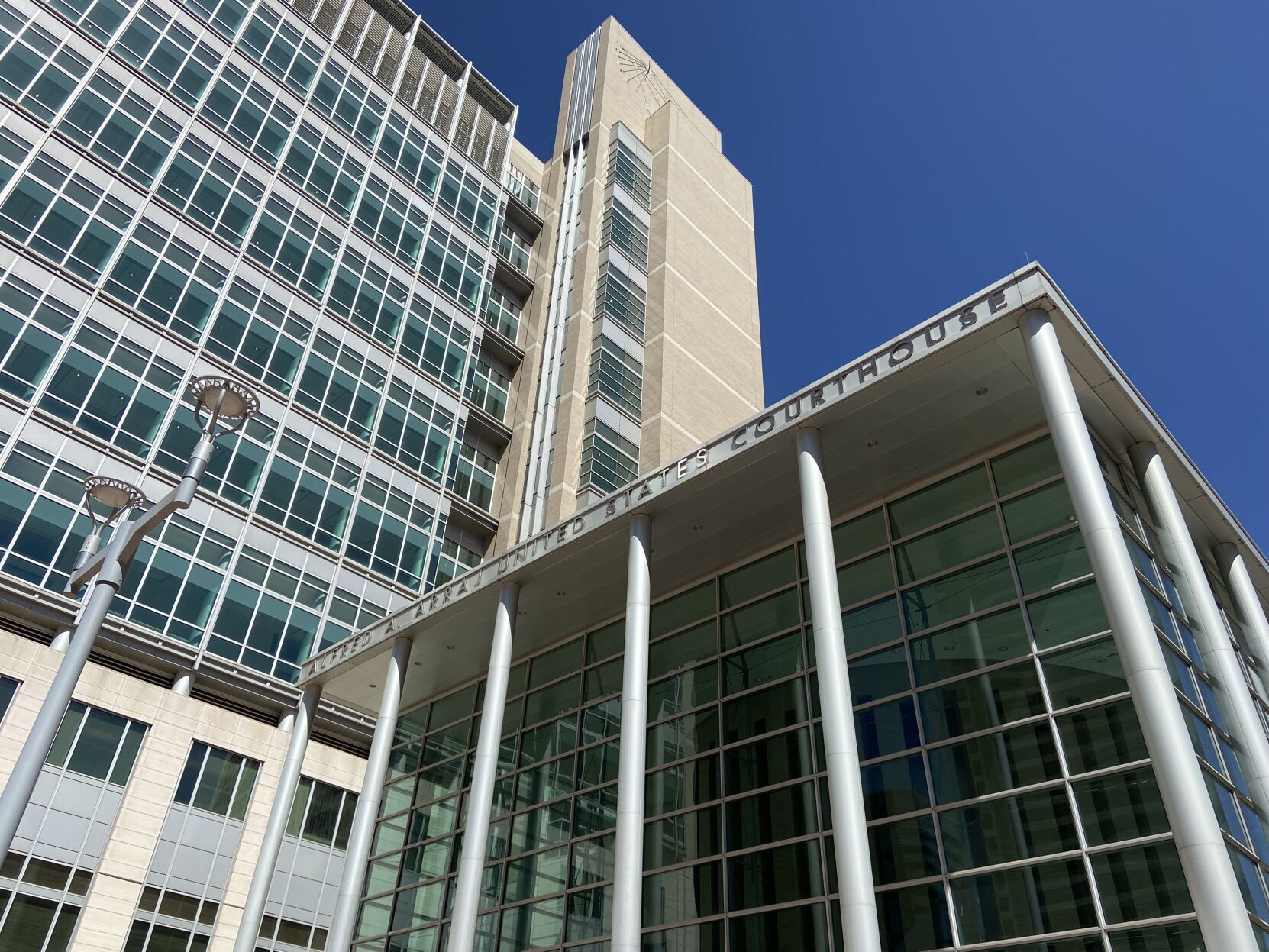
In April 2025, Chief U.S. Magistrate Judge Scott T. Varholak, who inherited the case from Gurley, decided Roe had not made a strong enough argument for remaining anonymous.
“Plaintiff’s allegations are entirely too vague and too conclusory to overcome the presumptive right of public access to court filings and proceedings and to warrant restriction,” he wrote, ordering Roe to file a complaint under her real name.
Roe objected, but U.S. District Court Senior Judge Lewis T. Babcock upheld Varholak’s directive and gave Roe 30 days to amend her complaint or face dismissal.
Roe appealed to the U.S. Court of Appeals for the 10th Circuit, where she argued that revealing her name “is likely to create a side show that diverts attention away from the very real constitutional issues.”
On June 16, a three-judge 10th Circuit panel agreed with Varholak that Roe’s case did not involve the typical circumstances where federal courts permit anonymity.
Case: Roe v. Colorado Judicial Department
Decided: June 16, 2026
Jurisdiction: U.S. District Court for Colorado
Ruling: 3-0
Judges: Richard E.N. Federico (author)
Scott M. Matheson Jr.
Nancy L. Moritz
“First, we are not persuaded this case involves ‘matters of a highly sensitive and personal nature’ to any degree that outweighs the presumption of openness,” wrote Judge Richard E.N. Federico. “Appellant acknowledges her identity was made public in the underlying disbarment proceeding but argues disclosing it in this case ‘would expand stigma.’ However, her own ’embarrassment’ regarding the disability and disbarment proceedings ‘is not enough’ to support her use of a pseudonym.”
He added that Roe had not explained how she would suffer future harm from revealing her name. Further, the panel was not persuaded by Roe’s argument that shielding her name would keep the case focused on the merits of her allegations.
Those contentions, “which might be raised in almost any lawsuit,” Federico added, “fail to show her case is ‘exceptional’.”
To date, Roe has not filed an amended complaint under her real name.
In her complaint, Roe referenced a disbarment decision from a disciplinary panel dated March 3, 2023, and a February 20, 2024, Colorado Supreme Court decision blocking her from representing herself in state courts. The only person whose disciplinary proceedings coincided with those dates is Nina H. Kazazian.
Further, “Jane Roe’s” address on her legal filings was identical to the address listed by Kazazian in a 2024 lawsuit filed in federal court in Illinois under her real name.
“In the past eleven years, respondent, Nina H. Kazazian, has initiated no fewer than ten lawsuits and twice as many appeals — most of which courts have found to be duplicative, meritless, or otherwise frivolous,” the Supreme Court wrote in its 2024 decision. “Now, no longer constrained by the ethical obligations of attorneys, Kazazian persists as a pro se (self-represented) party, creating new proceedings or prolonging old ones to continue her fruitless attempts at relitigating long-decided issues.”
Colorado Politics was unable to reach Kazazian by phone or email, despite sending messages to multiple addresses, regarding the Colorado case.
The case is Roe v. Colorado Judicial Department et al.

Federal judge hears arguments about Colorado’s 3-day gun purchase waiting period
Michael Karlik
michael.karlik@coloradopolitics.com
Updated 11 hours ago
A federal judge heard arguments on Monday about the constitutionality of a 2023 Colorado law that generally imposes a three-day waiting period on firearm purchases after the initiation of a background check. The test that the U.S. Supreme Court created...
Colorado Supreme Court intervenes in Weld County prosecution dismissed due to Missy Woods misconduct
Michael Karlik
michael.karlik@coloradopolitics.com
Updated 14 hours ago
The Colorado Supreme Court ordered a Weld County trial judge last week to respond to the district attorney’s claim that he improperly dismissed a criminal case because of “outrageous” conduct by the Colorado Bureau of Investigation. Daniel Lee Eatinger stood...
Schoolchildren’s presence at child sex-related trial did not harm Arapahoe County defendant, appeals court says
Michael Karlik
michael.karlik@coloradopolitics.com
Updated 3 days ago
Colorado’s second-highest court decided on Thursday that the presence of a group of schoolchildren on the first day of a child sexual exploitation trial did not violate an Arapahoe County defendant’s constitutional right to a fair trial. Prosecutors charged Jerry...
Appeals court cites week-old Colorado law to reinstate child neglect case at child, father’s request
Michael Karlik
michael.karlik@coloradopolitics.com
Updated 2 days ago
Colorado’s second-highest court invoked a new state law for the first time on Thursday and reinstated a child neglect case that both the child and her father wished to reopen. House Bill 1227 took effect on Aug. 12, reversing a...
Colorado Supreme Court names William Hood as next chief justice
Michael Karlik
michael.karlik@coloradopolitics.com
Updated 4 days ago
The Colorado Supreme Court has selected Justice William W. Hood III to be the next chief justice, the judicial branch announced on Friday. Hood will succeed Chief Justice Monica M. Márquez, who took over the role in July 2024. “I...
Family of slain Lakewood teacher releases statement as murder suspect makes first court appearance
Matt Kyle
matt.kyle@denvergazette.com
Updated 21 hours ago
Patrick Theodore Barnett, the Lakewood man accused of killing his wife, a Jeffco Public Schools art teacher, made his first court appearance Friday morning as his wife’s family looked on. The status conference hearing was held before District Court Judge...

Appeals court upholds Park County trophy hunting conviction
Michael Karlik
michael.karlik@coloradopolitics.com
Updated 3 days ago
Colorado’s second-highest court clarified on Thursday that a defendant may stand convicted under the state’s trophy hunting laws if he abandons a bear carcass but returns later to remove the meat. Under Colorado law, it is a felony to detach...
Judge grants partial injunction to GEO in fight against state health inspection law
Kyla Pearce
kyla.pearce@gazette.com
Updated 5 days ago
A judge ruled Thursday that The GEO Group does not have to follow parts of a new state law requiring more frequent health and safety inspections at the U.S. Immigration and Customs Enforcement processing center in Aurora. Under the order...
Parker man faces 20 years to life for serial sexual assaults
Nicholas Fogleman
nicholas.fogleman@denvergazette.com
Updated 5 days ago
A 25-year-old Parker man who sexually assaulted three women in 2025 pleaded guilty Wednesday and will serve 20 years to life in prison. Javier Rodriguez-Andrade pleaded guilty to charges stemming from three sexual assaults involving women ages 19 to 24. ...
Divided appeals court upholds warrantless DNA collection in Colorado cold case, cautions of government overreach
Michael Karlik
michael.karlik@coloradopolitics.com
Updated 5 days ago
Colorado’s second-highest court upheld the warrantless collection of a suspect’s DNA from a discarded soda can as constitutional on Thursday, while warning about potential abuse of DNA privacy in the absence of further guardrails. By 2-1, a three-judge Court of...
PREV
PREVIOUS

DPS Superintendent Alex Marrero misses cut for Miami-Dade job
Denver Public Schools (DPS) Superintendent Alex Marrero did not make the short list of candidates vying for the top job with the Miami-Dade County Public School District. The Miami-Dade school board narrowed the field from 21 applicants to six semifinalists. The list includes two Miami-Dade administrators and four other education leaders from Florida, Texas and […]

Cherry Creek School District paid law firm $114K, including $40K for political consultant, over superintendent allegations
The Cherry Creek School District paid $114,000 to hire outside counsel to provide the Board of Education with legal advice as it navigated the allegations that were swirling around the former superintendent. Fisher Phillips invoices obtained through a Colorado Open Records Act request show the district paid $114,191.50 from March through June. Roughly a third […]