

10th Circuit revives Colorado voter intimidation lawsuit due to judge’s error
The Denver-based federal appeals court on Monday reversed a trial judge’s finding that the leaders of an “election integrity” effort had not illegally intimidated Colorado voters through an organized door-to-door canvassing project to search for election fraud in the wake of the 2020 presidential race.
A three-judge panel of the U.S. Court of Appeals for the 10th Circuit ruled that the 2024 trial before U.S. District Court Judge Charlotte N. Sweeney was fatally flawed because she dismissed the organization itself as a defendant. The move limited the evidence Sweeney ultimately heard against the leaders of the canvassing effort.
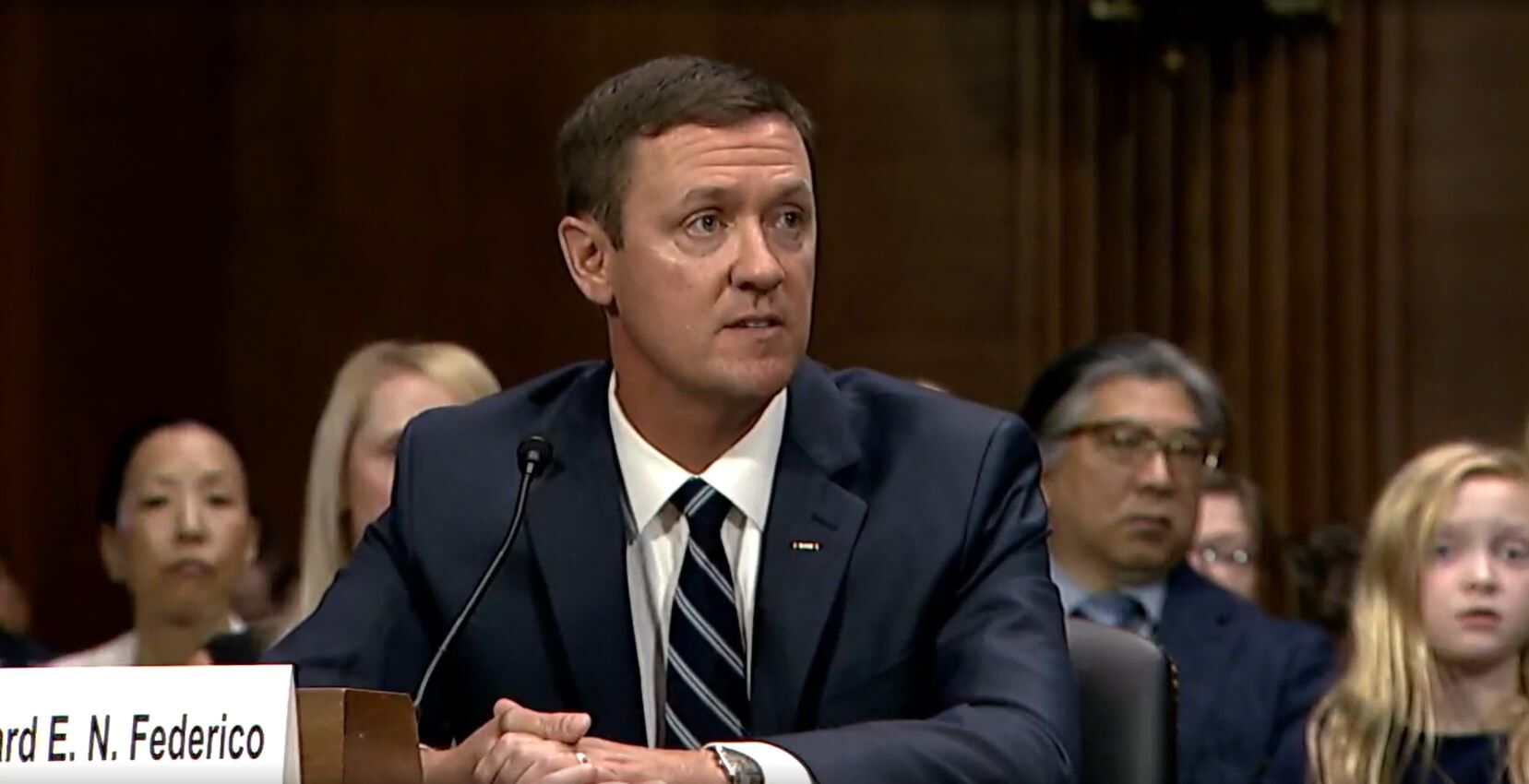
“While this is a close call, we conclude that the dismissal of (U.S. Election Integrity Plan) had a substantial influence on the outcome of the bench trial because it narrowed the scope of the evidence the district court considered. As always, it is somewhat unclear and predictive how a trial would have proceeded if USEIP remained in the case as a defendant,” wrote Judge Richard E.N. Federico in the July 6 opinion. “But despite this lack of clarity, it is certain that the (plaintiffs) would have presented a stronger case if USEIP remained a defendant and part of the alleged conspiracy.”
Case: Colorado Montana Wyoming State Area Conference of the NAACP v. Smith
Decided: July 6, 2026
Jurisdiction: U.S. District Court for Colorado
Ruling: 3-0
Judges: Richard E.N. Federico (author)
Veronica S. Rossman
Michael R. Murphy
The plaintiff groups — the Colorado Montana Wyoming State Area Conference of the NAACP, the League of Women Voters of Colorado, and Mi Familia Vota — sued the founders of USEIP, which was an organized effort following the 2020 election to visit voters at more than 9,400 homes to inquire about their registrations and past voting behavior. They lodged claims under the Ku Klux Klan Act and the Voting Rights Act.
The defendants characterized the canvassing effort as “the equivalent to a high school civics project,” but the plaintiffs maintained the purpose was not benign. They pointed to USEIP’s “playbook,” published in August 2021 at the tail end of the door-knocking project, which claimed “they stole our election” and warned about “the destruction of the greatest nation in the history of earth.”
During the three-day trial before Sweeney, however, the case quickly unraveled. Both sides attempted to litigate matters unrelated to USEIP’s activities, and the plaintiffs for the first time raised the theory that employees of the Colorado Secretary of State’s Office might have been victims of voter intimidation, as well.
The case faltered further with the testimony of Yvette Roberts, a Grand Junction resident whom the plaintiffs chose to testify about her alleged intimidation by USEIP canvassers. In her telling, a man and woman approached her house in June 2021 to say they were “part of an investigation looking into the Colorado 2020 election” and were wearing semi-professional-looking badges.
Sweeney had previously allowed the case to proceed based on Roberts’ pretrial statements about the interaction. However, Roberts’ testimony indicated she did not experience any intimidating behavior, nor could she be sure the canvassers were even affiliated with USEIP.
“There was no evidence of voter intimidation, but simply a risk of voter intimidation. This court will not act on risk that was proven unfounded,” Sweeney, a Joe Biden appointee, said in ruling for the defendants.
On appeal, however, the 10th Circuit panel found Sweeney had made a key error before the trial even started. In January 2023, she dismissed USEIP itself from the lawsuit. Sweeney believed the 10th Circuit required her to rule that unincorporated groups, such as USEIP, were not “persons” to be sued under the Ku Klux Klan Act.
At the same time, Sweeney disagreed with the perceived restriction on plaintiffs’ ability to hold civil rights violators accountable.
Under the 10th Circuit’s precedent, she wrote, “civil rights organizations cannot seek relief against unincorporated associations … to halt an allegedly discriminatory conspiracy committed by the group’s members — which is entirely contrary to the purpose and history of the Ku Klux Klan Act.”

The 10th Circuit panel ultimately ruled that Sweeney’s concerns were misplaced, as its precedent did allow for USEIP to be sued after all.
“Indeed, during floor debates over the Ku Klux Klan Act, members of Congress repeatedly stated that Section 2 of the Act was meant to prohibit organizations of persons from denying ‘any class or condition of men equal protection’,” wrote Federico, a Biden appointee.
Because USEIP was incorrectly excluded from the trial, Federico continued, Sweeney limited the evidence about alleged intimidation activities. Therefore, a new trial was warranted.
“Whether and how the trial evidence on remand may be presented, admitted into evidence, and considered to make findings is left to the sound discretion of the district court,” Federico wrote.
The panel did, however, conclude that one of Sweeney’s evidentiary decisions was erroneous. She declined to admit a video of defendant Shawn Smith speaking at a Castle Rock church, where he said, “If you’re involved in election fraud you deserve to hang.” Federico noted that none of the objections raised by the defendants had merit, so the video was fair game.
The case is Colorado Montana Wyoming State Area Conference of the NAACP et al. v. Smith et al.

Federal judge hears arguments about Colorado’s 3-day gun purchase waiting period
Michael Karlik
michael.karlik@coloradopolitics.com
Updated 5 hours ago
A federal judge heard arguments on Monday about the constitutionality of a 2023 Colorado law that generally imposes a three-day waiting period on firearm purchases after the initiation of a background check. The test that the U.S. Supreme Court created...
Colorado Supreme Court intervenes in Weld County prosecution dismissed due to Missy Woods misconduct
Michael Karlik
michael.karlik@coloradopolitics.com
Updated 8 hours ago
The Colorado Supreme Court ordered a Weld County trial judge last week to respond to the district attorney’s claim that he improperly dismissed a criminal case because of “outrageous” conduct by the Colorado Bureau of Investigation. Daniel Lee Eatinger stood...
Schoolchildren’s presence at child sex-related trial did not harm Arapahoe County defendant, appeals court says
Michael Karlik
michael.karlik@coloradopolitics.com
Updated 2 days ago
Colorado’s second-highest court decided on Thursday that the presence of a group of schoolchildren on the first day of a child sexual exploitation trial did not violate an Arapahoe County defendant’s constitutional right to a fair trial. Prosecutors charged Jerry...
Appeals court cites week-old Colorado law to reinstate child neglect case at child, father’s request
Michael Karlik
michael.karlik@coloradopolitics.com
Updated 2 days ago
Colorado’s second-highest court invoked a new state law for the first time on Thursday and reinstated a child neglect case that both the child and her father wished to reopen. House Bill 1227 took effect on Aug. 12, reversing a...
Colorado Supreme Court names William Hood as next chief justice
Michael Karlik
michael.karlik@coloradopolitics.com
Updated 3 days ago
The Colorado Supreme Court has selected Justice William W. Hood III to be the next chief justice, the judicial branch announced on Friday. Hood will succeed Chief Justice Monica M. Márquez, who took over the role in July 2024. “I...
Family of slain Lakewood teacher releases statement as murder suspect makes first court appearance
Matt Kyle
matt.kyle@denvergazette.com
Updated 15 hours ago
Patrick Theodore Barnett, the Lakewood man accused of killing his wife, a Jeffco Public Schools art teacher, made his first court appearance Friday morning as his wife’s family looked on. The status conference hearing was held before District Court Judge...
Appeals court upholds Park County trophy hunting conviction
Michael Karlik
michael.karlik@coloradopolitics.com
Updated 3 days ago
Colorado’s second-highest court clarified on Thursday that a defendant may stand convicted under the state’s trophy hunting laws if he abandons a bear carcass but returns later to remove the meat. Under Colorado law, it is a felony to detach...
Judge grants partial injunction to GEO in fight against state health inspection law
Kyla Pearce
kyla.pearce@gazette.com
Updated 4 days ago
A judge ruled Thursday that The GEO Group does not have to follow parts of a new state law requiring more frequent health and safety inspections at the U.S. Immigration and Customs Enforcement processing center in Aurora. Under the order...

Parker man faces 20 years to life for serial sexual assaults
Nicholas Fogleman
nicholas.fogleman@denvergazette.com
Updated 4 days ago
A 25-year-old Parker man who sexually assaulted three women in 2025 pleaded guilty Wednesday and will serve 20 years to life in prison. Javier Rodriguez-Andrade pleaded guilty to charges stemming from three sexual assaults involving women ages 19 to 24. ...
Divided appeals court upholds warrantless DNA collection in Colorado cold case, cautions of government overreach
Michael Karlik
michael.karlik@coloradopolitics.com
Updated 4 days ago
Colorado’s second-highest court upheld the warrantless collection of a suspect’s DNA from a discarded soda can as constitutional on Thursday, while warning about potential abuse of DNA privacy in the absence of further guardrails. By 2-1, a three-judge Court of...
PREV
PREVIOUS

United Way of Southern Colorado calls for donations, anticipates long recovery from Aspen Acres fire
As firefighters battle the Aspen Acres fire, the United Way of Southern Colorado is helping those displaced by the blaze. “This is going to take months and months to recover from,” said Shanna Farmer, president and CEO of the nonprofit, who noted the full scope of the disaster is unknown. The United Way of Southern […]
CSU expert shares air awareness strategies amid rising smoke, ozone risks
Wildfire smoke is blanketing parts of Colorado this summer following a dry winter, with large fires such as the Aspen Acres fire burning tens of thousands of acres and sending plumes across the state. Combined with frequent high-ozone days on the Front Range, poor air quality is threatening public health. The metro Denver area and […]