

Colorado appellate judges, lawyers hold annual conference | APPELLATE UPDATE
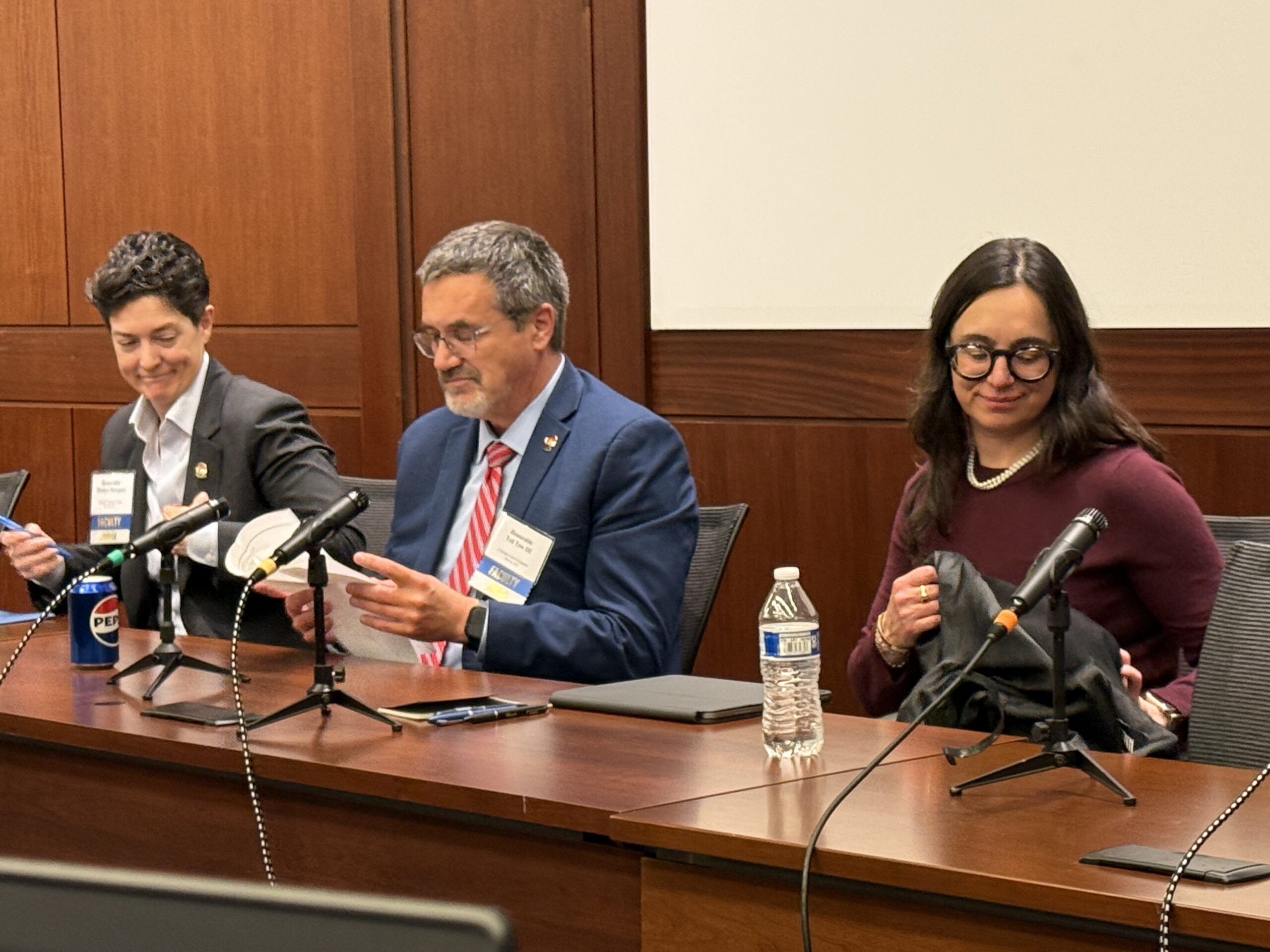
Appellate judges and attorneys gathered in Denver on Friday to discuss recent trends, exchange tips and clarify confusing areas of practice.
“One of the things I really had to focus on, coming from the trial court, is that my inclination before was to make sure things are raised and people were getting their questions answered. This is a different job,” said Judge Pax L. Moultrie, a former trial judge who now sits on the Court of Appeals. “Our rules are such that we don’t just get to answer everything under the sun.”
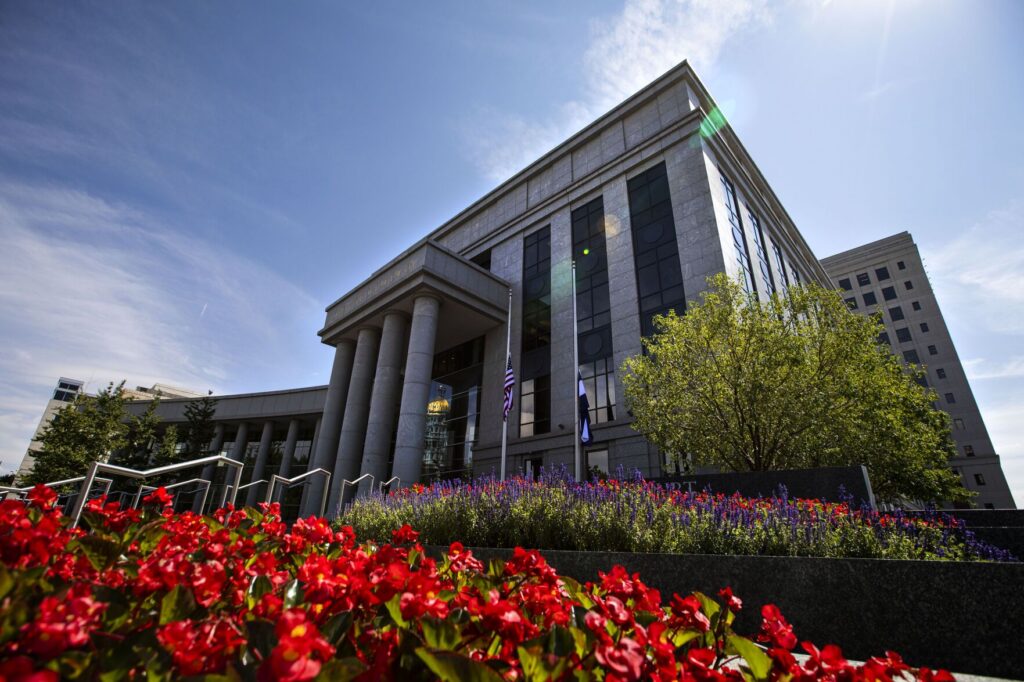
The Colorado Bar Association sponsored the annual appellate practice update, which took place at the Ralph L. Carr Colorado Judicial Center in downtown Denver.
Attorney Geoffrey C. Klingsporn presented statistics on the work of the state Supreme Court and Court of Appeals, with the assistance of data analyst Scott Hanks. Although the Court of Appeals saw roughly the same number of filings year-over-year, he found the Supreme Court case filings have been steadily decreasing.
Most surprisingly, Klingsporn’s data showed a steep decline in the past year in the amount of time lawyers took to fully brief a case and get it ready for oral arguments.
“Either we’re doing great or there’s something wrong with the numbers,” he said.
Moultrie spoke on a panel of judges about a collection of procedural issues that face the appellate courts. Those include “preservation,” which refers to the act of bringing an issue to a trial judge’s attention for a ruling. Failing to do so generally means an attorney has “waived” or “forfeited” the issue, depending on whether the lawyer knew what they were doing.
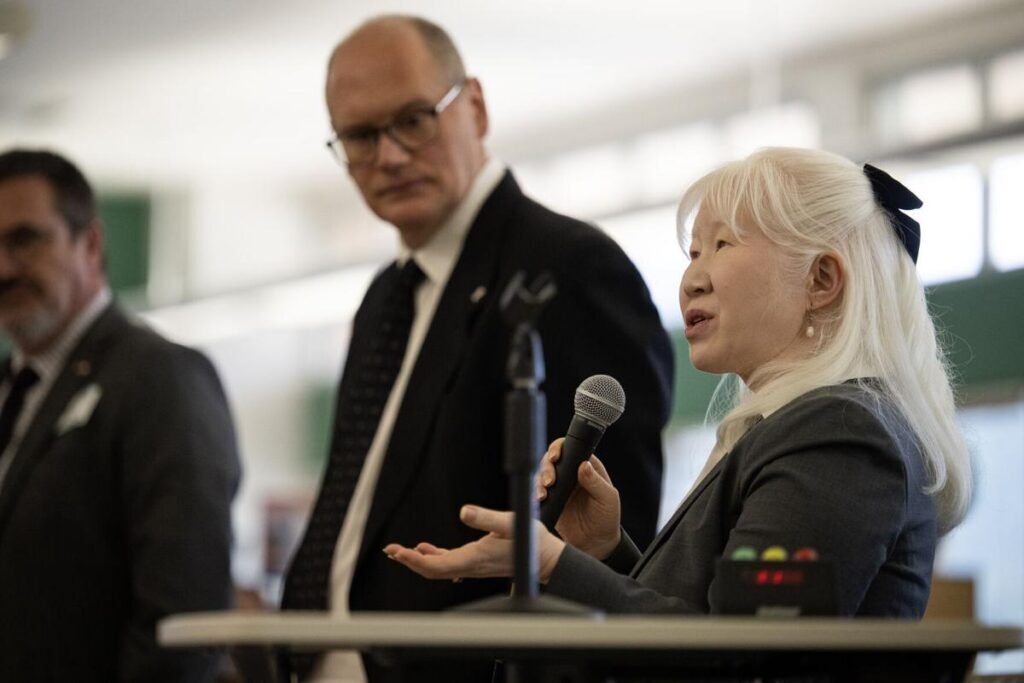
The panelists agreed that it can sometimes be difficult to decide whether an item is properly in front of the Court of Appeals.
“I feel like some of us are drawing lines in different places and it can be really tough,” said Judge Christina F. Gomez.
The panelists described the phenomenon of trial attorneys and judges being seemingly in agreement about what is going on in a case, only for the appellate judges to look at the record and scratch their heads. Consequently, they urged lawyers to be diligent in making their objections known to the trial judge, but not to overdo it.
“I would try to preface it with the whole, ‘I am not asking you to reconsider the ruling. May I just have two minutes to say this for the record?'” said Judge Sueanna P. Johnson.
“Know the fine line between making the actual record, and arguing when the thing has been decided,” added Moultrie. “I think that’s sometimes where judges get frustrated.”
During a panel discussion about oral arguments, Judge Neeti V. Pawar said she is aware of the notion that the lawyers who attend educational events like the appellate update are not the ones most in need of tutoring.
“It creates this fiction, this fake demarcation of ‘good lawyers’ and ‘bad lawyers’,” she said. “Everybody does slip into patterns of behavior that, unless we push pause and interrupt them, we perpetuate them.”
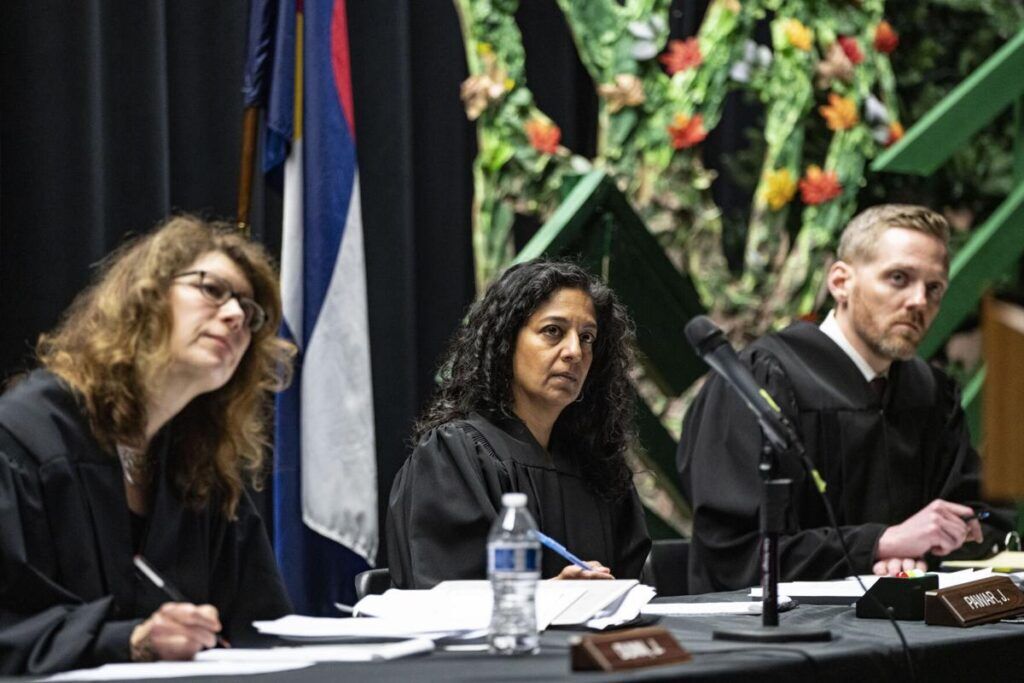
Judge Craig R. Welling acknowledged it can be difficult when an attorney is facing a judge who appears to misunderstand the facts or the case history during oral arguments.
“I think it’s important to try and meet the judge where they’re at and try to figure out what the source of that might be,” he said, “and try to walk the judge through why their understanding of the record might not fit with what happened at trial or what the legal framework is.”
The panelists also spoke to a unique feature of the Court of Appeals, which decides cases in groups of three judges. Before oral arguments, one of the judges will author a “predisposition memorandum” that functions as a draft opinion.
The appellate panel “isn’t an entirely blank slate, which is all the more reason why listening to questions is important,” said Welling. “They’ve either written or read a comprehensive opinion on the case, and are having trouble with one specific area.”
“It’s not a ‘default’ order,” said Pawar. “It’s a starting point for debate and discussion. Because of the volume of work that we have, somebody has to take that initial stab at it.”
“I certainly have more than a handful of situations where I’m really on the fence, so I might write it both ways,” added Judge Terry Fox. “There are some cases that are that close. Or at least, I give them a paragraph to say, ‘If you guys disagree with me …’ just give them a little outline of what it would look like.”
Judge Veronica S. Rossman of the U.S. Court of Appeals for the 10th Circuit, who was the lone federal judge to speak at the event, said it is normal to see her court set a case initially for oral argument, only to discover that argument is not necessary after all. She said litigants should not read too much into the cancellation of oral argument.
“Maybe your client wants it. It’s their day in court,” Rossman said. “But when we’re thinking specifically about, ‘Does this issue, in order to be resolved, require oral argument,’ most of the time the answer will be no because it’s not a question of first impression, it’s not a fact-heavy issue.”
Finally, in a panel discussion among court clerks, staff attorney Audrey Bianco of the Colorado Supreme Court said there has been an explosion of petitions from self-represented litigants that appear to be the product of artificial intelligence tools.
“The language is just the same throughout each of these filings. So, at some point, it becomes clear something is telling them to file that,” she said. “It’s making it easier to file, although it is much easier to read.”

Federal judge dismisses ex-Colorado judicial discipline director’s conspiracy lawsuit
Michael Karlik
michael.karlik@coloradopolitics.com
Updated 5 hours ago
A federal judge dismissed a lawsuit from Colorado’s former judicial discipline director on Tuesday, finding that he failed to adequately state claims for conspiracy or constitutional violations. Christopher S.P. Gregory, who served as the executive director of the Colorado Commission on Judicial...
Federal judge allows retaliation claims to proceed against prison officials
Michael Karlik
michael.karlik@coloradopolitics.com
Updated 3 hours ago
A federal judge agreed last week that a man incarcerated at Sterling Correctional Facility had credibly alleged that employees retaliated against him for filing grievances, including by taking away his disability accommodations and turning off his electricity. Louis Peoples Jr.,...

U.S. Rep. Lauren Boebert’s son arrested, faces charges of sexual exploitation of minor
Matt Kyle
matt.kyle@denvergazette.com
Updated 1 day ago
U.S. Rep. Lauren Boebert’s son Tyler Jay Boebert has been arrested and accused of recording and sharing a video depicting himself having intercourse with a minor, according to court records. The case originated in Garfield County in Western Colorado and...

Adams County water district may proceed with cost-recovery lawsuit against Denver for contamination
Michael Karlik
michael.karlik@coloradopolitics.com
Updated 16 hours ago
A federal judge rejected Denver’s arguments last week for pausing or dismissing a lawsuit brought by an Adams County special district seeking to recover its costs for addressing water contamination as a result of Denver firefighting activities. In January, the...
Federal judge declines to dismiss First Amendment retaliation claim against prison official
Michael Karlik
michael.karlik@coloradopolitics.com
Updated 15 hours ago
A federal judge agreed last month that an incarcerated Native American woman may pursue her claim of First Amendment retaliation against a prison official who allegedly interfered with her religious exercise. Yvonne Peterson resided at Buena Vista Correctional Facility for...

Colorado’s troubled guardianship office pursues ‘cultural reset’
Marianne Goodland
marianne.goodland@coloradopolitics.com
Updated 1 day ago
Colorado’s guardianship program, long criticized for mismanagement and high staff attrition, is undergoing a “cultural reset,” as its new director works to repair partnerships and prepare for a major expansion under recent legislation. Created by lawmakers in 2017, the Office...
Local party leaders, incoming judge among members of judicial performance commission that violated law
Michael Karlik
michael.karlik@coloradopolitics.com
Updated 3 days ago
A local Democratic leader and 2024 presidential elector. A legislative aide and leader in the Young Republicans. An incoming county court judge freshly appointed by the governor. They are among the eight members of the northeastern Colorado judicial performance commission...
Judge dismisses lawsuit seeking records from Colorado Democratic group
Marianne Goodland
marianne.goodland@coloradopolitics.com
Updated 4 days ago
A lawsuit seeking to obtain records from Democratic lawmakers affiliated with a caucus has been thrown out by a Denver District Court judge. On July 17, Judge Ericka Englert dismissed the April lawsuit filed by progressive activist Derrick Blanton, who...
Colorado Springs mother Deborah Nicholls’ murder conviction overturned
Nick Smith
nick-smith@coloradopolitics.com
Updated 5 days ago
A Colorado Springs mother convicted in 2008 of murdering her three children in a house fire might get a new trial after a judge ruled that prosecutors withheld key evidence that could have impacted the jury’s verdict. Deborah Nicholls, whose...
Colorado court overturns illegal $7,000 restitution order
Michael Karlik
michael.karlik@coloradopolitics.com
Updated 4 days ago
Colorado’s second-highest court overturned a Weld County defendant’s obligation to pay more than $7,000 in crime victim restitution on Thursday because a trial judge failed to issue a legally compliant restitution order at the time of sentencing. In Colorado, as...
PREV
PREVIOUS

Colorado appeals judges give tutorial on friend-of-the-court briefs | APPELLATE UPDATE
Two members of the Colorado Supreme Court and Court of Appeals described to attorneys on Friday how and when to submit advocacy briefs from outside entities — and the tactics that turn off the judges who read them. “I get that there are certain advocacy groups on particular sides. I can pick up a particular […]

Colorado adds 1,400 jobs in March, but state still on track for annual job losses
Colorado added 1,400 jobs to the economy in March, according to new state data. The Colorado Department of Labor and Employment reported the state had job growth in March and kept its unemployment rate at 3.9% amid a slowing labor market, according to its monthly report released Wednesday. The U.S. unemployment rate stood at 4.3% […]