

Colorado justices confirm water-related enterprises may condemn private property
The Colorado Supreme Court confirmed on Monday that water-related enterprises have the legal authority to exercise the governmental power of eminent domain over private property.
An enterprise is a government-owned business that provides fee-based services. In 1993, lawmakers authorized the creation of “water activity enterprises” to provide a secure water supply for residents. The enterprises may be part of existing water conservancy districts and, among other things, may “exercise the district’s legal authority relating to water activities.“
In response to a challenge from a private property owner in Weld County, the Supreme Court concluded that state law unambiguously allows an enterprise created by a conservancy district to condemn private property for water-related activities.
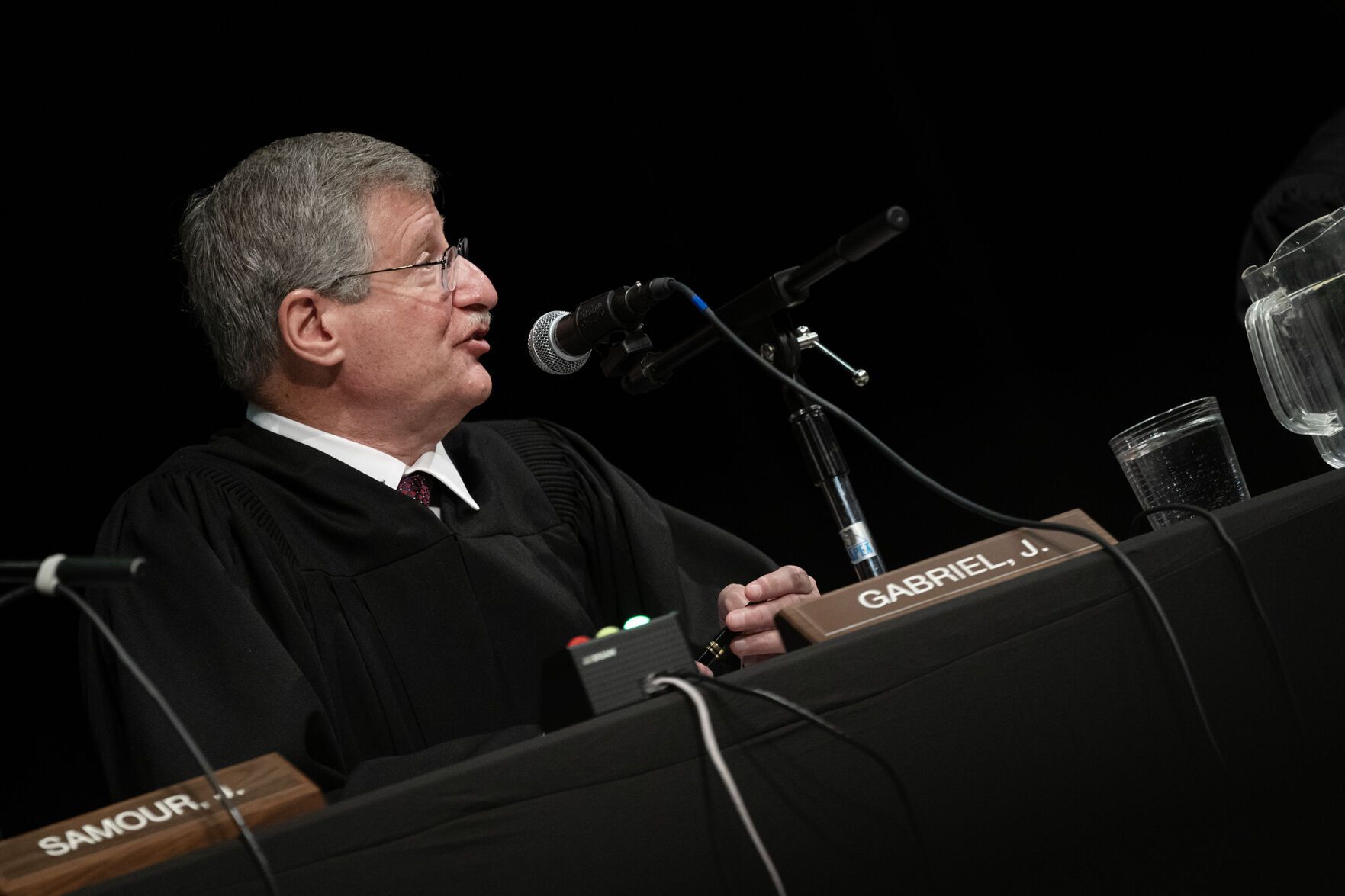
Lawmakers “expressly granted water conservancy districts the power of eminent domain to take private property when necessary,” wrote Justice Richard L. Gabriel in the May 4 opinion. “Moreover, the General Assembly expressly authorized the governing body of each water activity enterprise to exercise its parent district’s legal authority relating to water activities.”
In 2024, the Northern Integrated Supply Project Water Activity Enterprise sought a court order in Weld County condemning a portion of VIMA Partners, LLC’s property in exchange for compensation. The enterprise is owned by the Northern Colorado Water Conservancy District, or Northern Water.
As described, the purpose of the eminent domain action was to complete “a complex regional water supply and distribution project” to provide 40,000 acre-feet of water each year within Northern Water’s boundaries. VIMA Partners’ property was needed for a pipeline.
District Court Judge Kimberly B. Schutt concluded the NISP Enterprise had the authority to condemn the disputed parcel. She rejected the argument that if anyone had eminent domain power, it was the water district itself, and not the enterprise it owned.
“Northern Water’s Board of Directors controls and directs NISP Enterprise and may exercise its legal authority through NISP Enterprise to accomplish NISP Enterprise’s stated purpose,” Schutt wrote.
VIMA Partners appealed to the Supreme Court, arguing its intervention was necessary to prevent the unlawful taking of property. Several outside entities wrote to the court to warn that VIMA Partners’ argument would hamper the established framework for water-related projects.
“It has long been understood as a practical matter that the development of water resources in Colorado requires transporting water from the natural streambed across the property of others to its place of use,” wrote the Pueblo-based Southeastern Colorado Water Conservancy District. “Knowing this, the General Assembly would not have empowered water activity enterprises to pursue water activities, including delivery and distribution of water, while simultaneously depriving enterprises of the authority to obtain rights-of-way by which they may actually develop such distribution systems.”
Although VIMA Partners argued that the legislature needed to be explicit if it intended to give enterprises the authority to take private property, the Supreme Court concluded that the legislature had explicitly done so.
“Because NISP Enterprise is a water activity enterprise and its parent district is Northern Water,” wrote Gabriel, the law “allows NISP Enterprise to exercise Northern Water’s legal authority, including the power of eminent domain, provided that this authority is exercised in relation to ‘water activities.'”
He added that the pipeline in question is related to water activities.
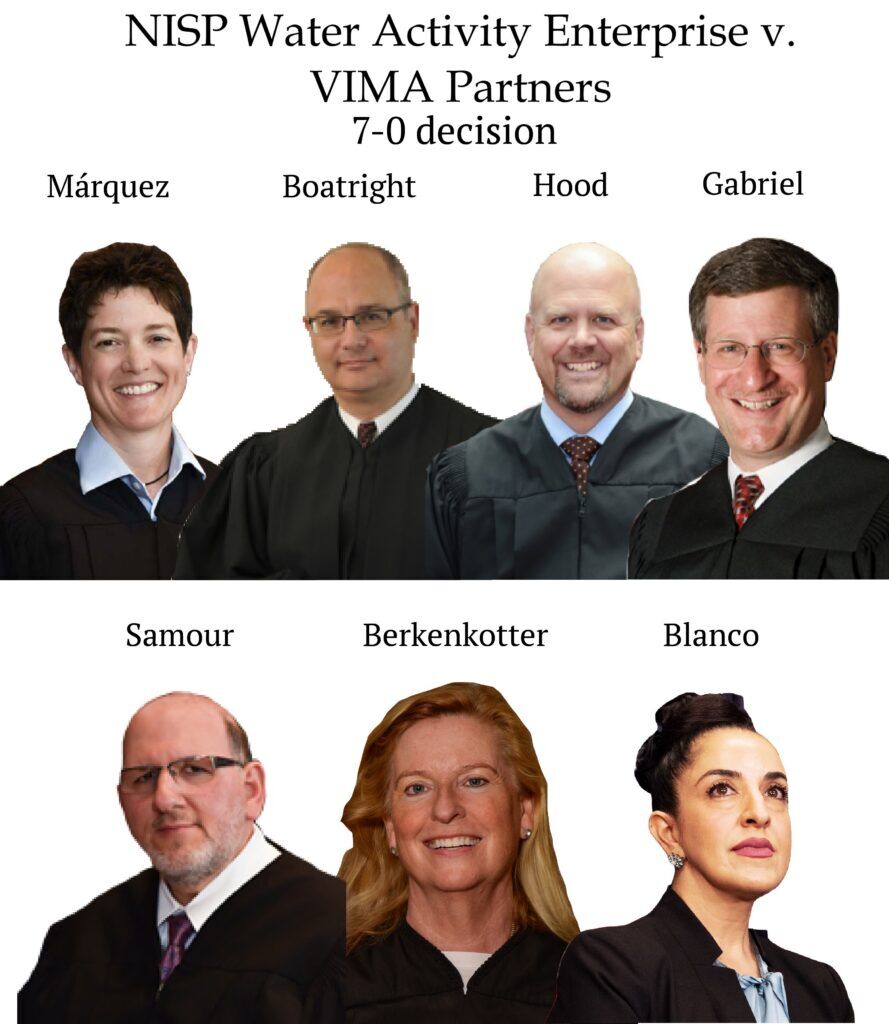
The case is Northern Integrated Supply Project Water Activity Enterprise v. VIMA Partners, LLC et al.

Federal judge dismisses ex-Colorado judicial discipline director’s conspiracy lawsuit
Michael Karlik
michael.karlik@coloradopolitics.com
Updated 5 hours ago
A federal judge dismissed a lawsuit from Colorado’s former judicial discipline director on Tuesday, finding that he failed to adequately state claims for conspiracy or constitutional violations. Christopher S.P. Gregory, who served as the executive director of the Colorado Commission on Judicial...
Federal judge allows retaliation claims to proceed against prison officials
Michael Karlik
michael.karlik@coloradopolitics.com
Updated 3 hours ago
A federal judge agreed last week that a man incarcerated at Sterling Correctional Facility had credibly alleged that employees retaliated against him for filing grievances, including by taking away his disability accommodations and turning off his electricity. Louis Peoples Jr.,...

U.S. Rep. Lauren Boebert’s son arrested, faces charges of sexual exploitation of minor
Matt Kyle
matt.kyle@denvergazette.com
Updated 1 day ago
U.S. Rep. Lauren Boebert’s son Tyler Jay Boebert has been arrested and accused of recording and sharing a video depicting himself having intercourse with a minor, according to court records. The case originated in Garfield County in Western Colorado and...

Adams County water district may proceed with cost-recovery lawsuit against Denver for contamination
Michael Karlik
michael.karlik@coloradopolitics.com
Updated 16 hours ago
A federal judge rejected Denver’s arguments last week for pausing or dismissing a lawsuit brought by an Adams County special district seeking to recover its costs for addressing water contamination as a result of Denver firefighting activities. In January, the...
Federal judge declines to dismiss First Amendment retaliation claim against prison official
Michael Karlik
michael.karlik@coloradopolitics.com
Updated 15 hours ago
A federal judge agreed last month that an incarcerated Native American woman may pursue her claim of First Amendment retaliation against a prison official who allegedly interfered with her religious exercise. Yvonne Peterson resided at Buena Vista Correctional Facility for...

Colorado’s troubled guardianship office pursues ‘cultural reset’
Marianne Goodland
marianne.goodland@coloradopolitics.com
Updated 1 day ago
Colorado’s guardianship program, long criticized for mismanagement and high staff attrition, is undergoing a “cultural reset,” as its new director works to repair partnerships and prepare for a major expansion under recent legislation. Created by lawmakers in 2017, the Office...

Local party leaders, incoming judge among members of judicial performance commission that violated law
Michael Karlik
michael.karlik@coloradopolitics.com
Updated 3 days ago
A local Democratic leader and 2024 presidential elector. A legislative aide and leader in the Young Republicans. An incoming county court judge freshly appointed by the governor. They are among the eight members of the northeastern Colorado judicial performance commission...

Judge dismisses lawsuit seeking records from Colorado Democratic group
Marianne Goodland
marianne.goodland@coloradopolitics.com
Updated 4 days ago
A lawsuit seeking to obtain records from Democratic lawmakers affiliated with a caucus has been thrown out by a Denver District Court judge. On July 17, Judge Ericka Englert dismissed the April lawsuit filed by progressive activist Derrick Blanton, who...

Colorado Springs mother Deborah Nicholls’ murder conviction overturned
Nick Smith
nick-smith@coloradopolitics.com
Updated 5 days ago
A Colorado Springs mother convicted in 2008 of murdering her three children in a house fire might get a new trial after a judge ruled that prosecutors withheld key evidence that could have impacted the jury’s verdict. Deborah Nicholls, whose...
Colorado court overturns illegal $7,000 restitution order
Michael Karlik
michael.karlik@coloradopolitics.com
Updated 4 days ago
Colorado’s second-highest court overturned a Weld County defendant’s obligation to pay more than $7,000 in crime victim restitution on Thursday because a trial judge failed to issue a legally compliant restitution order at the time of sentencing. In Colorado, as...
PREV
PREVIOUS

Judge's students create AI apps, solicitors general gather for group discussion | COURT CRAWL
Welcome to Court Crawl, Colorado Politics’ roundup of news from the third branch of government. A federal judge’s law students created artificial intelligence-powered apps to address access-to-justice issues, plus half a dozen current and former solicitors general of Colorado spoke about the unique role. State Supreme Court news • The Colorado Supreme Court decided that lifetime […]
Colorado approves $13 million for 48 water projects amid statewide drought
The Colorado Water Conservation Board recently approved an additional $13 million in funding for 48 projects through its Water Plan Grant and Water Supply Reserve Fund Programs for drought and wildfire-impacted communities. To date, the board has allocated more than $40 million to 136 local projects across the state. “Organizations across the state are implementing […]